The city of Puebla—located in the central highlands of Mexico—is particularly well-known for its street layout and predominantly Baroque architecture. A UNESCO World Heritage site since 1987, the city hosts a broad cultural dynamic centered on the preservation of its built heritage and its appreciation from a distance, as if it were a museum piece. Consequently, in our daily commutes, we notice the monumentality of its facades, often overlooking the fact that behind the large wooden doors lies what we have called "the heart of the Poblano house."
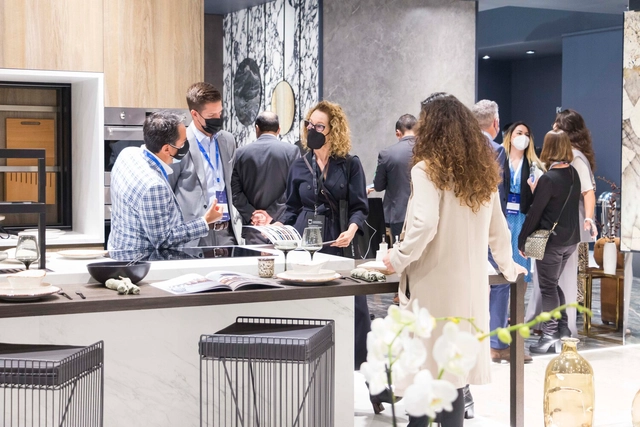
Obra Blanca, a project created to meet the construction sector's demand for all types of finishes, is returning for its third edition. This exhibition serves as a meeting point for professionals looking to showcase their offerings and those seeking to compare various finishing options. As a specialized exhibition, it focuses on the visitor experience and the professionalization of an increasingly sophisticated industry. The event aims to foster connections between professionals and companies in the Mexican construction finishes sector, further elevating the market level and serving as a benchmark for trends and design for architects, interior designers, builders, developers, distributors, and industry professionals.
On 13 October 2022 at 6 pm, Brick Award and Guiding Architects invite all those interested to discover Barcelona’s Camp del Ferro Sports Complex in conversation with its authors. The new facility by Barceló Balanzó Arquitectes, AIA and Gustau Gili has been nominated for the Brick Award 2022, a biennial accolade that celebrates the best brick architecture from around the globe.
The designers of the 2020 edition: Karol Suguikawa (MT), Pietro Oliveira (MG), Rodrigo Ambrosio (AL), Luly Vianna (SP), and Gustavo Bittencourt (RJ)
The 2022 edition of the Semana Criativa de Tiradentes has been scheduled: it will take place from October 20 to 23 in the historic city of Tiradentes, Minas Gerais. The event will be held in person, featuring four days packed with lectures, panel discussions, exhibitions, workshops, and experiences centered on the Brazilian artisanal universe. Daily lectures will be available on the Semana Criativa YouTube channel throughout the festival.
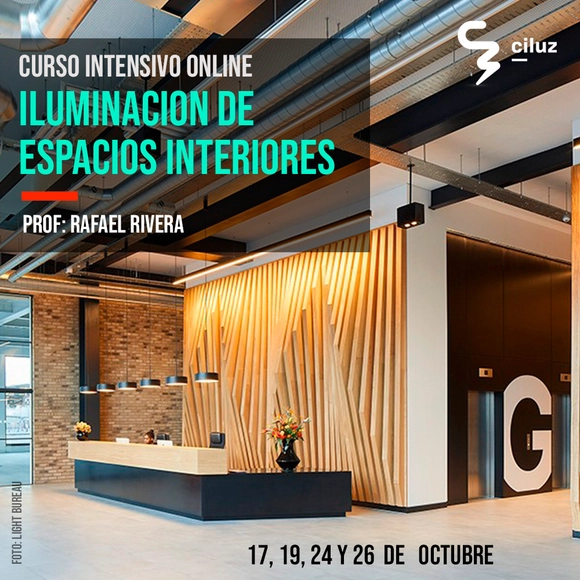
The Interior Lighting course aims to provide the necessary tools to develop lighting projects for residential and/or commercial spaces. Participants will learn how lighting can personalize and shape new spaces based on the program and its lighting requirements.
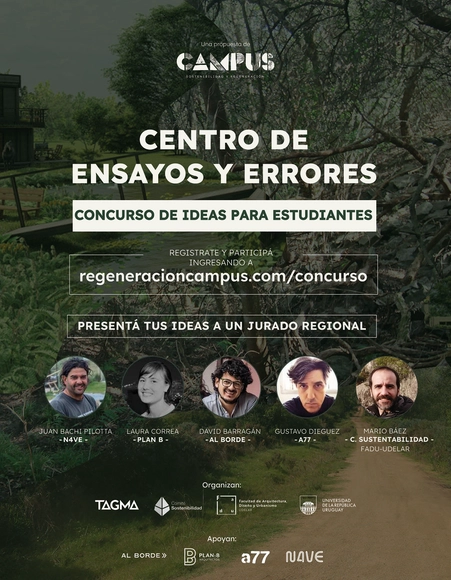
TAGMA and the Sustainability Committee of the Faculty of Architecture, Design, and Urbanism at the University of the Republic (Uruguay) invite students to participate in the Student Ideas Competition for the development of the Center for Trials and Errors (Centro de Ensayos y Errores), an infrastructural support facility for CAMPUS (Training in Sustainability and Regeneration) located in the department of Maldonado (Pan de Azúcar).
There is an underexplored niche within architecture and construction that is revolutionizing the market. With greater agility, speed, design freedom, and sustainability integrated throughout the process, Modular Construction represents a blue ocean of opportunity that is growing exponentially worldwide.
The World Around has launched an open call for applications to its inaugural Young Climate Prize. The prize has been designed to invest in the generation born into the climate crisis, and provide visibility, support and mentorship for 25 of the world’s most talented and passionate climate designers under the age of 25. We are looking for young people who are working on their own self-started projects that address, draw attention to or mitigate climate change in their community. The chosen applicants will join a bespoke academy and each be mentored by one of our extraordinary Design Champions – the world’s leading climate-change-focused designers, museum directors, curators, writers and business leaders.
School of Architecture, Creative Campus, Andrés Bello University
In conjunction with the "The Life of Things" exhibition, organized by the School of Architecture in the Campus Creativo Hall, a series of meetings on circular design in architecture will be held from two perspectives. These sessions will take place during the exhibition on September 1st and 2nd at 12:00 PM in a hybrid format at the Universidad Andrés Bello Campus Creativo Television Studio.
Videos
Calle de los Negros (starting point of 1871 massacre) in Los Angeles, ca. 1876. University of Southern California.
The City of Los Angeles has issued a Request for Ideas (RFI) inviting artists, architects, designers, students, and other members of the public to submit ideas for a permanent physical memorial to a shocking but largely forgotten incident in Los Angeles history: the lynching of 18 Chinese at the hands of a vigilante mob in Los Angeles on October 24, 1871, the largest massacre of Chinese in California history and the largest mass killing of any kind in Los Angeles history (almost 10 percent of the city’s Chinese population at the time). Here is a link to the RFI.
(left to right) Julie Bargmann, Joe Bargmann, Maura Rockcastle and Ross Altheimer - Photo courtesy TEN x TEN, 2015
“The day that I dedicated myself to call myself D.I.R.T., that was the day that I just stuck my flag in the ground, albeit being toxic ground, and I just said, you know, this is my life’s work ... And I think of Cornelia [Oberlander], and I think about her planting her flag in the ground. And how persistent she was in this kind of … dogged way. “I’m maybe not a savior, but I like to think maybe I’m an avenger. And I am leading a charge. But to have more colleagues plant their flag in the ground and go, really go, and unrelentingly, just believe in what you’re doing. Don’t get all distracted and fulfill the program of projects. You know? Have at it.” - Julie Bargmann, Inaugural Oberlander Prize Laureate The need for activist approaches to design is greater than ever given the scale of contemporary challenges, from climate change and biodiversity loss to racial and social equity. This one-day conference will showcase the ways that landscape architecture is taking the lead in these efforts. Speakers include: Jane Edmonds, Jane’s Way (Keynote); Sierra Bainbridge, MASS Design; Naomi Davis, Blacks In Green; April De Simone, Democracy by Design; Max Dickson/ Danielle Toronyi, OLIN Labs LGBTQ initiative; Gina Ford, Agency Landscape + Planning; Donna House, Ethnobotanist; Angela Kyle, Urbanist and kin-keeper; Marc Miller, Black Landscape Network; Chelina Odbert, Kounkuey Design Initiative; Lee Pivnik, Institute of Queer Ecology; and Maura Rockcastle, TEN x TEN.
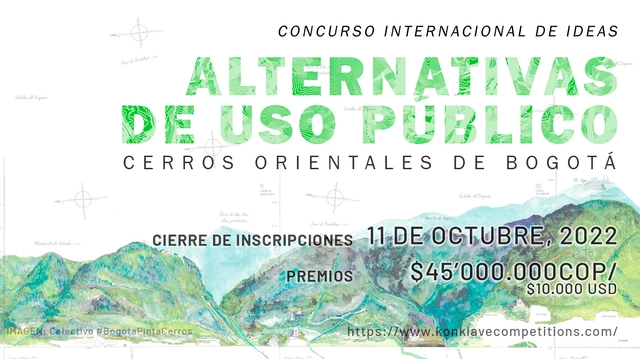
With the goal of reflecting on the relationship between the natural wealth of Bogotá's Eastern Hills and the city's dynamics, the call for entries for the International Ideas Competition: Public Use Alternatives is now open.
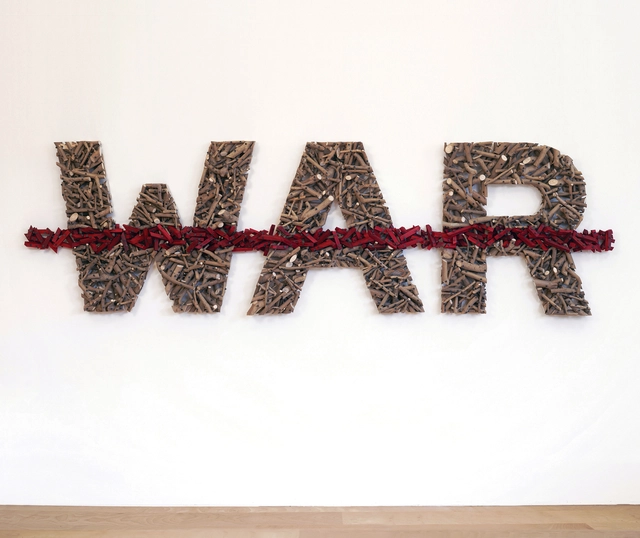
Globalization III by Gyöngy Laky, photographed by Tom Grotta
Political instability can bring about unexpected and engaging art. It can influence an individual artist’s career for a lifetime. The current upheaval in the Ukraine and the security concerns of neighboring European countries suggests echoes experiences of artists exhibited by browngrotta arts who have lived in, fled, or emigrated from repressive regimes. It weighs, too, on the minds of those working in the surrounding nations. German artist, Heidrun Schimmel says that living in a country, united and secure in NATO since 1989, "its now hard for us to learn: ... everything is hanging by a thread..." The nearly 50 artists in the exhibition reflect diverse perspectives and experiences. Allies for Art: Work from NATO-related Countries will include art created under occupation, in the ‘60s, ‘70s and ‘80s, art by those who left Hungary, Romania and Spain while occupied, and art by other artists who left Russia in later years. Gyöngy Laky’s family, for example, escaped from Soviet-occupied Hungary after World War II — to Austria, then America, experiences that are reflected in her politically themed works. Adela Akers’ family left Franco’s Spain, first for Cuba, then to the US. In the 1960s and early 1970s, Ritzi Jacobi’s expressive work in tapestry, abstract by nature, allowed her to circumvent the Romanian government’s preference for academic, figurative art which supported communist ideology. Other artists in the exhibition from Eastern Europe, including Jolanta Owidzka, Zofia Butrymowicz, Anna Urbanowicz-Krowacka, and Krystyna Wojtyna-Drouet of Poland and Luba Krejci and Jan Hladik of Czechoslovakia, were introduced to US audiences in the 1960s through 1980s by Chicago gallerists Jacques and Anne Baruch who spirited their work out of countries under oppressive regimes. On August 20, 1968, for example, the Baruchs left Prague after meeting with artists, just five hours before Soviet tanks rolled into the city and brutally ended a brief period of democratic reforms. Allies for Art: Work from NATO-related Countries will also include works created by artists currently working in Europe, including Gudrun Pagter of Denmark, Åse Ljones of Norway, Włodmierz Cygan of Poland and, artists new to browngrotta arts, including Esmé Hofman of the Netherlands, Anneke Klein of Denmark, and Baiba Osite of Latvia. The exhibition will be accompanied by a full-color catalog, which will include an essay by Kate Bonansinga, Director, School of Art, College of Design, Architec- ture, Art, and Planning at the University of Cincinnati, Ohio.