
INSÒLIT is a festival of ephemeral interventions in the courtyards of Palma that aims to promote the city's rich architectural heritage through creative, temporary actions.
INSÒLIT is a festival of ephemeral interventions in the courtyards of Palma that aims to promote the city's rich architectural heritage through creative, temporary actions.
Since the 19th century, World Expos have served to showcase the culture, art, progress, and scientific advancements of participating nations. These exhibitions are the premier international showcase for participating countries and represent a historic event for their host nations.
World Expos have left an impressive architectural legacy that has become symbolic of many cities and countries. Notable examples include the Crystal Palace in London (1851), the Eiffel Tower in Paris (1889), the Ferris Wheel in Chicago (1893), the Atomium in Brussels (1958), the Space Needle in Seattle (1962), and Mies van der Rohe’s German Pavilion in Barcelona (1929), among many others.
Ferrero and Desall invite the international creative community to propose an innovative interior design solution centered on the individual, ensuring that breaks at the company are even more relaxing and enjoyable.
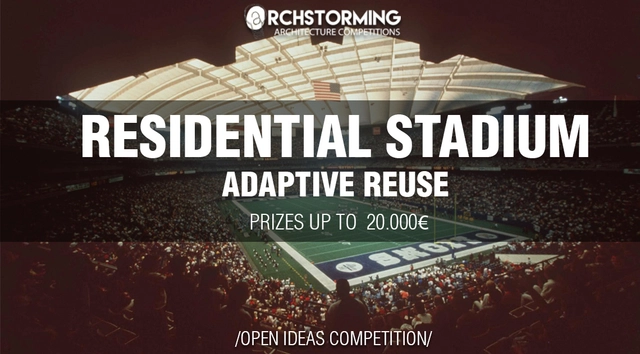
The 2018 World Cup ended just a few weeks ago. It concluded an intense month that not only impacted the world of sports but also had direct repercussions on the host country's economy, tourism, and urban planning. Russia was the chosen host country. A total of 12 stadiums across 11 Russian cities were built or renovated for the tournament. But have you ever considered what happens when Olympic stadiums, World Cup venues, or other costly sports infrastructure close after the events for which they were designed? Many host local sports clubs. Others, however, become what we call "white elephants," used as parking lots, car racing tracks, or even—as in the case of Montreal's spectacular Olympic Stadium—a flu vaccination center. In "Residential Stadium: Adaptive Reuse," Archstorming aims to analyze how architecture can provide solutions for stadium design, ensuring they can be repurposed once the sporting event has concluded.

Metalmeccanica Alba and Desall invite the international creative community to design a new combinable, modular, and detachable bookcase for the historic brand AlbaComponents.
Rethinking is celebrating its 4th anniversary. It has been four years since the launch of our first competition, and from the very beginning, participants have requested a specific type of competition: one that rewards, both symbolically and financially, the effort required by a year of work on a final degree project. Therefore, after 18 competitions, we are pleased to present our first competition dedicated to rewarding the best final degree projects.
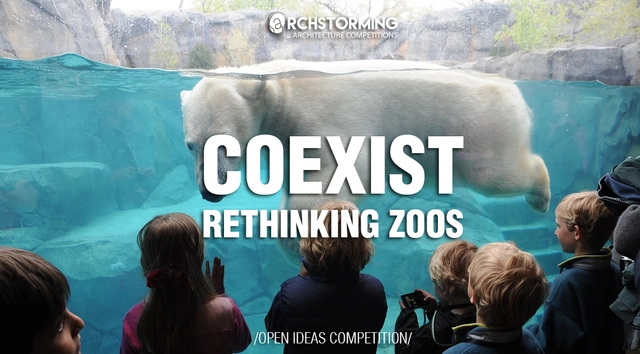
· introduction ·
Ideasforward is an experimental platform that seeks progressive ideas reflecting emerging themes. Ecological design, sustainable architecture, new materials, concepts, and technologies are pressing issues for the societies of the future, and the participation of the entire community is essential. In an era of globalization, where communication has been dominated by the technological revolution, there is a need to rethink cities and how humanity relates within a global world, as well as to reconsider the economic, social, and cultural patterns of contemporary societies.

New ideas competition on Desall.com: Manifattura Falomo and Desall invite you to design a system that helps consumers select the most suitable mattress based on their specific needs at retail locations.

For its fourth exhibition cycle, Espacio Odeón has invited Alejandro Martín Maldonado and Estudio Altiplano to serve as curators. They have chosen to launch an architecture competition that examines the spatial conditions of Odeón, along with its history, present, and future.
This competition invites any individual or collective—regardless of age, discipline, nationality, gender, or political affiliation—to submit architectural proposals. We are seeking submissions that consider the building's current state in programmatic, heritage, urban, and economic terms. We invite you to envision alternative futures and new directions, and to submit proposals that radically question the spatial condition of Odeón, the contingency of the void, and the potential of its ruins.

In the context of architecture and urbanism, design competitions are academic and/or professional contests that involve developing an architectural proposal based on specific requirements defined by organizers in a brief, which is carefully planned and prepared for each theme.
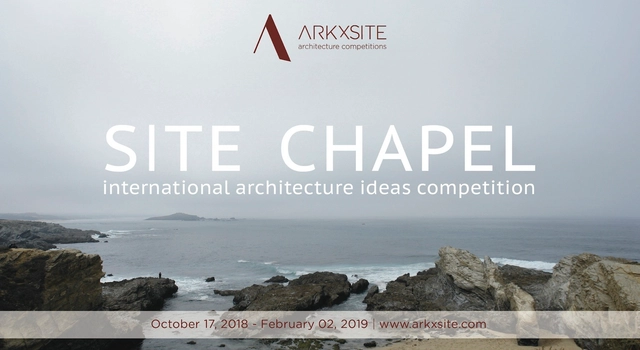
ARKxSITE is pleased to announce the ‘SITE CHAPEL’ international architecture ideas competition for architecture students and young professionals (≤ 40 years old).

Van Alen Institute and Broadway Mall Association are seeking emerging designers and artists for a temporary public design installation addressing the theme of “Eco-Mutualism.” The selected project will be on view March 2027–January 2028 at Mitchel Square in Washington Heights, Manhattan.

Introducing the sixth Architect's Chair competition, an exciting opportunity for architects and designers to showcase their creativity, versatility, and design vision through the creation of a signature piece of furniture. Developed in partnership with Stockholm Furniture Fair, the world's leading platform for Scandinavian design, this edition offers participants the unique opportunity to engage directly with one of the most influential events in the international furniture and design industry.

Cape Charles Railroad & Harbor Ideas Competition

There have been five major extinction events in Earth's history, the fifth being the obliteration of the dinosaurs by an asteroid some 65 million years ago. For many plant and animal species today, humans are now the greatest threat to their survival. This is known as the sixth extinction, and its grim ledger is the IUCN Red List of Threatened Species. The unrestrained destruction of animal habitats for our cities and food production is the equivalent of a slow-motion asteroid. And yet, it is only the human who has the capacity to prevent a real asteroid hitting Earth.

La Pyramide: The Futuristic soul of Abidjan, Côte d'Ivoire.

Beyond the Mall: Rethinking Retail Landscapes as Urban Public Space

Introducing the Kinderspace: Architecture for Children's Development competition / Edition #4, an architectural challenge dedicated to crafting innovative educational spaces that enhance early childhood learning. As young children navigate their formative years, the environment in which they learn plays a pivotal role in their cognitive, emotional, and social development. Traditional educational settings often do not fully cater to the dynamism of early childhood, potentially stifling creativity and exploration.

The Museum of Architecture, the Great Exhibition Road Festival and Dr Neal Shasore have launched an open international design competition to rethink the Crystal Palace for contemporary society, considering what it might look like, how it would function and who it should serve.

Submissions are open to the Drawing of the Year Awards 2026! The seventh annual, global Awards are free to enter and celebrate excellence in creative imagery, drawings and visual representations.

A Mountain Sanctuary will be designed within the National Park in Argentine Patagonia as a space for pause and contemplation for hikers and mountaineers on their journey toward Mount Fitz Roy.
The MOUNTAIN SANCTUARY must be conceived as part of the natural flow of the trail, functioning as an organic pause within the ascent experience. The expectation is for a space that provides protection against the extreme weather conditions of the Patagonian environment (wind, cold, snow) without becoming a permanent or massive shelter.

La Chambre and the European House of Architecture - Upper Rhine are launching the 8th edition of Archifoto - European architectural photography competition.
Since 2010, Archifoto has brought together documentary and artistic views on current architectural issues. By favouring a free and subjective viewpoint, it rewards photographers whose vision helps us to understand the urban and natural landscape, the ways of living and living together, and the new ways of building the world and society.

The 8th edition of Tallinn Architecture Biennale (TAB 2026) (www.tab.ee) will question cost, value, and sustainability in architecture with the theme “How Much?”. Curated by Kertu Johanna Jõeste, Ra Martin Puhkan and Siim Tanel Tõnisson from Stuudio TÄNA (www.stuudiotäna.ee) (Estonia) together with Mark Aleksander Fischer (Estonia) and Mira Samonig (Austria), TAB 2026 will run from September 9th – November 30th, 2026.