1. ArchDaily
  2. venezia

venezia: The Latest Architecture and News

Contested Fronts: Pavilion of Cyprus at the 15th Venice Biennale of Architecture Reveals Commoning Practices for Conflict Transformation

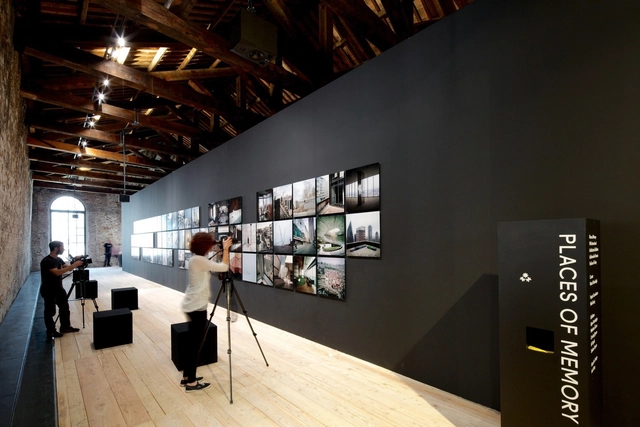
“Contested Fronts” is an exploration of architecture’s role for commoning practices in ethnically and socially contested spaces. It focuses on the agencies of architecture’s ad-hoc technologies that contribute into conflict transformation by advocating reconciliation processes to go hand in hand with urban reconstruction processes. “Contested Fronts” introduces three levels of frontiers’ investigation where architecture claims an active role: geopolitical, disciplinary and everyday urban politics’ frontiers. To do so, it concentrates on the agencies of ad-hoc technology’s materiality and use that encourage the emergence of collectives, with their members coming from areas across divides. Ad-hoc technology has to do with means of spatial engagement, of cartographic representation and of visual communication. It assists tactful organization of physical spaces and of events.
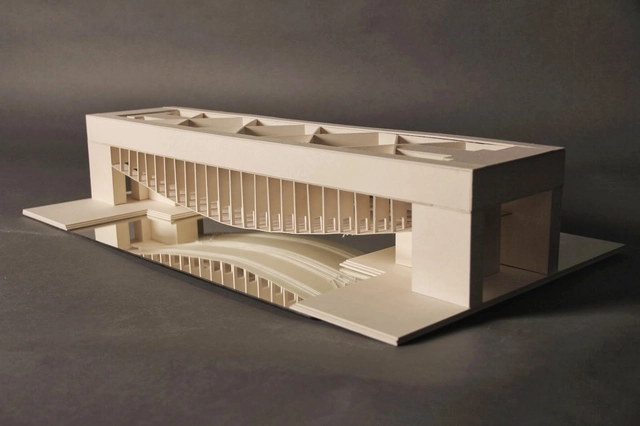
AD Classics: Palazzo dei Congressi / Louis Kahn

The city of Venice has been caught in a tug of war between progress and traditionalism for many years, and particularly since the construction of a railroad viaduct in 1846 linked the island city to the Italian mainland for the first time in its history.[1] Over a century later, the Venetian government commissioned Louis Kahn to design a new Palazzo dei Congressi for the city; his proposal, while paying respect to the histories of both the Republic of Venice and a unified Italy, could not escape similar controversy.

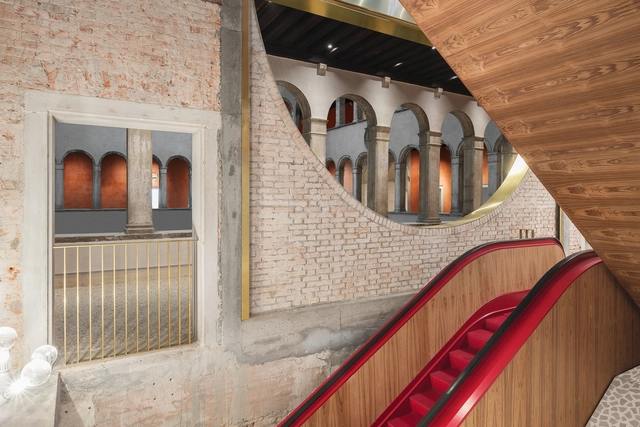
Il Fondaco dei Tedeschi / OMA

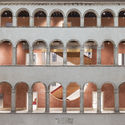
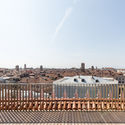
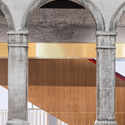
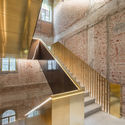
Il Fondaco dei Tedeschi / OMA - Store, Facade, Arch, Arcade, ColumnIl Fondaco dei Tedeschi / OMA - Store, Fence, Facade, CityscapeIl Fondaco dei Tedeschi / OMA - Store, Facade, Column, Door, Arcade, ArchIl Fondaco dei Tedeschi / OMA - Store, Beam, Facade, Stairs, HandrailIl Fondaco dei Tedeschi / OMA - More Images+ 16

•
Venezia, Italy

P.O.P. [Published on Paper] A Talk of Slow Architecture Media

why?
Today we are in the midst of a paradox: although fast, web-based media seems to threaten the very existence of slow architecture media, the amount of p.o.p. magazines has increased in the last few years. Furthermore, and discarding arguments about fast consumption of information, some editorial projects aimed at a slow and attentive audience have managed to succeed in the middle of a huge flow of information. It seems that once the novelty of fast media has decreased, p.o.p. architecture magazines have regained the space they once had. However, are they the same kind of magazines we once knew? How can we explain the fact that an old format may stay alive against all odds? Is it stubbornness, nostalgia, or is it something else? The reasons behind this paradox are what we would like to discuss and explore in this session.

Footnotes on Climate

An installation of nearly 100 books in the James Stirling-designed Book Pavilion at the Venice Biennale serves as a collection of documents that asks us to consider how climate intersects with architectural ideas.

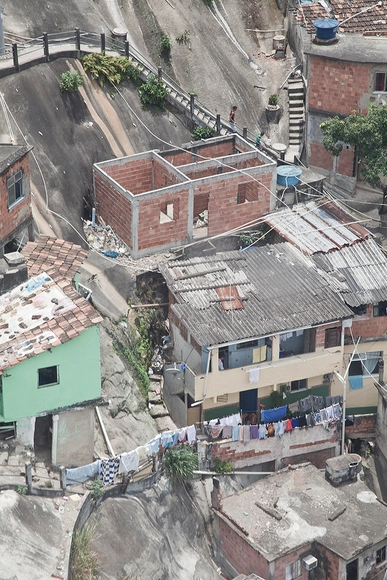
Structures of Spontaneous Architecture in the Favelas of Rio de Janeiro by Patricia Parinejad

FAVELAS, named after the Brazilian creeping plant ’favela’ have existed in Brazil since the late 19th century. Wretched areas of closely packed dwellings were planted in the cities, on the outskirts of the cities, and continued to spread rampantly, growing out of all control. The problem became worse around 1950 when the industrialization of Brazil led to mass migration from rural areas to the big cities. At first the municipal administration tried to resolve this problem by building social housing. Some of the favelas were bulldozed and their inhabitants were forced to resettle elsewhere. But areas of informal settlements have continued to grow. According to the Secretaria Municipal de Habitação the slum’s residents are already 22% of the population in Rio.

Today, a billion people across the world live in slums. There were 40 million more slum dwellers worldwide in 2012 than there were in 2010, according to the UN. By 2030 this number will have doubled.

AD Classics: Palazzo Santa Sofia / The Ca d’Oro

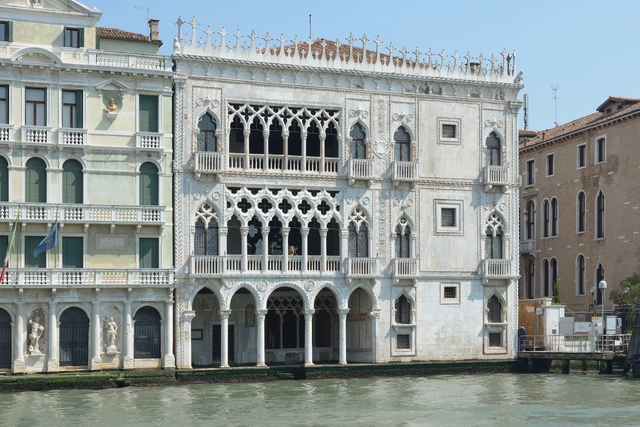
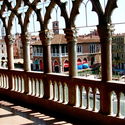
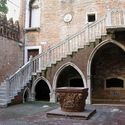
Sitting on the northern bank of Venice's Grand Canal is a great house whose ornately carved marble facade only hints at its original splendor. The Palazzo Santa Sofia—or the Ca D’Oro (House of Gold), as it is also known—is one of the most notable examples of late Venetian Gothic architecture, which combined the existing threads of Gothic, Moorish, and Byzantine architecture into a unique aesthetic that symbolized the Venetian Republic’s cosmopolitan mercantile empire. Built to serve as the grand residence of wealthy Venetian businessman and politician Marin Contarini, the palazzo has seen a number of owners and renovations over its lifetime before ultimately coming to serve as a museum for medieval painting and sculpture.[1]

AD Classics: Palazzo Santa Sofia / The Ca d’Oro - Houses, Arcade, Arch, ColumnAD Classics: Palazzo Santa Sofia / The Ca d’Oro - Houses, Facade, Column, Arch, Arcade, DoorAD Classics: Palazzo Santa Sofia / The Ca d’Oro - Houses, Facade, Column, Arcade, Arch, Handrail, FenceAD Classics: Palazzo Santa Sofia / The Ca d’Oro - Houses, Courtyard, Facade, Arcade, Arch, Column, Door, StairsAD Classics: Palazzo Santa Sofia / The Ca d’Oro - More Images+ 5

BORDERS 2016 Festival

BORDERS festival, curated by Luca Curci and Andrea Chinellato, will be presented in Venice at Palazzo Ca’ Zanardi, Venice Art House, and other prestigious venues and historical buildings, in the months between May and November 2016, in the same period of the 15th Venice Architecture Biennale. BORDERS consists of 3 main events, BODIES + CITIES SKIN, FRAGMENTED IDENTITIES, FUTURE LANDSCAPES, the Experimental Festival Exhibitions and the Venice Architecture Academy.
For more information about BORDERS FESTIVAL contact us: lucacurci@lucacurci.com

Open Call: Exhibition Proposals for Turkey's Pavilion at the 2016 Venice Biennale

The Istanbul Foundation for Culture and Arts (IKSV) is hosting an open call for proposals for the Pavilion of Turkey's exhibition at the 2016 Venice Biennale. The call is open to all people and institutions of relevant fields, including architects, designers, artists, historians, curators, theoreticians and critics.