Romullo Baratto is an architect with a PhD from FAUUSP and Managing Editor of ArchDaily. He previously coordinated the editorial team of the 11th São Paulo Architecture Biennial and served as Managing Editor of ArchDaily Brasil, where he led the platform to win the FNA Award—the first time the honor was granted to a media outlet. He collaborated on the editing of the book "Concrete Jungle", published by gestalten, and has curated architecture exhibitions in Brazil, Chile, Denmark, and Italy, as well as delivered lectures and moderated debates in Spain, the United States, and Portugal. His doctoral thesis investigates the urban landscapes of São Paulo through cinema. His work spans academic research and editorial practice, communicating architecture through texts, interviews, lectures, curatorship, and photography. Follow him on Instagram @romullobf.
City Councilor Marielle Franco, who was shot and killed in Rio de Janeiro, had introduced a bill last December to establish a Technical Assistance program for Social Interest Housing in the city. “This is a historic demand of social movements and organizations linked to the field of architecture and urbanism, given the massive low-income population that needs designs and construction work to improve their housing conditions,” Marielle stated in the bill's justification. “It is also important to expand the number of examples of good design and construction practices in the city, contributing to the dissemination of these experiences.”
Brazilian state capitals have become the setting for an unusual trend: motels are moving away from highways and into city centers, offering an increasingly wide range of entertainment-related services. The motel, which originated in Japan about 400 years ago, is a lodging format that generates R$ 4 billion annually in Brazil and accounts for approximately 25% of all lodging in the country's capitals.
Alfred Willer, a Czech architect who built his career in Brazil, has his story told in the feature-length documentary Red Trees [Red Trees], directed by his daughter, designer Marina Willer. After making its world premiere at the 2017 Cannes Film Festival and opening in theaters in New York, Los Angeles, and Miami, the documentary will have its national premiere on March 29.
The video “One day at the School,” produced by Building Pictures about the Maternelle du Lycée Français project in Barcelona by b720 Fermín Vázquez Arquitectos, invites viewers to experience daily life at this school.
The Housing Development Company of the Federal District (CODHAB-DF) recently launched Accreditation Call No. 001/2018 which aims to accredit companies to provide temporary home renovation and minor repair services in areas of social interest. Registration must be completed online at www.codhab.df.gov.br/credenciamento/01-2018 by 6:00 PM on March 26.
Since 2016, Sesc São Paulo and the UK’s Central Saint Martins, University of the Arts London—a global leader in art and design—have collaborated on various initiatives. A highlight for 2018 is the panel discussion "The Ironies of Architecture: The Architect as Citizen," which will take place on March 16 at 10:30 AM in the theater of Sesc 24 de Maio.
The National Institute of Historic and Artistic Heritage (Iphan) is taking a major step to strengthen the preservation of the country's tangible cultural heritage, relying on the participation of society as a whole. Opening a direct channel with the public, the Public Consultation on the Tangible Heritage Policy has been available on the institution's website since March 1. The document consolidates principles, premises, objectives, procedures, and concepts for preserving Brazil's tangible cultural heritage, which have been shaped and modified over the decades.
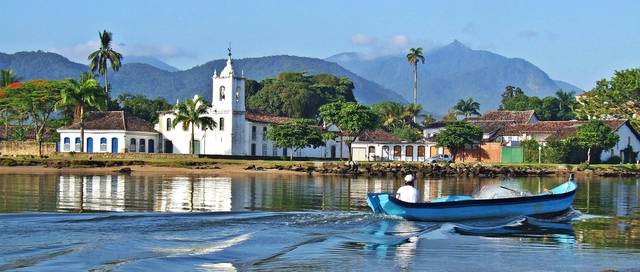
The city of Paraty, in the state of Rio de Janeiro, had its bid for World Heritage status accepted by UNESCO last week. While this is not the first time the city has been considered for the organization's list, having been nominated on two previous occasions, it is the first time it is running as a Natural and Cultural Landscape.
The Habitação e Cidade (Housing and City) graduate program at Escola da Cidade invited architect Luis Kehl to speak about the growth of favelas. Characterizing the favela as an “urban fossil”—a centuries-old form of spatial occupation through irregular housing clusters—the lecture offers a chronological overview of informal occupations across different geographical and historical contexts.
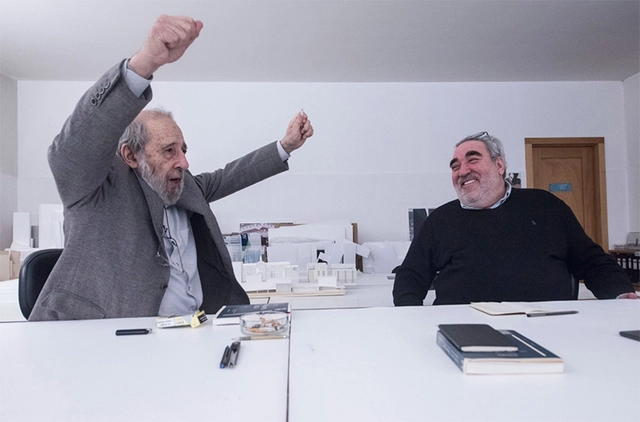
Working partners and friends for over four decades, Álvaro Siza and Eduardo Souto de Moura have won two Pritzker Prizes and a host of other awards, earning the admiration and respect of any architecture professional. In a conversation moderated by Isabel Lucas and published in the Portuguese newspaper Público.pt, the duo discusses the early days of this long partnership which, over time, has evolved into a close bond that allows them to sketch over each other's drawings in a process they refer to as "osmosis."
To avoid hyperrealistic renderings we have witnessed the emergence of other options for architectural representation which seduce the viewer, not for their overwhelming resemblance to reality but rather the opposite, its resemblance to everyday life's textures presented through unpretentious drawings inspired by collage, watercolor, and painting. Digital collage and other similar representation tools have gained more popularity when discussing how architecture can be communicated.
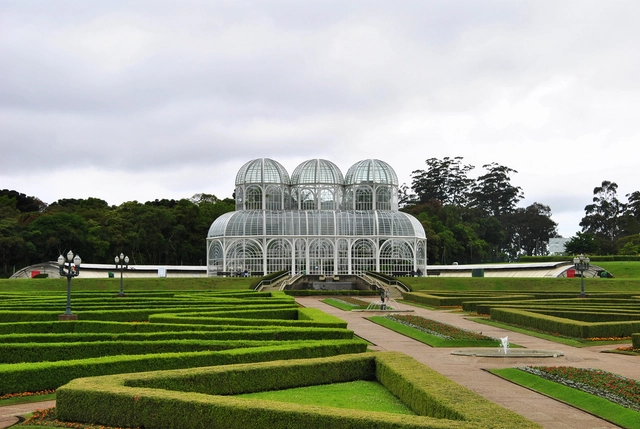
A Pavilion with a Greenhouse for a Botanical Park is the theme for the 11th edition of the Architecture Student Competition, a project promoted by the Brazilian Center for Steel Construction (CBCA). The theme is inspired by the United Nations 2030 Agenda for Sustainable Development, which aims to protect forests and combat desertification. Interested teams must register by July 25 and consist of a minimum of two and a maximum of four students. Each group must be advised by a professor from the same school or university and may also include a co-advisor.
When Le Corbusier visited Mallorca in 1932, he recorded his impressions in a notebook, which is now kept in the archives of the Fondation Le Corbusier in Paris. The pages of this notebook, titled Carnet C 10, clearly reflect Le Corbusier's interests during this private trip. However, they also shed light on the role of drawing in his thinking more generally, as Xavier Monteys reflected in his lecture for the series Author's Lessons - Le Corbusier and Drawing, titled Drawings in a Notebook. A close look at the sketches from the Mallorca trip reveals that the series is framed by two drawings of Barcelona, made from a boat at the beginning and end of his journey, between which he recorded various objects.
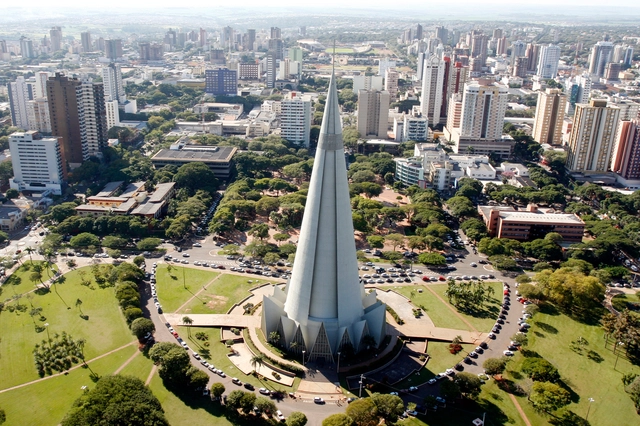
Municipal public buildings, licensed urban spaces, and private buildings of collective interest and use will be required to display the names of the authors of the architectural and/or urban design project, as well as the technical professional responsible for the construction. This is mandated by a bill recently approved by the Maringá City Council. The text now goes to the city's mayor, Ulisses Maia, for approval.
The LIMPAR SANTANA project involves constructing a sustainable basic sanitation system to clean up the waterways of Quilombo de Santana, in the state of Rio de Janeiro, aiming to improve the quality of drinking water in local homes.
Based on an assessment of the area's topography, geotechnics, and geography, the proposal suggests using evapotranspiration basins—a system that treats effluent through natural filtration and evaporation via banana leaves—and biodigester tank systems that convert wastewater into a usable byproduct for agriculture.
Is there an aspect, a recurring mark, that reveals a difference in the way that male and female architecture photographers see the world? This is, perhaps, one of those rhetorical questions often used as an argument to shed light on works produced by women and for which there is no precise answer.
The reality of many Brazilian cities is so challenging that it would make many mayoral candidates hesitant to take on the task of public administration. With this in mind, and aiming to bring political and urban discussions to children and teenagers, the Brava Foundation, in partnership with the Wilson Center's Brazil Institute, developed Cidade em Jogo, a free app reminiscent of the famous game SimCity, yet featuring problems and challenges typical of Brazilian cities.
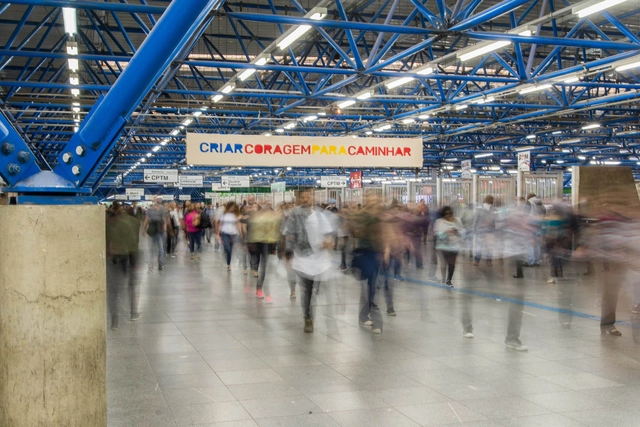
Fronteira Livre was a process that generated interventions in six stations of the São Paulo Metro Red Line for the 11th Architecture Biennial: Em Projeto. The initiative was collaboratively developed by immigrants, activists, architects, social workers, and artists during a ten-day immersive workshop at CAMI (Immigrant Support Center) in São Paulo.






.jpg?1519225511&format=webp&width=640&height=580)