Romullo Baratto is an architect with a PhD from FAUUSP and Managing Editor of ArchDaily. He previously coordinated the editorial team of the 11th São Paulo Architecture Biennial and served as Managing Editor of ArchDaily Brasil, where he led the platform to win the FNA Award—the first time the honor was granted to a media outlet. He collaborated on the editing of the book "Concrete Jungle", published by gestalten, and has curated architecture exhibitions in Brazil, Chile, Denmark, and Italy, as well as delivered lectures and moderated debates in Spain, the United States, and Portugal. His doctoral thesis investigates the urban landscapes of São Paulo through cinema. His work spans academic research and editorial practice, communicating architecture through texts, interviews, lectures, curatorship, and photography. Follow him on Instagram @romullobf.
The Ministry of Education (MEC) has released its list of the best and worst architecture programs in Brazil, based on the Preliminary Course Score (CPC). Topping the list is the Architecture and Urbanism program at the Centro Universitário Facvest, in Lages, Santa Catarina.
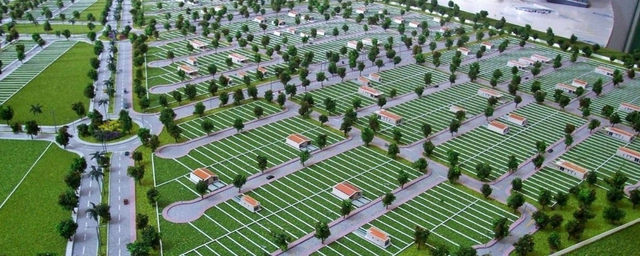
Aerial view of Smart City Laguna. Image by TecMundo
In 2017, ArchDaily Brazil reported that Smart City Laguna would become the first “smart city” in Brazil. With its inauguration scheduled for that same year, the venture opened with 1,800 units in its first phase, and in its final phase, 7,065 units divided between residential, commercial and technological uses.
Located in the Croatá district of São Gonçalo do Amarante, the first Brazilian smart city occupies 815 acres directly connected to the federal highway BR-22, which crosses the states of Ceará, Piauí, and Maranhão, starting in Fortaleza towards Marabá, in Pará. Its location has economic reasons: the proximity to Pecém Harbor, in Fortaleza, the Pecém Steel Company (CSP) and the Transnordestina Railroad make Croatá a strategic hub that has been recently occupied by technological companies, becoming a “digital belt” a little over 50 kilometers from the state’s capital.
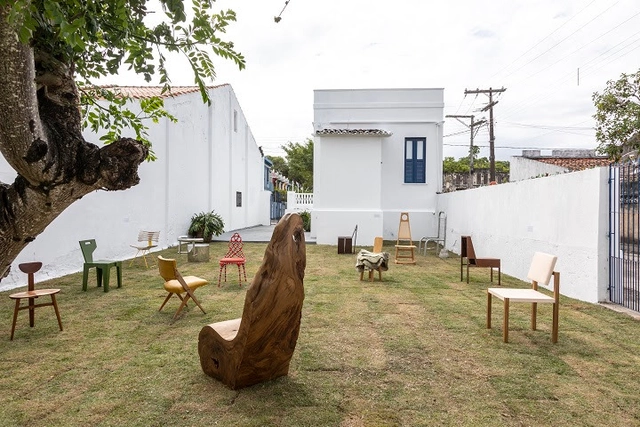
The city of Belmonte, on the southern coast of Bahia, has just opened Brazil's first museum entirely dedicated to the chair. The Museum of Brazilian Chairs is a project by designer Zanine de Zanine, son of Zanine Caldas—a Belmonte-born artist and one of the leading figures of Brazilian modernist furniture design—construction entrepreneur Daniel Katz, and the Belmonte Secretariat of Culture and Tourism.
This week, the São Paulo municipal government resumed the bidding process for the concession of six public parks to the private sector. Suspended since July of last year due to disagreements with the state government, the project was revived by current mayor Bruno Covas.
In addition to Ibirapuera, the city's largest park at 158 hectares, the bidding process also includes the concession of Lajeado (east zone), Eucaliptos (south zone), Jacintho Alberto (north zone), Tenente Brigadeiro Faria Lima (south zone), and Jardim Felicidade (north zone) parks.
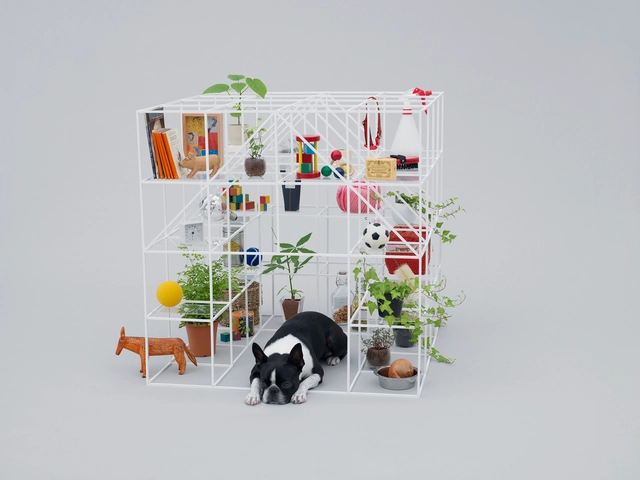
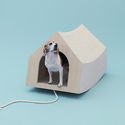
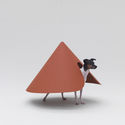
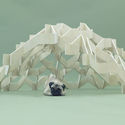
On January 19, Japan House São Paulo will open the exhibition Architecture for Dogs, curated by Japanese designer Kenya Hara. Through the work of renowned architects, the exhibition presents doghouses in a pioneering exercise in scale that considers society's current relationship with these pets.
Developed by researchers from the Federal Universities of Rio de Janeiro (UFRJ) and Bahia (UFBA), Cronologia do Pensamento Urbanísticois an online platform active since 2003 that brings together historical events, projects, key facts, and publications related to the history of urbanism in Brazil and worldwide.
Although zoning regulations point toward necessary densification and the subsequent verticalization of residential buildings in urban centers—seeking greater efficiency and access to urban infrastructure—something escapes this purely rational plan and enters the subjective sphere when we think of single-story houses.
The Embraer Institute, in partnership with GRU Airport – São Paulo International Airport, unveiled the art installation “The First Breath” (“O primeiro sopro”) earlier this month. The piece celebrates both the 50th anniversary of the twin-engine Bandeirante aircraft's maiden flight and the creation of Embraer itself, which will mark five decades of existence in 2019.
Designed by Carmela Rocha and Marko Brajovic, who are responsible for the exhibition design of major showcases in Brazil and abroad, the piece will be on display until February in the Terminal 3 check-in area. Approximately 100,000 people pass through the space daily.
National Museum, Rio de Janeiro. Image by museunacionalviverj. Via Instagram
Destroyed in September of this year by a major fire, the National Museum in Rio de Janeiro is one of the country's most important cultural institutions and an international research reference. A precious part of its collection was unfortunately destroyed by the flames; however, despite this immeasurable loss, the public can now visit some of the galleries through a 360-degree virtual tour released today by Google.
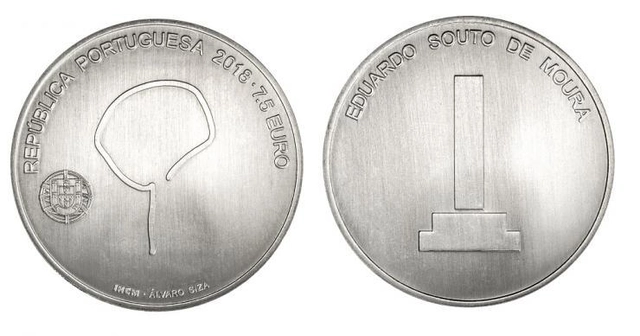
Coin honoring Eduardo Souto de Moura. Image via Banco de Portugal. Publicity
A commemorative coin honoring architect Eduardo Souto de Moura will be put into circulation this week in Portugal. As part of the "Portuguese Architecture" series of thematic coins issued by the Banco de Portugal, the coin, which has a face value of 7.50 Euros, will be available to the public starting this Wednesday, December 12, at Banco de Portugal treasuries and credit institutions.
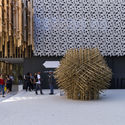
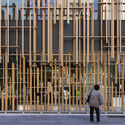
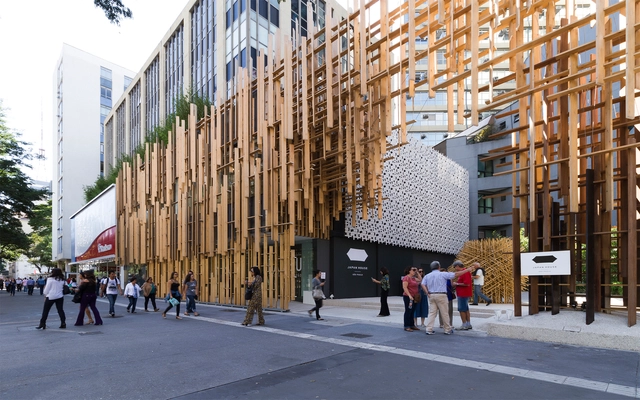
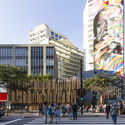
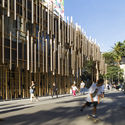
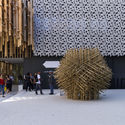
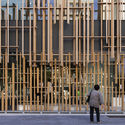
The architects and photographers of studio FLAGRANTE have shared with ArchDaily a series of photographs capturing the recently completed Japan House São Paulo, designed by Kengo Kuma in collaboration with local office FGMF.
Part of a global initiative by the Japanese government to “create a vision of contemporary Japan,” Japan House opened in May 2018, combining art, technology, and business to offer an escape into modern-day Japan.
Architect and photographer Romullo Fontenelle of FLAGRANTE studio shared with ArchDaily a series of photographs from the recently inaugurated Japan House Sao Paulo, a project by Kengo Kuma in partnership with the local office FGMF Arquitetos.
The global initiative by the Japanese Government aims to "create a vision of contemporary Japan." Opened May 2018, Japan House combines art, technology, and business to offer an escape to present day Japan.
This update is required and must be completed by architects and urban planners whenever there is a change in their personal or professional details, whether it is a simple change of residential address and/or phone number, or a change in marital status.
Having recently turned 90, Paulo Mendes da Rocha remains active in the practice of architecture, and his ideas are as sharp as ever.
In an interview with El País, conducted by journalist Tom C. Avedaño, the architect revisits some of his works, reflects on the purpose of architecture, and speaks about "the day everything made sense."
More than 50,000 people visited the Casa da Arquitectura – Portuguese Center for Architecture during its first year in the rehabilitated Real Vinícola block, in Matosinhos. To celebrate this first anniversary, the institution is organizing three days of free activities for everyone on November 16, 17, and 18.
Featuring guided tours, conferences, talks, presentations, book launches, and concerts, Casa da Arquitectura's anniversary program offers about 30 events for all audiences, including families and children. The block's outdoor space will also host various artistic performances.
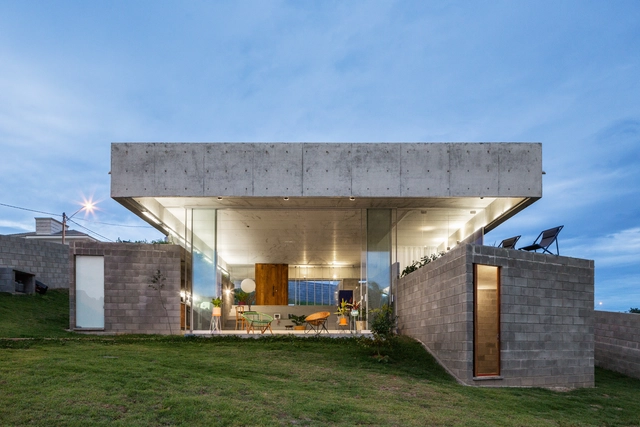
Concrete may be the material most associated with modern Brazilian architecture; high resistance to compression and, when armed, capable of assuming various forms. Its plasticity has made it a favorite material for some of Brazil's most expressive architects of the last century.
Today, it is still widely explored in the architectural production of Brazil, either for its structural robustness, ease of maintenance, or aesthetic value.
Vista do átrio. Image Cortesia de Safdie Architects
The first Brazilian project by Safdie Architects has broken ground in Sao Paolo's Morumbi neighborhood on November 6. Developed in partnership with Perkins+Will, The Albert Einstein Education and Research Center is part of the Albert Einstein hospital complex.
The new center, named Campus Cecilia and Abram Szajman, will be one of the most advanced institutions in Latin America for medical studies. It will feature innovations in learning methods and technologies, as well as flexible research laboratories capable of adapting to the advancement of hospital techniques.