Romullo Baratto

Romullo Baratto is an architect with a PhD from FAUUSP and Managing Editor of ArchDaily. He previously coordinated the editorial team of the 11th São Paulo Architecture Biennial and served as Managing Editor of ArchDaily Brasil, where he led the platform to win the FNA Award—the first time the honor was granted to a media outlet. He collaborated on the editing of the book "Concrete Jungle", published by gestalten, and has curated architecture exhibitions in Brazil, Chile, Denmark, and Italy, as well as delivered lectures and moderated debates in Spain, the United States, and Portugal. His doctoral thesis investigates the urban landscapes of São Paulo through cinema. His work spans academic research and editorial practice, communicating architecture through texts, interviews, lectures, curatorship, and photography. Follow him on Instagram @romullobf.

BROWSE ALL FROM THIS AUTHOR HERE

Architect and Urban Planner Day, celebrated on December 15, has become national law

National Architect and Urban Planner Day, celebrated on December 15, has officially become law. Law 13,627/2018, which adds the date to the official Brazilian calendar, was signed into law by the Presidency of the Republic on January 16. This marks an important step in the process of professional recognition initiated by CAU/BR and regional CAUs since their creation in 2011. The Council began operating precisely on December 15 so that its establishment would coincide with the birth date of Oscar Niemeyer.
Congress cuts positions at Iphan to create 231 jobs for federal intervention in Rio de Janeiro

This week, Congress approved the creation of 231 positions for the office of the federal interventor in Rio de Janeiro and the Extraordinary Ministry of Public Security — to fund these new roles, positions will be eliminated at the National Institute of Historic and Artistic Heritage (Iphan).

Of the newly created positions, all of which are appointed roles, 67 will be allocated to the office of the interventor, General Walter Braga Netto, and 164 will be chosen by the Extraordinary Minister of Public Security, Raul Jungmann.

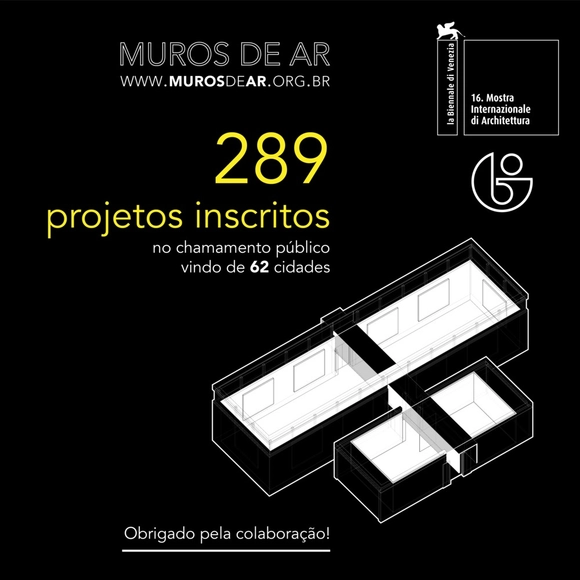
289 projects submitted to the open call for the Brazilian Pavilion at the Venice Biennale

The open call for projects for the Brazilian Pavilion at the 16th International Architecture Exhibition of the Venice Biennale closed on Friday, January 19, at 11:00 p.m., after being open to the public for one month. 

The initiative aimed to find projects across Brazil that demonstrate architecture as a tool to mediate conflicts, negotiate transitions between the public and private realms, and articulate connections between distinct urban fabrics. 

Lisbon and the culture of urban graffiti murals

Over the past five years, Lisbon has attracted significant international attention, driving major changes in the Portuguese capital's urban life. From foreign technology investment to the promotion of cultural initiatives, these transformations are both positive and negative—a complex issue currently debated through the lens of gentrification, echoing developments in other global cities such as Berlin, Portland, and San Francisco.

On the cultural front, the city boasts an impressive diversity of initiatives, ranging from the opening of major, world-class museums—such as MAAT and Coches—to a rich culture of urban graffiti murals. This scene is supported by initiatives like the Underdogs cultural platform, which has worked with artists from around the world since 2013 to bring these paintings to the city's walls.

Lisbon and the culture of urban graffiti murals - Imagem 1 de 4Lisbon and the culture of urban graffiti murals - Imagem 2 de 4Lisbon and the culture of urban graffiti murals - Imagem 3 de 4Lisbon and the culture of urban graffiti murals - Imagem 4 de 4Lisbon and the culture of urban graffiti murals - More Images+ 25

"Arquitetura Paulistana" Releases Videos of Visits to Contemporary Works in São Paulo

Subscriber Access | 

The open course Arquitetura Paulistana, organized by Estúdio Artigas, offers guided tours of prominent contemporary projects in São Paulo. Accompanied by the architects behind the designs, participants gain insight into each work through the eyes of those who conceived them.

"Arquitetura Paulistana" Releases Videos of Visits to Contemporary Works in São Paulo - Image 3 of 4

Fewer than 40% of Brazilian municipalities have a housing plan, says IBGE

The Brazilian Institute of Geography and Statistics (IBGE) released last week the 2017 edition of the Profile of Brazilian Municipalities (Munic). According to the document, fewer than half of Brazilian cities have structured planning for housing. The report points out that last year, of the country's 5,570 municipalities, 59.6% had some type of housing-directed initiative, but only 39.7% had a Municipal Housing Plan.

Landmarked church is suspended 31 meters above the ground during construction at Cidade Matarazzo

Announced in 2016, the Cidade Matarazzo complex is currently under construction near Paulista Avenue in São Paulo. In addition to a tower designed by Jean Nouvel, the development includes the restoration of the former Matarazzo Hospital and the Santa Luzia Church, both heritage-listed by Condephaat – the Council for the Defense of Historical, Archaeological, Artistic, and Tourist Heritage of the State of São Paulo.

To protect the church's structure during excavation work, the engineering team behind the Grupo Allard development carried out a delicate procedure to keep the 1,200-ton building suspended 31 meters above the ground. 

IBGE makes a series of maps of Brazil's urbanized areas available for free

The Brazilian Institute of Geography and Statistics (IBGE) has released the publication Urbanized Areas of Brazil, which maps the urban footprints of major Brazilian cities. Covering the changes that occurred between 2011 and 2015, the study presents an overview of the country's recent urbanization process.

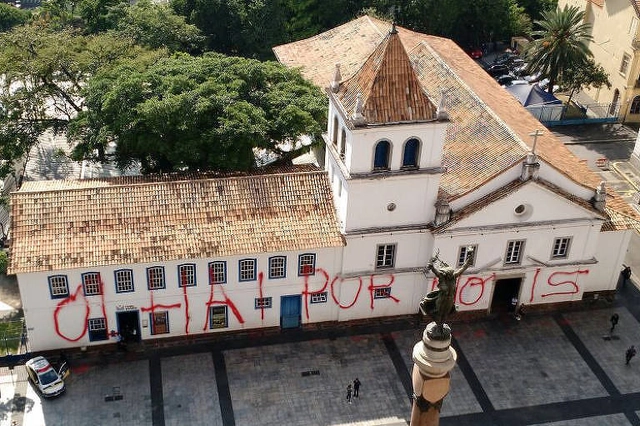
Pateo do Collegio, one of São Paulo's main historic landmarks, has its facade vandalized with graffiti

One of São Paulo's primary historical and tourist landmarks, the Pateo do Collegio—the founding site of the state capital—awoke with its facade covered in graffiti. "Olhai por nois" [Look out for us] is the phrase that, in red letters, covers the facade of the Museum of Sacred Art and the chapel of the complex, which belongs to the Society of Jesus.

Under Brazil's environmental crimes law, defacing monuments is a crime, and perpetrators can face up to one year in prison. At the time of publication, those responsible for the act had not been identified by the Metropolitan Civil Guard.

Indivisible: comic narrates the Black and Asian history of the Liberdade neighborhood in São Paulo

Subscriber Access | 

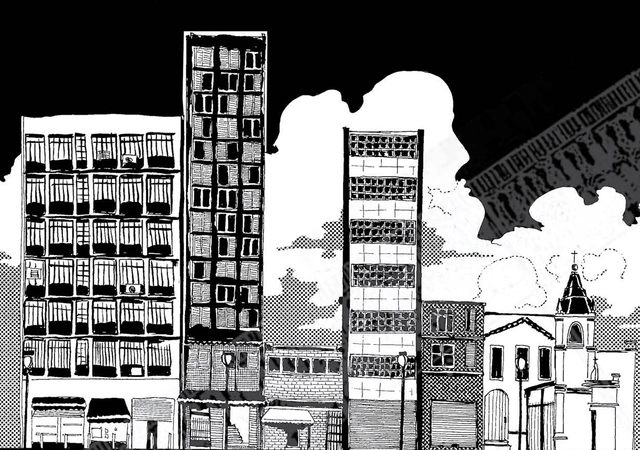
Indivisível (Indivisible) is the title of the graphic novel created by Marília Marz as her final thesis project at Escola da Cidade – Faculty of Architecture and Urbanism. The project aims to identify and analyze the narrative possibilities intrinsic to the architectural and urban elements of the Liberdade neighborhood in São Paulo across two distinct historical periods.

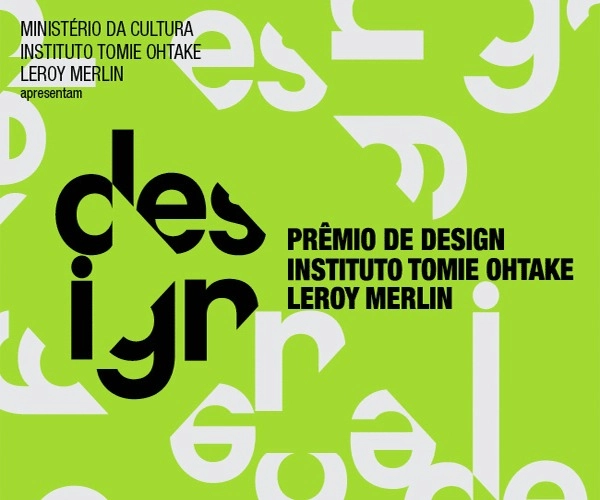
Applications extended for the 1st Tomie Ohtake Institute Leroy Merlin Design Award

The new award, a partnership between the Tomie Ohtake Institute and Leroy Merlin, has extended its submission deadline. Until August 10, university students of any discipline can submit design projects related to products, furniture, fashion, interiors, landscaping, web, graphics, services, and other fields, under the theme SHARE.

Far from the Speaker: Video Art on the Adega Baía da Arruda Project in the Azores

Subscriber Access | 

Afastado de Quem Fala is a diptych short film about Adega Baía da Arruda, a project by the Portuguese-Swiss studio Barão-Hutter, built on Pico Island in 2017.

5th Instituto Tomie Ohtake AkzoNobel Architecture Prize Announces Winners

Last Thursday, during the opening of the exhibition featuring the 13 finalist projects – selected from 244 submissions representing 17 Brazilian states and the Federal District – the winners of the 5th Instituto Tomie Ohtake AkzoNobel Architecture Prize were announced.

What do Bolsonaro and Haddad propose for Brazilian cities?

With the votes counted, the first round of the presidential election was not enough to determine the country's next political leader; candidates Fernando Haddad, of the Workers' Party, and Jair Bolsonaro, of the Social Liberal Party, will face off once again in the runoff vote on October 28.

Political differences and ideological discrepancies aside, the next president will have, among many other tasks, the responsibility of providing federal support for the development of Brazilian cities—home to about 87% of the country's population. To contribute to the debate and—if it is ArchDaily's place to do so—help undecided voters make up their minds, we have compiled below the proposals of both presidential candidates for the future of cities, based on their respective government platforms, covering topics such as housing, urban development, infrastructure, sustainability, mobility, and the right to the city.

São Paulo Buildings for Children: A Playful Book to Discover the Beauty of São Paulo's Architecture

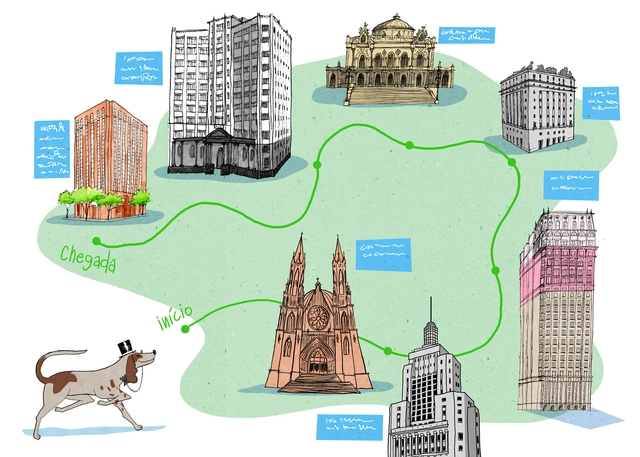
How many discoveries can a walk through São Paulo reveal? What if this expedition felt like a treasure hunt and was led by a friendly, highly curious dog? Inspired by the success of the Prédios de São Paulo trilogy, a project conceived by Matteo Gavazzi, comes Prédios de São Paulo para Crianças. Set to launch in July 2018, the children's book features text by journalist Tatiana Engelbrecht and illustrations by Daniel Almeida. The book is published by GAPS Editora.

São Paulo, out of reach: an interview with Mauro Restiffe

Subscriber Access | 

Documenting the urban landscape is a task photographers have undertaken almost since the birth of photography in the second half of the nineteenth century. Inexhaustible, the city continues to serve as raw material for photography, which, in turn, offers an image of the city that is simultaneously identical to and distinct from what is felt when experiencing the urban space.

Mauro Restiffe is perhaps one of the photographers who most deeply experiences the city and its residual spaces—an aspect that becomes immediately apparent upon viewing the selection of photographs chosen for the exhibition São Paulo, Out of Reach, on display at the Instituto Moreira Salles in São Paulo, curated by Thyago Nogueira. Bringing together photos that record moments of urban transformation and decay in places such as Cracolândia, Bom Retiro, Luz, Itaquera, and Ipiranga, among other neighborhoods, Restiffe composes a fragmented image of São Paulo between 2012 and 2014. Yet—partly due to his technique and, above all, his gaze—it also represents other eras of this metropolis.

Approval of a law in Portugal weakens both architecture and engineering

The debate over the roles of architects and engineers and the perceived overlap of their professional scopes has driven a series of recent protests in Portugal, sparked by parliament's approval of a bill that allows engineers to sign off on architectural projects.

Under these circumstances, the frustration of architects and their resentment toward their engineering colleagues is understandable. However, in an article published by the newspaper Público.pt, Gonçalo Cano Moniz offers an alternative perspective. In hopes of reversing this unfortunate decision, he seeks to reunite engineering and architecture as the complementary fields they are, using historical arguments to shift the focus to the true consequence of the legislation: the weakening of both professions—architecture for having been undermined, and engineering for being assigned "responsibilities for which it is clearly unprepared."

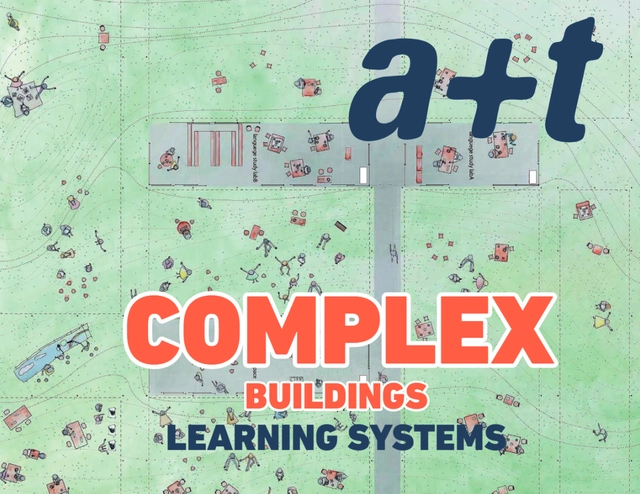
Learning Systems: a+t's book analyzes the complexity of school projects from around the world

School buildings house complex systems. From kindergarten to university faculty, the journey through the levels of learning consists of an accumulation of vital experiences resulting from the interaction between these systems.

The educational function, as functionalism termed it, now builds its environments under new paradigms that reflect and respond to an increasingly diverse and complex social agenda.