
Last Thursday, during the opening of the exhibition featuring the 13 finalist projects – selected from 244 submissions representing 17 Brazilian states and the Federal District – the winners of the 5th Instituto Tomie Ohtake AkzoNobel Architecture Prize were announced.
Discover the winners below:
Hors concours
Sesc 24 de Maio (São Paulo – SP)
Architecture: Paulo Mendes da Rocha + MMBB Arquitetos / Paulo Mendes da Rocha, Marta Moreira, Milton Braga, and Fernando de Mello Franco

1st Place
Parque Novo Santo Amaro V (São Paulo – SP)
Architecture: Vigliecca & Associados / Héctor Vigliecca, Luciene Quel, Neli Shimizu, and Ronald Werner Fiedler

2nd Place
Hostel Villa 25 (Rio de Janeiro – RJ)
Architecture: C+P Arquitetura / Rodrigo Calvino and Diego Portas

3rd Place
Casa no Cerrado (Moeda – MG)
Architecture: Vazio S/A / Carlos M. Teixeira

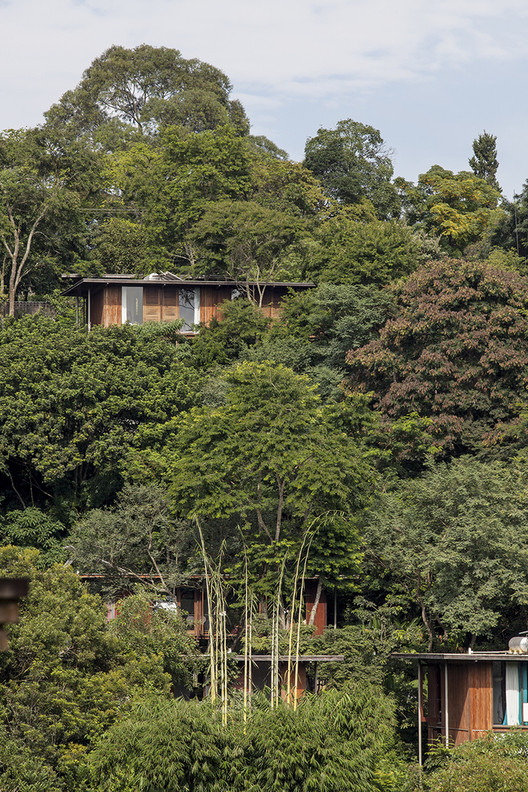
Honorable Mention - Sustainability
Vila Taguaí (Carapicuíba, SP)
Architecture: Cristina Xavier Arquitetura / Cristina Xavier
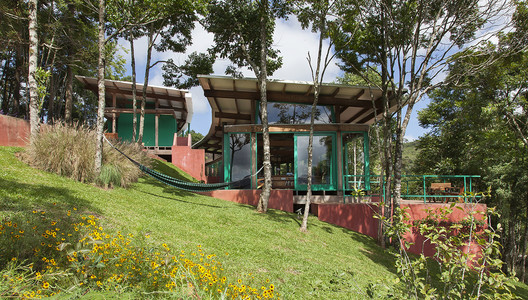
Honorable Mention - Color
Residência em Gonçalves (Gonçalves – MG)
Architecture: André Vainer Arquitetos / André Vainer
The winners will receive trips to three Latin American countries: 1st Place - Havana, Cuba; 2nd Place - Medellín, Colombia; and 3rd Place - Lima, Peru.
The exhibition, which runs until September 23 at the Instituto Tomie Ohtake, features the winning projects alongside the other finalists: Cais do Sertão / Recife – PE (Brasil Arquitetura - Francisco Fanucci, Marcelo Ferraz, and Pedro Del Guerra); Casa 711H / Brasília – DF (BLOCO Arquitetos - Daniel Mangabeira, Henrique Coutinho, and Matheus Seco); Casa do Carnaval / Salvador – BA (A&P arquitetura e urbanismo - Alexandre Prisco Paraíso Barreto and Nivaldo de Andrade Junior); Estúdios Ouro Preto / Sete Lagoas – MG (Arquitetos Associados - Carlos Alberto Maciel and Ulisses Mikhail Jardim Itokawa); Residência Piracaia / Piracaia – SP (Nitsche Arquitetos Associados Ltda - Lua Nitsche and Pedro Nitsche); Sede de uma Fábrica de Blocos / Avaré – SP (Vão - Anna Juni, Enk te Winkel, and Gustavo Delonero); Vila Amélia / Sertãozinho – SP (VAGA - Fernando O’Leary, Pedro Domingues, and Pedro Faria).
The jury for this 5th edition consisted of architects Adriana Benguela, Fábio Mariz Gonçalves, José Lira, Marcos Boldarini, and Priscyla Gomes. In 2018, the prize saw a 31.18% increase in submissions compared to the previous edition. The finalists include works located in São Paulo, Minas Gerais, Pernambuco, the Federal District, Bahia, and Rio de Janeiro.
Through this prize, the Instituto Tomie Ohtake and AkzoNobel continue to map contemporary architectural production, highlighting, for the fifth consecutive year, significant projects built in the current Brazilian landscape. Urban relationship, commitment to the site and sustainability, as well as design and constructive inventiveness, are the fundamental criteria guiding the 5th Instituto Tomie Ohtake AkzoNobel Architecture Prize.
Since its first edition in 2014, the Instituto Tomie Ohtake AkzoNobel Architecture Prize has received 764 submissions. In the previous 2017 edition, 1st place went to Adriana Benguela (Rosenbaum + Aleph Zero) for the Moradas Infantis project (Formoso do Araguaia, TO, 2015), while Marcos Paulo Caldeira (MM18) took second place with Mirante 9 de Julho (São Paulo, SP, 2015), and Enk te Winkel (Vão) came in third with the Subsolanus project (Mexico City, Mexico, 2015).
About the Architecture Prize
The Instituto Tomie Ohtake AkzoNobel Architecture Prize is open exclusively to Brazilian architects or foreign architects who have lived in Brazil for at least two years, featuring projects built over the last ten years. Architects, architecture firms, or collectives can submit more than one project, which helps showcase an overview of Brazilian architecture across its diverse contexts.
The award is the result of a partnership between the Instituto Tomie Ohtake and AkzoNobel, a Dutch multinational active in the paints, coatings, and specialty chemicals sectors. It aligns with the Institute's goals as a cultural institution to promote initiatives in the fields of architecture, urbanism, and design.
About the Jury
Adriana Benguela
Architect, graduated from Universidade Estadual Paulista, with experience in planning and coordinating architecture, design, and innovation projects. She is the executive director of Rosenbaum. She has worked on over 300 architecture and interior projects at Rosenbaum since 1998. A partner at Rosenbaum since 2004, she works with new clients to build customized business models for architecture, product design, co-branding, and co-creative projects. Working within the network model that is core to Rosenbaum's values, she develops the commercial model, planning, and team architecture, bridging people, projects, and processes.
Fábio Mariz Gonçalves
Graduated from the Faculty of Architecture and Urbanism at the University of São Paulo in 1986 and earned his PhD in 1999. He has taught there since 1989, becoming a full-time professor in 2009, and chaired the Undergraduate Committee between 2009 and 2014. He has also taught at Universidade São Judas Tadeu, Centro Universitário das Faculdades Alcântara Machado, Universidade Brás Cubas, and Universidade Ibirapuera, and coordinated the architecture program at Universidade Anhembi Morumbi. He was a partner at the firm Projeto Paulista de Arquitetura from 1989 to 2003. He has experience in Architecture and Urbanism projects, focusing on architectural design, urban design, urban planning, urban landscape, and landscaping. From July 2014 to January 2017, he was Director of the Department of Urbanism (DEURB) at the Municipal Department of Urban Development (SMDU) of the City of São Paulo. From January to December 2016, he served as President of the Commission for the Protection of the Urban Landscape (CPPU).
José Lira
Architect and Urbanist, Full Professor at FAU-USP. He conducted post-doctoral research at Columbia University (2009) and the École Nationale Supérieure d’Architecture de Paris (2015). He directed USP's Cultural Preservation Center / Casa de Dona Yayá between 2010 and 2014. He has curated exhibitions at Casa de Dona Yayá, Centro Universitário Maria Antônia, the XI São Paulo Biennial of Architecture, and the III Istanbul Design Biennial. Author of O Visível e o Invisível na Arquitetura Brasileira (DBA, 2017) and Warchavchik: Fraturas da Vanguarda (Cosac & Naify, 2011), editor of the Revista Brasileira de Estudos Urbanos e Regionais, and co-editor of the collections Domesticidade, Gênero e Cultura Material (Edusp, 2017), Memória, Trabalho e Arquitetura (Edusp/ CPC, 2013), São Paulo: os estrangeiros e a construção das cidades (Alameda, 2011), Tempo, Cidade e Arquitetura (FAU-USP/ Annablume, 2007), and the 4th edition of Caminhos da Arquitetura by Vilanova Artigas (Cosac & Naify, 2004).
Marcos Boldarini
Architect and Urbanist, university professor at Associação Escola da Cidade – Arquitetura and Urbanismo (AEC). He has coordinated and developed urbanization projects for informal settlements, social housing, public facilities, and public spaces for over 15 years. Author of award-winning projects. He was one of Brazil's representatives at the XII Venice International Architecture Biennale in 2010. Partner at Boldarini Arquitetos Associados, with works selected for the international architecture biennials of Venice (2002, 2010, 2012, and 2018), Rotterdam (2009 and 2012), Quito (2010), Buenos Aires (2012), and São Paulo (2011, 2013), receiving awards in the last three.
Priscyla Gomes
Architect graduated from the Faculty of Architecture and Urbanism at the University of São Paulo, where she completed her Master's in Theory and History of the Arts. She is currently an associate curator at the Instituto Tomie Ohtake, having curated exhibitions such as: *It's Like Dancing About Architecture* (2017), *Things Without Names* (2015), *What If the Dusty Lenses Break?* (2015), and *Modern Fears* (2014), among others. She is part of the curatorial team for the 5th edition of *Arte/Cidade: Linha Metálica*, alongside Nelson Brissac. Since 2015, she has coordinated *Filming Architecture*, an academic workshop.
About AkzoNobel
AkzoNobel is passionate about paint. We are experts in the proud craft of making paints and coatings, setting the standard in color and protection since 1792. Our world-class portfolio of brands – including Coral, International, Sikkens, and Interpon – is trusted by customers around the globe. Headquartered in the Netherlands, we operate in over 80 countries and employ around 35,000 talented people who are passionate about delivering high-performance products and services to our customers. The sale of our Specialty Chemicals business is expected to be completed by the end of 2018. For more information, please visit www.akzonobel.com.
This article was written by Romullo Baratto. The translation is powered by AI.


