Days of Architecture are the biggest architectural festival in Bosnia & Herzegovina, and one of the biggest in the region of South Eastern Europe. This year's festival will be held from 26 to 28 September 2025 at the Bosnian Cultural Center Sarajevo (BKC).
What If? A London Design Festival installation exploring place and possibilities this September in Kingston
This September Kingston Society will be encouraging residents to shape where they live and work as they explore the week-long What If? installation in central Kingston. Organised as part of both the London Design Festival's annual series of city-wide events and Kingston 2025 celebrations, What If? invites those most affected by change to join the creative conversation and feel empowered to influence their community.
Videos
More than just a commercial showcase, La Feria De Diseño Medellín powered by imm cologne is an urban experience featuring over 35 satellite events and a curated agenda that connects business, creativity, and well-being in Latin America.
The 12th edition of La Feria De Diseño Medellín powered by imm cologne will bring together more than 230 national and international brands in residential and contract furniture, kitchens, architecture and interior design, lighting and technology, wellness, and outdoor spaces, as well as decor and accessories. The commercial exhibition will serve as a space for innovation and a window into the design trends currently shaping the global landscape.
CP Kukreja Foundation for Design Excellence presents The Masterplan Exhibition, celebrating 50 years of the Jawaharlal Nehru University campus designed by architect C.P. Kukreja. Conceived in the early 1970s, JNU stands as a symbol of India’s democratic spirit and its aspirations for inclusive education.
The I Ibero-American Biennial of Creation and Territory is a cultural event that invites critical reflection on contemporary creation within the context of Ibero-American regionalism.
Videos
Chapel of Notre Dame du Haut, Ronchamp, France by Le Corbusier, photo by Henry Plummer, The Daylight Award 2020 laureate
Daylight shapes the spaces we inhabit, guides design decisions and modulates life on Earth. The Daylight Award 2026 invites architects and researchers to nominate individuals and teams whose work with natural light is pushing the boundaries of design, science, and innovation.
After touring Brasília (from April 8 to May 7, at the Galeria Christina Jucá, FAU-UnB) and São Luís (from June 7 to July 17, at the Museu Casa de Nhozinho), the international exhibition CURRICULUM arrives in São Paulo for its final stop in Brazil. The exhibition celebrates the contemporary work of Latin American architects trained in Spain and will be open to the public starting September 17 on the mezzanine of the IABsp building (Rua Bento Freitas, 306, Vila Buarque), a symbolic location for both São Paulo and national architecture.
In architecture, the effect of color is rarely neutral. It has the power to calm or energize, to expand or compress space, to unify or divide. Far from solely being a decorative layer, color is a tool that architects, interior designers, and designers use to structure atmosphere and perception. Alongside light, material, and proportion, it is one of the most precise instruments available for guiding spatial experience. When treated deliberately, it becomes a system — one that allows designers to articulate relationships between spaces, establish moods, and create continuity across various scales.
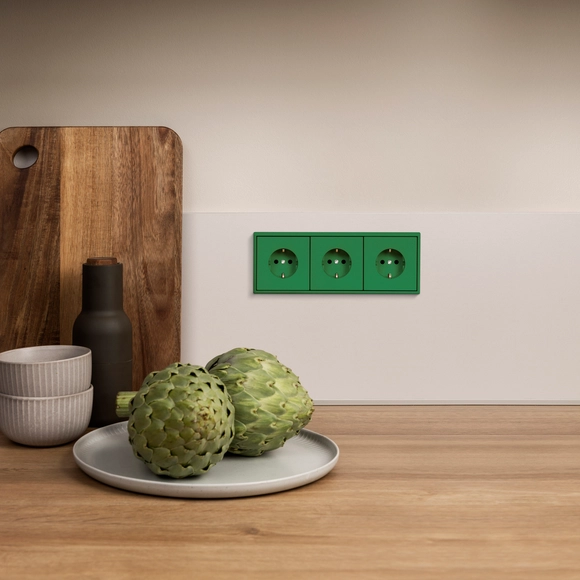
Color is not limited to paint. Surfaces, materials, finishes, and technical elements all carry chromatic weight. Yet in practice, color often remains uneven across the finest details — switches, sockets, intercoms — frequently appearing as neutral interruptions. This gap highlights a broader question: if color is to be considered a true architectural tool, should it not extend to every detail, no matter how small? Addressing this, German manufacturer JUNG has extended Le Corbusier's Polychromie Architecturale to electrical installations, allowing essential building components to speak the same language as the surrounding architecture.
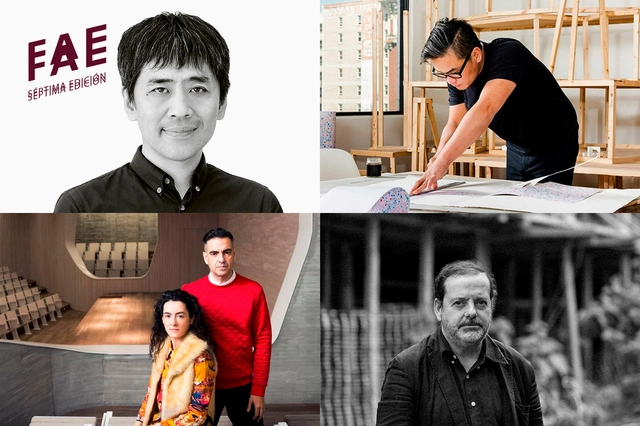
Spanish Architecture Festival (FAE) 2025 September 4–5 · Mexico City This September, Mexico City will become the epicenter of Spanish-language architecture with the 2025 edition of the Spanish Architecture Festival, an international gathering celebrating contemporary thought and practice. Over two days, key voices in global architecture will gather at iconic sites of Mexican modern heritage to tour, inhabit, and reflect upon them through shared experience. A curated architectural experience. Designed as an intimate gathering, the Festival offers close access to its international guests: direct conversations, guided tours of Modern Movement works, and moments of connection where dialogue transcends the professional. It is not just about talking about architecture, but about inhabiting it, exploring it in company, and sharing it through experience. The program is framed by an exclusive multi-course meal prepared by chef Miguel Sánchez Navarro—creator of CARDO—accompanied by cocktails, with transportation included to facilitate the experience. Venues September 4 – Los Manantiales, Xochimilco The first day will take place at the iconic Los Manantiales, a work by Félix Candela nestled among the canals of Xochimilco. This reinforced concrete shell—one of the architect's most emblematic structures—stands as a symbol of 20th-century structural experimentation and formal beauty. September 5 – Bacardí Plant, Tultitlán The second day moves to the Bacardí Plant in the State of Mexico, an exceptional enclave that brings together two key works of the Modern Movement: the bottling plant designed by Félix Candela and the office building designed by Mies van der Rohe. A setting where industrial architecture becomes a manifesto. International Guests FAE 2025 will bring together essential voices in contemporary architecture to share their trajectories, processes, and visions: ● Ryue Nishizawa (SANAA, Japan) 2010 Pritzker Prize laureate, co-founder of SANAA, and author of iconic works such as the 21st Century Museum of Contemporary Art and the Teshima Art Museum. ● Jimenez Lai (Bureau Spectacular, USA) Architect and artist recognized for experimental installations and a narrative approach that rethinks how we inhabit space. ● Cristina Díaz Moreno and Efrén García Grinda (Amid.cero9, Spain) Founders of the influential Madrid-based studio and professors at institutions such as Harvard, Princeton, and the University of Applied Arts Vienna. ● Mauricio Rocha (Taller Mauricio Rocha, Mexico) Winner of the 2023 Mies Crown Hall Americas Prize, author of works such as the Anahuacalli Museum expansion and the San Pablo Academic and Cultural Center.
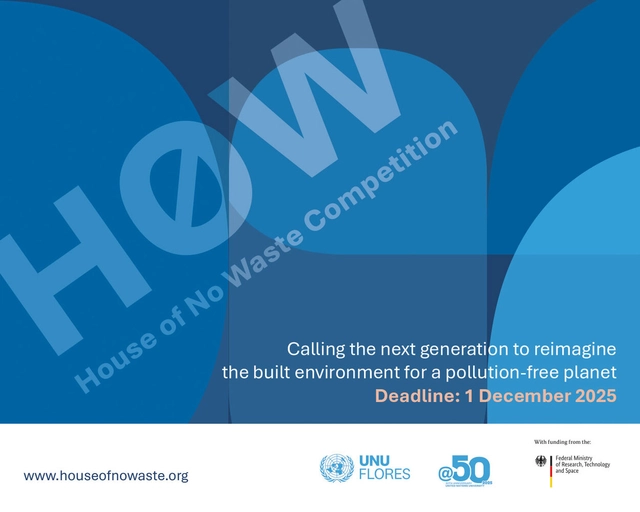
The House of No Waste Competition, organised by UNU-FLORES, is calling the next generation to reimagine the built environment for a pollution-free planet
The House of No Waste Competition (HØW) calls upon aspiring young architects, landscape architects, building and structural engineers, planners, builders, material and environmental scientists, product designers, and built environment professionals to engage in a global competition that tackles pressing issues of the circular economy and waste management in the built environment. The competition is organised by the United Nations University-FLORES, to mark the 50th anniversary of the UNU. Its Institute for Integrated Management of Material Fluxes and Resources (UNU-FLORES) is marking the anniversary with the launch of the HØW initiative, of which the competition is a central element.
Call for Papers: Media Architecture Biennale Bangkok 2025
We invite you to submit your contribution to the Media Architecture Biennale 2025 (MAB25), which will take place on 18 - 23 November 2025 in Bangkok, Thailand.
Over the past few decades, the Architecture, Engineering, Construction, and Operations (AECO) industry has been undergoing an unprecedented digital transformation. Since the days when designs were drawn exclusively on paper—a reality that lasted until the early 1980s—the field has passed significant milestones, first with the adoption of CAD (Computer-Aided Design) and, more recently, BIM (Building Information Modeling). Now, a new transition is underway, promising to be even more profound. Artificial Intelligence (AI), which until recently seemed confined to laboratories or futuristic concepts, is beginning to play a practical and strategic role in how we design, build, and manage our buildings and cities.
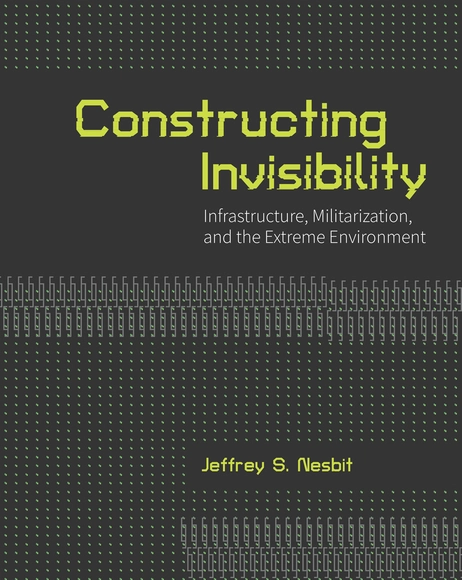
Today, designers, researchers, and scholars must responsibly engage the entangled networks and delineated systems far beyond boundaries of typical design practice to engage in thoughtful critique of the past and consider counter-imaginations of the future. Our discussion of the unseen begins first with an understanding of the power of sight. A look back at the technologies of control implicated in documenting the world reveals the closely intertwined evolution of imperial occupation and technological progress. Constructing Invisibility continues the exchanges initiated during the first symposium and builds upon the diversity of knowledge shared. The late French philosopher Bruno Latour reminds us that “politics has always been oriented toward objects, stakes, situations, material entities, bodies, landscapes, places. This is in effect the decisive discovery of political ecology: it is an object-oriented politics. Change the territories and you will also change the attitudes.” This issue uses these economies, landscapes, and places, including the boundless corporations and destructive climate realities, to better see the world. Further, the collection of essays seeks to understand how the construction of such sight impacts civilian occupation in the remaining world. Illuminating stories and places has become the aim of this volume, and shedding light on distant territories has become confounded by extremity, complexity, disparity, and secrecy.
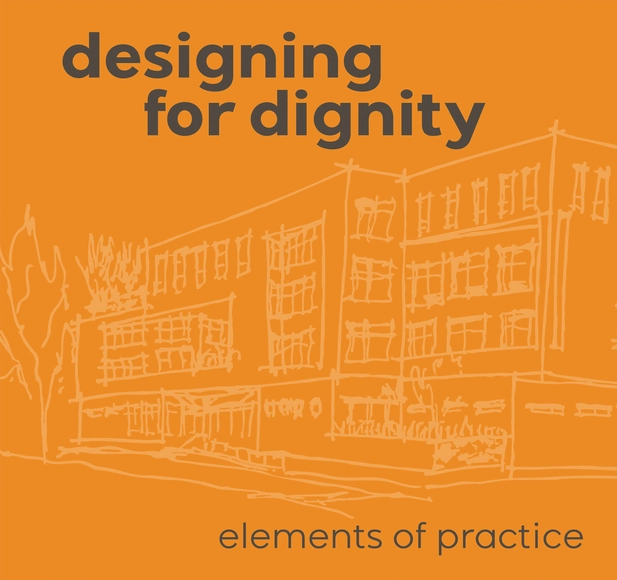
Designing for Dignity: Elements of Practice reflects the current and best thoughts on Dignified Design. The book offers tangible guidance for how the built environment can promote health and wellbeing and how design professionals can create atmospheres of dignity and hope. Transdisciplinary evidence, including interviews with over 3,000 people over the last decade, informs the premise of the book—acknowledging that nothing we design is neutral, the places we inhabit shape our ideas about who we are and what we deserve, and the built environment has the potential to promote safety, comfort, community, and control for all end users. The 22 elements of Dignified Design illustrate a range of potential spatial responses with infinite applications, all of which underscore that Dignified Design requires intention, iteration, and evaluation to achieve meaningful impact. Designing for Dignity: Elements of Practice centers health, wholeness, and flourishing—stipulating a standard of DIGNITY in housing, shelters, and all environments.