'Las propiedades de la luz' de Luis Barragán y Fred Sandback
Author
Federica Zanco; Daniel Usabiaga
Publisher
Hatje Cantz
Publication year
2018
Binding
Tapa dura
Language
English
Proyectos Monclova is pleased to announce the solo exhibition Fred Sandback: The Properties of Light (Inside and Outside), running from May 26 to August 18, 2018, in conjunction with the launch of the new publication The Properties of Light: Luis Barragán and Fred Sandback, which will be presented alongside a panel discussion.
Reyes Ríos + Larraín is an architecture firm founded by Salvador Reyes Ríos and Josefina Larraín in Mérida, Yucatán. The firm is noted for the remodeling and restoration of historic mansions and haciendas in the state of Yucatán and across other parts of Mexico, which have been converted into hotels or private residences. This compilation showcases the firm's exploration of various construction systems, materials, and finishes used in the adaptive reuse of these projects. It also features projects built from the ground up on vacant lots, where the firm has implemented traditional construction techniques and, in some cases, designed custom furniture. The book details the firm's design process and working methodology through essays, sketches, site photographs, and models.
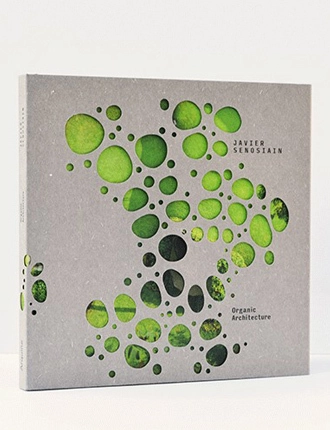
The role of the organic in the history of modern architecture has been primarily attributed to figures such as Frank Lloyd Wright and Bruno Zevi, who, for much of the 20th century, challenged radical mechanistic, functionalist, and rationalist proposals with a vision that sought to recover the organic relationship between humans and their environment. The broad definition of the organic allowed the scope of modern architecture to expand, encompassing subsequent generations such as Alvar Aalto, and even Eero Saarinen or Jørn Utzon.
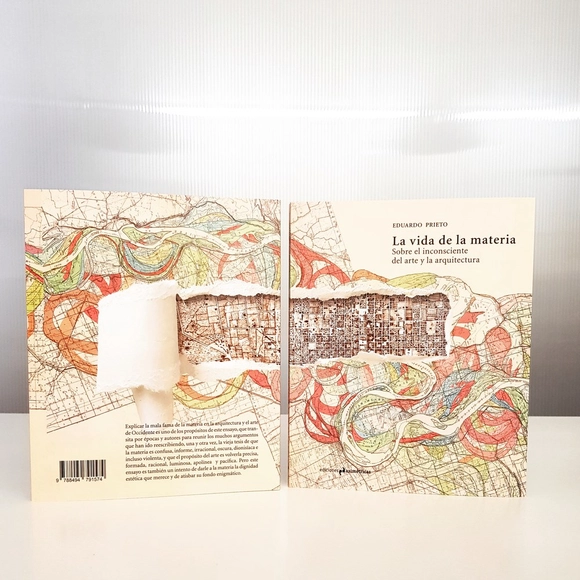
One of the aims of this essay is to explain the poor reputation of matter in Western architecture and art, traversing various eras and authors to assemble the many arguments that have repeatedly rewritten the long-standing thesis that matter is confused, formless, irrational, dark, Dionysian, and even violent, while the purpose of art is to render it precise, formed, rational, luminous, Apollonian, and peaceful. Yet this essay also seeks to grant matter the aesthetic dignity it deserves and to glimpse its enigmatic depths.
Malmö Eastern Cemetery, photograph by Alejandro Carrasco Hidalgo.
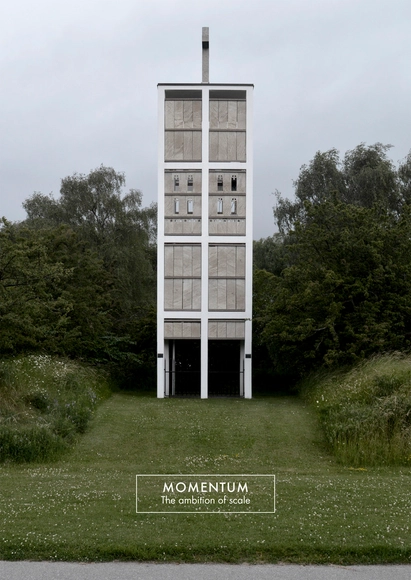
We live in a globalized world where, due to hyperconnectivity, information is stored and accumulated online without filters. But can there be something more behind an image than mere visual information? What distinguishes an image from a memory or a postcard? What can we convey through a graphic document?
MOMENTUM emerges as a response to an atmosphere in which the image is reduced to a swift, ethereal tool that transmits superficial information. Conceived as a reaction to the incredible amount of unfiltered inputs and images we access on the internet with a single click, it proposes opening a new dialogue and returning, for a moment, to carefully chosen personal references that allow for the illustration of an opinion on a given subject, uncovering new conversations, viewpoints, or ways of thinking.
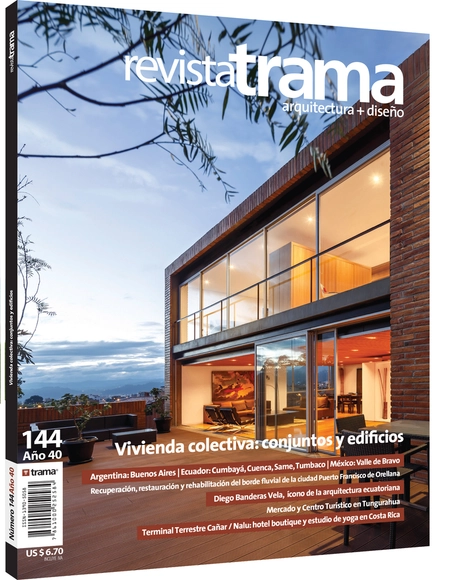
Revista TRAMA 144. Image Cortesía de Revista TRAMA
In this edition of Revista Trama, small and large-scale urban developments, as well as multifamily buildings and complexes, address the need for economic sustainability and compliance with current regulations. Within this framework, architects explore both existing and new spatial organizations that link the part—the housing unit—with the whole—the overall concept. Each project prioritizes the optimization and integration of energy resources.
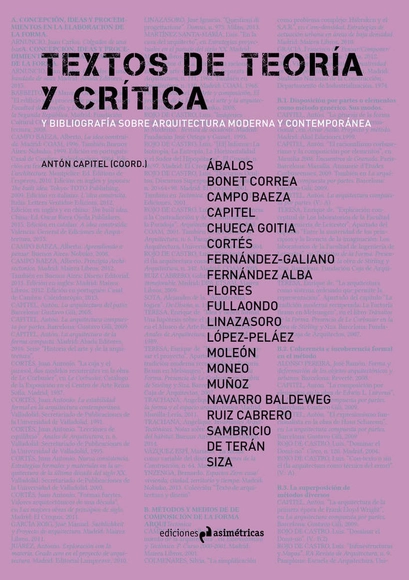
"Texts of Theory and Criticism and Bibliography on Modern and Contemporary Architecture" is a book composed of two complementary parts. The first presents a precise anthology of 20 texts written by some of the most influential voices in the critical and theoretical landscape of the ETSAM. The second part provides an exhaustive bibliography of the work produced by all the school's faculty since 1940.
The foundations of architecture, which until a few years ago were avant-garde and dogmatic, are undergoing a profound revision. This is evident in diverse aspects such as a renewed concern for the user, the growing appreciation for inherited architectural heritage, the return of ornamentation, the search for warmth in spaces, the personalization of environments, and the use of natural materials.
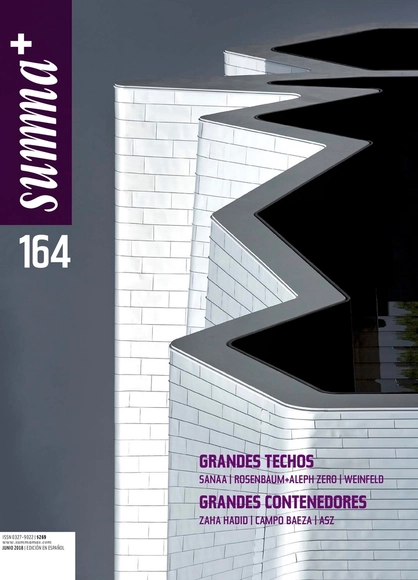
Summa+ 164 Cover, June 2018 Edition, Large Roofs and Large Containers
The new edition of the architecture magazine SUMMA+ 164 is a special issue addressing "Large Roofs and Large Containers," featuring works by studios such as SANAA, Rosenbaum + Aleph Zero, Weinfeld, Zaha Hadid, Campo Baeza, and ASZ, among others.
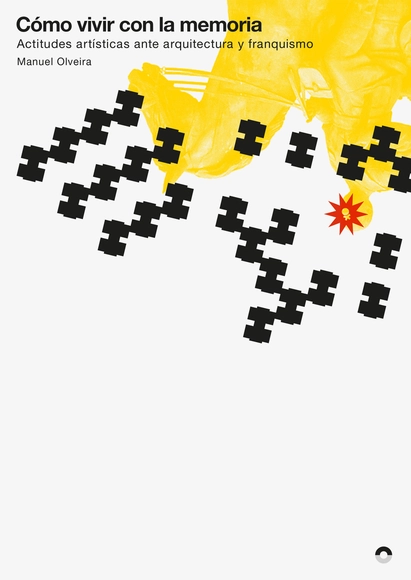
This book by Manuel Olveira served as the basis for the exhibition 'How to Live with Memory: Artistic Attitudes Toward Architecture and Francoism,' held at the Museum of Contemporary Art of Castile and León (MUSAC), Spain, between February 17 and June 3, 2018. It includes images of the exhibited works and texts by Manuel Olveira, Alberto Tellería, and Alejandro S. Garrido. The book explores how the seventeen selected artists examine the architecture of the Franco regime and the transition period to analyze the legacy of the dictatorship.
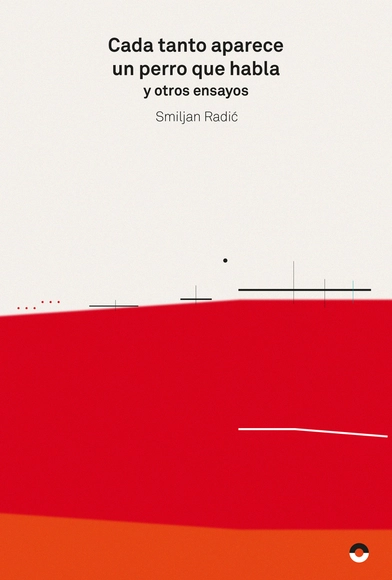
This collection of texts by Chilean architect Smiljan Radic spans twenty years of written work. These texts were written for various reasons: for book publications, as lectures, or to accompany exhibitions. They serve as an invaluable complement to better understand the work of this magnificent architect, yet they can also be read independently as insightful, personal reflections on themes in architecture and other disciplines.
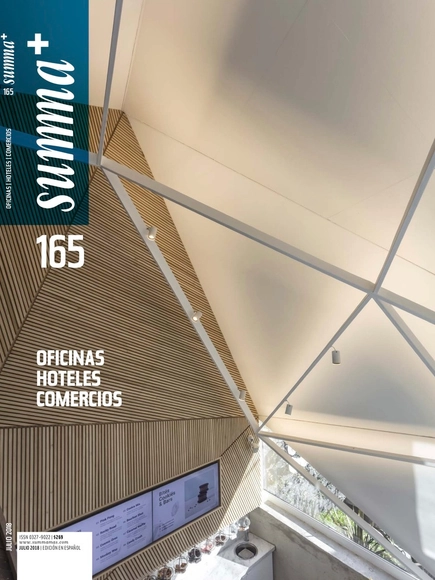
Summa+ 165 Cover, July 2018 Edition, Hotels, Retail, and Offices
We present the new special edition of the architecture magazine Summa+, issue 165: Hotels, Retail, and Offices. Published this past July, this issue presents a selection of works, highlighting the Y-TEC Technology and Antonini Schön Zemborain offices, which respond to the notion of a corporate headquarters associated with the idea of a campus, where work buildings are predominantly low-rise and establish a direct, welcoming relationship with the landscape. In addition, the issue features three expansions that also serve as adaptive reuse projects. These projects incorporate brick and—despite being located in distant cities—share an environmental concern reflected in the reuse of existing walls and structures, as well as in the preservation of the local brick-making tradition. The authors are H Arquitectes, Lacroze Miguens Prati, and Luis Elgue, respectively.
Regarding hotels, the Hotel Explora Valle Sagrado by architect Cruz Ovalle stands out, having faced the challenge of the valley’s strong symbolic and landscape imprint, including its centuries-old system of terraced farming. Also featured are hotels by Federico Eliaschev and Javier Sánchez, which share the space constraints typical of large cities.
Turning to retail, this issue highlights four projects that explore the counterpoint between new and old, smooth and rough, and technological and traditional materials. This dialogue between the new and the old is exemplified by the intervention of an old mansion in Valparaíso, the Antares brewery in Córdoba, the Tetuán warehouse in Palermo, and, in the suburbs, the Goodstën ice cream parlor in a typical house in Martínez.
Finally, the issue highlights the interior work of the Atelman Fourcade Tapia studio, which draws inspiration from the world of historic and contemporary automotive design. This is complemented by a piece by Joaquín Medina Warmburg that summarizes the interest of modern architecture in climate-related issues, and a review of the book Portman's America, which discusses his work on hotels and offices that revolutionized these typologies in the 70s and 80s.
Marc-Antoine Laugier summarized the origin of architecture as an arboreal construction, and Gottfried Semper identified the woven plant walls of a Caribbean hut as one of the fundamental elements of dwelling. Vegetation has, therefore, been part of architecture since its origins and has been present in diverse construction traditions that are now being incorporated into contemporary practice to leverage their thermal qualities, ease of execution, and low environmental impact.
The Pirate Tower in Ibiza is one of the most famous defensive structures on the island, attracting hundreds of tourists each year. It is the tallest tower in Ibiza, though its primary appeal lies in the unique view from the top, which encompasses the islets of Es Vedrà and Es Vedranell, and even the Montgó massif in Denia on clear days.
The Fast Wood Festival is an association of architecture, engineering, and design professionals and students that hosts workshops throughout the year, culminating in an itinerant festival. Held during the summer months, it brings together around 80 wood enthusiasts with the primary goal of constructing a project using this material, while also enjoying the experience and expanding their knowledge.
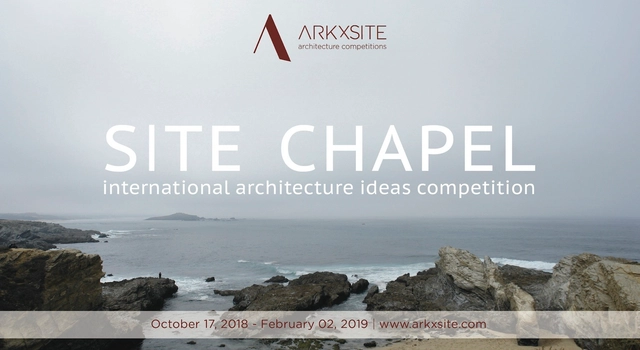
ARKxSITE is pleased to announce the ‘SITE CHAPEL’ international architecture ideas competition for architecture students and young professionals (≤ 40 years old).
New ideas competition on Desall.com: Manifattura Falomo and Desall invite you to design a system that helps consumers select the most suitable mattress based on their specific needs at retail locations.