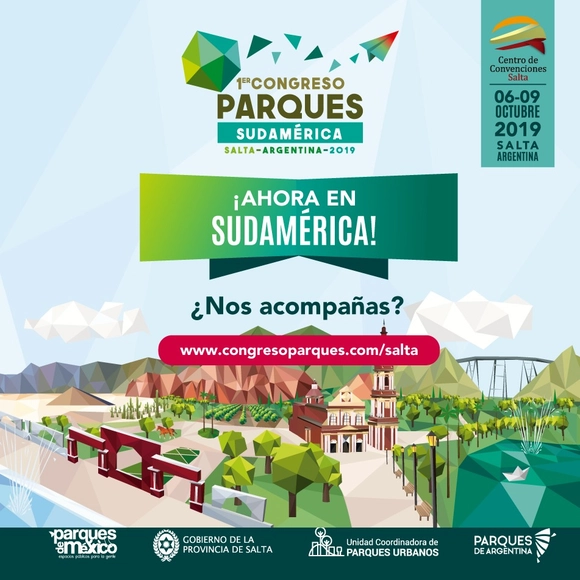
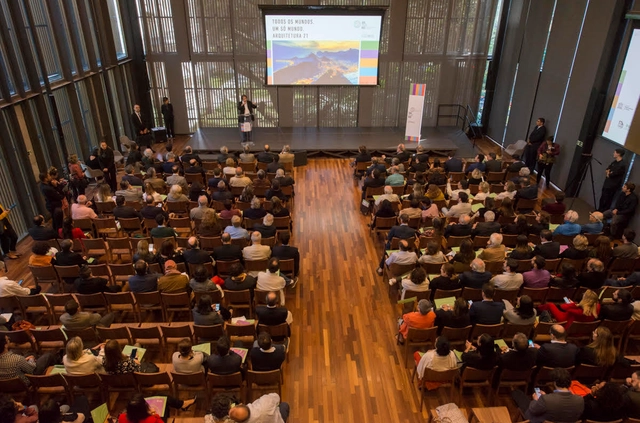
Congreso Parques is an international congress organized in partnership with the Ministry of Culture, Tourism, and Sports of the Province of Salta and the organization Parques de México. This event will bring together public officials, technicians, academics, students, housing developers, civil society organizations, and equipment suppliers to elevate the discourse on public space in our communities and boost the urban park and recreation industry in Latin America. Over the course of three days, an attendance of 1,200 people is expected. The program will feature keynote addresses, over 30 educational sessions, 10 workshops, and a trade show with more than 50 industry companies, featuring over 100 speakers from more than 15 countries.
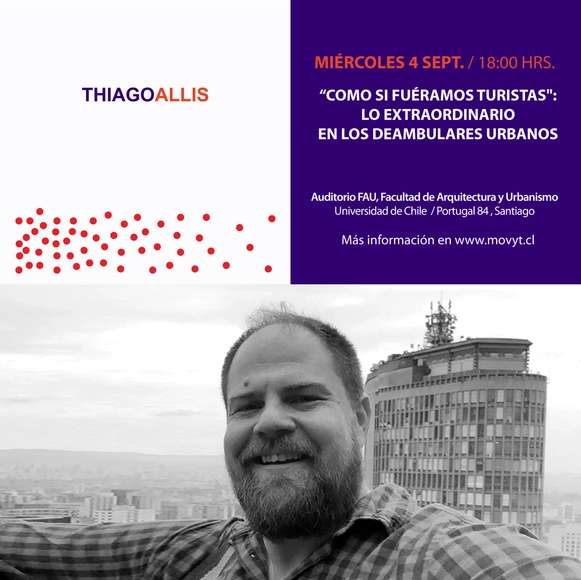
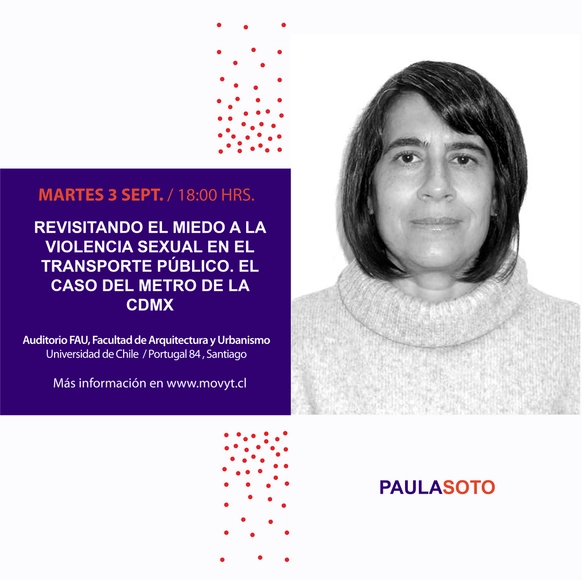
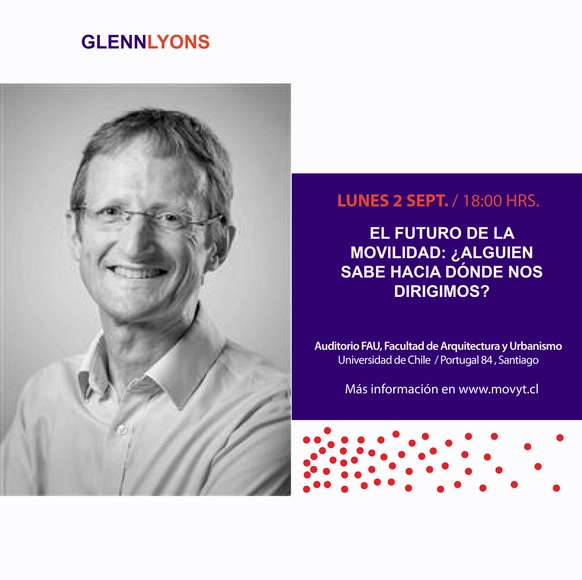
The Millennium Nucleus for Mobilities and Territories (MOVYT) invites all interested parties to attend its public masterclasses, which will be delivered by international guests as part of an international course held at the Faculty of Architecture and Urbanism of the University of Chile from September 2 to 5.
The Millennium Nucleus for Mobility and Territories (MOVYT) invites all interested parties to attend its keynote lectures, which are open to the public and will be delivered by international guests as part of an international course held at the Faculty of Architecture and Urbanism of the University of Chile, from September 2 to 5, at 6:00 PM.
The Millennium Nucleus on Mobility and Territories (MOVYT) invites all interested parties to attend its keynote lectures, which are open to the public. These lectures will be delivered by international guests as part of an international course held at the Faculty of Architecture and Urbanism of the University of Chile, from September 2 to 5, at 6:00 PM.
The 11th Scientific Initiation Symposium at Escola da Cidade – Faculty of Architecture and Urbanism will take place on October 29 and 30. Submissions for presentation will be accepted until September 20.
Guests gather at Casa Firjan for the UIA2020RIO launch / Renata Mello
Twenty thousand architects from around the world will come to Rio de Janeiro in 2020 for three mega-events, 12 seminars, more than 50 art exhibitions and cultural initiatives, and competitions for students and young professionals. All of this will revolve around the 27th World Congress of Architects (UIA2020RIO), which will even incorporate some of the world's most famous celebrations, such as New Year's Eve on Copacabana Beach and the Rio Carnival.
For article submissions, please observe the rules on the event website.
As we stand at the threshold of the third decade of the 21st century, looking back at the previous century, we believe certain debates will prompt reflections such as: "How did we get here?" and "What do we do now?"
University of Chile Directorate of Services and Infrastructure
At this First Meeting on Infrastructure Management and Planning for State Universities, "How do we move forward together to build quality learning spaces?", we will share experiences focused on Educational Infrastructure Management, Institutional Infrastructure Planning, Design, Architecture, Innovation, Universal Accessibility, and Sustainability.
Join us for the 3rd International Placemaking Week on October 1-4 in Chattanooga, TN!
The 3rd International Placemaking Week is an intimate, four-day-long global gathering of public space practitioners, researchers, and advocates that combines hands-on learning, public space activations, and innovative social events. Sign up before the regular registration rate ends on August 30!
Namoradeira_credit Andre Nazareth_Courtesy of Editora Olhares
Starting September 14, 2019, the Museum of Modern Art in Rio de Janeiro (MAM) presents the exhibition "Zanine 100 Years – Form and Resistance," featuring 18 works by the renowned architect, designer, artist, landscape architect, and professor José Zanine Caldas (1919–2001), stemming from his deep research into native woods. Curated by MAM design curator Tulio Mariante, the selected works represent Zanine’s iconic and prolific production between the late 1960s and 1980s, known as "protest furniture." Crafted from solid wood, these pieces were a pioneering indictment of deforestation in Brazilian forests. Mariante notes that Zanine "collected wood from logging remnants, often irregular, as a form of protest and resistance."
On August 29, the Istituto Europeo di Design (IED) in São Paulo will host the second edition of IED Parla, a series of open forums where IED coordinators and faculty invite design professionals to engage in discussions that bridge the gap between speakers and the audience. In partnership with the Istituto Italiano di Cultura (IIC), this edition features Alberto Salvadori, curator of the Munari exhibition, and Rafael Toledo, coordinator of the Product and Service Design undergraduate program at IED São Paulo, for a conversation on the contributions of Italian artist and designer Bruno Munari.
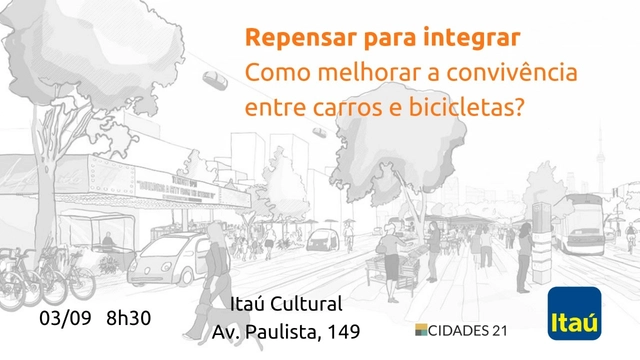
The 'Rethink to Integrate' event discusses alternatives for integrating cars and bicycles to make commuting more sustainable
Supported by Itaú Unibanco, the event will bring together representatives from the automotive sector, environmental organizations, and mobility programs.
This course introduces students to five of the most significant thinkers in aesthetics from the first half of the 20th century. We will begin with an overview of the formation of aesthetics as a philosophical discipline. Next, we will examine how Benjamin, Bataille, and Merleau-Ponty—in the field of philosophy—and Argan and Greenberg—in the fields of art criticism and art history—insightfully and originally navigated the transformations Western art underwent following the advent of the avant-garde and the emergence of the culture industry. By considering these two radical shifts, which fundamentally altered our relationship with images and the sensory world at large, we will explore the perspectives of these authors and assess the reach and relevance of their writings today.
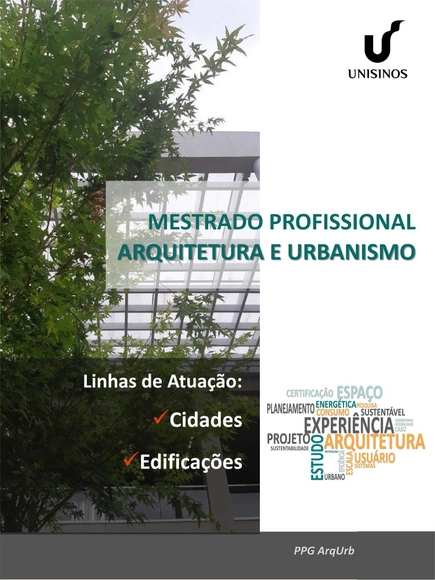
Professional Master's Degree in Architecture and Urbanism
The Professional Master's in Architecture and Urbanism at Unisinos focuses on the sustainability and performance of cities and buildings. Designed to meet the ongoing need for advanced professional qualification and societal engagement, this program builds knowledge in sustainable architecture and urban design, construction performance analysis, energy efficiency, and environmental certification to improve quality of life. It addresses topics related to innovation, sustainability, and technology in Architecture and Urbanism.
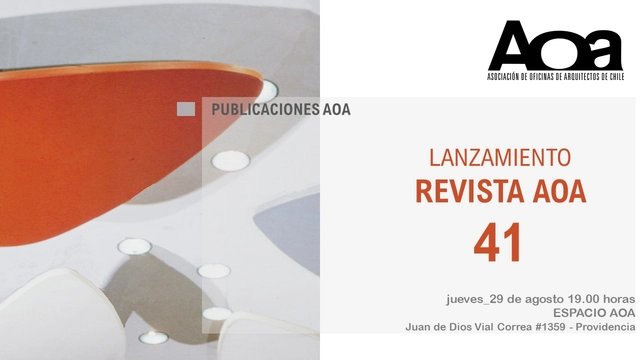
The President of the Association of Architecture Offices (AOA), Ignacio Hernández M., and the Director of AOA Magazine, Yves Besançon P., cordially invite you to the launch of AOA Magazine No. 41. The event will take place on Thursday, August 29, at 7:00 PM at Espacio AOA, located at 1359 Juan de Dios Vial Correa, Providencia.
Description via Amazon. Following the example of music publication, Source Books in Architecture offers an alternative to the traditional architectural monograph. If one is interested in hearing music, he or she simply buys the desired recording. If, however, one wishes to study a particular piece in greater depth, it is possible to purchase the score―the written code that more clearly elucidates the structure, organization, and creative process that brings the work into being. This series is offered in the same spirit. Each Source Book focuses on the work of a particular architect or on a special topic in contemporary architecture and is meant to expose the foundations and details of the work in question. The work is documented through early studies, models, renderings, working drawings, writings, and photographs at a level of detail that allows complete and careful study of a project from conception to completion. The graphic component is accompanied by commentary from the architect and critics that further explore the technical and cultural content of the work.
Description via Amazon. Monotown: Urban Dreams Brutal Imperatives examines the post-industrial transformation and transnational legacy of planned single-industry towns that emerged as a distinctive sociopolitical project of urbanization in the Soviet Union during the 1920s. Monotowns took form through the teleological establishment of industrial enterprises strewn across remote parts of the Siberian hinterland and entailed the relocation of vast populations requiring services, housing, and social and physical infrastructure, all linked to a given town's productive apparatus. Today, having outlasted the political and economic systems that made them viable, many have become shrinking towns with graying populations and obsolete enterprises, even as they are subjected to considerable national investment and commanded to grow in order to catalyze their respective regions. Given this implied imperative for transformation, the work goes on to explore the largely overlooked legacy of the Monotown as a model of urbanization that was deployed upon remote geographies of China and India through Soviet-aided industrial development projects. By exploring the etymology of the Monotown over time in this expanded field, the work establishes a broader yet more specific dialogue about this model's complex legacy and future.