
The CBCA is offering online courses that you can take from the comfort of your home. The available courses are: "Introduction to Steel Construction," "Steel Structural Systems," and "Execution of Steel Structures."
The CBCA is offering online courses that you can take from the comfort of your home. The available courses are: "Introduction to Steel Construction," "Steel Structural Systems," and "Execution of Steel Structures."

INSPIRELI AWARDS is the world's largest global student contest in Architecture, Urban Design and Landscape, and Interior Design, which in 2019 involved 136 countries. INSPIRELI AWARDS are enabling new talents to tell their stories and raise awareness about their own world view before they get their chance to build it. It brings together up-and-coming students of architecture, as well as established professionals, and provides for them a forum to connect to the general public.
IF it is an international platform for competitions that aims to connect ideas from different areas of society in order to help transform cities and make them increasingly self-sustaining, efficient and green.
We are looking for innovative ideas and new ways of thinking.
In a global emergency period, it is increasingly important that we think globally.
IF is the space.
Here, you can try and experiment, everything is possible!

The second edition of the cultural project Reuse Italy promotes an international architecture competition on the reuse of Piscina Mirabilis, a Roman reservoir located in the countryside of Naples. The contest is powered by a partnership with ArchDaily, KooZA/rch, 120g, EX32, and with the official support of the Parco Archeologico dei Campi Flegrei, the Minicipality of Bacoli (Naples) and the FAI.
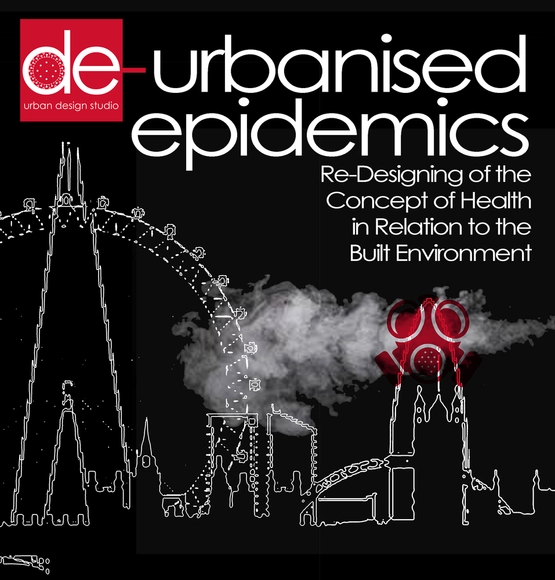
Urbanised humans are the most invasive species on Earth, consuming the majority of the planet's resources. In an endless battle with nature, the urban fosters an unhealthy condition resulting in extinctions and planetary crises, endangering the livelihood of both humans and non-humans. Meanwhile, in the contemporary urbanised world, health is interpreted as the temporal psychological and physical condition of a human body. A permanent and holistic conception of (well)being and its widened territory embracing the vitality of the entire nature are often neglected. Health in the urban environment is inscribed in infrastructures, rather than being a generative concept for a nurturing habitat. The paradigm of our times is that of treatment-an act after the damage has been done, rather than wellbeing, a sustained state of healthiness.
The emergence of epidemics brings forth the significance of a new concept of health and wellbeing in relation to the built environment and beyond. It is evident from the zoonotic sources of the latest epidemics that humans have penetrated deeper into ecozones not occupied before.
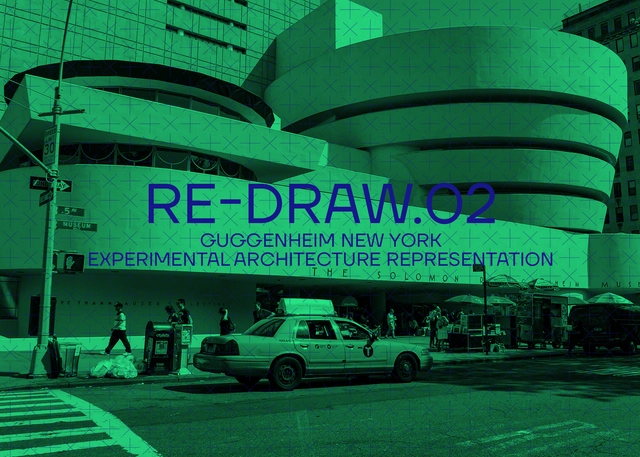
The aim of the RE-DRAW competition is to develop one drawing to ‘represent’ an iconic architecture. The participants are asked to draft one image, with absolute freedom of scale, technique and level of abstraction.

120 Hours is an architecture competition by students, for students. Each year we create a task, giving students from all over the world 120 hours to answer. Last year, 1556 teams signed onto the competition.

Between houses written about (the intimacy of reading) and houses photographed (interiors unveiled), this book explores the dispersed nature of modern dwelling.
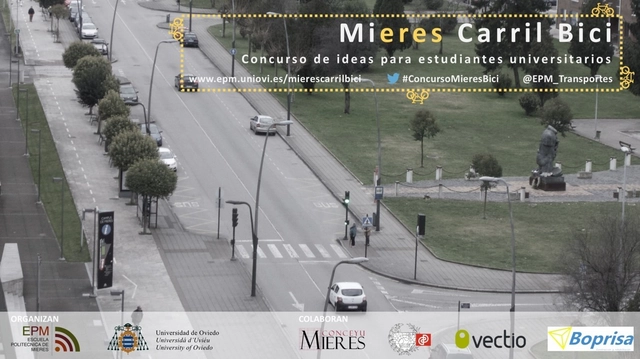
The Mieres Polytechnic School at the University of Oviedo, through its Transport Engineering Department, is launching an international ideas competition for university students to solicit proposals for resolving urban and territorial challenges associated with the evolution of transport networks.
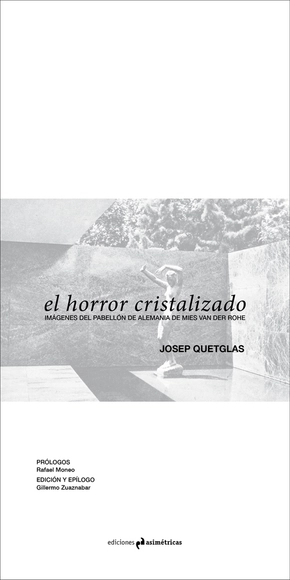
"I return to read, with interest and pleasure, the text by Josep Quetglas on the German Pavilion at the 1929 Barcelona International Exposition, a work that established the stature of architect Ludwig Mies van der Rohe [...] The flashes of lucidity that illuminate the complex scene in a text like this do not aim to convince the reader of a specific thesis; on the contrary, they engage the reader with the text and compel them to read at a measured pace, discovering moments of clarity throughout that bring them closer to the drama of Mies. A drama that may not have been resolved even after crossing the Atlantic. Reading Quetglas’s text, and mindful of the aforementioned flashes, one appreciates this way of viewing the new role of the critic,” writes Rafael Moneo in the new prologue to El horror cristalizado by Josep Quetglas, written specifically for this fourth, revised, and expanded edition, which was overseen by the eminent professor, curator, and researcher Guillermo Zuaznabar.
.jpg?1584702899&format=webp&width=640&height=580)
Things aren't going too well right now. Each new day seems to add to the uncertainty about the immediate and long-term impact of the Coronavirus pandemic. Whether you think that people are overreacting or it is truly a global health emergency, one fact is objectively true: Covid-19 has affected billions of lives: if not physically than economically and mentally.
The Arquia Foundation signs an agreement with Architect-US to expand its program to the United States and adds 2 scholarships in New York to their XXI Arquia Scholarships 2020 Call.

The Council on Tall Buildings and Urban Habitat (CTBUH) is now accepting submissions for its 9th International Student Tall Building Design Competition, which will distribute $21,000 in prizes to exceptional projects. Top finalists will also have the opportunity to present in real time for winning distinctions during the CTBUH 2020 International Conference's core programming, which will take place in Singapore from October 20–21, 2020.
The Architecture of Cinematic Spaces by Interiors is an academic, graphic exploration of architectural spaces in cinema that provides a new perspective on the relationship between architecture and film. Combining critical essays with original architectural floor plan drawings, the book discusses production design in key films from the twentieth and twenty-first centuries, including The Cabinet of Dr. Caligari, Rope, Lemépris, Playtime, 2001: A Space Odyssey, Home Alone, Panic Room, A Single Man, Herand Columbus.

Build it Bigger’s Danny Forster explains how NexoTek — with V-Ray for SketchUp & Chaos Cloud — helped him design and present the world’s tallest modular hotel.
Currently under construction in New York City, Marriot’s AC Hotel New York NoMad is set to make history as the world’s tallest modular hotel. The 168-room, 26-story building has been prefabricated and assembled in Poland, before crossing the Atlantic to New York, where construction workers will be able to put together an entire floor in less than a week.
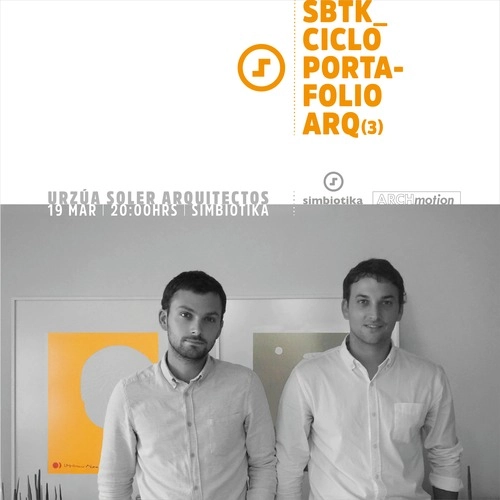
Simbiotika and Archmotion present the Portfolio Cycle featuring Urzúa Soler Arquitectos, a firm that seeks to enhance the spatial experience through design and construction. Their approach focuses on material development, structural modulation, the creation of intermediate spaces, and the pursuit of an architectural form that expands the possibilities of each commission. By consistently considering use, program, expression, and context, they develop habitable works that resonate with their users.

This book compiles six interviews with American artist Gordon Matta-Clark (1943–1978) conducted during the most productive years of his artistic career, from 1974—shortly after he completed his famous work Splitting, which involved cutting a condemned suburban house in half—to the year of his untimely death in 1978 at the age of 35. As an artist of few words who preferred action over theoretical statements, these interviews serve as valuable documents for gaining insight into the motivations behind his work.

As in global politics, the history of architecture has often treated refugees as mere human surplus. Consequently, conventional architectural histories have largely limited themselves to echoing the nation-state’s exclusion of refugees as people out of place. This book examines several often-overlooked yet critical intersections between mass population displacement and architecture, tracing a trajectory from the 19th and 20th centuries to the present day. By identifying the refugee as the central collective political subject of our time, this study seeks to initiate a history of refugee architecture that bridges the gap between architectural history and the study of displacement.