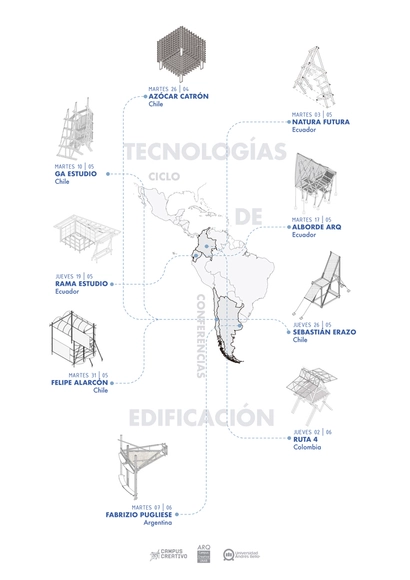
This lecture series is part of the Building Technologies course taught at the Universidad Andrés Bello School of Architecture.
This lecture series is part of the Building Technologies course taught at the Universidad Andrés Bello School of Architecture.

A ceremony to welcome new members and honor our Lifetime and Honorary Members, an exhibition and discussion on the CA Bulletin (1944-1963), the presentation of the CA Awards and Distinctions, and a keynote lecture by the new National Architecture Prize winner are among the activities with which the Colegio de Arquitectos de Chile will commemorate its 80th anniversary, all of which will be free and hybrid.

Solo tendrás piedras is an exhibition developed by artist Alejandra Prieto in collaboration with architect Francisco Díaz. The project explores reflections on lithium, an element capable of regulating psychological imbalances such as bipolar disorder while simultaneously storing potential energy in the form of batteries.
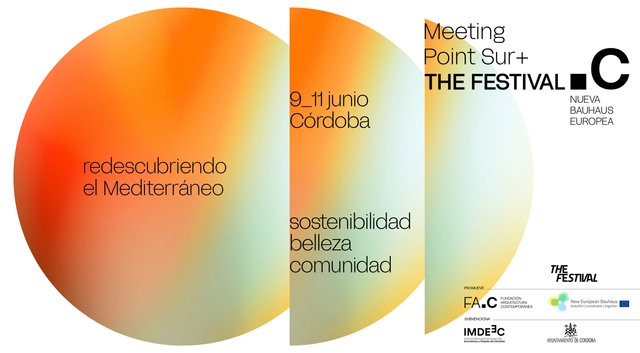
The Contemporary Architecture Foundation (FAC), as a Spanish partner of the New European Bauhaus (NEB), is organizing the NEB Meeting Point Sur+ Festival as a program of parallel events to the New European Bauhaus Festival in Córdoba, Spain.
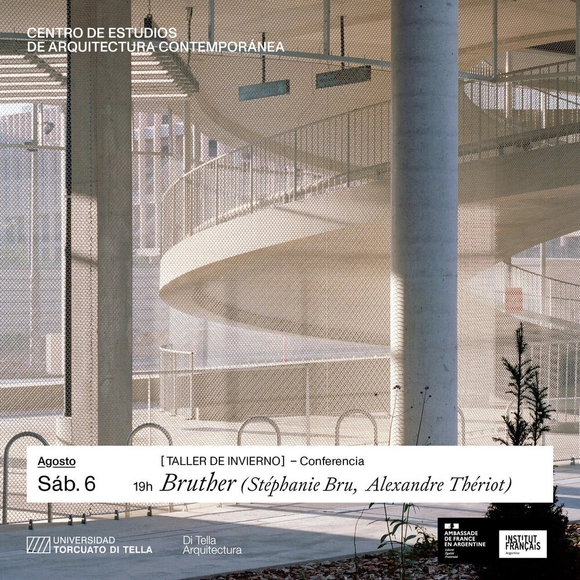
This Saturday, August 6, at 7:00 PM, the Bruther (Stéphanie Bru, Alexandre Theriot) conference will take place, organized by the Center for Studies of Contemporary Architecture (CEAC) at the Universidad Torcuato Di Tella, with an introduction by Marcelo Faiden.

Organized by the Center for Studies of Contemporary Architecture, with an introduction by Juan José Cruces, Rector of UTDT, the keynote lecture by Jorge Silvetti will take place.
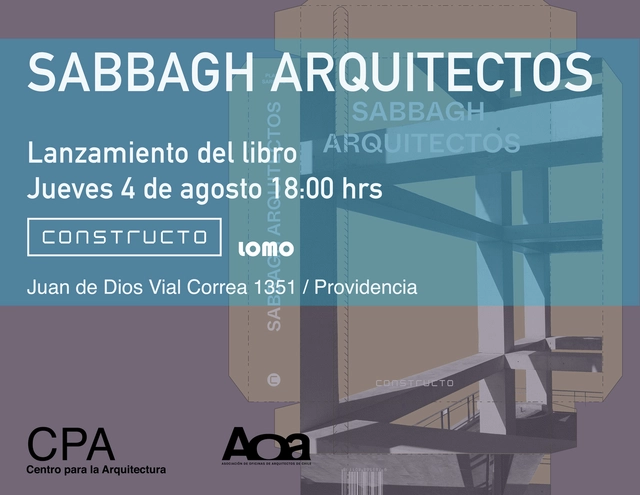
The launch of the monograph Sabbagh Arquitectos will take place on Thursday, July 4, at 6:00 PM at the AOA offices.

The 21st-century agenda requires addressing a set of structural changes resulting from the development model that, at least since the beginning of the last century, we have maintained as a society and region. This is evident in our cities and rural areas, where conditions associated with poverty, inequality, violence, displacement, and climate change—to name a few—generate intense pressures, imbalances, and maldevelopment in the dynamics of social occupation and vacancy across much of our territory. We are interested in focusing on a spatial process framed within these dynamics: migration.

The Atraviesos Urbanos (Urban Crossings), organized by the School of Architecture at Universidad Finis Terrae, consist of four walking tours through different sectors of the capital during the first semester of 2022. Each tour is led by an architecture faculty member who discusses the history and heritage value of each site for an audience of students, faculty, and the general public interested in learning more about the city.
This upcoming session, titled "From Plaza de Armas to the General Cemetery," will take place on Monday, May 16, at 3:00 PM. The route begins at kilometer 0 in Plaza de Armas, continuing through the Central Market, the Mapocho River, the Pérgola de las Flores, and Avenida La Paz, ending at the cemetery. The tour will be led by academic Max Palma.

Within the academic dialogue and reflection space 'Del territorio al Detalle,' which brings together architecture professors and students alongside renowned architects, the spin-off 'Del territorio al detalle .re' explores, through informal conversations with key stakeholders, the thesis that a territory's richness stems from its capacity for renewal, activating its own disused spaces to transform them into challenges and resources.

Architect and collage artist Camila Mancilla presents her book Las casas de los espejos rotos: El collage como método de investigación creativa (The Houses of Broken Mirrors: Collage as a Creative Research Method). In it, she invites readers to explore this simple yet noble technique, highlighting its value not only as a finished work, but above all as a creative process.

The National Meeting of Architecture Students "ENEA Quito 2022" is an event that, for the third time, seeks to impart and merge knowledge capable of creating, developing, and projecting architecture. It is a week where integration, participation, and academic exchange become the fundamental pillars for analyzing and debating how architecture is practiced in Ecuador, along with alternatives for its professional application.

These pages document a journey through the various layers of a city that is now largely lost to time or imagination, weaving a narrative that spans an era nearly a century removed from our own.
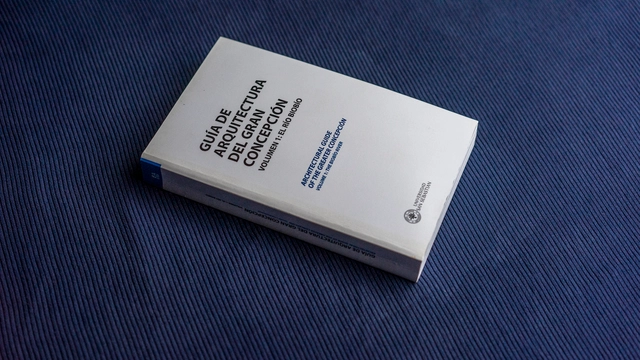
This publication is a collaborative effort between researchers and students, featuring a selection of ninety-four architectural works built in the municipalities of Concepción, Hualpén, San Pedro de la Paz, and Chiguayante between 1850 and 2017.
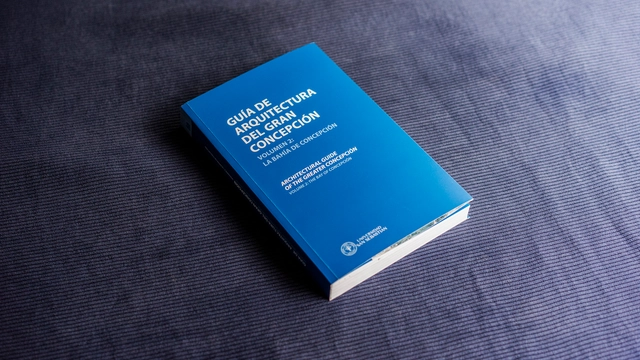
This second volume in the Gran Concepción Architecture Guide collection presents 74 architectural works from one of the most significant territories in Chilean history: the Bay of Concepción, located on the coast of the Concepción province in the Biobío region.
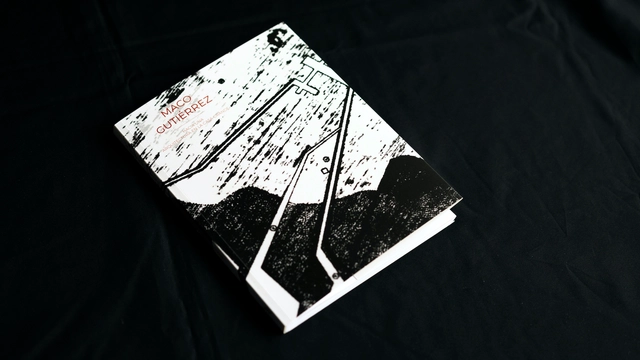
This work offers a panoramic record of the life and work of architect Javier Lisímaco Gutiérrez (1928–1972), spanning Chile, Cuba, and Bolivia. Most of the material is previously unpublished, gathered through the collaboration of institutions and numerous individuals who have generously shared their memories and experiences.
“From the perspective through which we conceive and carry out our work, architectural projects convey sensations to some and ideas to others, with each observer or user decoding them to engage with and assimilate them. Hence the impetus behind editing a book that seeks, for the first time, to establish a convergence between dialogue and the built work.
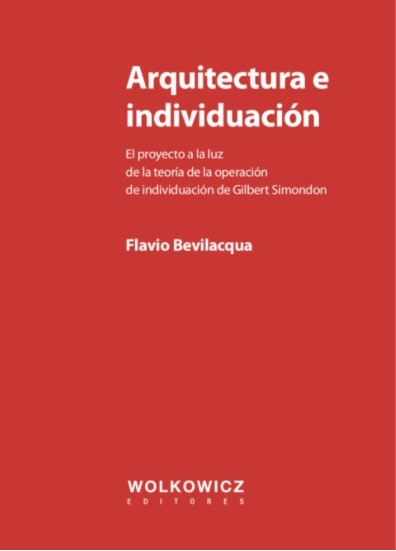
Flavio Bevilacqua applies segments of Gilbert Simondon's philosophy of technology to architectural theory and design research. Consequently, this book can be viewed as the first extensive transfer of Simondon's theoretical approach to these fields. The French philosopher critiques the hylomorphic model, moving away from it to propose a "theory of individuation." The book’s central argument follows this trajectory: non-hylomorphic morphogenesis exists within architecture and design.