New construction as an exception? “Waste” as a new building material? Affordable housing vs. climate protection? How do we design a building’s whole lifecycle? How do we calculate grey energy honestly? What is zero-carbon concrete? Which insights are new, and how can we tap past knowledge to develop solutions for the future? How do we shape this complex change process together? “Second City. On the New in the Old” is the theme of Architecture Matters 2023, where we will explore this topic at different levels: materials, buildings, society.
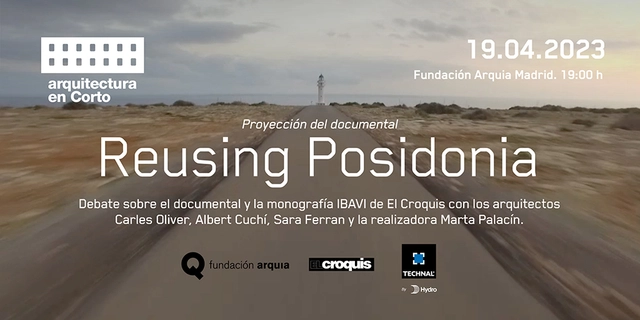
On April 19 at 7:00 PM, we invite you to the Fundación Arquia (C/Tutor, 16, Madrid) for the screening of Reusing Posidonia, a documentary about the first public housing units built on the island of Formentera by the IBAVI (Balearic Housing Institute) based on the principles of circularity, emission reduction, and climate change adaptation from the Life Reusing Posidonia project.
Following the screening, there will be a discussion regarding the documentary and the recently published El Croquis monograph on the IBAVI, which compiles and analyzes 24 works and projects promoted by the Balearic institution between 2019 and 2023. Speakers will include Carles Oliver, director of the Life Reusing Posidonia project; Albert Cuchí, author of the essay "IBAVI, una experiencia necesaria" published by El Croquis; Sara Ferran, architect and partner at the firm taller11; and Marta Palacín, the documentary's screenwriter, director, and producer.
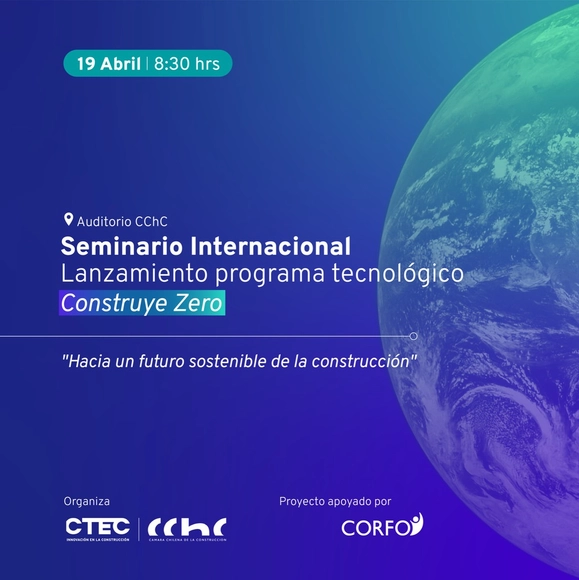
On April 19, we will gather with national and international experts to discuss the housing deficit and the climate crisis. Additionally, we will launch the Construye Zero Program, led by CTEC and supported by Corfo, which aims to contribute to the decarbonization of Chile amidst the climate crisis.
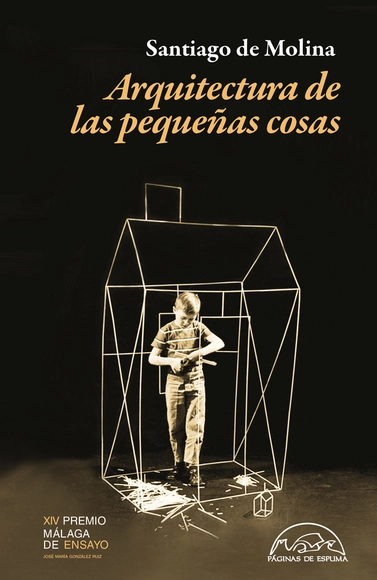
No one suspected that the least extraordinary of architectures—the house, our home—would so quickly change its meaning. While this box, burdened by mortgages and rooms, has traditionally served as the most immediate human habitat and our daily point of departure, the dizzying changes it has undergone in recent times have endowed it with new and profound existential dimensions.
Videos
House in Restelo / Pedro Domingos Arquitectos. Image Courtesy of FritsJurgens
The third and final part of "Stories of Lisbon's Light" focuses on a robust and daringly contrasting family home between the seven rolling hills of ‘the city of light’, Lisbon. Discover how architect Pedro Domingos designed a home where daylight and the river Tagus play the leading roles. With the residence facing the south, radical architectural choices had to be made to allow the light to flow through the entire residence.
Mariana will interview key figures in accessibility in Brazil
Mariana Bunn Arquitetura e Acessibilidade is hosting a series of live streams on architectural accessibility in Brazil. The goal is to interview individuals representing diverse perspectives on the topic—whether as professionals, activists, or citizens—to explore all facets of the subject.
Videos
Zoomorphic bench, unknown author, Karajá people. Photo by Rafael Costa.
The new edition of Bancos Indígenas do Brasil presents valuable photographic documentation of the BEI Collection of Indigenous Benches, accompanied by texts that explore the subject through various cultural, practical, and aesthetic lenses. The book also features a map locating the ethnic groups represented in the collection, as well as a stunning photo essay by Rafael Costa captured in the Xingu region.
Videos
ENICS reaches its 5th edition with the goal of transforming the sector through technological and sustainable innovations / Photo: Courtesy
The 5th edition of ENICS (National Meeting of Innovation in Dry Construction) has been scheduled for May 4th and 5th (Thursday and Friday) at the Expo Center Norte in São Paulo, Brazil. The event is organized by Steel Home, a group of companies specializing in dry construction with over 10 years of experience in the domestic market. Sponsored by leading industry brands—including Saint-Gobain, Knauf, Kingspan, and Gypsum—ENICS brings together the entire construction supply chain through interactive lectures, while also serving as a prime opportunity for business and networking.
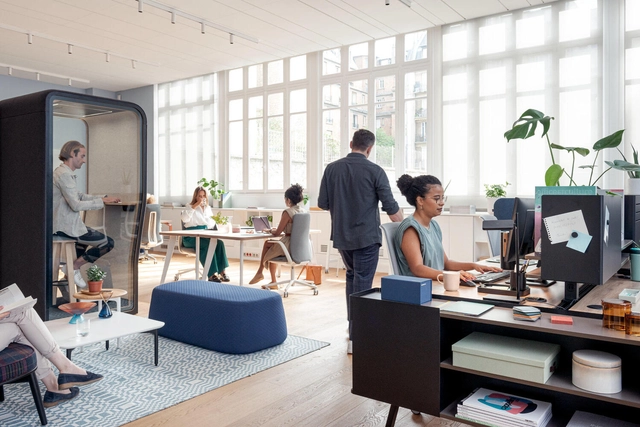
People’s tolerance for sound in the workplace is different at different times. Curating acoustics requires a hybrid approach, combining areas for focused work and comfortable conditions for meeting. Image Courtesy of Haworth
Is it the award-worthy barista skills at the third-floor coffee bar that make your days in the office bearable? Or is it being able to ring-fence a desk and height-adjusted chair and call them your own while the rest of the world hot desks? Perhaps it is knowing that the warming of your hands and toes is at someone else’s expense or that in this space you are you and not mum, dad, daughter, or husband. Or you might put it simply down to the camaraderie of the team and the common sense of purpose. One thing that is not in question, however, is that since the recent shake-up of our working practices, it matters now more than ever that productivity and wellbeing are in balance in the office, and contentment and comfort are key to both.
The exhibition Souto de Moura – Memory, Projects, Works will open on March 22 at the Paço Imperial in Rio de Janeiro. It is a selection from the 2019 exhibition held at the Casa da Arquitectura in Matosinhos, Portugal, dedicated to architect Eduardo Souto de Moura. A 2011 Pritzker Architecture Prize laureate and recipient of the Golden Lion at the 2018 Venice Architecture Biennale, Souto de Moura is one of the most significant Portuguese architects working today.
The Irmãos da Terra group, composed of residents from rural communities in Southwest São Paulo and technical teams from Escola da Cidade and Cânions Paulistas, invites you to a series of lecture-meetings on rural living and methods that respect and value local culture, identity, nature, water, energy, and food. The sessions will present best practices and references to support participatory plans within the involved communities.
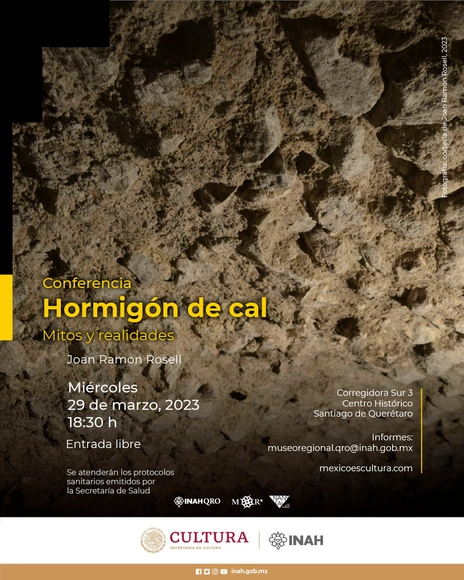
Lime mortars have been known in construction for millennia; in fact, some structures built with this type of mortar still stand today. Undoubtedly, the most famous is Roman concrete, which brought greatness to the empire and has been the subject of countless studies. The most recent of these, published by MIT, documents properties such as the self-healing of fissures and cracks, as well as increased durability over time.
Installation for 2023 Venice Biennale. 3DM Architecture
3DM Architecture is proud to announce our presence at The Laboratory of the Future at the 2023 Venice Biennale. The TIME, SPACE, EXISTENCE exhibition will feature an installation inspired by the culture and history of Malta, which seeks to transcend said architecture to an international context.
The Republic of Kosovo is taking part for the fifth time in the International Architecture Exhibition – La Biennale di Venezia from 20 May to 26 November 2023 with a project by architects Poliksen Qorri-Dragaj and Hamdi Qorri entitled “rks2 | transcendent locality”.
Small Infrastructures Opening, March 30, 2023. Credit: Sidell Pakravan Architects
In March 2021, the Biden Administration released the American Jobs Plan, earmarking $213B for “quality” and “affordable” housing, yet the bill lacks specificity on how houses are to be built. Here housing’s problem is split into two: a social one of accessibility and equity, and a material one of wood, metal, and rocks. Architects can play a unique role in bridging abstract policy ambitions to real construction as these connections are made every day in practice.