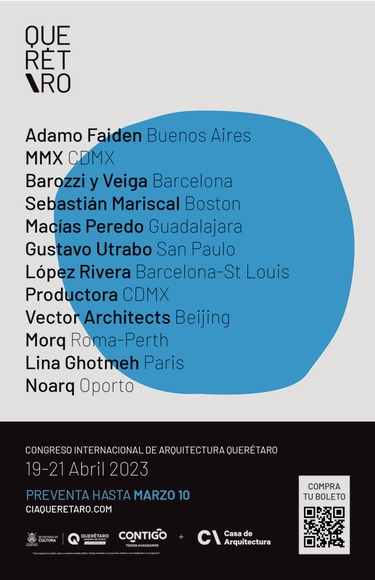
The city of Santiago de Querétaro was named a UNESCO World Heritage site in 1995 and has recently established itself as one of the most important development hubs in Mexico. Therefore, reflecting on architectural practice and the way we build our city is vital for our community.
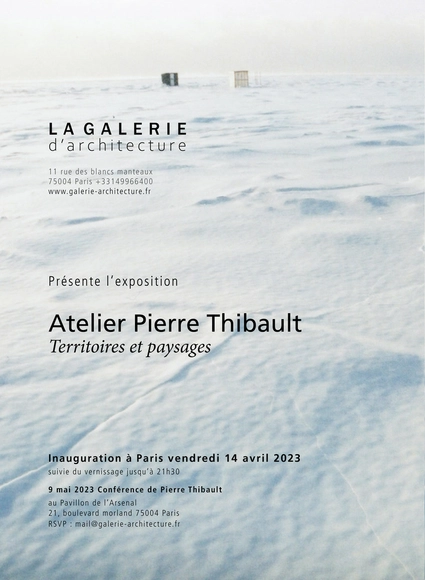
Créé en 1988 et composé d’une dizaine d’architectes, l’Atelier Pierre Thibault place en dialogue constant le territoire québécois, ses paysages, ses saisons et son architecture vernaculaire de manière à créer des projets intimement ancrés dans le milieu naturel et culturel. Fortement influencé par les lieux qui l’entourent, l’Atelier a su se démarquer sur les scènes nationale et internationale grâce à son approche sensible, empirique et intuitive. Cet univers intriqué et poétique de lieux, d’images et de typologies qui l’habitent se matérialise dans le cadre de l’exposition, proposant aux visiteurs une immersion littérale et figurative dans l’imaginaire architectural québécois et des territoires qui le compose. Scénarisée en un archipel composé de plusieurs ilots-territoires, l’exposition utilise le corpus distinctif de Thibault et son équipe pour interroger les différents rapports entre un projet d’architecture, son site d’implantation, son contexte culturel et naturel. En résulte une constellation architecturale distillant l’essence du travail de l’Atelier, brillant à la fois par sa constance et sa capacité de renouvellement, et ce depuis une trentaine d’années. Articulée autour des médiums de prédilection de l’agence - maquettes et croquis - l’exposition s’ancre dans une volonté de construire des ponts entre différentes approches architecturales et paysagères et de stimuler des échanges durables et lumineux entre cette profession, les territoires qu’elle construit et le grand public.
Join us for the opening reception of The Koffler Gallery's latest exhibition, “The Synagogue at Babyn Yar: Turning the Nightmare of Evil into a Shared Dream,” launches on April 17th, Yom HaShoah Eve.
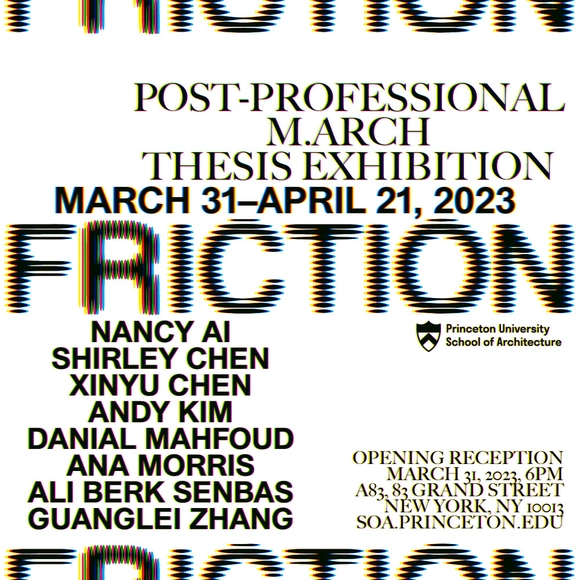
Princeton University School of Architecture is pleased to announce F(r)iction, an exhibition by the 2023 Post-Professional M.Arch Thesis class, opening March 31st at a83 in New York City. The exhibition showcases projects by 8 students—Nancy Ai, Shirley Chen, Xinyu Chen, Andy Kim, Danial Mahfoud, Ana Morris, Ali Berk Senbas, and Guanglei Zhang.
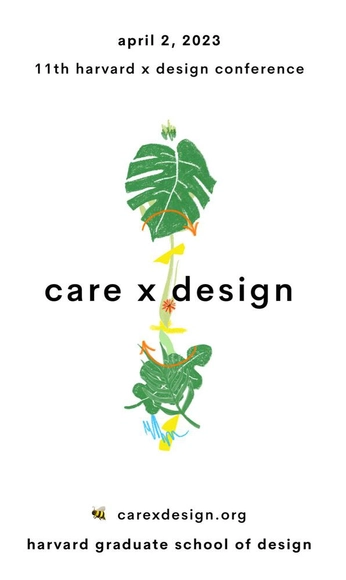
HarvardxDesign is an annual conference launched in 2012 and led by students at the Harvard Graduate School of Design this year. We bring together creative thinkers, industry leaders, professors, and students to engage, debate, and reinterpret the design process across scales and sectors. Our goal is to share knowledge, tools, and resources that can empower creatives to become change agents through design.
29ddm Mourning Station #4, Dominic Di Mare, hawthorn, handmade paper, silk, bone, bird's egg, feathers, gold and wood beads, 13" x 7" x 7", 1981. Photo by Tom Grotta
Acclaim! Work by Award-Winning International Artists, presented by browngrotta arts The exhibition features 45+ artists whose diverse bodies of work, in addition to being acquired into important collections, have achieved formal art recognition — lifetime achievement awards, artist-of-the-year designations, a Legion of Honor award and even an Order of the British Empire. browngrotta arts will produce a catalog for Acclaim! —its 56th.
"Datament", a monumental installation to be presented at the Polish Pavilion for the 18th International Architecture Exhibition of La Biennale di Venezia, will allow visitors to experience data in its ‘physical’ form. The space of the pavilion will be filled with the frames of four life-size houses. These seemingly chaotic and absurd structures faithfully reproduce the source data. The exhibition is intended as a starting point for a discussion about how, while new technologies may not offer us ready-made solutions, they can help us ask better questions.
Next Sunday at 8 PM, Mariana Bunn will interview architect Eduardo Ronchetti
Mariana Bunn Arquitetura e Acessibilidade is hosting a series of live streams on Architectural Accessibility in Brazil. The goal is to interview individuals who represent a diverse range of perspectives on the subject—whether as professionals, activists, or citizens—to explore every facet of the topic.
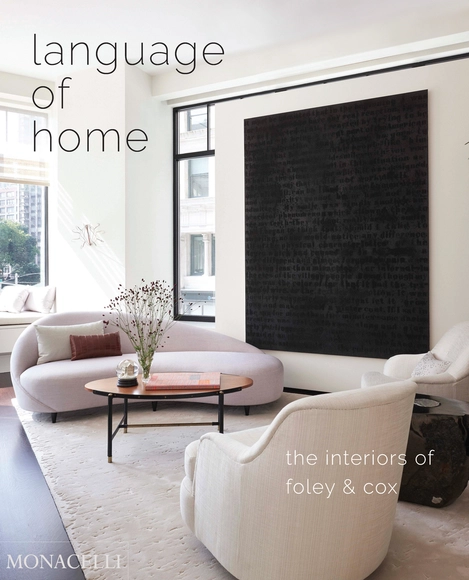
foley&cox is a New York–based interior design firm recognized for its style and versatility, led by Michael Cox. Cox focuses his practice on the concept of home—a word that encompasses a myriad of associations for everyone but can be most eloquently and simply described as the special place where we feel most comfortable. Published to coincide with the firm’s 20th anniversary, Language of Home: The Interiors of Foley & Cox presents twenty-four projects that reflect the breadth and depth of the foley&cox portfolio.
A collection of illuminating essays exploring what theory makes of architecture and what architecture makes of theory in philosophical and materialized contexts.
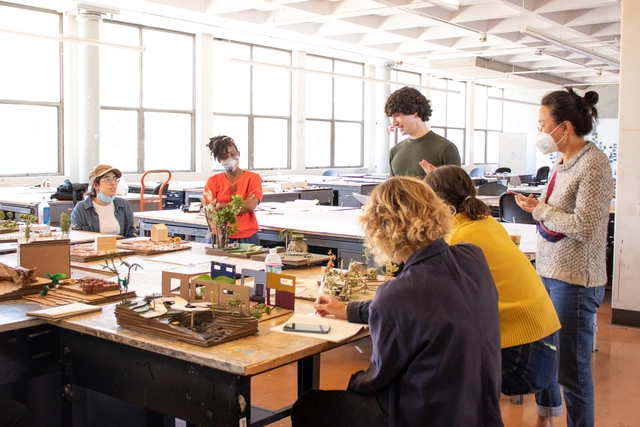
For those considering a career in environmental design –as an architect, landscape architect, urban designer, or city planner–, an immersive summer program in architecture and sustainable design might be the way to go before making a more long term commitment. Intensive summer programs are a great way to explore a career interest in architecture and environmental design. The College of Environmental Design at the University of California, Berkeley offers a variety of immersive summer courses, emphasizing hands-on studio design and teaching a multitude of relevant foundational design skills. By attending these programs, students gain professional clarity, competency, an increased network of peers and experts, and an empowering experience.
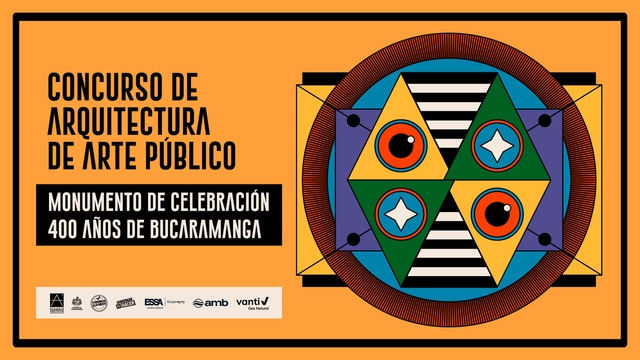
To position Bucaramanga as a tourist destination and contribute to the city's cultural development and citizens' sense of heritage, numerous projects are being carried out throughout 2022 as part of the city’s 400th-anniversary celebrations. One of these involves the redesign, improvement, and renovation of Parque Centenario, an area that has seen a surge in artistic and educational offerings in recent years, led by institutions such as the Teatro Santander and the Municipal School of Arts. This competition is part of these significant transformation efforts, inviting architects, sculptors, designers, and related professionals to submit proposals for a sculptural piece to be installed in Parque Centenario.
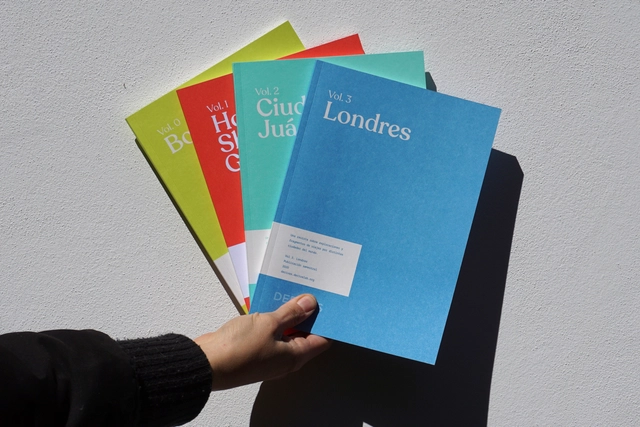
DERIVAS is an invitation to walk; not in the way we do when commuting to study or work, but rather andare a zonzo—traversing the city without a specific purpose, wandering, enjoying the void, allowing ourselves to deviate, suddenly changing course, and finding pleasure in the collective zigzag.