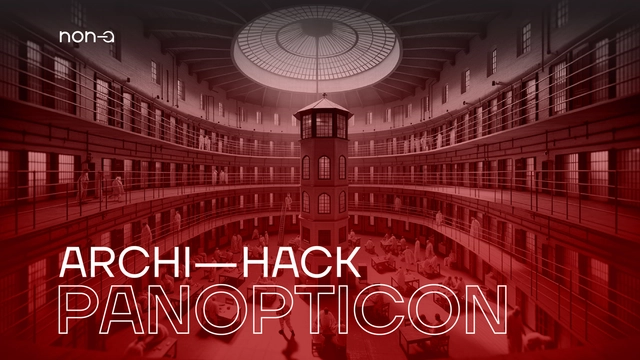
🔖 Create a design concept for repurposing a panopticon. — only 1 drawing, with absolute freedom of scale or program.
🔖 Create a design concept for repurposing a panopticon. — only 1 drawing, with absolute freedom of scale or program.

SIT DOWN AND FEEL
One of humanity’s most important contributions, and one that supports, literally and often to the extreme, our choice not to move, is the chair. Disregarding the hip joint’s capacity for permanent movement, we adopt from an early age a sitting posture that in adulthood can account for an average of 7 hours of every day, according to studies by experts in workplace ergonomics, who also recommend changing positions from time to time, lest we begin to take root. Our body spends so much time in a chair that the challenge for designers has been to create one with a backrest and seat that merge with the body to unload its weight, distributing it over four legs. The process of imagining, recreating, developing, and producing a new chair is summarized in each iconic model that scholars of the history of design have placed on the timeline of humanity —which since the industrial revolution seems to spend increasingly more time seated— and of a profession exploding with endless creativity and rife with proposals for furniture that contradicts, complies with, reformulates, and varies the possibilities of our bodily actions when we stop moving around to rest, find ourselves, feel, and sit down.
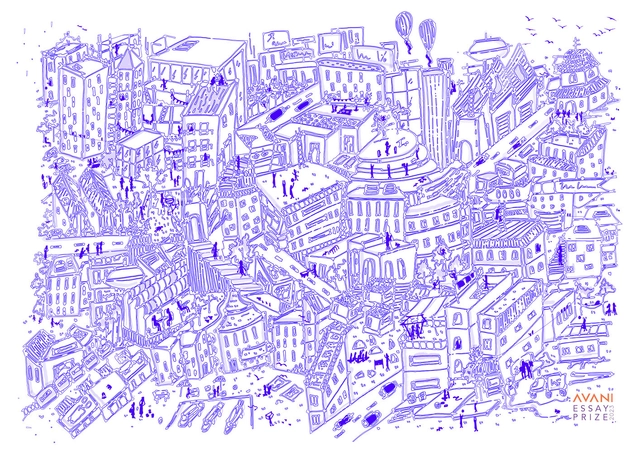
Avani Essay Prize, 2023, is an essay competition for full-time registered undergraduate students of architecture, planning, and design from around the world.
The Avani Essay Prize is dedicated to fostering intellectual exploration and encouraging students to express their thoughts and ideas through the written word. This year we intend to explore the concept of a "city" that challenges the conventional narratives about its nature and purpose.
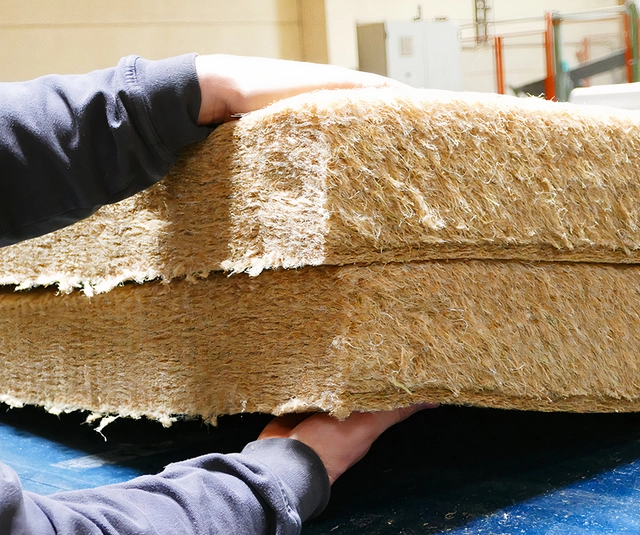
What insulation materials are needed to meet the challenges facing the modern built environment, including how to create a more sustainable future? What if some of them are already available? Kingspan’s dedicated innovation center, IKON, hosted a panel of experts to discuss some of the key issues and explore solutions. Michael Bol, an architect and Concepting Director at Buro Kade, Benjamin Constant, Director of Development and Partnerships at Neo-Eco Partner, and Sandra Del Bove, Kingspan Group Head of Innovation, each brought a different perspective and shared their experiences of these crucial issues.

Feira na Rosenbaum will host its Christmas edition from December 5th to 10th at the Edifício Teodoro in Pinheiros, with the main entrance on Rua Mateus Grou. Admission is free, and the event is open to the public daily. In addition to musical performances and items for pet and children's markets, this edition features a special partnership with the NGO Amigos do Bem, where 100% of the proceeds from products sold by the organization will be donated to residents of the Sertão.

IED - an international network of prestigious design and visual arts schools - is participating in Miami Art & Design Week for the first time with an exciting experiential exhibit at Alcova. A nod to both the site and Gruppo T (a group of Italian cinematic artists from the 1950s), Denoise is a collective video mapping artwork developed by students in IED Milano’s Master Course in Visual Arts for the Digital Age. Combining volumes, surfaces, and sound over several levels of narration, the installation will transform Room 35 into a multi-sensory experience, inviting participants to accept the unknown (equated with noise) as an integral part of our existence.

Architecture photographer Edmund Sumner has taken us on a journey from Europe, to India, Mexico, and beyond. Now his works will be featured at London's Albumen Gallery. You can read about Edmund's perspectives in our interview.

The Ableist Cities Symposium will bring together academics and industry experts to hear narratives of individual lived experience and co-designed research around disability and accessibility in cities.
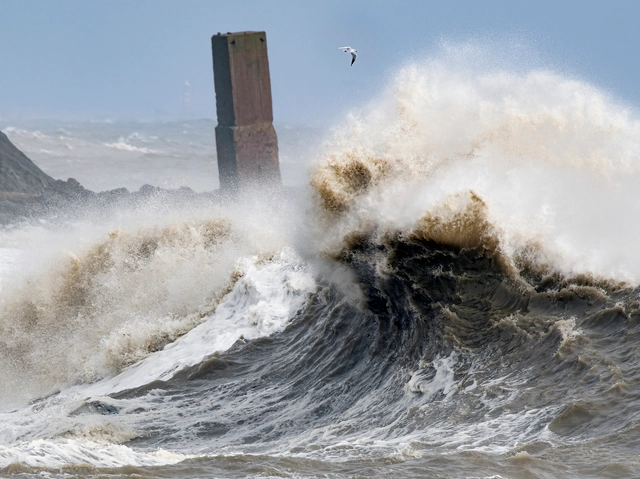
Coastal zones are among the most dynamic and volatile environments on the planet. They also include some of our most treasured heritage sites. As the rate of climate change accelerates, addressing its impacts–from rising sea levels to coastal erosion–poses the greatest and most complex challenge that coastal heritage sites have ever faced.

Educational workshop:
Visualising the Voice of Maria Callas
![Building Black Spaces [Berlin, Germany] - Featured Image](https://snoopy.archdaily.com/images/archdaily/media/images/6569/b92c/06a0/5e00/011c/462f/slideshow/EOTO_IG_CommUnity_BBS_1080x_v03_1.jpg?1701427543&format=webp&width=640&height=580)
How do we construct and maintain community centers for People of African Descent in Western contexts? What are the many potentials and challenges of such an endeavor? How do we incorporate the groundwork that has already been conducted elsewhere and which dimensions require special attention to honor the diversity of needs in our communities?

For a sustainable city, a transformation of the underlying system is necessary in addition to spatial changes. This leads to new typologies and forms for buildings, neighborhoods, and landscapes. We are currently overexploiting the urban body. How do we manage resources like energy, food, and materials, and how do we create an exchange of byproducts like waste and heat production? How do we respond to new digital measurement and processing techniques through Artificial Intelligence?
The book delves into envisioning the future of sustainable cities and how we can design them. Difficult problems do not always require far-fetched solutions, but in order to arrive at the solution a change of perspective may be in order. The City as a System advocates such a change in perspective in urban research, arguing that designers must not only focus on the spatial manifestation of a city but also thoroughly investigate the underlying systems and the use and appearance of the urban fabric. This publication was made possible through the support of the Creative Industries Fund NL and the Van Eesteren-Fluck en Van Lohuizen Foundation.
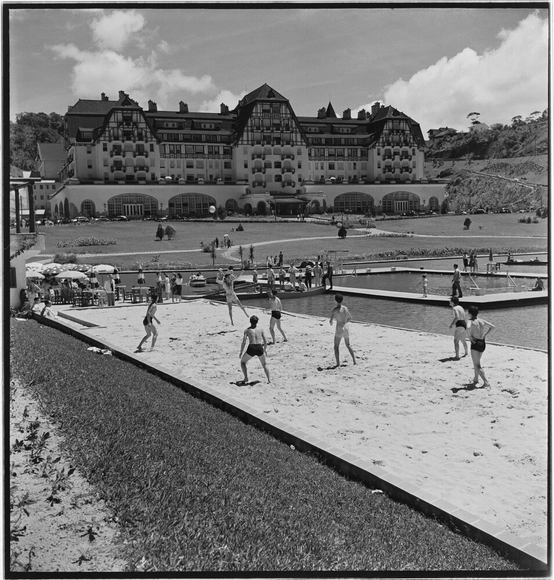
Sesc Rio de Janeiro invites you to the opening of the exhibition "Da Kutanda ao Quitandinha – 80 anos" on December 1, 2023, starting at 10:00 AM. The exhibition marks the beginning of the 80th-anniversary celebrations for the venue, which opened in 1944 as a hotel-casino and now houses the Sesc Quitandinha Cultural Center. Curated by Marcelo Campos, the expansive exhibition is organized into six sections, tracing a narrative that begins in the 18th century with the earliest records of Black presence in the Freguesia de Nossa Senhora de Inhomirim—the foundation of the region's settlement—via the Piabanha River and the plantations that relied on enslaved labor, ultimately giving rise to the city now known as Petrópolis.
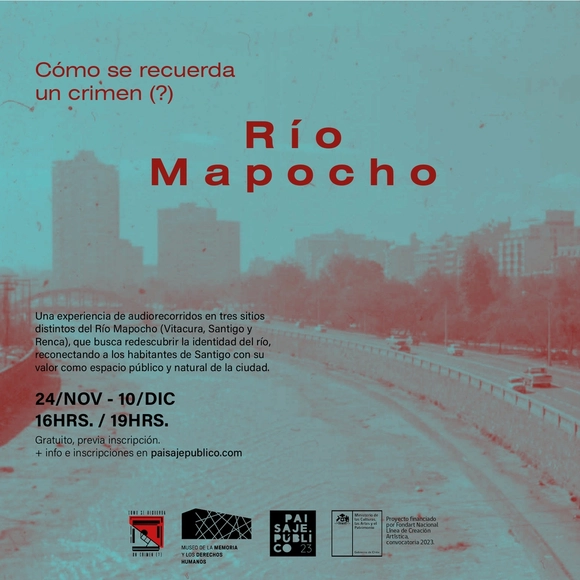
“How to Remember a Crime: Mapocho River” is a free performance that, through a walking tour guided by soundscapes, voiceovers, and testimonies, encourages reflection on the connection to nature, civic development, fundamental rights, and crimes against humanity committed during the dictatorship.
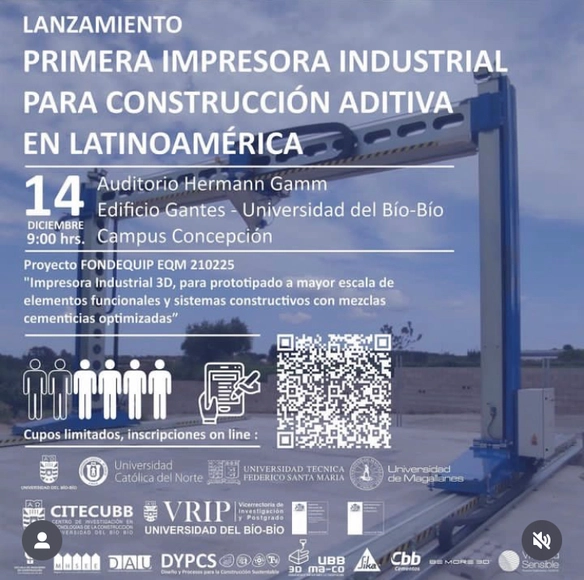
The launch of the first industrial printer for additive construction in Latin America will take place on Thursday, December 14, at the Universidad del Bío-Bío's Concepción campus. This printer will enable the construction of entire houses in Latin America for the first time. It represents a significant advancement in additive construction developed by the UBB's Center for Research in Construction Technologies (CITEC), which has already produced various pieces of furniture and residential walls using an industrial robot in collaboration with several industry partners.
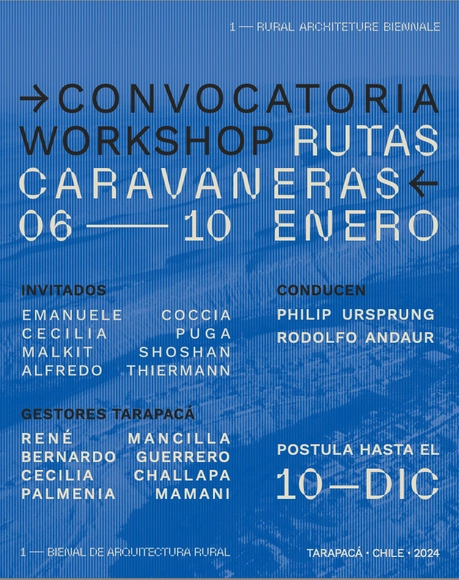
“Ruta Caravanera” is an interdisciplinary workshop based on the itinerant methodology of Swiss curator and historian Philip Ursprung and the territorial research trips led by Tarapacá-based curator Rodolfo Andaur in Tarapacá and other regions of the Americas. The workshop’s objectives revisit the ancestral practices of the first Andean nations as alternative frameworks for reading and understanding geography.
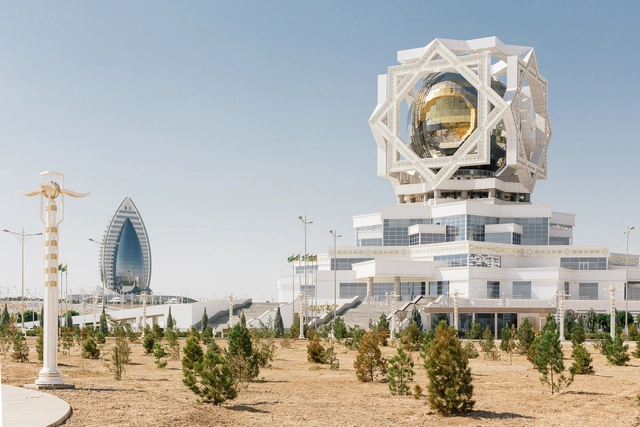
Arnau Rovira is a photographer who found himself in Turkmenistan by accident. From Barcelona, he recalls the story of how he found himself in its capital, Ashgabat, accompanying sports journalists for the 2017 Asian Indoor and Martial Arts Games. This Central Asian country, a former colony of the USSR, is known not only for its strict access and control restrictions but also for its white and golden structures that create a futuristic city near the border with Iran.
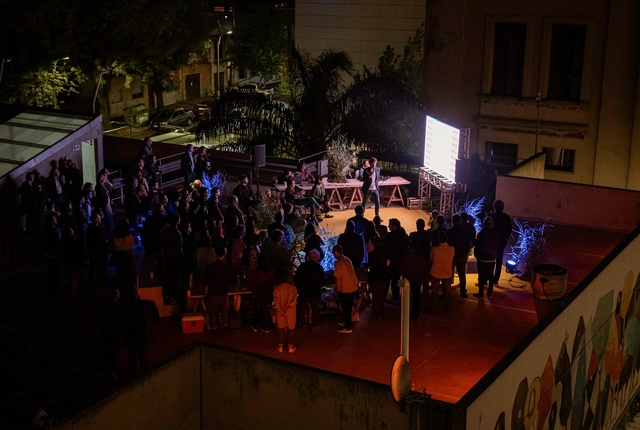
With its sights set on the future, in 2024, the Universidad Católica del Uruguay is adding the Architecture, Design, and Environment program to its academic offerings. Felipe Reyno, PhD in Architecture and director of this new degree program, reflects on the need to train architects with a contemporary, contextual, diverse, critical, and collaborative perspective.