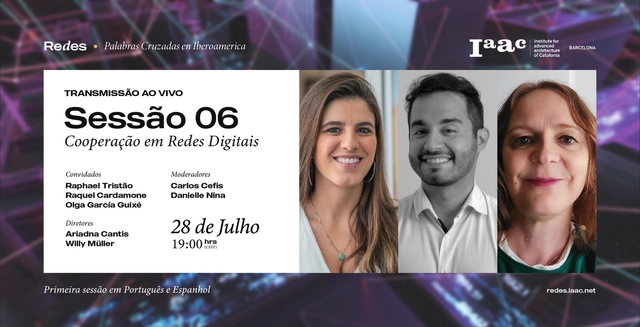
"Cooperation in Digital Networks" is the topic of the sixth IAAC Networks session, an open, online event broadcast via streaming.
"Cooperation in Digital Networks" is the topic of the sixth IAAC Networks session, an open, online event broadcast via streaming.
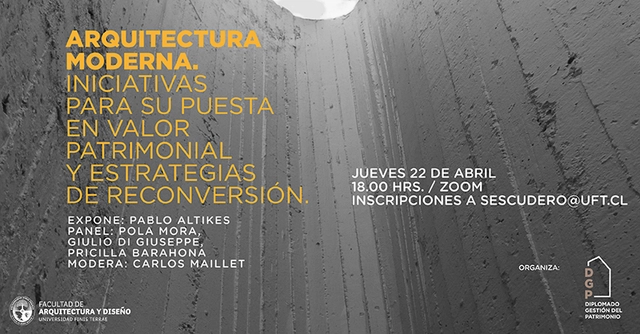
This panel discussion, organized by the Faculty of Architecture and Design at Universidad Finis Terrae, will feature Pola Mora, Head of Community and Partnerships at ArchDaily; Giulio Di Giuseppe, MSc in Architecture Heritage and Architecture (TU Delft) and Founding Partner of Forma Colectiva; and Pricilla Barahona, Vice President of the Centro Latinoamericano del Vitral Foundation (CLAV) and member of the Chilean Committee of the International Council on Monuments and Sites (ICOMOS CHILE).

On September 22 at 7:00 p.m., Roca Barcelona Gallery and Technal invite you to the screening of Reusing Posidonia, a documentary about an exemplary project carried out on the island of Formentera that demonstrates the possibility of building with lower resource and energy consumption, fewer CO2 emissions, and greater comfort and habitability. Following the screening, there will be a discussion with the audience featuring architect Carles Oliver, author of the project and winner of the 2018 FAD Architecture Award; documentary director Marta Palacín; and building sustainability consultant Gerardo Wadel.
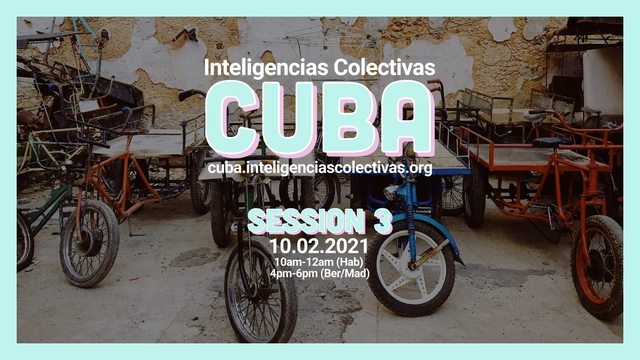
IC Cuba is an action-research project focused on the emerging heritage of Havana and its surrounding areas.
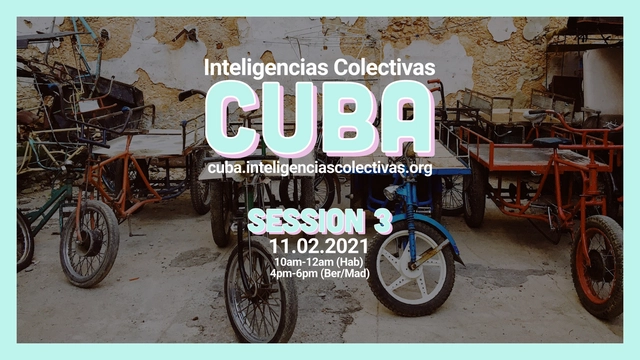
IC Cuba is an action-research project focused on the emerging heritage of Havana and its surrounding areas.
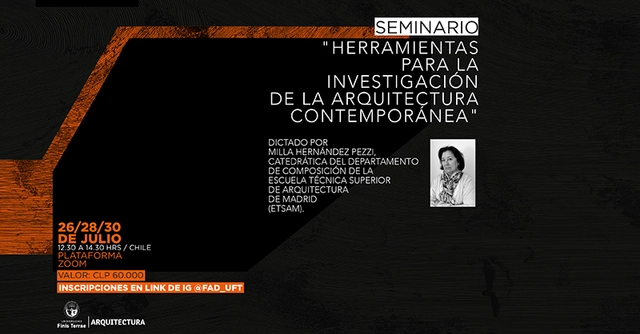
The Faculty of Architecture and Design at Universidad Finis Terrae (Chile) is organizing the online seminar "Tools for Researching Contemporary Architecture," which will be led by the distinguished professor Milla Hernández Pezzi, a tenured professor in the Department of Architectural Composition at the Escuela Técnica Superior de Arquitectura de Madrid (ETSAM).

“The Limits of the Possible” is the title of a lecture in which prominent Mexican sculptor José Dávila will discuss his work and processes, as part of the “Architecture of Selection” series organized by the School of Architecture at Universidad Finis Terrae.

Late to the Party refers to the generational sentiment of missing the peak, the sense of loss for a more optimistic era, or the observation that certain trends or movements in architectural history arrived at these Valencian buildings a few years behind schedule.

The second issue of Revista Pliego presents an intersection between the textual output of architecture students and the design research developed within the studios of the National University of La Matanza.

The first issue of 2021 picks up where the first issue of 2020 left off, with both editions tied to the "Introduction to Design Knowledge" course at the National University of La Matanza.
Additionally, the issue features the winning entries from the digital photography competition organized by Revista Pliego, alongside the winning project for the "Public Space and Mobility in the Central Area of the City of Resistencia" competition, developed by faculty and students from the National University of La Matanza.

The first issue of Revista Pliego is dedicated to the content developed during the Introduction to Design Knowledge course, which originated at the National University of La Matanza.

Opportunity is a decidedly optimistic, positive word that brings to mind that ideal moment when everything is possible. However, it also has a dark side, as it is frequently linked to the negative concept of crisis. This duality seems to be an essential condition for defining the value of an opportunity as inversely proportional to that of its opposing crisis. In this sense, the proposal of VAD could not be more relevant at a time when we, as a society, are facing one of the greatest and most universal crises in living memory.

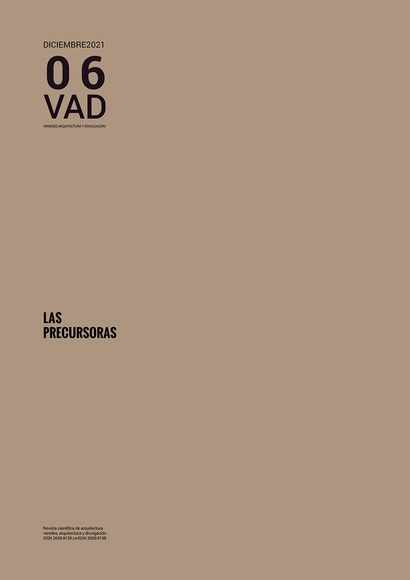
Women have pioneered new ways of practicing, not only by specializing in peripheral and often transdisciplinary subjects but also by proposing new forms of business organization that generally facilitate a better balance between professional and personal life. These working methods, in the face of a reassessment of production and business models, as well as workplaces and schedules, are fundamental to addressing the challenges of a profession that—in the midst of an internal transformation—is confronting the need for economic, social, and environmental sustainability.

“Pension Hotels in the City of Buenos Aires: Housing Precarity, Evictions, and Organizational Processes in the Constitución Neighborhood” is a book published by the Fundación Tejido Urbano. It emerged from the Buenos Aires Publica open call, an initiative that seeks to support research and innovative actions that can guide specialists and decision-makers toward solutions and tools aimed at reducing the housing deficits of our metropolis. The book’s author is María de la Paz Toscani, who holds a degree in Social Work and a PhD in Social Sciences from the Faculty of Social Sciences at the University of Buenos Aires.
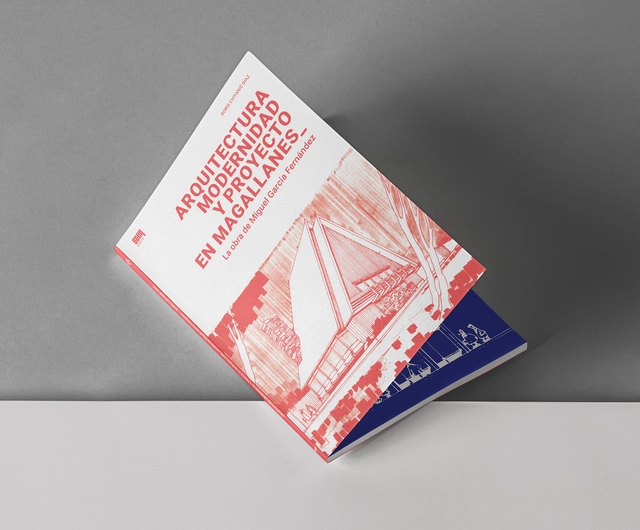
"Architecture, Modernity, and Project: The Work of Miguel García Fernández" seeks to highlight the history and development of modern architecture in Chile's southernmost region through the projects and ideas of this unique architect.

The Alberto Cruz C. Foundation, in collaboration with the Amereida Cultural Corporation and the School of Architecture and Design at the PUCV, hosted a seminar focused on the architectural work of Cruz Covarrubias, which transcends and complements his career in academia.

"Arquitectura Popular is not a book about 'popular architecture'—though that would be a great subject. Instead, this book summarizes my quest to make architecture popular. In other words, I strive to make my designs accessible to everyone. Because they are simple, affordable, and mass-producible. I believe that architectural design possesses virtues that can improve people's quality of life, and there should be no barriers to that." Alejandro Soffia begins his book with these words, emphasizing the importance of access to architecture and how it directly impacts quality of life.