Young Designers Open Call (deadline April 4th, 2025)
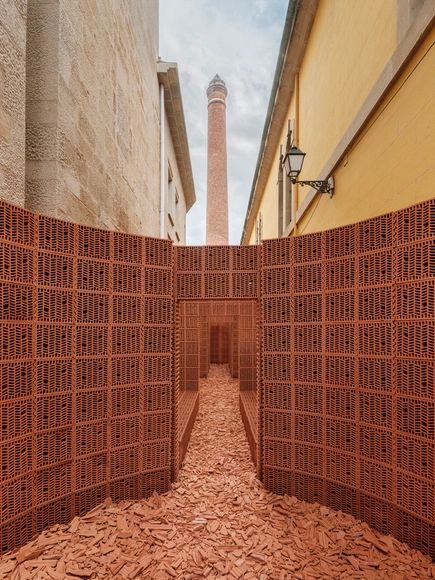
The Young Designers Open Call (YDOC), organized by reSITE for Manifesto Market, is an opportunity for emerging architects and designers to manifest their talent in front of a renowned jury, get their idea built and put in use in a popular Prague location, within only a few weeks.
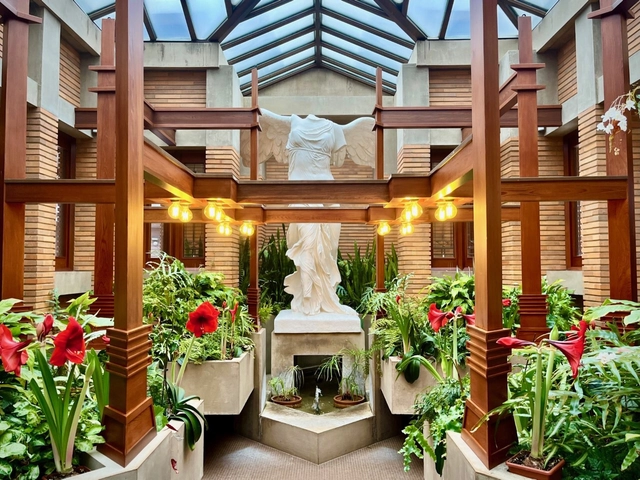
Frank Lloyd Wright’s Martin House (Buffalo, New York) is pleased to announce a call for applications to its Creative Residency Program. The residency provides individuals from multiple disciplines a thought-provoking environment in which to produce new works of the imagination inspired by one of the great examples of 20th century architecture. Applications to the 2026 season will open on April 14 and close on May 9. They will be accepted in two distinct categories. The Artist Program supports the development and presentation of creative works as they relate to Martin House. The Researcher Program provides opportunities to conduct research that will lead to published texts or projects in various fields, again as they relate to Frank Lloyd Wright and Martin House. Creative makers who are selected to participate will generally spend 2-4 weeks onsite either consecutively or incrementally within the residency term: June - October, 2026. Residents are also expected to deliver a free public program, performance, exhibition, or other creative presentation in order to share their Martin House-inspired work with the larger public. Residents will receive a stipend of $5,000. Travel expenses of up to $1,000 will also be provided to residents who are from outside the Buffalo-Niagara region. The Creative Residency Program is an opportunity for the Martin House to respond to and engage with our community. We anticipate that it will lead to more robust interpretations of Frank Lloyd Wright, the Martin House, and the people who once lived and worked here so as to expand the dialogue as to what great architecture is and why it matters. Further information and application materials are available here: https://martinhouse.org/visit/creative-residency-program/
BuildFest 2: Peace Rises invites proposals for timber "Peace-Infrastructure" at Bethel Woods Center for the Arts, the historic site of the 1969 Woodstock festival.
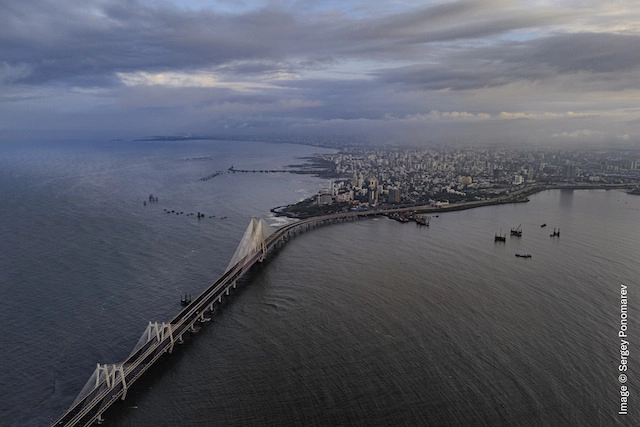
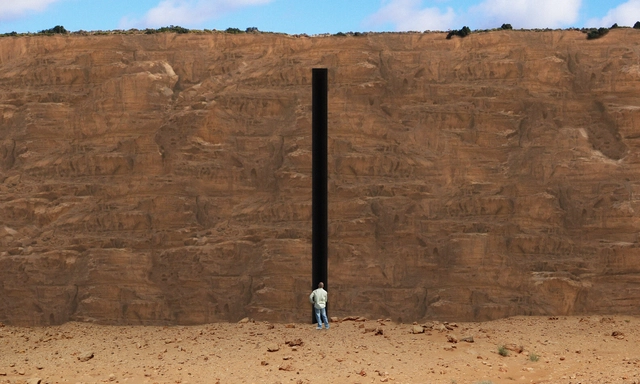
Enter the Mujassam Watan Urban Sculpture Challenge Architecture Competition now! 50,000 € in prize money! Closing date for registration: July 24, 2025
Saudi Arabia is undergoing an extraordinary transformation, stepping boldly into a future shaped by innovation, creativity, and opportunity. Guided by Vision 2030, the Kingdom is diversifying its economy beyond oil, with significant investments in tourism, culture, technology, and sustainability. This national evolution is redefining Saudi Arabia's identity on the global stage, blending modern progress with deep-rooted heritage. Across the country, ambitious initiatives are revitalizing cities and landscapes, honoring the past while embracing the future. Historic sites are being preserved, new urban developments are emerging, and cultural projects are flourishing—all working together to create a contemporary Saudi Arabia that is both forward-thinking and proud of its traditions. As the Kingdom grows into a global hub for art and creativity, it provides new platforms for artists, architects, and designers to contribute to its evolving landscape. As part of Saudi Arabia's broader cultural transformation, the Mujassam Watan Urban Sculpture Challenge, organized by Buildner in partnership with the Mujassam Watan Initiative (an initiative by Al Fozan Social Foundation), provides a platform for architects and artists to shape the Kingdom's evolving public spaces. Since its launch in 2018, this prestigious competition has welcomed creative minds from around the world to design sculptures that reflect Saudi Arabia's culture, heritage, and aspirations. These works of art are envisioned as meaningful additions to the urban landscape, enhancing public spaces and celebrating the Kingdom's identity. This year's theme, "The Inspiration Around You," challenges participants to reflect on their environment and create sculptures that embody Saudi Arabia's unique story. Designers will choose from two distinct sites:
KMUTT-SoA+D Lecture by Jenchieh Hung and Kulthida Songkittipakdee of HAS Design and Research
King Mongkut’s University of Technology Thonburi - School of Architecture and Design (KMUTT - SoA+D) is pleased to announce its 2025 Lecture Series on the Life and Career of Architecture Students After Graduation. This semester's lectures will feature speakers from various fields around the world, offering diverse perspectives and international viewpoints on the forefront of contemporary architecture and architectural engineering.
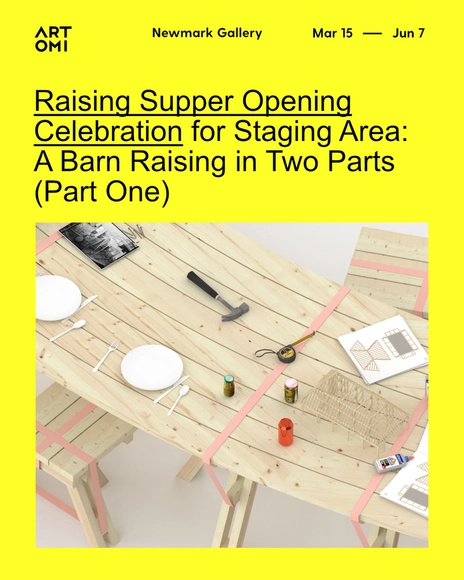
Join us in the Newmark Gallery at Art Omi for Raising Supper, an afternoon of gathering, making, and conversation as we celebrate the opening of Staging Area: A Barn Raising in Two Parts by designer Erin Besler.
NYCxDESIGN Opening Night Party at Mercer Labs - Photo by Sub-Urban Photography
NYCxDESIGN brings together design professionals and enthusiasts for a dynamic, citywide celebration spanning all five boroughs. From exhibitions and design talks to cocktail parties and open studios, the Festival hosts hundreds of events, drawing thousands of attendees from around the world. The highly anticipated 2025 edition will explore "Design is for Everyone," highlighting the power of design to shape humanity, culture, and inclusion.
Objective of the Contest • Main purpose: Achieve a project that manages to enhance the value of the Choquequirao Citadel as a secondary destination after Machu Picchu • Specific objectives: To locate a quality hostel that complements the next Funicular that will be installed eventually (not necessarily). • Expected impact: Convert the Choquequirao Citadel into a "World Heritage Site" 1st PRIZE : • US$ 3500 + 2 travel tickets (two people) in order to participate in 5 nights accommodation in 4-star hotels in Peru with an internal trip to Choquequirao, • Participation in the CHOQUEQUIRAO 2025 exhibition that will be held at a Institution in Lima, with an exhibition at the end of the competition. • Keynote lecture by the winning architect, explaining his project. Trekking route to Choquequirao 4-day tour to Choquequirao for two people The most common way to get to Choquequirao is by taking a 4-day, 3-night trekking route . This tour can be booked online or directly at an agency in Cusco.
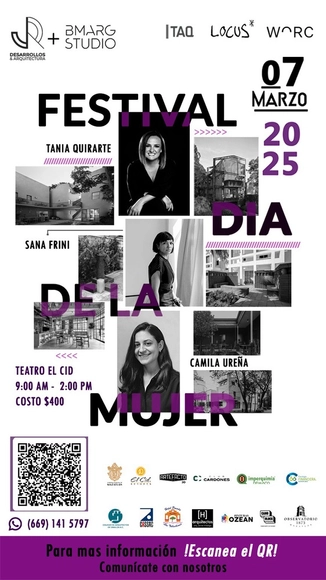
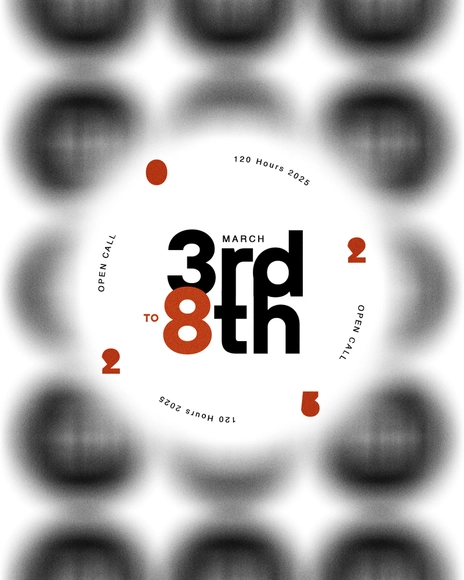
This festival aims to highlight architecture in the northern part of the country and the contributions of women to Mexican architecture through a series of lectures and discussions with invited architects.
Types of Spaces - Spain | Architects: HANGHAR, Madrid, Spain; PALMA, Mexico City, Mexico. Image Courtesy of Weinberger
The Brick Award is presented every two years to honor innovative, sustainable, and visionary brick architecture worldwide. The upcoming Brick Award 26 will be celebrated in June 2026. Architects, designers, and developers are encouraged to submit projects that showcase creativity and functionality using clay building materials. This prestigious award recognizes excellence across various categories and offers a global platform to highlight the versatility and potential of bricks in contemporary architecture. Submissions for the Brick Award 26 are open until March 9, 2025, offering a unique chance for international recognition. Participation does not require the use of wienerberger products.
Designing the next 'wow' project? It's like trying to catch lightning in a bottle—except with BIG and D5 Render, you're handed the jar. Bjarke Ingels Group (BIG), a global leader in architecture, is renowned for its bold designs and commitment to innovation. Constantly exploring new tools, BIG pushes the boundaries of design technology to optimize workflows and enhance creativity. With iconic projects worldwide, BIG has redefined architectural storytelling. By leveraging D5 Render's all-in-one platform, the firm has optimized its real-time design and visualization workflow, combining D5 rendering, animation, and AI to bring concepts to life with exceptional speed and precision.
Buildner has announced the results of Buildner's Unbuilt Award 2024, the inaugural competition in an exciting new annual series celebrating architectural design that has yet to be realized. With a generous 100,000 EUR prize fund, this competition provides a platform for architects and designers to showcase their most inspiring unbuilt projects, whether conceptual, published, unpublished, or fully developed.