Content Editor at ArchDaily Mexico. Architect by UNAM (2018). Her interests focus on exploring the relationship of the body with architecture through dance. She has collaborated with different international choreographers who explore dance and architecture as an event. Twitter / Instagram: @monicarellano_
Trained in the United States (Princeton and Cornell), young Mexican architect Isidoro Michan-Guindi established his studio in Mexico City just four years ago, in 2019. While Michan-Guindi is relatively unknown within the Mexican architectural scene, his studio is a complex laboratory home to a multitude of projects materialized through cardboard prototypes, pigmented concrete models, electro-robotic pieces, and aluminum molds; these all transform into intelligent architectural proposals ranging from everyday objects, such as doorknobs, to residential towers.
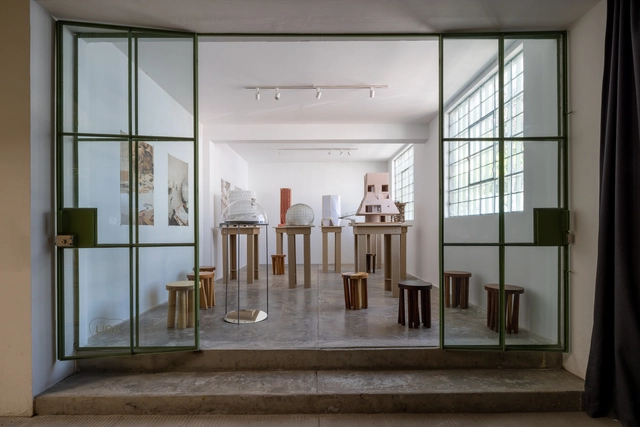
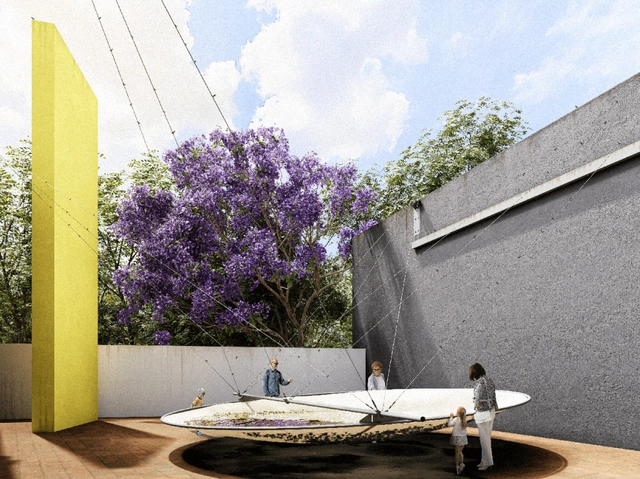
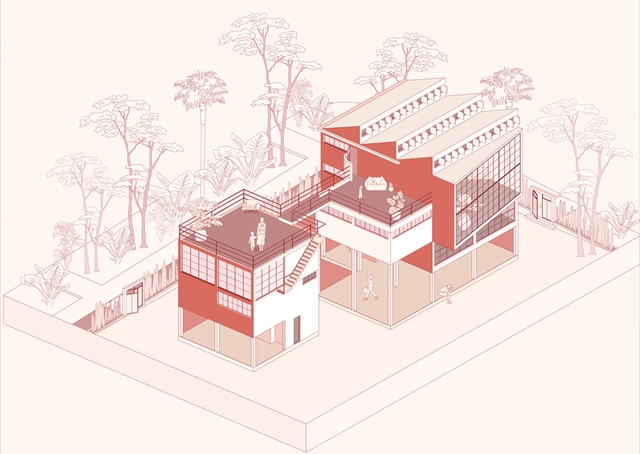
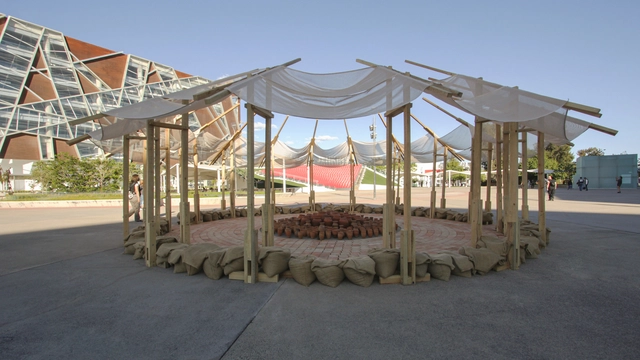
As part of the exhibition program of the Museo Experimental El Eco, the call for entries for the Eco Pavilion 2023 was launched, inviting professionals involved in architectural practice in Mexico to engage in dialogue with the museum's space. This edition marks the 13th anniversary of the Eco Pavilion, a competition initiated in partnership with Buró-Buró with the mission of offering a platform for architectural production with an emphasis on experimentation and spatial reflection.
Over the centuries, the history of architectural visualization has undergone numerous shifts. Its intrinsic relationship with architecture itself has sparked movements and critiques that, beyond serving as tools to represent the inhabited world, directly shape our perception of it and influence the production of the built environment. At ArchDaily, we have explored the history and evolution of post-digital representation through various articles, a subject that has been deeply explored in Mexico specifically.
In recent years, sustainability has been at the forefront of debates across all disciplines due to the ongoing environmental crisis. One concept that design, architecture, and urbanism have embraced is the "Circular Economy," as experience has shown the profession that efforts must go beyond simply incorporating recycling into our strategies. Instead, it is necessary to focus on sharing, leasing, reusing, repairing, refurbishing, and recycling existing materials and products for as long as possible to prevent waste.
Dérive LAB is a multidisciplinary laboratory based in Santiago de Querétaro, Mexico, that seeks to explore, understand, and inspire other (new) ways of living and thinking about city life. Through research, design, and action, they have focused on developing projects in art, architecture, urban design, and other disciplines that impact three specific scales: public life, the built environment, and everyday objects.
The National Institute of Fine Arts and Literature (Inbal) announced the selected proposal that will represent Mexico at the 18th International Architecture Exhibition of the Venice Biennale 2023. The selection was derived from 44 registered teams and 14 projects submitted. The selected proposal is called "Utopian Infrastructure: The peasant basketball court" and is made up of the following participants:
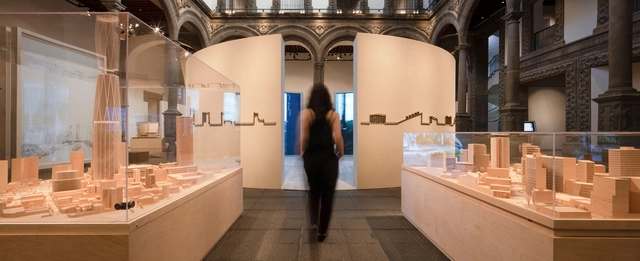
Today, February 17, the exhibition "Urban Transformation: Sordo Madaleno Arquitectos" opens at the Palacio de Cultura Citibanamex - Palacio de Iturbide in Mexico City. Organized in collaboration with the Banco Nacional de México, through Fomento Cultural Citibanamex, A.C., and the Fundación Sordo Madaleno A.C., the exhibition chronicles the firm's 85-year history. It constructs a narrative drawn from more than 450 projects, presenting a curated selection of 62 architectural works built in Mexico and abroad to serve a variety of programs.
The TEMA Pavilion Competition was established to give young architects and students from the University of Guadalajara community the opportunity to design ephemeral projects that express ideas beyond the typical demands of an architecture or design school.
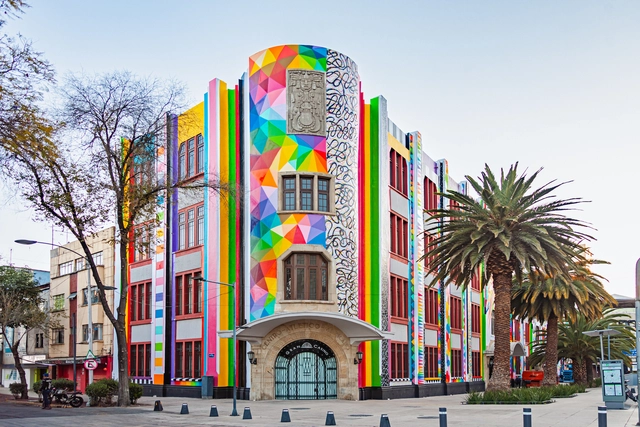
As part of the Mexico City Art Week lineup, a monumental mural was unveiled on Wednesday, February 1, transforming the facade of Frontón México—a historic downtown building that customer-exemplifies Art Deco architecture in the country, originally designed by architects Teodoro Kinhard and Joaquín Capilla and later renovated by Moyao Arquitectos. The installation was created by Spanish artist Okuda San Miguel in tandem with an immersive experience running inside the venue until March 11.
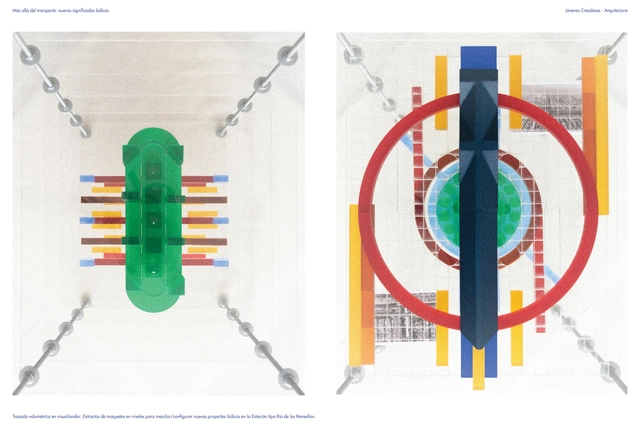
Each year, the National Fund for Culture and the Arts (FONCA), through the National System of Art Creators (SNCA), honors key figures of excellence in national culture through the Young Creators Program. By providing grants, the program supports the creative and educational development of young Mexican artists, fostering favorable conditions for the execution of original, meaningful, and positive creative projects. For this edition, the grant recipients in the “Architectural Design” category were Ruy Berumen, Diego González, Juan José Kochen, Ignacio Pérez, Elsa Ponce, Luca Salas, and Tania Tovar, who worked under the mentorship of tutors Elena Tudela Rivadeneyra, Rafael Ponce Ortiz, and Patricia Ivonne Álvarez De Anda.
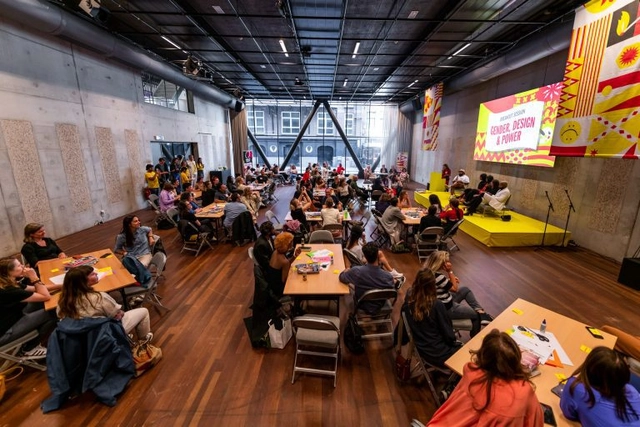
As part of the agenda of What Design Can Do (WDCD)—an international organization that seeks to accelerate the transition to a sustainable and just society using the power of design—a series of events and conferences took place in Amsterdam during 2022, bringing together speakers from all over the world to present their projects and perspectives on the current challenges facing the design community today.
As part of the activities taking place during the What Design Can Do festival, the Make It Circular Challenge has been launched, with a deadline of January 31. The challenge seeks proposals in the categories of "What We Eat," "What We Wear," "What We Buy," "How We Package," or "How We Build" to help address the devastating effects of overconsumption, waste, and climate change. The Make It Circular Challenge awards a prize of 10,000 euros for the development of circular design projects that help combat the climate crisis in a creative way.
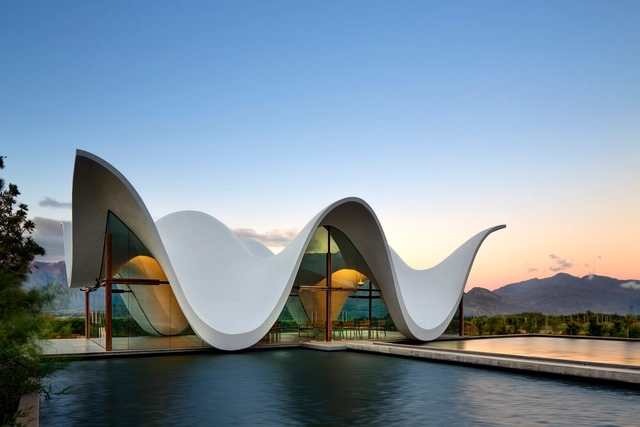
Today, January 27, marks the 113th birthday of Félix Candela—of Spanish and Mexican nationality—who is one of the most globally recognized architects of the 20th century. His career was defined by his exploration of reinforced concrete through experiments that resulted in his famous cascarones (concrete shells): key structural and design elements that support many of his works, such as the Cosmic Rays Pavilion at UNAM, Mexico City (1951); the Palmira Chapel in Cuernavaca (1958); the Los Manantiales Restaurant, Xochimilco (1958); and the Palacio de los Deportes for the 1968 Olympic Games in Mexico City.
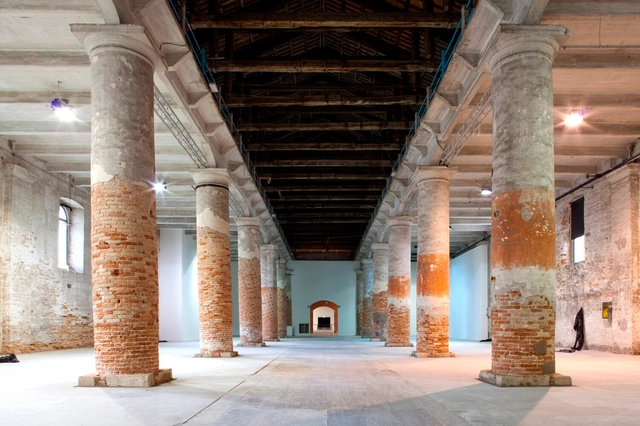
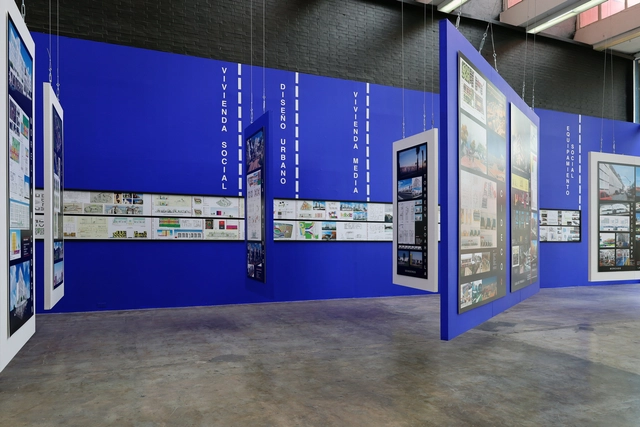
The Venice Architecture Biennale is an event organized by the Italian State that brings together some of the world's most prestigious international architecture exhibitions. The Giardini and the Arsenale serve as the event's main venues. These spaces have hosted various exhibitions, national pavilions, and collateral events spread throughout Venice.
On Wednesday, January 18, 2023, at 7:00 PM, the exhibition "Sara Topelson: Architecture and Life in Diversity" opened at the María Luisa Dehesa Gómez Farías Gallery of the Faculty of Architecture of the National Autonomous University of Mexico (UNAM). The event marked the culmination of the 2022 Federico E. Mariscal Extraordinary Chair, which celebrates the outstanding career of architect Sara Topelson.
APRDELESP is a Mexico City-based practice founded in 2012 whose main partners are Guillermo González, Rodrigo Escandón, Ricardo Roxo, and Manuel Bueno. It emerged as a research practice on space and its processes of appropriation, seeking to question traditional architectural processes. As an architectural practice, APRDELESP maintains an equal commitment to public and private infrastructure, as well as to the physical and digital infrastructure of the office itself.
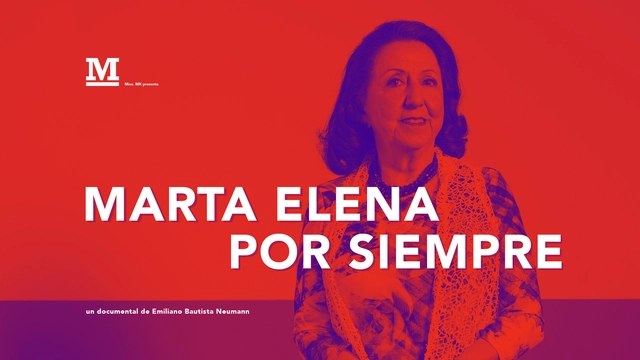
Marta Elena Campos Newman is one of the first female architects to graduate from the school of architecture at the Universidad Iberoamericana in Mexico City. From early in her career, she specialized in interior architecture, building a professional legacy that continues to bear fruit today. Furthermore, throughout her career she has collaborated with Mexico's most prominent architecture firms of the second half of the 20th century, while her work as a professor at UNAM's Faculty of Architecture has allowed her to shape entire generations of architecture professionals.



-10.50.gif?1606237770)