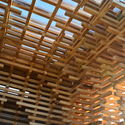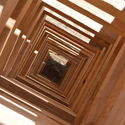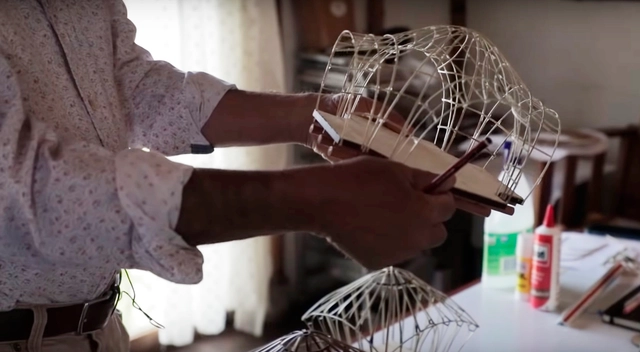
In an interview with El Espectador, Colombian architect Simón Vélez opens a debate on the state of the discipline, prompting us to question the role of the architect in both economics and politics.
Architect and Project - Team Lead at ArchDaily Instagram: @ fabe.de
In an interview with El Espectador, Colombian architect Simón Vélez opens a debate on the state of the discipline, prompting us to question the role of the architect in both economics and politics.
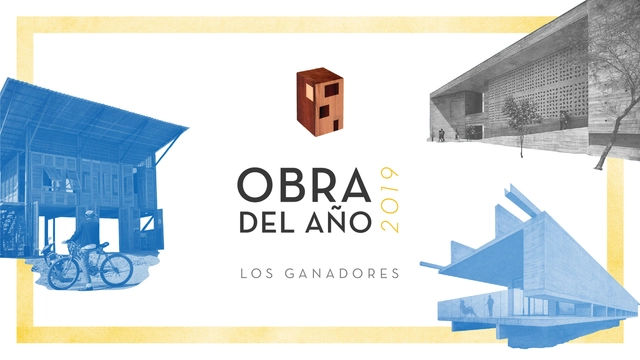
Last week, we announced the 15 finalists for the 2019 Building of the Year Award, which since 2008 has celebrated the best built architecture in Latin America and Spain, inviting our readers to select their favorite completed projects. Today, the time has come to announce the winners of ODA19.
We are pleased to present three architectural works from Peru, Chile, and Ecuador, where the winners not only showcase the architectural diversity of the region but also serve as examples of the public impact that architecture should deliver. Meet the three winners!
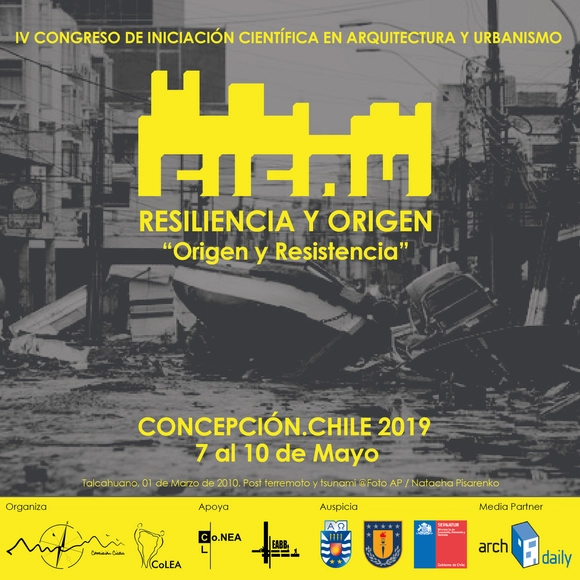
300 students from across Latin America will gather at the Universidad del Bío-Bío and the Universidad de Concepción for the fourth CICAU 2019: Congress of Scientific Initiation in Architecture and Urbanism.

ArchDaily is a constantly evolving digital project. It is an experiment in the documentation, discussion, and dissemination of key architecture and urbanism topics on a scale that would have been impossible twenty years ago. Today, we are happy to announce that our team in Colombia is growing.
Our content team works continuously to bring together readers from around the world on a platform that operates in four languages: Spanish, English, Portuguese, and Mandarin Chinese. Our primary goal is to ensure that all discussions surrounding architecture and the city reach the widest possible global audience.
As we grow, we are looking for talented new writers and editors. Are you passionate about architecture and the internet? If so, this opportunity might be for you!
More than 10,000 readers nominated their favorite projects from nearly 1,000 built works in Latin America and Spain: the day has come to meet the finalists of ODA19.

ALCUADRADO Arquitectos + Habitar Colectivo won first place in the national public competition for the environmental, landscape, and urban design of the Cali River urban environmental corridor in Colombia. The competition aimed to explore how to integrate the city with the river, seeking to coordinate the main and complementary ecological structures through the integration of pre-existing elements. Read on to discover the winning project in the words of its designers.
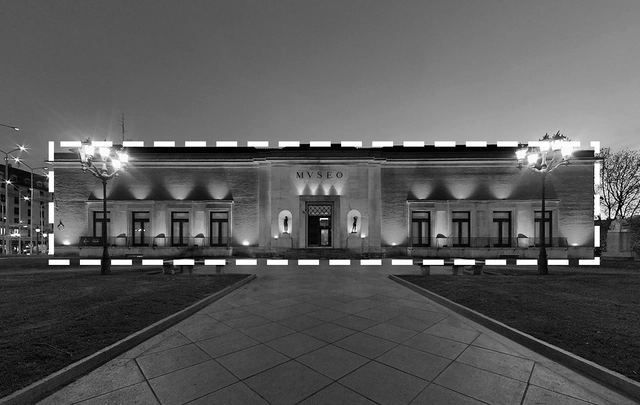
Continuing the history of expansions at the Bilbao Fine Arts Museum —located just meters from Frank Gehry's Guggenheim Museum Bilbao— the six finalists selected from the 57 initial applicants in the architecture competition have been announced. The leading architecture firms of Norman Foster, Rafael Moneo, Nieto Sobejano, Snøhetta, BIG, and SANAA will advance to the next stage to compete for the renovation of the current venue, with the winner to be announced between July 22 and 29.
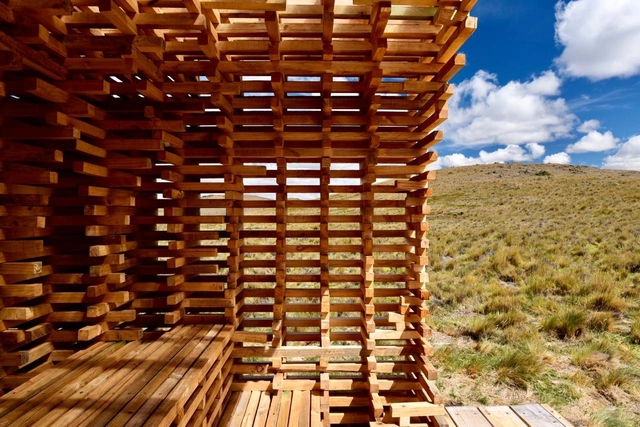
The School of Architecture at the Universidad Finis Terrae traditionally organizes workshops where its students build full-scale structures. This time, the workshop was led by Chilean architect Verónica Arcos, who worked with the participants, drawing inspiration from timber-stacking systems for drying wood.
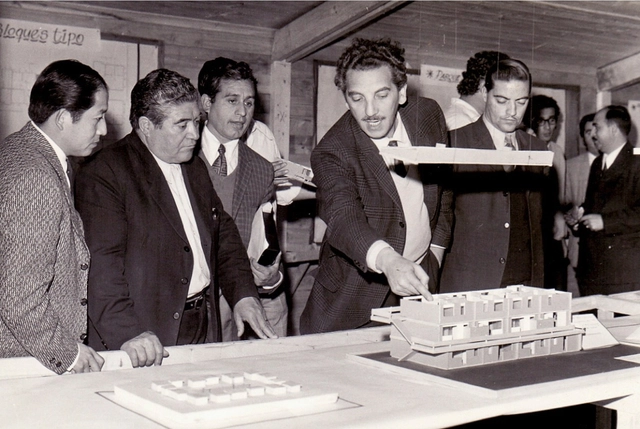
Today, Friday, April 5, the National Board of the Chilean Association of Architects (Chile) announced Miguel Lawner as the winner of the 2019 National Architecture Prize—the highest honor an architect can receive in the country, previously awarded to other renowned figures in past editions such as Germán del Sol, Enrique Browne, Teodoro Fernández Larrañaga, and Edward Rojas Vega.
Lawner served as the executive director of the Urban Improvement Corporation (CORMU) until the 1973 Chilean coup d'état, during which he was detained in concentration camps before being exiled to Denmark. Both from abroad and following his return, he has been recognized for his social housing projects, as well as his research and advocacy exposing human rights violations.

Access to housing, both in the case of purchasing or renting, with any type of financing, is usually one of the most important economic investments in people's lives. It is natural to ask oneself what considerations are necessary in order to have a knowledge base before acting.

At ArchDaily en Español, we recognize the need to maintain constant contact with architecture students, who will be responsible for designing and building the cities of the future. For this reason, we periodically open a call for applications to join our editorial team through our internship program.
If you currently reside in Argentina, this could be your opportunity to contribute local content to the world's most visited architecture platform, which inspires and informs hundreds of thousands of architects around the globe. If you are interested, please read on.

Faced with the challenge of designing housing units for rural areas south of the city of Bogotá, Sociedad Colombiana de Arquitectos (Colombian Society of Architects) called upon a participation of proposals with technical and spatial solutions, not only allowing the development of viable forms of productivity and growth, but also applying criteria of sustainability, efficiency and comfort.
Considering the adaptability of this architecture of the unity to the terrains situated in three varying geographies and characterised by an Andean landscape, the jury granted the first price to the team of FP Arquitectura and the second prize to Espacio Colectivo Arquitectos + Estación Espacial Arquitectos. Get to know the latter project in detail below, described by the authors.
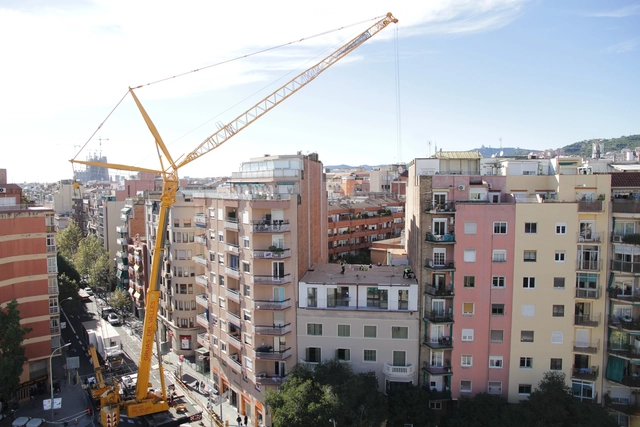
La Casa por el Tejado, a company that specializes in adding floors to old buildings, duplicated both the living spaces and the number of floors of an apartment building on Avenida Meridiana in the El Clot neighborhood of Barcelona. The new residences were built off-site in 12-weeks time and in accordance with the building's original dimensions and characteristics.
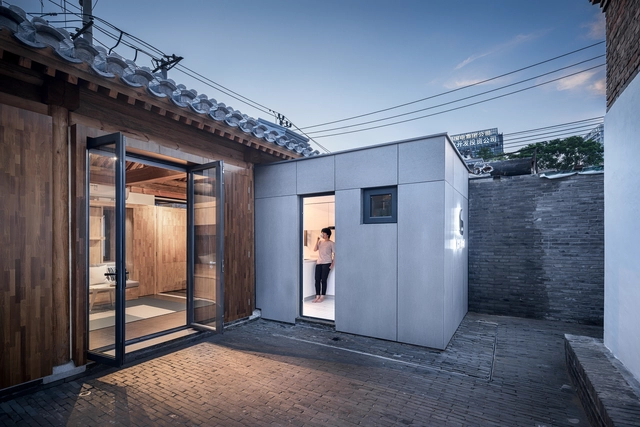
Although the ability to install home automation in a practical way is associated with new projects, it is possible to adapt previously built buildings in a relatively simple way. In both small and large renovations projects these systems can deliver automated features that responds to the requirements and needs of its users. They can also improve the habitability and comfort of its spaces, increase their security and promote long-term energy and money savings. So, what considerations must be taken into account in order to transform an regular architecture project into an "intelligent" one?
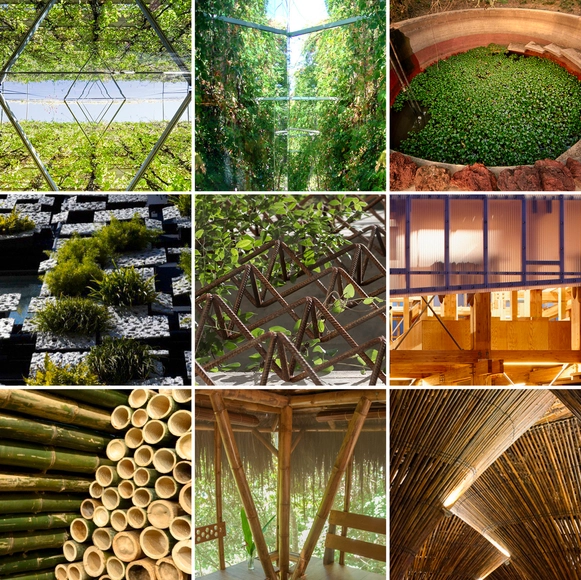
The dramatic improvement in recent decades in our understanding of sustainable design has shown that designing sustainably doesn't have to be a compromise—it can instead be a benefit. When done correctly, sustainable design results in higher-performing, healthier buildings which contribute to their inhabitants' physical and mental well-being.
The benefits of incorporating vegetation in façades and in roofs, as well as materials and construction systems that take energy use and pollution into account, demonstrate that sustainable design has the potential to create buildings that improve living conditions and respect the natural environment.
Below we have compiled 30 plans, sections and construction details of projects that stand out for their approach to sustainability.

In early March, students, architects, and designers gathered to bring their wooden projects to life for the third edition of Hello Wood Argentina.
The theme chosen for 2019 was “a space of containment, a space with-tension”:
Pushing our capabilities to the limit necessarily implies achieving the tension needed for our skills to emerge and be put into crisis.
Discover the projects built during this edition below.

Fifty years after its last participation, Cuba returns to the Milan Triennial for the XXII International Exhibition, titled "Broken Nature: Design Takes on Human Survival."
Addressing the relationship between humanity and nature, the Cuban Pavilion showcases unconventional examples of organic architecture: the National Art Schools of Havana, born of Fidel Castro and Che Guevara's desire to offer art education to all developing nations.
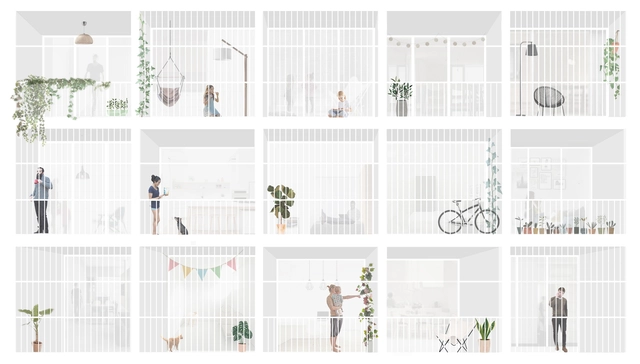
To showcase the valuable output of Argentine universities, for the third consecutive year we launched an open call inviting our Argentine readers to submit their final thesis projects, sharing the work that launched their careers as newly minted architects.
After receiving more than 60 submissions from various Argentine architecture schools and cities, our editorial team selected nine projects, focusing on those that demonstrated critical thinking toward contemporary issues, formal resolution, and representation. The selection not only recognizes those projects that delivered the best possible architecture through simple design suited to their context, program, and users, but also highlights those showing a strong commitment to human scale, mediation, transition, and new ways of approaching urban architecture. This edition's jury was composed of Fabian Dejtiar, Managing Editor of ArchDaily en Español; Mónica Arellano, Editor of ArchDaily México; and Delia Bayona, Editor of ArchDaily Perú.
Read on to explore the selected projects in detail.