
Today, Friday, April 5, the National Board of the Chilean Association of Architects (Chile) announced Miguel Lawner as the winner of the 2019 National Architecture Prize—the highest honor an architect can receive in the country, previously awarded to other renowned figures in past editions such as Germán del Sol, Enrique Browne, Teodoro Fernández Larrañaga, and Edward Rojas Vega.
Lawner served as the executive director of the Urban Improvement Corporation (CORMU) until the 1973 Chilean coup d'état, during which he was detained in concentration camps before being exiled to Denmark. Both from abroad and following his return, he has been recognized for his social housing projects, as well as his research and advocacy exposing human rights violations.
Official Biography: At 90 years old, Miguel Lawner represents an incomparable academic contribution in its comprehensiveness. His contributions driven both within the professional association and in public policy, his educational legacy in Chile, Denmark, and Germany, and countless square meters designed across various scales, contexts, and programs make him highly deserving of this national recognition—an architect who remains active to this day.

Lawner graduated in 1954 from the Faculty of Architecture and Urbanism of the University of Chile. After graduating, he taught at the same institution, and alongside his wife, Ana María Barrenechea, and Francisco Ehijo, founded the firm BEL Arquitectos Ltda. Together, they won several public competitions for social housing design, community facilities, and other projects.


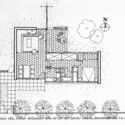
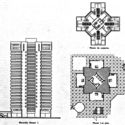


During the government of President Salvador Allende, Lawner served as executive director of the Urban Improvement Corporation (CORMU). His works from this period include the design and execution of several housing developments in Santiago, such as Villa San Luis, and the CORMUVAL housing project, located between Santiago and Valparaíso.


He was also involved in the planning of the building for UNCTAD III and the International Housing Exhibition (VIEXPO). Under his executive leadership, CORMU built around 158,000 social housing units.

Following the 1973 coup d'état, Lawner was detained and held in various detention centers, including Dawson Island, before ultimately being exiled to Denmark with his wife, Ana María Barrenechea. In exile, Lawner taught at Goethe University in the Federal Republic of Germany and the Royal Danish Academy of Fine Arts. He was able to return to Chile in 1984.

Regarding his involvement with the professional association, he served as Secretary-Treasurer of the Santiago Delegation of the Chilean Association of Architects between 1965 and 1967, and later as National Director from 1986 to 1994.
Among his most significant works are the Población Abate Molina in Talca, the Regional University College of Temuco, the COOPERCARAB Building in Santiago, the Lo Prado Municipal Building, and the restoration of the Salvador Allende Solidarity Museum.
His numerous accolades include the Alberto Risopatrón Award (Chilean Association of Architects, 1994), the Claude François Brunet de Baines Medal (University of Chile, 2010), the Edwin Haramoto Award (Housing Institute, 2011), and the National Monuments Conservation Award (CMN, DIBAM, and UNESCO, 2016).
This article was written by Fabian Dejtiar. The translation is powered by AI.
Miguel Lawner sobre proyectos inmobiliarios paralizados: '¿A quién defiende el Colegio de Arquitectos de Chile?'
En noviembre pasado, la Contraloría de Chile ordenó la paralización de la construcción de los denominados guetos verticales en la comuna de Estación Central (Santiago). En respuesta, un grupo de inmobiliarias ha presentado este viernes 14 de diciembre una serie de recursos de protección en contra de la resolución, mientras la Cámara Chilena de la Construcción ha levantado la alarma respecto a la paralización de proyectos, como fue recogido por el periódico chileno El Mercurio.
Miguel Lawner y la construcción de vivienda social en Chile
Miguel Lawner fue director ejecutivo de CORMU, hasta el Golpe de Estado de 1973, tras el cual fue detenido en diversos centros de concentración, hasta su exilio en Dinamarca. Desde el extranjero y luego de su retorno a Chile en los 80, continuó trabajando en proyectos sociales.
Miguel Lawner sobre guetos verticales: 'La precariedad habitacional ahora se extiende a la clase media'
En el contexto de la XX Bienal de Arquitectura y Urbanismo de Chile, el arquitecto chileno Miguel Lawner -ex director de la histórica Corporación de Mejoramiento Urbano (CORMU) a comienzos de los años setenta- formó parte de la mesa de diálogo El Habitar Común.
Centro Cultural Gabriela Mistral / Cristián Fernández Arquitectos + Lateral arquitectura & diseño
Construido en 2008 en Santiago, Chile. Imagenes por Nico Saieh, Juan Eduardo Sepúlveda, Marcos Mendizábal. Introducción Vivimos tiempos en que es más fácil botar que reparar, adecuar y poner en valor. Los objetos y edificios que nos rodean poseen una...
