Arquitectas. Maestras del espacio [Architects. Masters of Space] is a recent series from Encuentro. Over the course of two months, the weekly episodes built an engaging audiovisual catalog of the historical work of eight Argentine architects.
The second installment of this architecture series is once again presented by actor Rafael Spregelburd, who reminds us of the importance of highlighting the lesser-known creators behind the country's celebrated architectural projects.
Estereo(auto)scopio is an ephemeral public art piece co-created by Esteban Pastorino and Nicolás Sáez, funded by the "Chile-Argentina Residencies of the Performing and Visual Arts Exchange Program" grant from the Ministry of Cultures, Arts, and Heritage of the Government of Chile. On this occasion, the creative residency took place at "Residencia Corazón" in the city of La Plata, Argentina.
The project was first installed in the center of Plaza Moreno, then moved to the Pasaje Dardo Rocha Cultural Center, and finally exhibited at Residencia Corazón, accompanied by a discussion with the authors. The project, with the collaboration of Diego del Pozo, Nahuel Bralo, Ismael Maldonado, Juan Pablo Ferrer, and Rodrigo Mirto, offers visitors an immersive experience through a device that allows them to view aerial perspectives of the city. Using stereoscopic photographs taken by a drone, it provides observers the opportunity to view their current location from above and gain awareness of the urban characteristics.
Learn more about the project in detail through the words of its authors below.
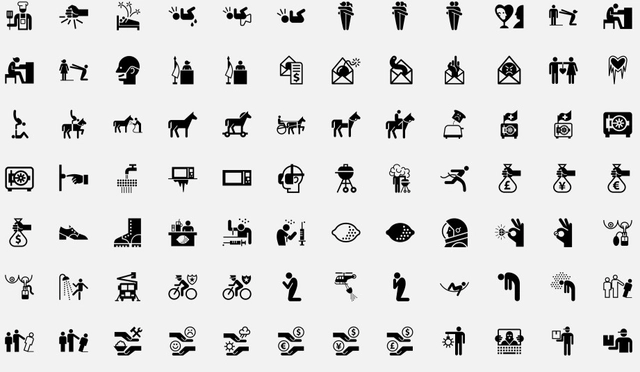
The title says it all: If you have spent hours scouring the web for clean icon designs for your diagrams and architectural presentations—essential tools for optimizing layout, analysis, and communication—this universal online library from The Noun Project will be an invaluable resource.
As part of Casa Portal 2018—an Argentine architecture and interior design exhibition dedicated to intertwining art and solidarity—the Emergen Project by visual artist Rocío Moreno and architect Gonzalo Viramonte is presented as a quest to reflect on the state of emergency at the Children's Hospital.
The visual proposal continues the production line associated with light-based work, this time using neon to illuminate children's drawings, thereby incorporating them into the conversation.
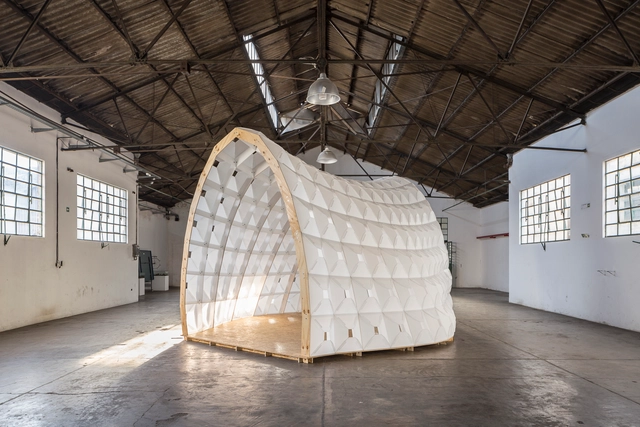
The digital exploration by the experimental architecture and design studio Formosa for an itinerant pavilion in Buenos Aires proposes a blend of digital fabrication and artisanal techniques using a resistant, lightweight, and flexible material.
The project, a pavilion composed of modules made primarily from white corrugated polypropylene pieces—analogous to one another yet each unique—allows for easy assembly through interlocking joints and bolts.
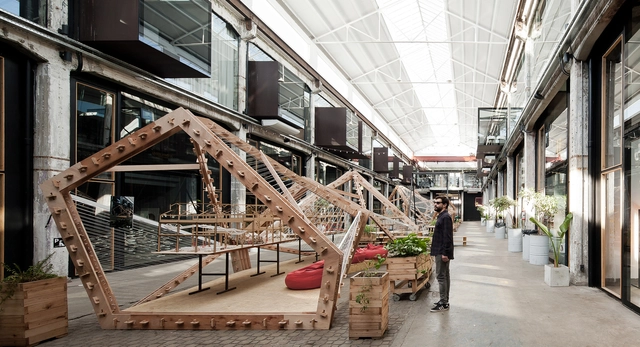
PENTA is the result of the first design studio course from the Taller Danza at the Faculty of Architecture, Design, and Urbanism of the University of the Republic (UdelaR). Each year, the Montevideo-based studio proposes the ephemeral construction of a full-scale project, conceived and built collaboratively by its students.
On this occasion, the pavilion explores the possibilities of computer-aided manufacturing, experimenting with techniques using limited resources and digital production systems.
Learn more about the process in the authors' own words below.
Would you like to help highlight the work of women in architecture? Un día | Una arquitecta invites readers to suggest architects to be featured in the 2018-2019 cycle.
In response to the historical threat posed by urban transformations, applying "collage thinking" to heritage could prove to be a compelling tool, capable of easily identifying values and roles, and suggesting narratives between disparate historical elements.
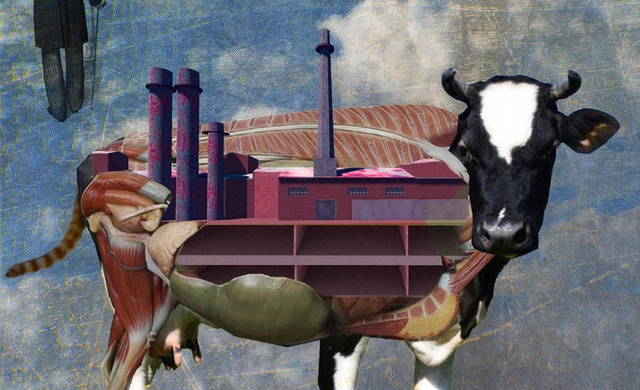
Camila Mancilla Vera highlights and explores this in the series Brotes de la industria (Industrial Sprouts). By combining 3D representation techniques, photographs, newspaper archives, and publications, the series aims to visualize and foster debate regarding elements worthy of protection.
Below, the author presents a series of considerations.
Do you have questions about how to properly finish gypsum board? Or how to prepare surfaces for painting or wallpapering?
Canal Encuentro offers a series of eleven Spanish-language videos to help you learn the basics of finishing and answer your questions in the most instructional way possible.
ArqFilmFest and the Colegio de Arquitectos de Chile hosted the preview of the first episode of the documentary series Chiloé yesterday. The series, which premieres this coming Sunday, May 6, at 7:00 PM on La Red TV, consists of five episodes that present stories from the island featuring architects, carpenters, and local inhabitants alike, highlighting the diversity of the local reality and architecture as its form of expression.
Chiloé, a production by Glaciar Films directed by Diego Breit and David Guzmán, is a project that, as the creators note, began by focusing on heritage and ultimately came to represent something greater: a reflection on the island's current identity.
Glaciar Films has made three video clips featuring interviews with key figures in Chiloé architecture available to our readers. In the first installment, we featured Jonás Retamal and local modes of production on the island. In this second installment, Edward Rojas highlights the importance of architecture that is relevant to its place.
These video clips are part of the Chiloé series, a production by Glaciar Films directed by Diego Breit and David Guzmán, which presents five episodes exploring the island's architectural identity and its key figures. Architects, carpenters, craftspeople, and residents weave together a narrative that addresses the history of construction and how it faces imminent change and the adoption of modern patterns.
The footage is part of Chiloé, a series by Glaciar Films directed by Diego Breit and David Guzmán. The five-episode series documents the island's architectural identity and its key figures: architects, carpenters, artisans, and inhabitants.
Chiloé is a production by Glaciar Films which, directed by Diego Breit and David Guzmán, offers five episodes presenting the island's architectural identity and its key figures. Architects, carpenters, craftspeople, and residents weave together a narrative that explores the island's construction history and how it faces imminent change and the adoption of modern patterns.
In this instance, Glaciar Films has made three video clips featuring interviews with key figures in Chiloé architecture available to ArchDaily readers. In the first chapter, Jonás Retamal—an architect from the University of Chile who has lived on the island for 15 years—discusses traditional materiality and the adoption of modern patterns in local production methods.
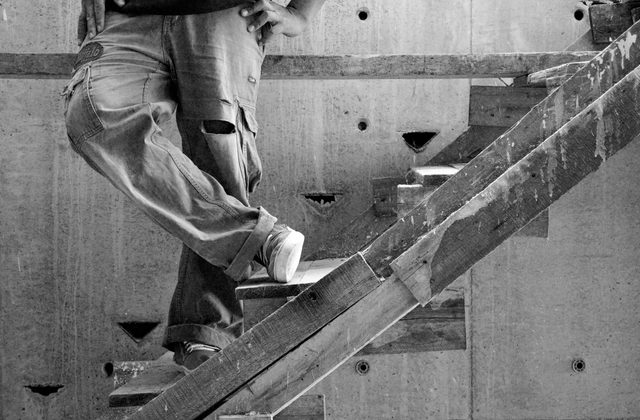
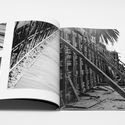
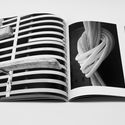
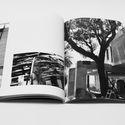
In FOMM, architect Manuel Mosquera captures the construction phase of a residence in Argentina designed by architects Mathias Klotz and Edgardo Minond.
This black-and-white photography book offers a new perspective, rescuing the small stories and practices inherent in the process while capturing its unique atmosphere and details. Simultaneously, it highlights a range of records and observations that invite us to reflect on the procedures, timelines, and considerations of construction.
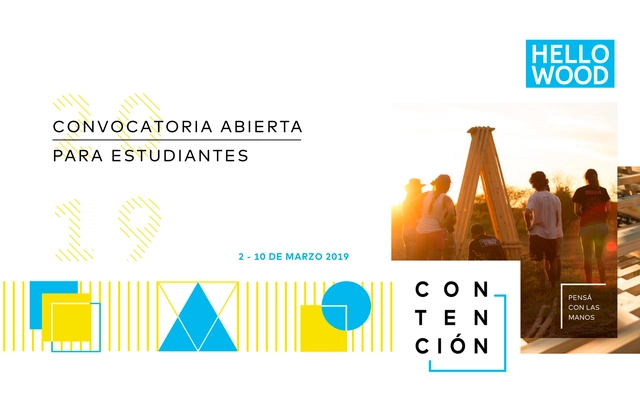
The third edition of Hello Wood in Argentina is approaching—scheduled for March 2–10, 2019—and is calling for university students or recent graduates in architecture, design, and art who are inspired to build around the new theme: CON-TENSIÓN.
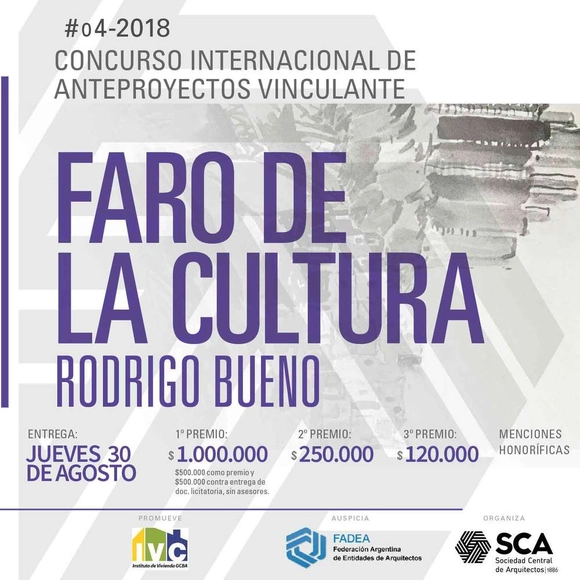
Organized by the Sociedad Central de Arquitectos, this international competition seeks the development of a preliminary design for the Faro de la Cultura (Lighthouse of Culture), a cultural center to be located in the Rodrigo Bueno neighborhood of Costanera Sur, between the ecological reserve and the former Boca Sports City.
The project’s primary objective is to stimulate integration and equitable access to facilities for all local residents, fostering community engagement.
At ArchDaily en Español, we recognize the need to maintain constant contact with architecture students, who will be responsible for designing and building the cities of the future. For this reason, we periodically open a call for applications to join our editorial team through our internship program.
If you currently reside in Argentina, this could be your opportunity to contribute local content to the world's most visited architecture platform, which inspires and informs hundreds of thousands of architects around the globe. If you are interested, please read on.
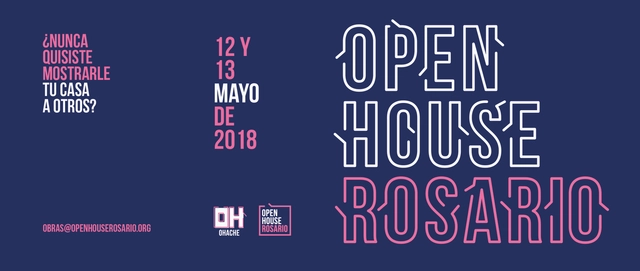
Open House, the annual architecture festival founded in London and now present in 34 cities worldwide, is aimed at anyone interested in discovering and rediscovering the city's architecture and urbanism.
The festival offers the opportunity to enter and tour a selection of private and public buildings of great cultural, historical, heritage, and architectural value free of charge during an open-door weekend.
We are currently seeking new icons to explore in the city of Rosario, Argentina, with the goal of transforming private spaces into public ones and fostering curiosity among residents under the theme:
Have you ever been curious about someone else's home?