Delia Bayona

BROWSE ALL FROM THIS AUTHOR HERE

Barrio Móvil, the multifunctional bus that seeks to bring seniors and people with disabilities closer in Lima

Subscriber Access | 

If Muhammad will not go to the mountain, the mountain must go to Muhammad. If the elderly do not go to city hall—sparing themselves the clear hassle of tedious paperwork—city hall goes to them. In a largely unplanned city like Lima, where design for older adults and people with disabilities is rarely prioritized, getting around or participating in social activities requires double the effort. Consequently, they often choose to stay home to avoid the hassle.

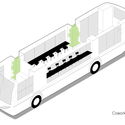
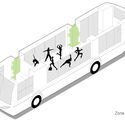
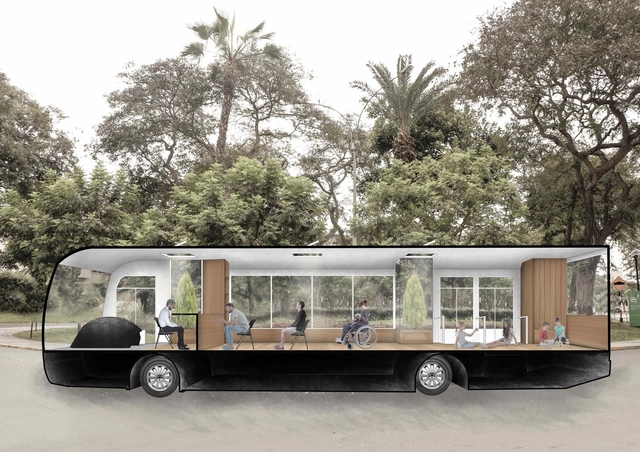
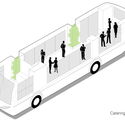
Bringing services closer through mobile architecture—going beyond static physical buildings—is an idea worth putting into practice. Under this approach, the Municipality of Miraflores is rolling out a bus equipped with diverse functions that are valuable to the neighborhood, and particularly essential for a demographic with limited mobility. Architecture in action is capable of adapting an "ordinary" bus for this "multifunctional" purpose. Once again, the profession demonstrates its power to connect, support, and bring people together...
Barrio Móvil, the multifunctional bus that seeks to bring seniors and people with disabilities closer in Lima - SustainabilityBarrio Móvil, the multifunctional bus that seeks to bring seniors and people with disabilities closer in Lima - SustainabilityBarrio Móvil, the multifunctional bus that seeks to bring seniors and people with disabilities closer in Lima - SustainabilityBarrio Móvil, the multifunctional bus that seeks to bring seniors and people with disabilities closer in Lima - SustainabilityBarrio Móvil, the multifunctional bus that seeks to bring seniors and people with disabilities closer in Lima - More Images+ 33

Urban occupation strategies to re-inhabit the hillsides of Lima

Subscriber Access | 

Dedicated to the families affected by natural disasters and to those living on hillsides waiting for alternatives or changes in their habitat.

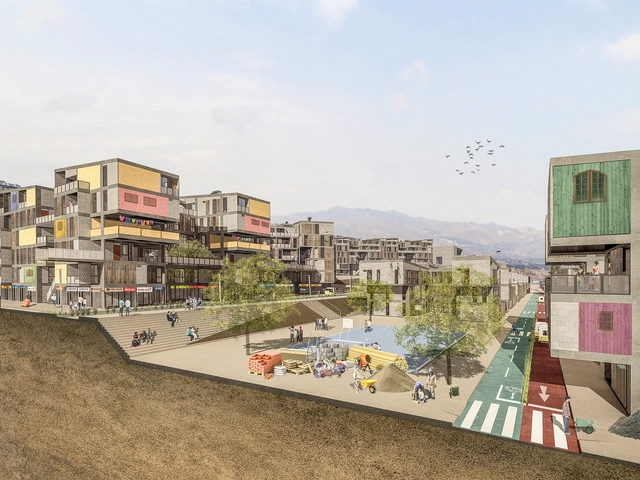
The hillsides are like a shroud surrounding us, yet in a skewed manner. Lima's fog serves as an excuse for this neglect. Speaking of inhabiting the hillsides can still be synonymous with "uninhabitable" due to the precarious conditions of so many vulnerable homes, which make up 70% of the city's self-built housing. Yet, by virtue of their geography, hillsides offer habitable qualities that we must recognize and rethink to position ourselves wisely within the territory, and thereby reinhabit them with a fresh perspective. Not all self-built homes are "devoid of knowledge"; some offer their own lessons. Most, however, do not. The truth is, this is a field that remains to be explored.

'Institutes of Excellence': A New Opportunity to Improve Peru's Public Higher Education Infrastructure

Subscriber Access | 

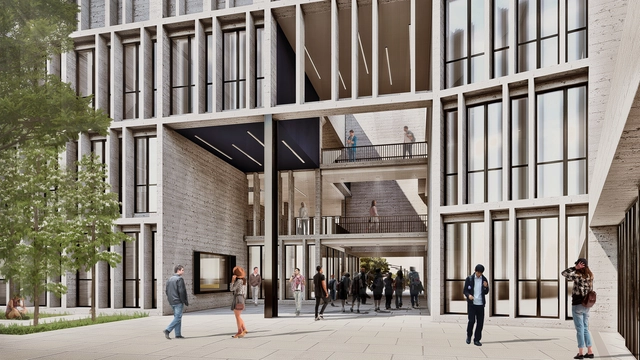
A country's educational standards are reflected not only in students and teachers, or public curricula, but also in educational infrastructure as a space that shapes learning and experience. Technical institutes represent a vital option within the country's educational framework; however, many of these institutions have not undergone major infrastructural transformations or improvements since their founding. To address this gap, the "Institutes of Excellence" were established. These projects are part of a larger strategic plan encompassing both institutes and universities under a public higher education infrastructure investment program, proposed by the Ministry of Education (MINEDU) and the Inter-American Development Bank (IDB).

Strikingly, the attribute of "quality" is rarely associated with the vast majority of institutes within Peruvian higher education, as they are often overlooked. Driven by this observation, we examine the design of a prototype institute that represents a group of several projects, which have already been approved and are ready to begin construction. To understand how the vision of a better, decentralized education is translated into architecture, the team of specialists and architects led by Ana Carlín outlines the program's and project's guidelines and scope. Read on to learn more about this exemplary practice.

Architecture in crisis, or the crisis of architecture

During the period of violence (1980-2000), the notion of public space, citizenship, and architecture underwent various physical and conceptual reconfigurations. It may be that the crisis was evidenced in the architecture, or the architecture was evidenced in the crisis. Be that as it may, the city was determined by violence and simulacrum.

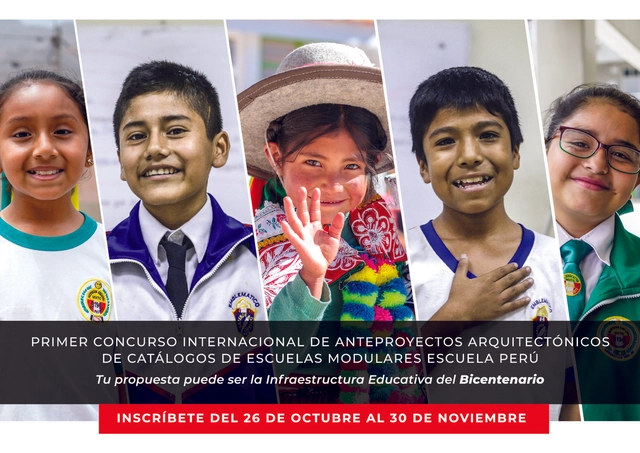
The "Escuela Perú" International Competition calls for the design of modular school catalogs across the country's five bioclimatic zones.

We have been anticipating the arrival of this competition of national impact and international scope. Peru's educational infrastructure has been rethought from the ground up, and we are increasingly seeing improvements. This competition is an opportunity for more architects to join this movement for Peruvian education. Below, we share all the details.

 The Ministry of Education of Peru faces a major challenge for the Bicentennial: reducing the educational infrastructure gap with innovative, safe, efficient, sustainable spaces and environments that respond to the diversity and needs of the national territory. In this way, we will guarantee the development of learning and the training of our students in quality spaces. This is our commitment: to work to shape better Peruvian men and women, always.

Experimenting with Concrete Models: More Mass Doesn't Mean Less Light

Subscriber Access | 

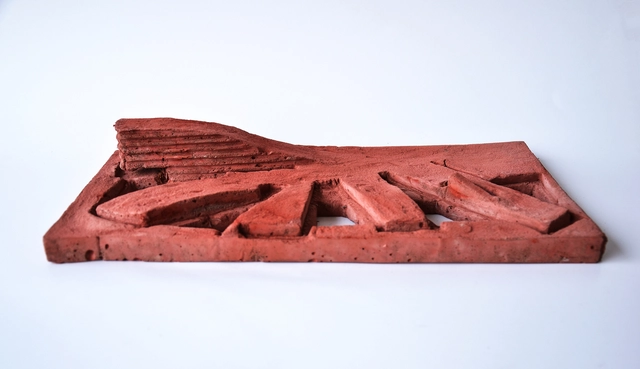
The contact between hands and models should never be lost. Going into this experience provokes silence, forcing us to think about the care that goes into concrete models. Few words are needed, as models often tell us everything we need to know through the beauty and simplicity that goes into their creation and the importance of the manual process in an architect's work. 

Experimenting with Concrete Models: More Mass Doesn't Mean Less Light - Image 1 of 4Experimenting with Concrete Models: More Mass Doesn't Mean Less Light - Image 2 of 4Experimenting with Concrete Models: More Mass Doesn't Mean Less Light - Image 3 of 4Experimenting with Concrete Models: More Mass Doesn't Mean Less Light - Image 4 of 4Experimenting with Concrete Models: More Mass Doesn't Mean Less Light - More Images+ 43

Architecture and Politics: 1st PUCP Architecture Student Colloquium. Let's participate!

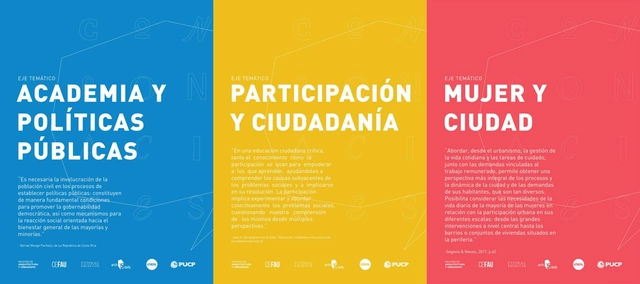
Most committed architecture students will agree that as the years of learning go by, a growing urge arises to speak up, express ourselves, and mobilize in different ways to bring the architecture we study in school to life. This spark is further ignited in a country where development is largely controlled by private interests rather than public ones, and where, above all, deep inequality persists amidst vast potential diversity. Outraged, our voices are increasingly being heard as citizens. We are stepping out of the classroom, seeking dialogue, marching more frequently, and carving out new paths to intervene in and transform our social reality. And we realize, or rather, we return to the natural understanding of our political role within architecture.

From Peru to the World: Illustrating Utopias for a Happy Architecture

Subscriber Access | 

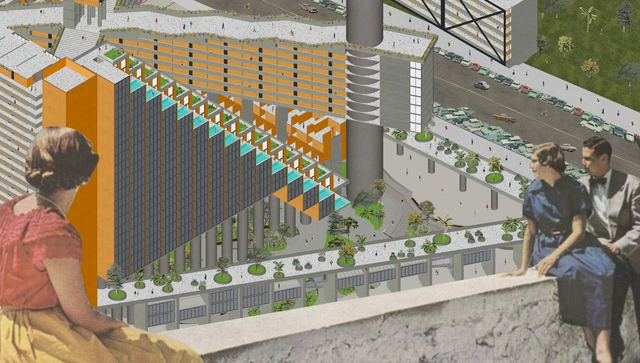
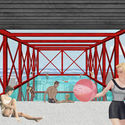
It is not common to speak extensively about these ideas in architecture, even if we have fallen back on them more than once. Diagnosis, happiness, rehabilitation, void, sadness, fear, health, patient, save... words repeated over and over, integrating ever more coherently as you read, transforming into a discourse that convinces us of these architectural utopias. It is not about who is behind this proposal, but rather about what they achieve for architecture and society through this multidisciplinary union forged from different approaches—be it philosophy, sculpture, or illustration—all of them medicine for the soul. Ultimately, they are a critique wrapped in the high spirits of the 1950s.
Dialogues of space and time converge in these projects: that a building can move from one place to another, that its atmosphere can evoke another era. It is a philosophy based on healing cities through detachment and happiness. No building belongs entirely to a territory; no spirit is inherent to an era in itself. Much like their sculptural projects, one is born in New York, another remains in Peru, and another ends up in Brazil. All of this is delivered with the cheerful 1950s aesthetic they seek to bring back and popularize through their contemporary illustrations. Here, we present DAD's philosophy and three projects that put their principles into practice.

Without further ado, they happily share the details with us.

From Peru to the World: Illustrating Utopias for a Happy Architecture - Image 5 of 4From Peru to the World: Illustrating Utopias for a Happy Architecture - Image 7 of 4From Peru to the World: Illustrating Utopias for a Happy Architecture - Image 67 of 4From Peru to the World: Illustrating Utopias for a Happy Architecture - Image 89 of 4From Peru to the World: Illustrating Utopias for a Happy Architecture - More Images+ 88

CASA: Planning Sustainable and Resilient Cities in the Amazon

Subscriber Access | 

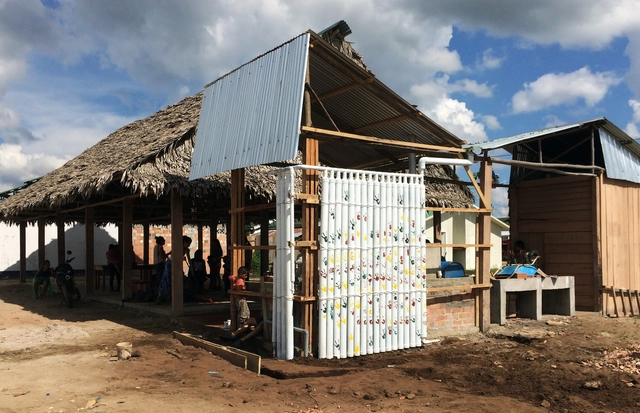
Flood-prone cities and water scarcity in the Amazon: contradictions and problems that are further exacerbated by climate change. While population resettlement is a solution in itself, it generally tends to be unsustainable, eventually evolving into a more complex issue. This stems from a lack of viable livelihoods and the limited adaptation of architectural and urban infrastructure to the specific cultural, social, and environmental realities of each context. How can sustainability be achieved? CASA [Self-Sustainable Amazonian Cities], as its name suggests, is a program whose work focuses on vulnerable Amazonian populations seeking to become sustainable and progressively resilient throughout their development.

CASA: Planning Sustainable and Resilient Cities in the Amazon - Imagen 4 de 4CASA: Planning Sustainable and Resilient Cities in the Amazon - Imagen 18 de 4CASA: Planning Sustainable and Resilient Cities in the Amazon - Imagen 19 de 4CASA: Planning Sustainable and Resilient Cities in the Amazon - Imagen 20 de 4CASA: Planning Sustainable and Resilient Cities in the Amazon - More Images+ 22

'100 in 1 Day Chimbote': Northern Peru is activated by more than 100 simultaneous urban interventions

Subscriber Access | 

Not long ago, we read in one of the winning texts of the National Criticism Competition: “In Chimbote, a city that grew turning its back on its bay, shaped by the pursuit of an economically productive life, there is not much to do, not much to enjoy. And this is not only due to the lack of venues for cultural or recreational activities, but because in the street itself, in the public space, there is not much to encounter. It seems difficult for this situation to change when it comes to building the city (…) in a city that became boring, useful only for a precarious economic production, where the street is merely a transit space, of coming and going without much emotion (…). Hopefully, boredom will not rob us of the ability to imagine new ways of growth for our city.” A harsh and challenging critique of the city's future trajectory.

Today, this project emerges as a response, showcasing alternative ways of seeing, living, and growing for this warm city on Peru's northern coast. It is a way to rediscover a vibrant, colorful Chimbote, and we are thrilled to present and highlight it here: the flip side, the actions taken in response to criticism, or precisely what critical thinking can achieve. Beyond being a breath of fresh air, it serves as a replicable model of small yet significant initiatives that can be carried out in cities across the country, beyond Lima.

'100 in 1 Day Chimbote': Northern Peru is activated by more than 100 simultaneous urban interventions - Imagen 1 de 4'100 in 1 Day Chimbote': Northern Peru is activated by more than 100 simultaneous urban interventions - Imagen 2 de 4'100 in 1 Day Chimbote': Northern Peru is activated by more than 100 simultaneous urban interventions - Imagen 3 de 4'100 in 1 Day Chimbote': Northern Peru is activated by more than 100 simultaneous urban interventions - Imagen 4 de 4'100 in 1 Day Chimbote': Northern Peru is activated by more than 100 simultaneous urban interventions - More Images+ 45

Winners of the 18th Biennial of Architecture and Reconciliation “Rethinking the Territory” in Peru

To start at the end: last Saturday, September 8, 2018, the award ceremony was held for the XVIII National Biennial of Architecture and Reconciliation “Rethinking the Territory”, an event co-organized by the Architects' Association of Peru - La Libertad Region, and the Architects' Association of Peru. This concluded a three-day series of events designed to foster reflection and showcase the work produced in Peruvian architecture over the last two years. We attended the biennial in the city of Trujillo, where its decentralization, return to long-forgotten values, and rethinking of the territory invite deep reflection—points we will return to later. For now, we focus on presenting the results.

Discover the winning proposals of the 'National Ideas Competition: Plaza 3 Design' in San Isidro, Lima

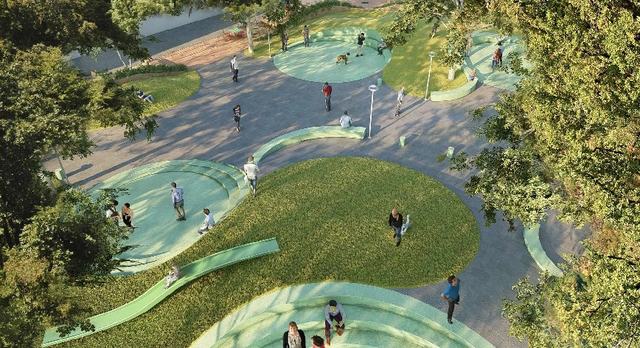
The site where this new plaza will be created is currently underutilized as a public parking lot, failing to leverage the favorable pedestrian conditions of this location, which is surrounded by housing and commerce and strategically located at the intersection of Calle 3 Sur and Av. Del Parque Sur. This gave rise to the National Ideas Competition: Design of Plaza 3 - San Isidro, organized by the College of Architects of Peru alongside the Municipality of San Isidro, with the goal of promoting the development of a reclaimed public space for the benefit of the district's community by creating a welcoming gathering place. At the same time, the urban design proposal is expected to serve as a benchmark for future related competitions.

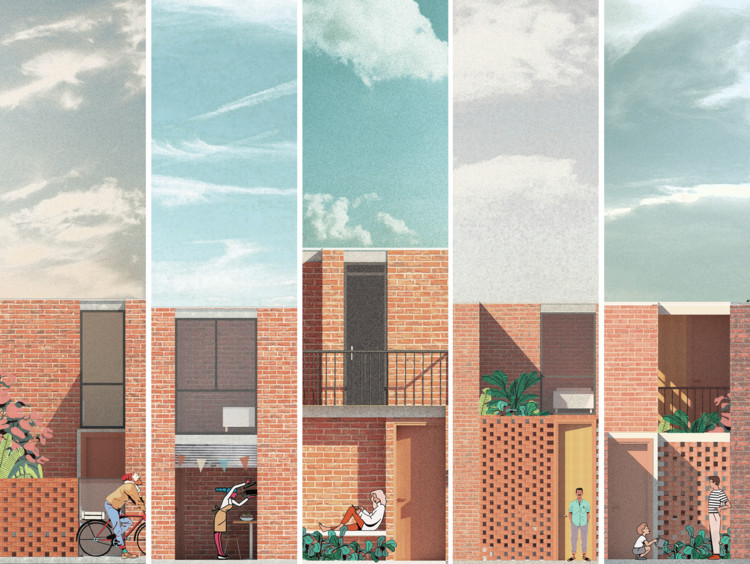
Interspersed Courtyard Houses: A Colombian Proposal to Improve Social Housing in Lima, Peru

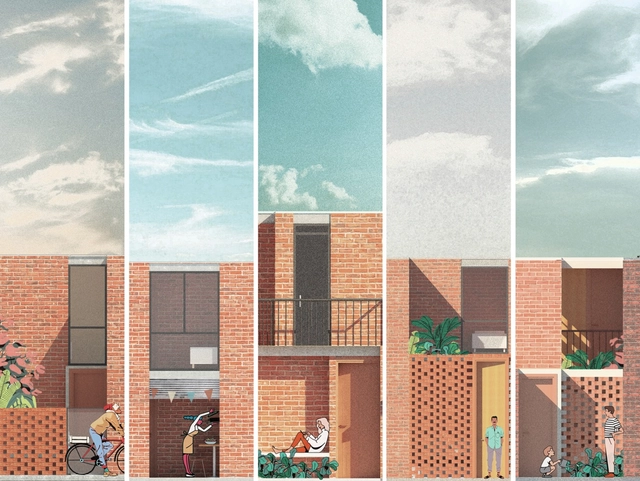
Lima has a strong tradition of courtyard houses, which is why we will always find this typology familiar and captivating. We recognize these courtyards as well-contained and distanced from one another, with each having its own time-space within the home.

Interspersed Courtyard Houses: A Colombian Proposal to Improve Social Housing in Lima, Peru - Image 1 of 4Interspersed Courtyard Houses: A Colombian Proposal to Improve Social Housing in Lima, Peru - Image 2 of 4Interspersed Courtyard Houses: A Colombian Proposal to Improve Social Housing in Lima, Peru - Image 3 of 4Interspersed Courtyard Houses: A Colombian Proposal to Improve Social Housing in Lima, Peru - Image 4 of 4Interspersed Courtyard Houses: A Colombian Proposal to Improve Social Housing in Lima, Peru - More Images+ 48

Nuevo Amanecer Community Center: From a University Workshop to a Community in Chosica, Peru

Subscriber Access | 
Nuevo Amanecer Community Center: From a University Workshop to a Community in Chosica, Peru - Image 51 of 4
Cortesía de Archivos T3 ALBORDE

How many architecture students sit down to listen to a community's needs and transform them into a project to be built during the academic term? Few. While there are several participatory courses in universities, they often remain as proposals—brilliant ones, by the way—without ever materializing; though, of course, they leave us inspired. Meanwhile, other projects that do get built do not necessarily involve an exhaustive dialogue with the residents of the site. In recent years, students at Peru's architecture schools are increasingly engaging with reality, recognizing that the country is an experimental laboratory still under construction. And the project presented here is the first of such complexity to be built within a university workshop.

Nuevo Amanecer Community Center: From a University Workshop to a Community in Chosica, Peru - Image 1 of 4Nuevo Amanecer Community Center: From a University Workshop to a Community in Chosica, Peru - Image 2 of 4Nuevo Amanecer Community Center: From a University Workshop to a Community in Chosica, Peru - Image 3 of 4Nuevo Amanecer Community Center: From a University Workshop to a Community in Chosica, Peru - Featured ImageNuevo Amanecer Community Center: From a University Workshop to a Community in Chosica, Peru - More Images+ 51

‘Seven Bridges for the Talker’: This Is What the Rímac River Park in Lima Would Look Like

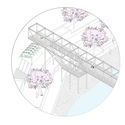
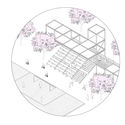
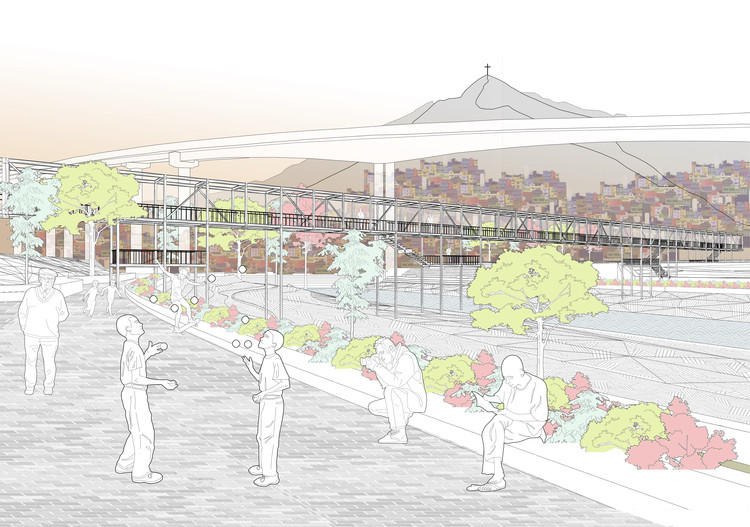
We must talk about this issue repeatedly until we truly listen: the city of Lima turns its back on the Rímac River, which spoke loudly to us last year with overflows and disasters following the El Niño phenomenon. Meanwhile, calls emerged to improve the reality surrounding this important river and contribute to national reconstruction. In this context, the much-needed idea competition ‘Rímac River Park’, organized by the urban solutions incubator Lima Design Network, promoted various ways to protect the boundaries between nature and appropriation, highlighting the imminent urgency for public space. It will not be built—not for now—but through this publication, we aim to stir the waters once again and move people with these sensitive, ideal projects for the city.

‘Seven Bridges for the Talker’: This Is What the Rímac River Park in Lima Would Look Like - Image 1 of 4‘Seven Bridges for the Talker’: This Is What the Rímac River Park in Lima Would Look Like - Image 2 of 4‘Seven Bridges for the Talker’: This Is What the Rímac River Park in Lima Would Look Like - Image 3 of 4‘Seven Bridges for the Talker’: This Is What the Rímac River Park in Lima Would Look Like - Image 4 of 4‘Seven Bridges for the Talker’: This Is What the Rímac River Park in Lima Would Look Like - More Images+ 14

Marianela Castro and José Orrego reveal details of the Peruvian Pavilion at the 2018 Venice Biennale

Subscriber Access | 

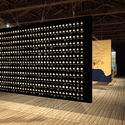
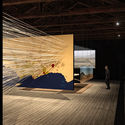
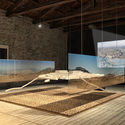
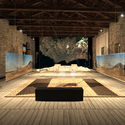
This Saturday, May 26, the Peruvian pavilion at the 2018 Venice Biennale will open, and Lima's huacas will never be seen in the same light again—or at least they shouldn't be—thanks to "En Reserva" (In Reserve), the curatorial proposal by Marianela Castro de la Borda, Janeth Boza, and Javier Lizarzaburu, which manages to synthesize 4,000 years of architecture in a 250-square-meter space.

Through a poetic reading, the curators guide us through an ancient Lima and its contested huacas as a "knot city," seeking to rediscover its infinite potential as a "living city" that develops while respecting all its historical layers. The curators' goal is to highlight the existence of 447 neglected and dormant huacas in the Peruvian capital, while simultaneously revealing their potential to become the public spaces that Lima's residents so eagerly need and desire.

UDEP Classroom Building by Barclay & Crousse stands out internationally for its urban generosity

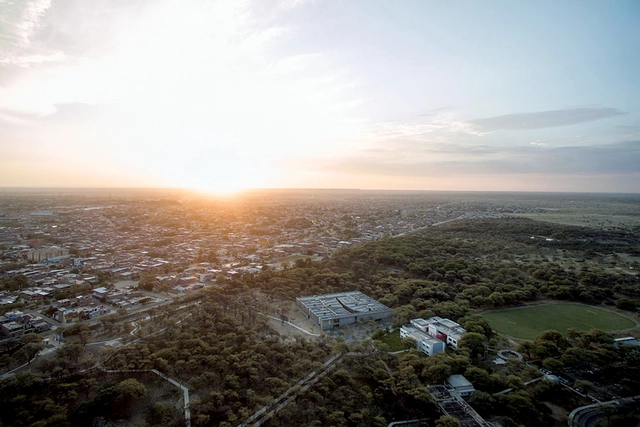
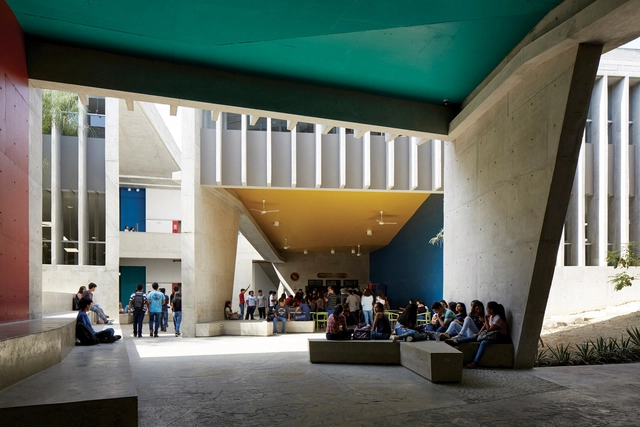
Before discussing how and by whom this project is internationally acclaimed, it is important to recognize its regional relevance. Built for the University of Piura, this classroom building is a robust educational project located in the middle of the northern desert. In light of the events of 2017 in various parts of Peru caused by the devastating El Niño phenomenon—where the north was hit hardest, losing many poorly situated buildings made of inadequate materials—this building stands firm. It exemplifies how to intervene with sensitivity, coherence, and respect for the local climate and landscape, serving as a replicable model for national reconstruction. Furthermore, it represents a major contribution to improving the quality of—and investment in—educational spaces outside the capital, promoting decentralization and offering better education and opportunities to students.

Beyond its domestic impact, the project has also garnered significant international recognition:

First images revealed of what will be the Peruvian pavilion at the 2018 Venice Biennale.

First images revealed of what will be the Peruvian pavilion at the 2018 Venice Biennale. - Imagem 8 de 4
© EILETZ | ORTIGAS Architects

The upcoming opening of the 16th International Architecture Exhibition of the Venice Biennale—taking place starting May 26—is the perfect occasion to begin unveiling the layers of the Peruvian pavilion. Curators Marianela Castro, Janeth Boza, and Javier Lizarzaburu share new images in this feature to offer a closer look at their vision. Meanwhile, commissioner José Orrego, who has led Peru's participation since 2012, highlights the great enthusiasm sparked by the originality of the national competition's winning proposal, chosen from among 40 entries.

The focus of this international exhibition highlights issues central to local architectural discourse, opening the door for these reflections to become proposals that enrich the understanding of our cities. Under the curatorial direction of Yvonne Farrell and Shelley McNamara, the main theme of the Venice Biennale is "Freespace," defined as "architecture's ability to find additional and unexpected generosity in each project." Through this collection of images and ideas, we explore what the curatorial team reveals about this concept.

First images revealed of what will be the Peruvian pavilion at the 2018 Venice Biennale. - Imagem 1 de 4First images revealed of what will be the Peruvian pavilion at the 2018 Venice Biennale. - Imagem 2 de 4First images revealed of what will be the Peruvian pavilion at the 2018 Venice Biennale. - Imagem 3 de 4First images revealed of what will be the Peruvian pavilion at the 2018 Venice Biennale. - Imagem 4 de 4First images revealed of what will be the Peruvian pavilion at the 2018 Venice Biennale. - More Images+ 12