ArchDaily Team

The team behind the world's largest architecture website.

BROWSE ALL FROM THIS AUTHOR HERE
↓
Subscriber Access

Last days to choose the finalists for ArchDaily Brasil's 2026 Obra do Ano Award

Audio available

With only five days left until the finalists are announced, there is still time to choose your favorite projects for the 2026 Obra do Ano Award. As the largest architectural award in the Portuguese-speaking world decided by popular vote, the Obra do Ano is dedicated to recognizing the best architectural projects published every year on ArchDaily Brasil.

On April 8, the 15 finalists chosen by the ArchDaily community over these two weeks of nominations will be revealed. By nominating projects, each reader becomes part of an unbiased network of jurors, bringing visibility to the best of architecture in Portuguese-speaking countries.

Subscriber Access

The Life and Work of Lilly Reich, According to Laura Martínez de Guereñu and Anna Ramos

Audio available

Nicolás Valencia speaks with Anna Ramos, director of the Fundació Mies van der Rohe, and architect and researcher Laura Martínez de Guereñu, author of ⁠Lilly Reich in Barcelona: The Materialization of a Neglected Authorship⁠.

Martínez de Guereñu examines the body of work created by Lilly Reich and Mies van der Rohe as a creative partnership: from the famous Glass Room at the Die Wohnung (The Dwelling) exhibition in Stuttgart and the Velvet and Silk Café at the Die Mode der Frau (Women's Fashion) exhibition in Berlin, both in 1927, to their masterpiece for the German section of the 1929 Barcelona International Exposition, the official German Pavilion.

Subscriber Access

Christian de Groote: Five Decades of Modern Architecture

Audio available

Nicolás Valencia talks with Chilean architects Emilio de la Cerda and Paulette Sirner about ⁠Archivo Christian de Groote: cinco décadas de arquitectura⁠, a comprehensive publication on the vast work of one of the leading Chilean architects of the second half of the 20th century.

Subscriber Access

Eight Timber Houses in Chile with Cristián Izquierdo

Audio available

In Santiago, Nicolás Valencia speaks with Chilean architect Cristián Izquierdo, author of the book ⁠Composición Centralizada⁠, a collection of eight essays on eight houses designed and built by Izquierdo in Chile, weaving together theory and practice.

Who is Cristián Izquierdo? He holds a degree in architecture from the Pontificia Universidad Católica de Chile and an MSc from Columbia University. He is a partner at Izquierdo Lehmann Arquitectos and the founder of Taller Tecton, where he develops low-emission civic projects. He is the author of Composición Centralizada and El material de lo construido. His work has been recognized with honors such as Architectural Record's Design Vanguard and the AOA Medal for Outstanding Young Architect. He is a professor at the Pontificia Universidad Católica de Chile.

Subscriber Access

Sebastián Irarrázaval, the architect as translator

Audio available

Nicolás Valencia speaks with Chilean architect Sebastián Irarrázaval following the release of ⁠Escritos y arquitectura,⁠ the first monograph on his career, curated by Fernanda de Maio, published by Lettera Ventidue Edizioni in a bilingual Spanish and Italian edition, and funded by the 2023 National Fund for the Arts and Culture.

Who is Sebastián Irarrázaval? He graduated with a degree in architecture from the Pontificia Universidad Católica de Chile. He founded Sebastián Irarrázaval Arquitectos, an office through which he has developed housing, public architecture, and cultural facilities in Chile and abroad. He has served as a faculty member at the UC School of Architecture, where he taught design studios and project courses. His work has been widely published and exhibited, earning various national and international awards, and is notable for its experimental approach to materials, construction systems, and the adaptive reuse of existing structures.

Subscriber Access

Hotels, Seaside Resorts, and Trains: The Architecture of 20th-Century Tourism with Macarena Cortés

Audio available

Nicolás Valencia talks with Chilean architect Macarena Cortés, author of Turismo y Arquitectura Moderna en Chile, an exploration of the architecture that helped shape Chile as a tourist destination starting in the mid-1930s through railway advertising.

Subscriber Access

Ángela Stassano: “I grew up in a house that already had climate responses without being called bioclimatic architecture”

Audio available

Nicolás Valencia talks with Honduran architect Ángela Stassano, designer of the Copán Sculpture Museum and one of Central America's leading architects. Recorded in the Honduran city of San Pedro Sula, Stassano discusses her bioclimatic architecture publications, scooter anecdotes, and the history of Honduras.

Subscriber Access

Imitate, Quote, or Copy: What Inspires Chilean Architecture?

Audio available

Nicolás Valencia converses with Chilean architects Juan Pablo Urrutia, Beatriz Coeffé, and Felipe Corvalán, co-authors of ⁠Imitate, Cite, Copy? Essaying a Genealogy of Contemporary Chilean Architecture, a unique project in Latin America designed to trace the influences and references of those selected for the 2019 Chilean Architecture Biennial.

Subscriber Access

Earthen Architecture in Chile with Soledad Díaz de la Fuente and Robert Newcombe

Audio available

Nicolás Valencia speaks with the Chilean-British duo Soledad Díaz de la Fuente and Robert Newcombe, co-authors of ⁠Guía de arquitectura en tierra del valle del Loncomilla: San Javier⁠ and ⁠Material didáctico - arquitectura en tierra del valle del Loncomilla: San Javier.⁠

Both books provide an unprecedented record of earthen architecture in Chile's Loncomilla Valley, highlighting more than 40 projects that demonstrate the potential of this construction method as a viable and sustainable alternative.

Converging Architectural Trends in 2025: Circularity, Biomaterials, and Carbon-Conscious Design

The phenomenon known in biology as convergent evolution describes how distant species can develop similar structures when confronted with comparable challenges. Dolphins and ichthyosaurs, for example, are separated by millions of years of evolutionary history, yet both evolved nearly identical hydrodynamic bodies. Architecture has its own parallels: A-frame structures emerged independently in both the European Alps and Japan, even without direct cultural exchange, as spontaneous responses to snow, wind, and material scarcity.

Resilient Footprints: ELEA XXXVII Ecuador

From October 12 to 19, 2025, the city of Cuenca became the gathering point for more than 150 architecture students from 13 Latin American countries. The 37th Latin American Meeting of Architecture Students (ELEA XXXVII)—held as part of the 40th anniversary of the Latin American Coordinator of Architecture Students (CLEA)—proposed rethinking the role of architects in the face of contemporary territorial challenges.

Coordinated by architect Fernando Abarca, with the support of CLEA, the National Organization of Architecture Students of Ecuador (ONEA), the University of Azuay (UDA), the University of Cuenca (UCUENCA), and the Andean Parliament, the meeting adopted "Resilient Traces" as its conceptual framework: an invitation to read the city not only as a physical substrate, but as memory, conflict, and opportunity.

Subscriber Access

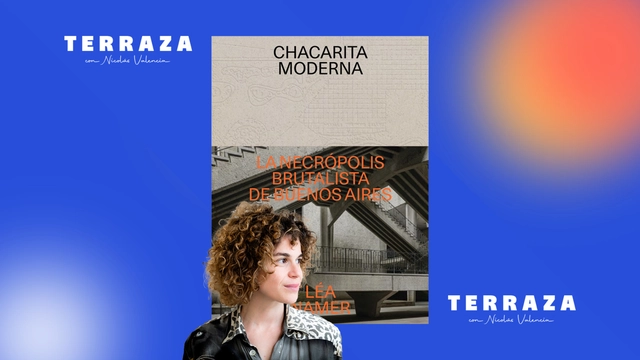
Ítala Fulvia Villa and her Brutalist necropolis in Buenos Aires, according to Léa Namer

Nicolás Valencia speaks with French architect Léa Namer, author of ⁠⁠Chacarita Moderna, ⁠⁠the Brutalist Necropolis of Buenos Aires,⁠ where she investigates the Sexto Panteón in the Argentine capital and the history of its forgotten architect, Ítala Fulvia Villa.

Arquiteturas Film Festival 2026 Opens Call for Films on the Urban Era

The Arquiteturas Film Festival has opened submissions for its 13th edition, which will take pace from July 1 to 5, 2026, in Porto, Portugal. Organized by INSTITUTO and directed by architect Paulo Moreira, the festival was founded in 2013 and has established itself as an international platform dedicated to discussing and disseminating architecture in dialogue with cinema, visual and spatial arts, critical thought, and interdisciplinary collaboration.

Under the theme "Urban Age," the 2026 edition invites filmmakers, architects, and artists to reflect on the urban era we inhabit and the ways in which cities and territories are shaped by contemporary social, political, and environmental challenges. The festival proposes a reflection on the lived experience of urbanization—from the material forms of architecture to the social and cultural dynamics that define contemporary cities.

Subscriber Access

The Origins of Santiago's Parks, According to Romy Hecht

Nicolás Valencia talks with Chilean architect Romy Hecht, Dean of College UC and author of El alma del verdor de Santiago⁠, (Orjikh Editores, 2025), where she explores the nature of the landscape in Chile's capital, examining its origins and identifying the key figures responsible for cultivating exotic species and designing planting geometries that, once rooted, shaped Santiago's identity and character.

Subscriber Access

Data Centers, Blind Boxes, and Digital Clouds, According to Marina Otero Verzier

Nicolás Valencia speaks with Spanish architect Marina Otero Verzier, winner of the 2022 Wheelwright Prize, about her research on the material and extractive cost of the digital cloud, a topic she explores in her book ⁠In the Depths of the Cloud⁠, published in 2024 by Ediciones Asimétricas.

Subscriber Access

How Heavy is a City? Exploring the Lisbon Architecture Triennale 2025

How heavy is a city, and what does that weight mean for our collective future? This provocative question guides the 7th edition of the Lisbon Architecture Triennale, which proposes an inquiry into the transformations of urban life and the material, social, and environmental consequences of inhabiting the planet today. From October 2 to December 8, Lisbon will once again host one of Europe's most significant architectural events.

Curated by Ann-Sofi Rönnskog and John Palmesino, founders of the practice Territorial Agency, the Triennale investigates the magnitude of contemporary cities and their planetary impact. Composed of nearly 30 trillion tons of materials, global cities form a dense and intricate web of continuously evolving structures. To unpack these complexities, the Triennale opens itself as a space of learning, curiosity, imagination, and debate — a meeting ground for architects, researchers, artists, and the wider public.

Subscriber Access

São Paulo Architecture Biennial 2025 — Extremes: Architecture for a Hot World

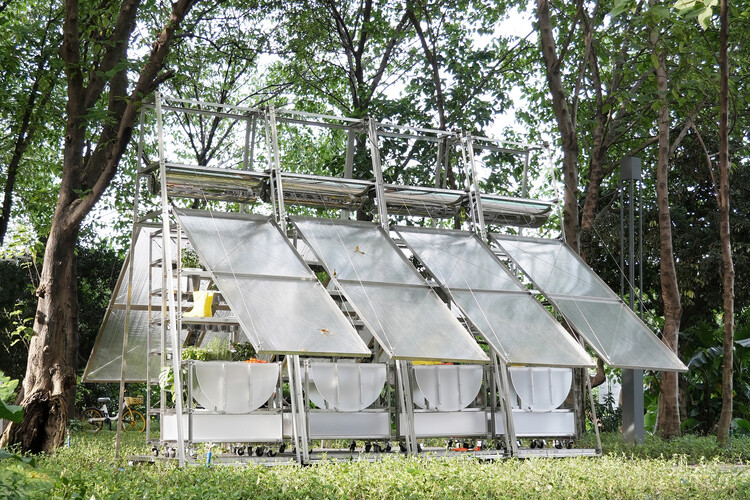
From September 18 to October 19, 2025, the 14th São Paulo International Architecture Biennial, organized by IABsp, will occupy the Oca Pavilion in Ibirapuera Park to discuss how architecture, urbanism, design, and landscape architecture can address climate change and extreme events.

The curatorial concept stems from the understanding that we live in times of extremes, demanding radical and innovative solutions. Across the four floors of the Oca, the curators aim to bring together science and innovation, traditional knowledge, everyday practices, market-driven proposals, and state actions, asserting that the climate challenge must be confronted by society as a whole.

São Paulo Architecture Biennial 2025 — Extremes: Architecture for a Hot World - Imagen 1 de 4São Paulo Architecture Biennial 2025 — Extremes: Architecture for a Hot World - Imagen 2 de 4São Paulo Architecture Biennial 2025 — Extremes: Architecture for a Hot World - Imagen 3 de 4São Paulo Architecture Biennial 2025 — Extremes: Architecture for a Hot World - Imagen 4 de 4São Paulo Architecture Biennial 2025 — Extremes: Architecture for a Hot World - More Images+ 5

Subscriber Access

World Photography Day: 25 Rising Architectural Photographers to Watch in 2025

Architectural photography provides a window into the built world, making significant structures more accessible to people who may never have the chance to visit them. A good architectural photograph captures more than just the physical structure; it conveys the mood, scale, and context of a space. Each photograph is unique and shaped by the photographer's eye, which conveys their sensitivity and perception of the built environment through their lens.

World Photography Day: 25 Rising Architectural Photographers to Watch in 2025 - More Images+ 21