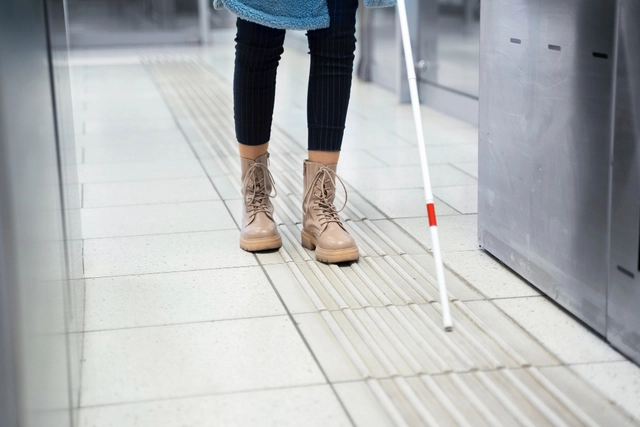
Although people with disabilities represent nearly 15% of the global population, and more than half of them live in urban areas, our cities rarely meet their needs. Most are designed from the perspective of non-disabled people traveling by private transport (such as cars and motorcycles), rather than those who walk, cycle, or use public transportation.
https://www.archdaily.com/1078840/how-to-ensure-access-to-the-city-for-people-with-disabilitiesITDP Brasil
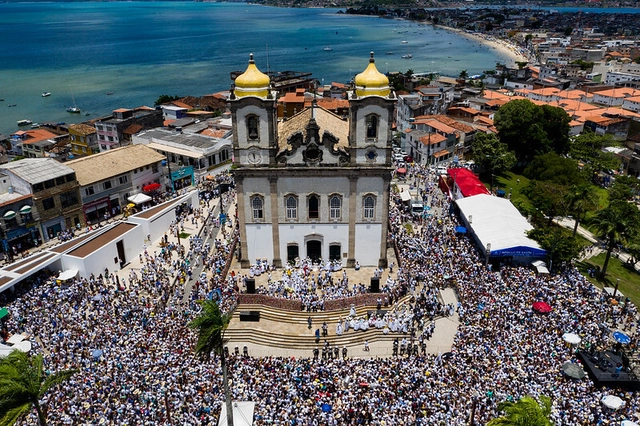
In Brazil, popular festivals share a deep spatial, historical, and symbolic connection with urban public spaces, providing a unique experience of collective occupation, appropriation, and reimagining of these sites during their occurrence. These events not only utilize urban spaces in ways that differ from their daily routines, but they also constitute the cultural and social landscape of cities, offering alternative ways of perceiving them. By appropriating the streets—in their full potential and broadest sense—these festivities imbue them with new uses, which often transcend and subvert their everyday functions.
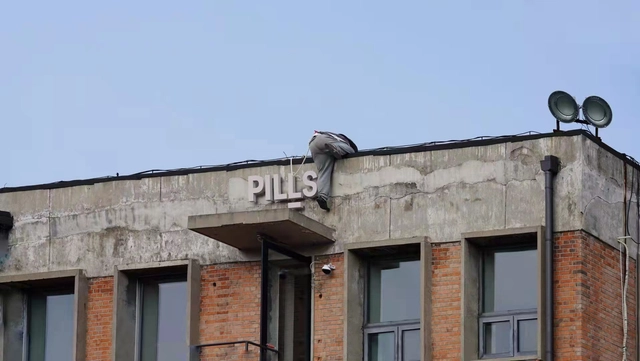
PILLS is a multidisciplinary architecture studio based in Beijing and Shenzhen. Our practice spans speculative fields including architecture and interior design, installation and exhibition design, urban and landscape design, as well as cross-media production and cultural dissemination. Ranging from installations to public buildings, and from cultural projects to commercial developments, PILLS actively responds to diverse urban and architectural design needs while driving the production of contemporary architectural culture through various media.
The architectural, research, and art projects of PILLS are widely recognized within the industry. The studio's work has been showcased in major international exhibitions, including the Venice Architecture Biennale, the Lisbon Architecture Triennale, the Oslo Architecture Triennale, the Seoul Biennale of Architecture and Urbanism, Helsinki Design Week, the Bi-City Biennale of Urbanism\Architecture (UABB) of Shenzhen and Hong Kong, the Shanghai Urban Space Art Season (SUSAS), the Beijing Art Biennale, the National Exhibition of Fine Arts, the Power Station of Art (PSA) Emerging Curators Project in Shanghai, the Hyundai Motorstudio Beijing Youth Curator Program, Get It Louder, the "Nine-Tiered Pagoda" exhibition at Pingshan Art Museum in Shenzhen, and the "A New Generation of Working Methods" exhibition at Wind H Art Center. The studio's work has also received numerous awards, including the New York ADC Awards for Design Studio of the Year, Best of Discipline, and Gold Cube; the London Design Awards Platinum Winner (highest honor); the MUSE Design Awards Platinum Winner (highest honor); the Norman Foster Foundation "Kharkiv Housing Challenge" Second Prize; First Prize in the Fairy Tales Competition; First Prize in the Jacques Rougerie Foundation Competition; and the Organizing Committee Award and Academic Committee Award of the Bi-City Biennale of Urbanism\Architecture (UABB).
Wang Zigeng, founder and principal architect of PILLS, is an architect, artist, and curator. He is an Associate Professor and Deputy Head of the Department of Architecture at the School of Architecture, Central Academy of Fine Arts (CAFA). He holds a Master of Architecture from Princeton University. He served as the Chief Curator and Academic Committee Member of the 9th Bi-City Biennale of Urbanism\Architecture (UABB). He is also an Academic Committee Member of the Greater Bay Area Innovation Institute of the Guangzhou Academy of Fine Arts and the Benyuan Design and Research Center of Shenzhen University. Previously, he was a visiting professor at Syracuse University, a lecturer at the Fine Arts School of Beijing Film Academy, and an open studio instructor at the School of Architecture, Tsinghua University. His research fields include environmental technology, architectural exhibitions, and architectural media and narrative.
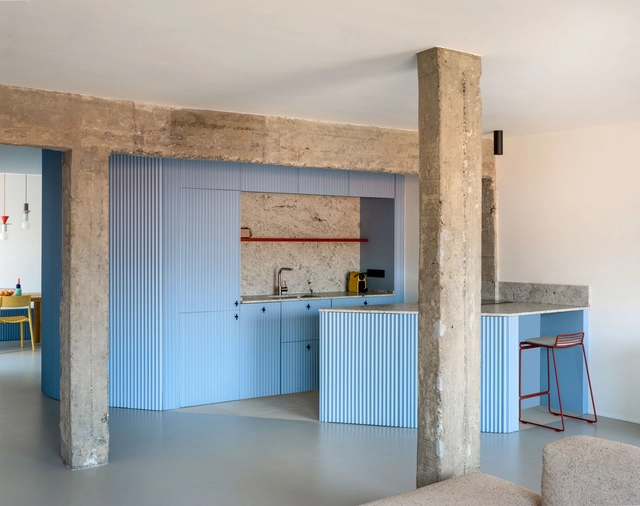
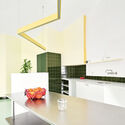
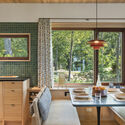
Weary of minimalist, cookie-cutter standards, people are increasingly seeking spaces with character, featuring pieces that reflect their own identity. At least, that is one interpretation when we consider that kitchens with "bold colors, clashing patterns, artwork, plants, and, of course, the mandatory refrigerator penguin" are trending in Pinterest for 2024. Fueled by the return of a kitsch aesthetic and these eclectic elements, we have selected several projects published on ArchDaily to inspire a transformation in this essential household space.
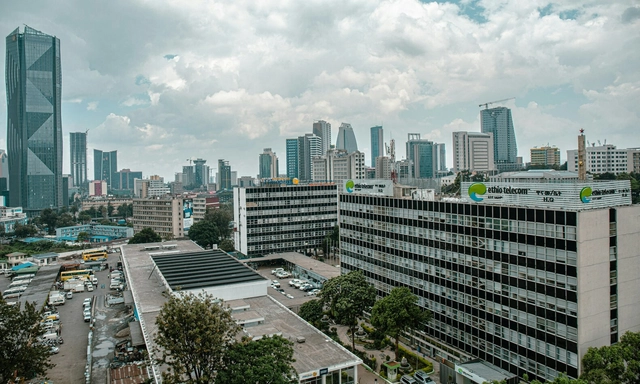
With an estimated population of over 3.7 million people, Addis Ababa, the capital of Ethiopia, is home to about a quarter of the country's urban population. The city generates more than 29% of Ethiopia's urban GDP and 20% of national urban employment. Over the last two decades, Addis Ababa has witnessed rapid socioeconomic changes and a drastic physical transformation, driven by a development-oriented government and the private sector.
Courtesy of Instituto Lina Bo e P.M. Bardi. Unknown author
“When I cannot build, I draw; when I cannot draw, I write; when I cannot write, I speak.” With this maxim, Le Corbusier leaves no doubt that, for him, the architect’s ultimate mission is construction. It is construction that underpins and fuels the technological and intellectual development surrounding the discipline of architecture: ways of building, creating space, and inhabiting. Yet, as he suggests, any linguistic resource—drawing, writing, or speech—can serve as a vehicle for construction.
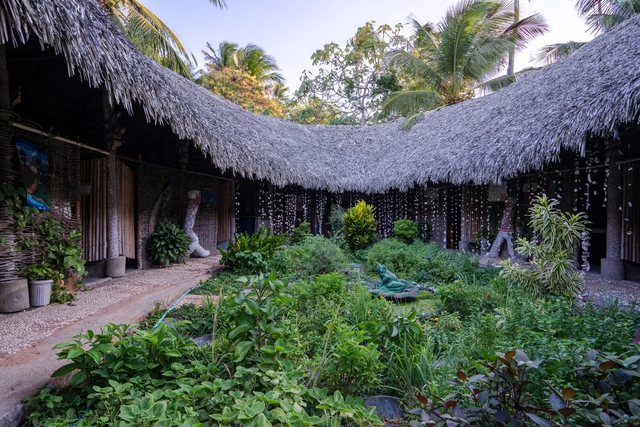
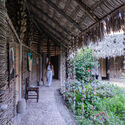
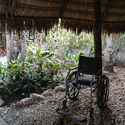
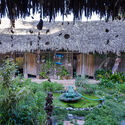
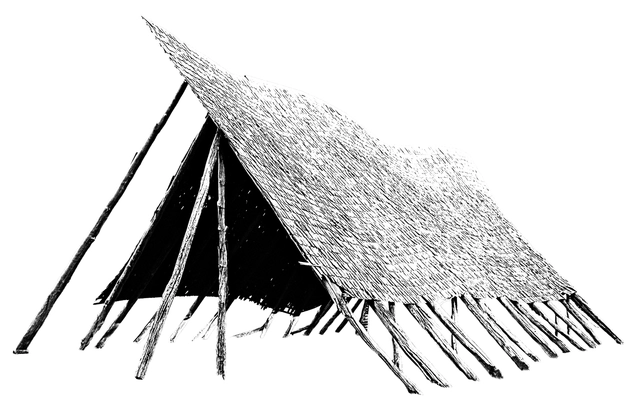
The Oca da Saúde is one of the buildings that comprise the 4 Varas Integrated Mental Health Movement (MISMEC), located in Barra do Ceará, on the outskirts of Fortaleza. It serves as a healing space, offering free holistic care and experiences to the community. Built by traditional master builders alongside local residents, the structure features an Afro-Indigenous architectural typology rich in ancestral symbolism.
https://www.archdaily.com/1078872/community-architecture-for-healing-the-health-oca-at-the-4-varas-integrated-mental-health-movementAdrísia Marques e Clevio Rabelo
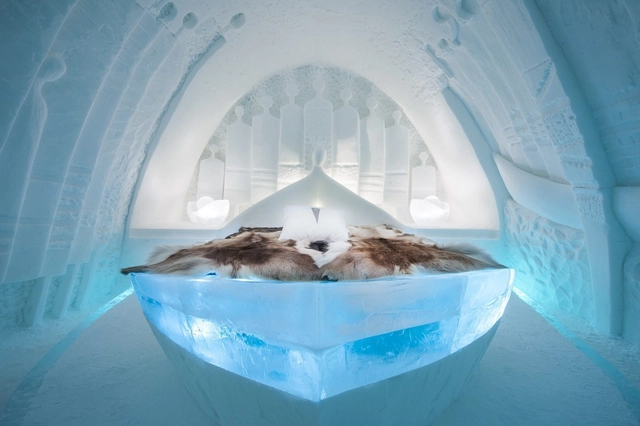
When the first rays of sun strike the Swedish town of Jukkasjärvi, as winter gives way to spring, this ice hotel begins to melt. Five hundred tons of water flow toward the Torne River. What were once walls, floors, and ceilings are now drops of water seeking their natural course. In this scene, which has occurred every year since 1989, everything is a contradiction: the solidity and longevity of construction versus the ephemerality and transience of ice sculpture.
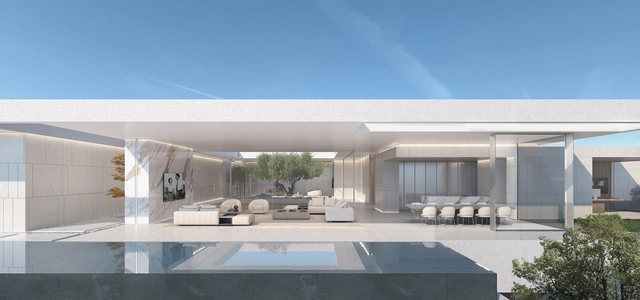
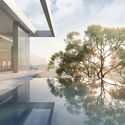
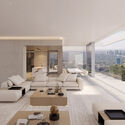
Located in the Bird Streets of Los Angeles, adjacent to Beverly Hills, the Blue Jay Way Residence occupies a prime, elevated site overlooking the Los Angeles and Hollywood skylines. The project’s open floor plan establishes a strong visual and experiential connection between the interior and the panoramic city views, complemented by staggered courtyards and warm white materials that invite a play of light and shadow into every corner of the building.
How can architecture and urbanism contribute once again to the debate and production of Social Interest Housing (HIS)? This was one of the central questions guiding the creation of the Social Interest Housing Guidelines Manual for Jardim Lapena, developed by the Tide Setubal Foundation and BlendLab for the East Zone of São Paulo. This manual gathered a set of guidelines on housing, management models, implementation, and integration with the urban environment, directing the proposals for the +Lapena Habitar Call for Projects held in late 2022.
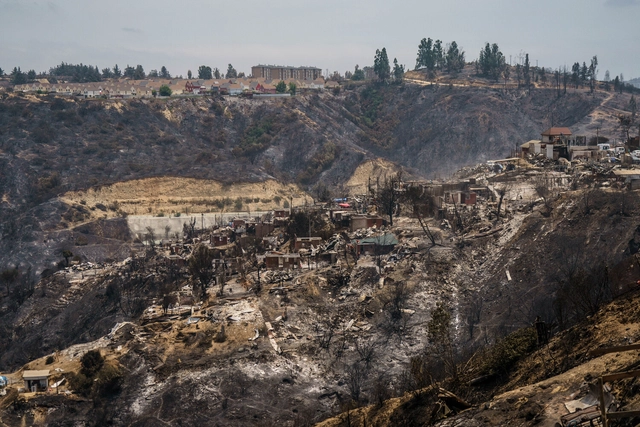
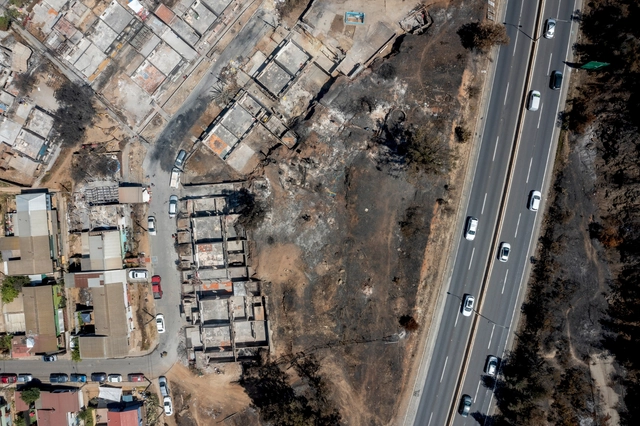
Consequently, the community and authorities must once again begin the process of rebuilding and restoring the affected areas. At this critical juncture, it is paramount to consider the factors that heightened the risk and spread of the fires, and to reevaluate urban planning regulations, land regularizations, and, above all, community risk-prevention education—especially since many of these homes were built informally and outside existing codes.
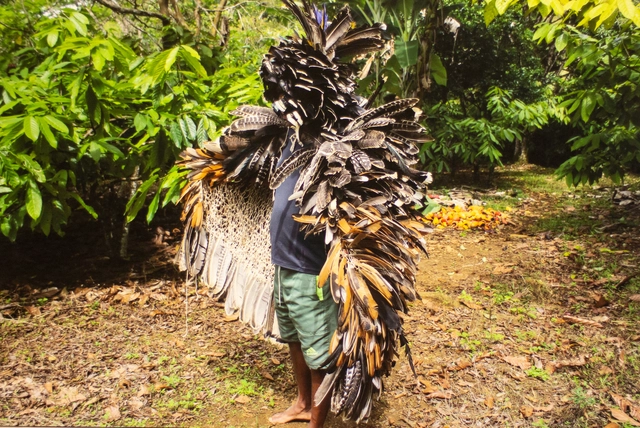
Glicéria Tupinambá. Tupinambá cloak, 2023. Courtesy of the artist. Photo: Glicéria Tupinambá
Hãhãwpuá is the name used by the Pataxó Indigenous people of Brazil to refer to the land, the soil, or, more precisely, the territory that after colonization became known as Brazil, though it has had—and still has—many other names. Amidst all these “Brazils,” Brazil as Indigenous land is the focus of the country's pavilion at the Venice Art Biennale 2024, which has consequently been renamed the Hãhãwpuá Pavilion.
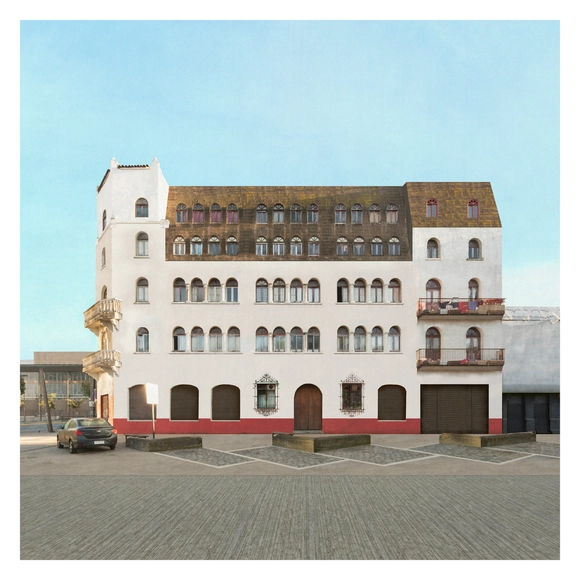
The images in this exhibition seek to create a space for reflection on a condition that can be extrapolated to the current state of the city of Concepción, Chile. They offer a simultaneous view of architectural works related by technique, scale, or construction period, capturing the distinctive identity that defined the city over the last 100 years—one that is currently threatened by an urban renewal process far removed from the motivations that gave rise to its heritage legacy.
As of this writing, the death toll exceeds 130, with over 15,000 homes affected by the megafires in Valparaíso, Viña del Mar, and Quilpué, which struck Chile in early February 2024. Above all, this tragedy forces us to once again confront the lack of urban planning and to continue improving prevention, evacuation, and warning systems. These events also demand—once again—that we outline a diagnosis and concrete courses of action toward necessary adaptation.
Founded in Shanghai in 2002 by a group of architects with academic backgrounds from China and abroad, Verse Design currently operates offices in Shanghai and Los Angeles. For over two decades, Verse Design has been deeply engaged in multi-scale practices across urban design, architectural design, community making, and residential product systems, developing a systematic and coherent design logic and methodology. From master planning and urban design to schematic design and detail control, a "craftsman's spirit" underpins every phase of their work.
Cultural and tourism resort towns, neighborhood communities, civic spaces, and community retail form the core of the firm's spatial typologies and research. Over the past decade, Verse Design has master-planned and fully designed a series of resort towns for the renowned lifestyle brand Aranya, including projects in Qinhuangdao, Jinshanling, Wuling Mountain, Sanya, and Jiulong Lake in Guangzhou. Additionally, the firm has been deeply involved in the master planning and architectural design of prominent projects such as Jiangshan Wanli, Prolo Utopia, and Shanghai Vanke's Ideal Land.
Verse Design maintains a boutique team size and a flat management structure, offering architects a highly autonomous working environment. Here, team members engage in multi-dimensional, full-phase projects ranging from early-stage programming and urban design to architectural design and detail execution. We welcome talented, like-minded architects to join us and grow alongside the firm. The office is located in a historic garden villa at the intersection of Zhaojiabang Road and Wulumuqi Road in Shanghai, just 50 meters from the Zhaojiabang Road Metro Station (Lines 7 and 9), offering easy accessibility and a comfortable working environment.
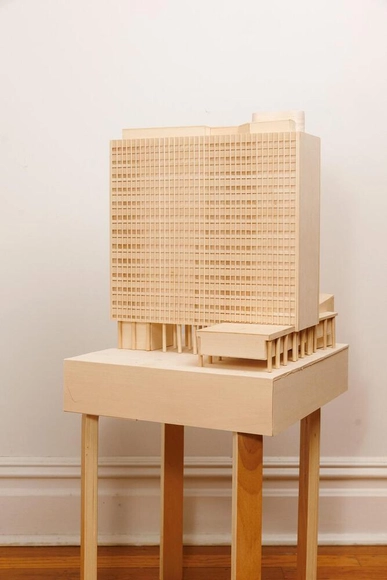
Conceived during the Fall Residency Program for Independent Projects at the IPA – Institute for Public Architecture, the project “The other of the other” (2023) was developed through visits to and research in a series of institutional sites and archives in New York City—resources that have influenced Talles Lopes's work since 2018. These primarily include spaces and archives related to the dissemination of Brazilian modernist architecture in the Global North from a New York perspective, specifically the MoMA archives in Manhattan.
OUTIN.DESIGN was founded in 2014 by Chen Wang and Shajun Jiang. Based in China, it is an award-winning, multidisciplinary design firm with international recognition.
OUTIN.DESIGN's creative process begins with the observation of the self, daily life, nature, humanity, art, and the world itself. The studio seeks to gather and translate these impressions, reflecting ideas, objects, and moments through an experimental, functional, and forward-looking design language.
Our practice comprises four interdisciplinary design teams—R.E.C, WMT, SIBAN, and JEDI 404—which operate both independently and collaboratively across boundaries. Their exploration spans a comprehensive range of design scales, including architecture, community interaction, innovative retail spaces, exhibition design, co-working offices, boutique hotels, residential and lifestyle environments, interior styling and sourcing, as well as product design and prop development.
Each team brings a distinct design language and expertise to the table, enabling us to provide clients with comprehensive support across highly specialized, intersecting domains. This structure fosters diversity and pluralism within creative communities and technical innovation, while ensuring the streamlined operation of OUTIN.DESIGN as a cohesive, collective practice.
Some lessons, however simple, can resonate lastingly within our personal practice. This is the case with a specific memory from my undergraduate years in the Architecture and Urbanism program at Escola da Cidade, where, during a second-year technical drawing class, the professors suggested we retrace the floor plans of the Butantã House, designed by architect Paulo Mendes da Rocha. My recollection is that, immediately, some of the students found the activity uninspired or even irrelevant—which is understandable—while for others it was certainly enjoyable and fruitful, even if they might not recall this specific episode more than a decade later, as is the case here. The value of being exposed to different activities within a course—from the most to the least conventional, from the simplest to the most elaborate—is that each individual will utilize different tools and knowledge in unique ways. Hence the importance of a wide range of experiences, even within the seemingly rigid instruction of technical drawing. What is trivial for some can be instrumental for others, whether momentarily or over the long term.
Concrete, in its various facets, exhibits an interesting duality thanks to its aesthetic and technical qualities, which have been explored by architects and designers in different typologies and contexts. On the one hand, reinforced concrete displays the strength and durability required for large-scale construction, efficiently withstanding adverse weather conditions. On the other hand, the malleability of stamped concrete allows it to elegantly adapt to complex shapes and imprint patterns on the surface, utilizing texture and pattern to cultivate a distinct atmosphere within the built environment.
Stamped concrete has gained prominence due to its durability and versatility, offering options and designs that adapt to different architectural styles. However, while we are familiar with its use and applications, specifying it requires a meticulous approach to ensure optimal results. Below is a practical guide covering the essential considerations from Melón Hormigones for specifying this innovative material, from pattern selection to proper care and maintenance.
https://www.archdaily.com/1078784/practical-guide-and-essential-considerations-for-specifying-stamped-concreteEnrique Tovar
Figura 01: Galpón Complejo Recreativo Funcionarios de la Salud. Comuna de Coyhaique, Sector Lago Frío.. Image Cortesía de Alejandro Muñoz Massoglia
The architectural heritage established by the early settlers of the Aysén region—initially a minimal expression of dwelling designed to protect inhabitants from the elements, which later evolved intrinsically alongside the changing needs of its residents—symbolically represents a vernacular architectural identity in wood.
Today, with few exceptions, the remaining houses from the early years of spontaneous settlement in the region show advanced signs of decay. They are often repurposed as storage sheds or outbuildings next to the main house due to degraded materials, a lack of basic utilities, or precarious thermal insulation.
Similarly, although the vast majority of larger and more complex homes from a more recent period—built primarily in urban areas—remain inhabited, the structural decay of these buildings is increasingly evident. This precarious condition is closely linked to their occupants, who are mostly older adults lacking the financial resources or physical capability to undertake necessary repairs.
The craft of architecture is, fundamentally, a practice of approaching the other. While the product expected of the architect is a physical object, it must respond with the utmost sensitivity to the people who will use it—that is, those who will inhabit the space.
During the 1980s and 1990s, a paradigm shift occurred in how the social sciences understood certain social phenomena. Spatiality became a key concept for grounding social phenomena in physical space, giving rise to a new research perspective known as the "spatial turn in the social sciences." This approach aims to anchor social phenomena, such as dwelling, in concrete material spaces, acknowledging that physical space exerts agency over human social life, and vice versa.
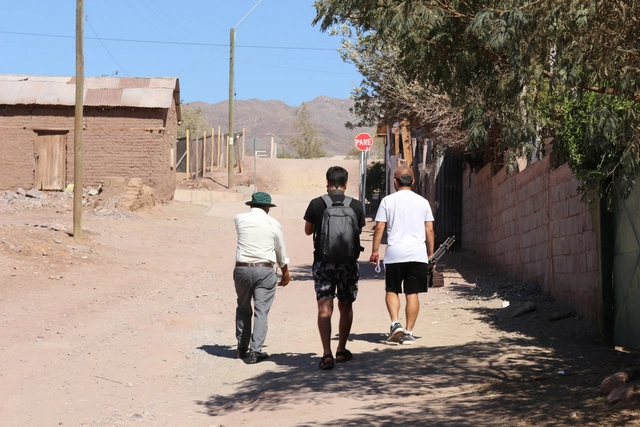
Walking through rural communities in Chile today, it is clear that from a pedestrian perspective, these areas are growing through the application of urban design elements. There is a clash between two realities: on one hand, the historical practices of the residents themselves, and on the other, the introduction of standardized urban development.
Alongside their own ways of life, local residents have been forced to adapt to standardized territorial growth, excluded from decision-making processes regarding interventions in their pedestrian environment. Regulatory frameworks are the tools used by direct operators to intervene in the rural sphere. Generally, the resident—the central subject of social policies—remains a passive and uninformed actor regarding these regulatory frameworks (Tapia, 2007).
Image courtesy of AFT Arquitectos - Bicentennial Library
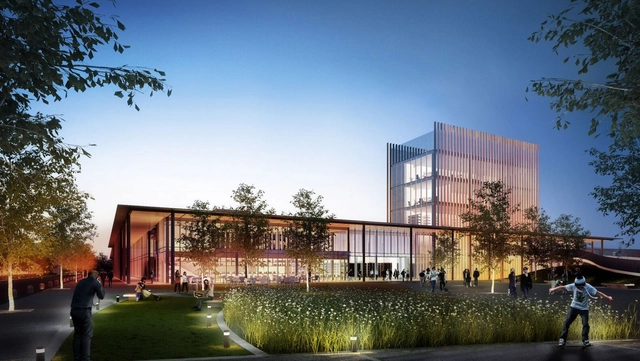
Large-scale urban facilities (GEUs) are generally buildings or complexes of buildings—whether public or private—and spaces where activities complementary to habitability take place. As such, this term refers to those buildings whose function, use, and location impact the development of new centralities. Due to their scope and strategic positioning, they can be identified as urban landmarks within a network of symbolic buildings that characterize globalized cities.
The city of Rosario has a strong track record of urban planning, starting with the 1935 Regulatory Plan by Ángel Guido, Carlos Della Paolera, and Adolfo Farengo, and continuing with Oscar Mongsfeld's 1968 Regulatory Plan. Following the return of democracy in 1983, successive municipal administrations ensured continuity in territorial planning by adhering to the main guidelines of these plans and formalizing others, such as the Master Plan (1991), the Rosario Master Plan (2001), and the Rosario Urban Plan (PUR) 2007/2017, along with its updates.
Lujia Village Community Service Center, Zhengzhou Airport Economy Zone, Public Building, Under Construction | 2023-2024
Wild City Studio was founded in Paris in 2010, and established in Beijing in 2015 as Wild City Factory. An innovative and experimental interdisciplinary architectural practice, its research and practice span architecture, urbanism, landscape, interior and exhibition design, art curation, event planning, content production, the integration of technology and art, and metaverse development.
Founder and principal architect Ye Cheng graduated from the Department of Earth Sciences at Nanjing University before studying in France at the École Spéciale d'Architecture (ESA) in Paris, where his thesis project won the ESA Annual Award. He is the first Chinese recipient of the "Prix des Jeunes Artistes" (Young Artist Award) from the Institut de France. Having lived and worked in France for over a decade, Ye Cheng possesses a cross-disciplinary and cross-cultural background spanning science, architecture, and art, making him a representative figure among China's young interdisciplinary pioneers. He has curated major domestic and international exhibitions, including five editions of the "Reconstructing Utopia" architecture and art exhibition, the "Urban Interconnection" Sino-French Contemporary Architecture Exhibition series celebrating the 60th anniversary of diplomatic relations between China and France, the "Unknown City" Chinese Contemporary Architecture Installation and Video Exhibition, the main exhibition of Beijing Design Week 2015, the inaugural 2019 Nanjing Youth Olympic Art Light Festival, the "Along the River During the Qingming Festival 3.0" Digital Art Exhibition in Hong Kong, and the "Emotional Architecture" exhibition at the Laboratoire d'Exposition in Paris. His large-scale spatial art installations—such as Huntian City, Void Shanshui, Net City, Super-Axis, Ecological Mandala, and Wormhole City—merge Eastern philosophy and aesthetics with modern technology, proposing a poetic vision of "Eastern Urban Shanshui" for future urban spaces and social structures. Furthermore, he independently produced the sci-fi short film Interstellar Folding, which uses cinematic language to explore his "Interstellar Great Bay Area" space city concept. In 2022, serving as the master planner of the "Meta City" metaverse, Ye Cheng collaborated with Meta Media and Baidu to develop and launch this internationally leading metaverse application, pioneering the "Eastern Futurism" metaverse school that integrates Eastern and Western philosophies with urban theory.
Design Philosophy Wild City Factory has consistently adhered to a design philosophy centered on "spatial ontology." From the spiritual to the material, the individual to the world, and reality to the virtual, all questions are fundamentally spatial. Everything begins with space, rooted in the present while spanning the three dimensions of time: past, present, and future. Space is not merely a container, but a connector—linking people to people, space to space, and humanity to space. Space exists in a fleeting moment of time, yet resides in its eternity. In this sense, from architecture to art, exhibition to writing, and observation to criticism, the work of Wild City Factory always revolves around spatial inquiries. Space, ultimately, is the root of all questions.
Externally, our work explores, perceives, imagines, constructs, dissolves, abolishes, and regenerates space within its limitations. Internally, we continuously traverse the "in-between" (jian) within the infinity of space, drawing infinitely closer to its "void" (kong)—the very ontology of space.
Believing that "design is problem-solving," Wild City Factory champions a trinity spatial strategy of "Space-Content-Event." By conducting in-depth research and analysis of project contexts, we integrate this spatial philosophy and methodology into innovative designs. This approach embodies the diverse, multi-directional, and cross-border interdisciplinary nature of our practice.