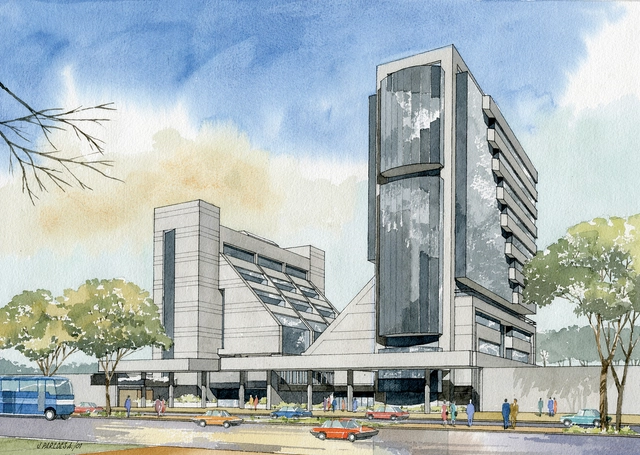

The 1970s and 1980s witnessed a new urban image in the Ecuadorian capital. Rafael Vélez Calisto graduated in 1970, going on to become one of its most prominent and prolific architects. He expressed his architecture for a thriving country and capital that offered unique opportunities to professionals, driven by oil exploitation, the growth of the public and private sectors, and rapid urban expansion.
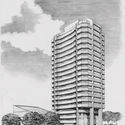
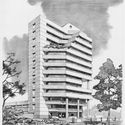
The capital shifted the profile of its main corridors, gradually shaping itself as a vertical city. Along Quito's Avenida Amazonas, the dominant presence of large, still-functional estates gradually disappeared, replaced by high-rise buildings (1)—an urban landscape that continued to spread along new arteries toward the north.
In these areas, several of his notable, contemporary, and cosmopolitan buildings stand out.







.jpg?1535964102&format=webp&width=640&height=580)
.jpg?1523848316&format=webp&width=640&height=580)