With 55% of the world's population living in cities, the concept of circular economy is increasingly prominent in discussions on architecture and urbanism. The goal of circularity is to reduce the environmental impact of the current production and consumption model through the efficient use of material resources and waste reduction. But how can this idea actually be applied to cities?
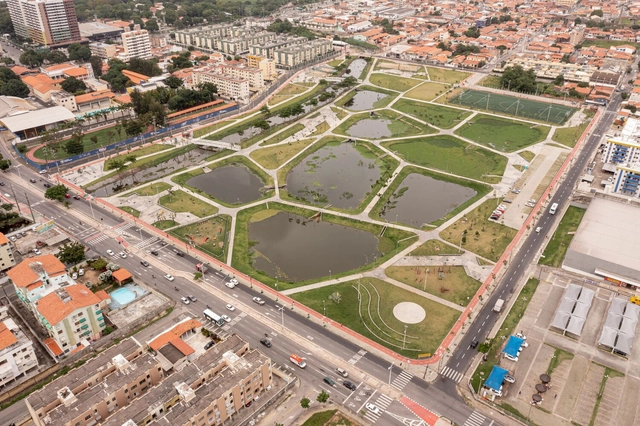
This February 2 marks another World Wetlands Day, held under the theme revitalize and restore degraded wetlands. The 2023 theme highlights that "if done correctly, these sites can offer the same benefits as the original natural wetland."
As part of the XXVI Arquisur Congress “Turns of Architecture,” held from October 11 to 13 at the Faculty of Architecture, Design and Urbanism of the University of the Republic of Uruguay, the winners of the 2023 edition of the Arq. José Miguel Aroztegui Award for Architecture Students, the Arquisur Research Award, and the Arquisur Outreach Award were announced.
https://www.archdaily.com/1136116/discover-the-winners-of-the-2023-arquisur-awardsClara Ott
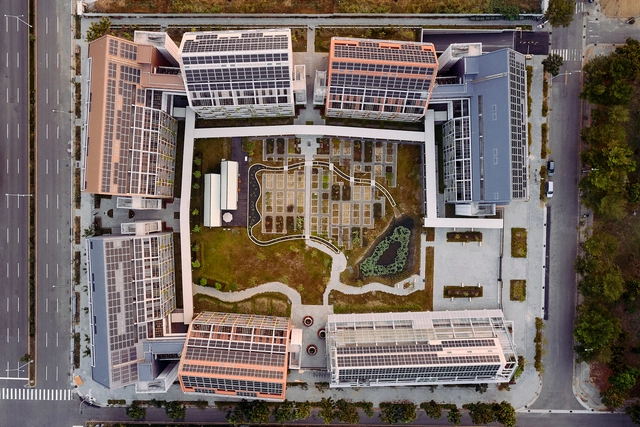
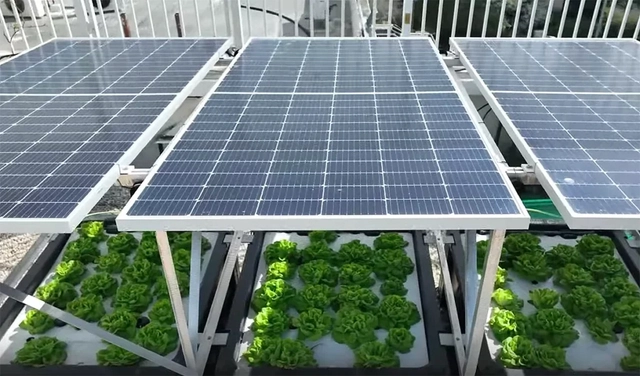
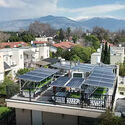
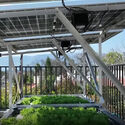
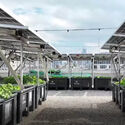
Bringing greenery and, in many cases, vegetable cultivation into urban areas yields countless benefits for city dwellers. Green roofs offer a solution for transforming underutilized areas into true natural oases, helping to mitigate urban heat islands, absorb rainwater, improve air quality, control noise levels, and attract biodiversity.
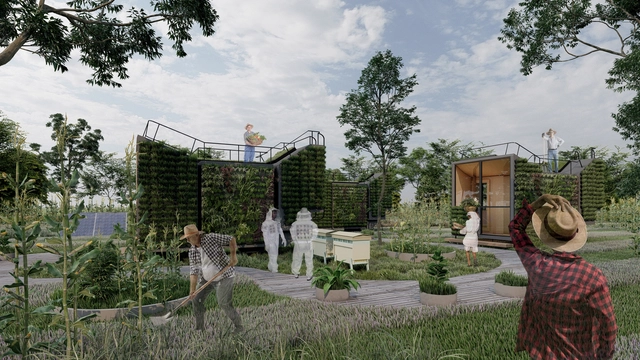
Habitat X is part of an ongoing research initiative developed over more than 12 years, led by Argentine architect Alejandro Borrachia, involving over 100 professors, students, and graduates from the University of Morón – School of Architecture and Design (UM-ESAD) alongside multidisciplinary actors and strategic partners from both the private and public sectors. Focusing on theoretical inquiry and the physical realization of a series of prototypes, the project engages with a specific program based on contemporary societal concerns and needs, connecting with processes, hypotheses, and case studies that spark unprecedented disciplinary shifts.
A resident of Vitória might not think of the Jucu River Basin forests when pouring a glass of water. Uruguayans likely do not think of the Amazon Rainforest when they watch rain fall on city parks. And residents of Addis Ababa are probably not thinking of the Congo Basin when they eat injera, a traditional Ethiopian staple made from teff grain.
Yet, forests near and far affect the daily lives of these people more than they realize.
https://www.archdaily.com/1136051/how-forests-benefit-people-living-in-citiesSarah Wilson, John-Rob Pool, Mack Phillips e Sadof Alexander
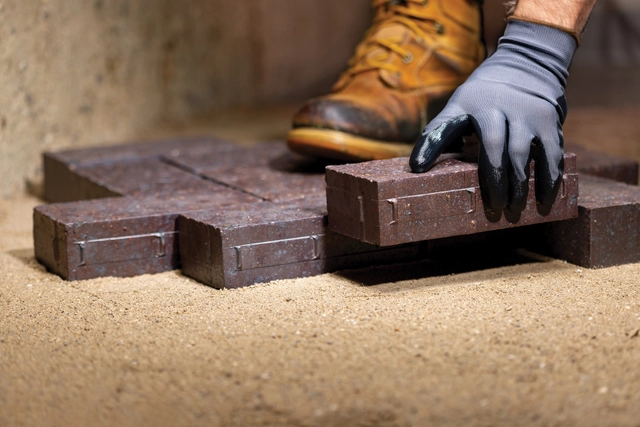
Composed of extremely fine mineral particles and formed through the long-term weathering and erosion of rock, clay possesses unique properties that make it highly versatile. When wet, it becomes highly plastic and malleable, allowing it to be molded into virtually any shape. Once dried and fired, it becomes hard and durable, leading to its widespread use in construction and ceramics. In outdoor applications, clay pavers are particularly common, favored for their durability, resistance to weathering and traffic, natural earthy tones, and ease of installation.
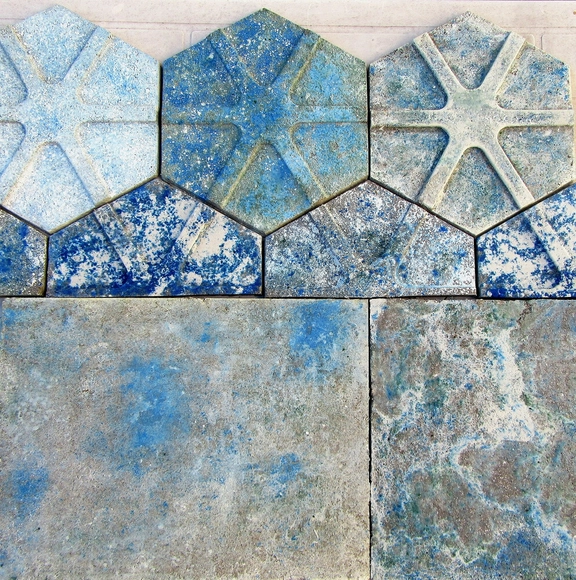
Placas hexagonales. Image Cortesía de Susana Caruso
This research on cultivable components as a replacement for petroleum derivatives in products used to manufacture materials from waste is carried out within a UBACyT Project directed by architect Marta Yajnes, within the framework of the Centro Experimental de la Producción (CEP) of the School of Architecture, Design, and Urbanism at the University of Buenos Aires.
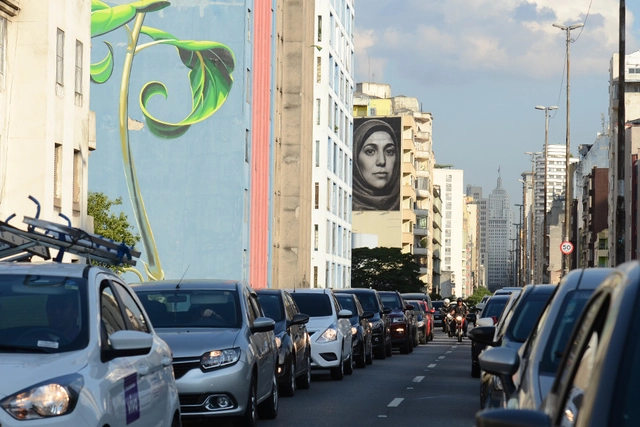
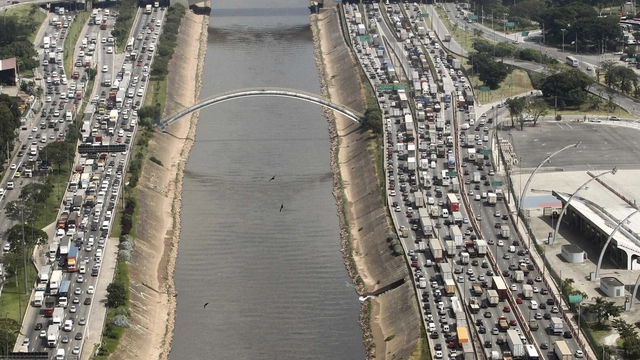
Over the last two decades, the reach of public transit and ridership in one of the world's largest cities, São Paulo, have grown, reducing the share of trips made by car. Yet, despite exceptionally strict restrictions on certain cars and trucks during business hours, congestion—as conventionally understood—remains virtually unabated.
https://www.archdaily.com/1136068/sao-paulo-needs-a-congestion-chargeStephen H. Graham
A few days ago, on a beautiful, sunny Sunday in the middle of winter, my wife and I decided to take our two young children to visit Villa-Lobos Park, in the far west of the city of São Paulo, nearly on the border with Osasco.
It is not a park we visit often nowadays, but it undoubtedly holds a special place in our personal history. She grew up in Cotia; I, in Osasco. Both cities lie in the western part of the São Paulo Metropolitan Area, and the park was perhaps the main public space relatively close to our homes during our childhood and youth. We even have photos from when we first started dating in 2013, capturing idle moments—sometimes stretched out on a broad green lawn, other times embracing under a blossoming tree.
https://www.archdaily.com/1136053/upkeep-of-public-spaces-is-the-solution-to-rent-out-brazilVitor Meira França
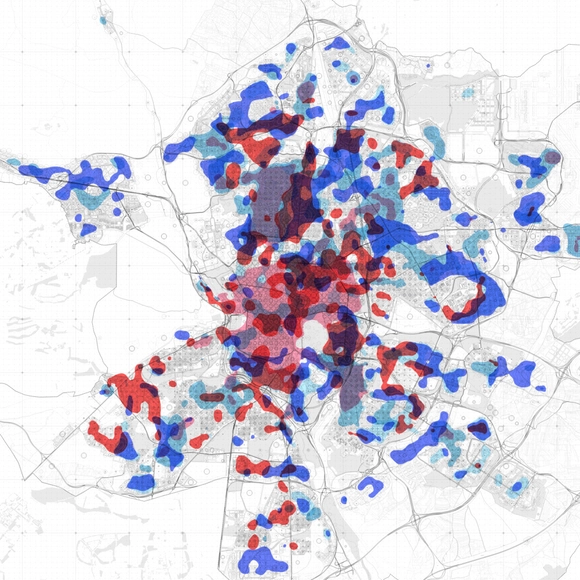
As if dealing with a culinary recipe, Cedric Price compared the evolution of cities to the multiple ways of cooking an egg, showing how the relationship between the yolk and the white (inherent to each preparation) resembled the configuration of different urban models that have emerged over the last couple of millennia. This evolutionary description moves from the almost perfect hard-boiled egg embodied by ancient cities (the result of walled settlements) to scrambled eggs, comparable to modern cities (sprawling shapelessly across the vast territory). It is a metaphor that exemplifies how, so often, the elements that make up the city resemble one another (like the yolk and the white) and yet, the way these ingredients intermingle is key to the final recipe—that which characterizes and explains them.
https://www.archdaily.com/1136054/unscrambling-madrid-describing-the-urban-mix-before-degrowthPablo Martínez y Mar Santamaria (300.000Km/s)
Videos
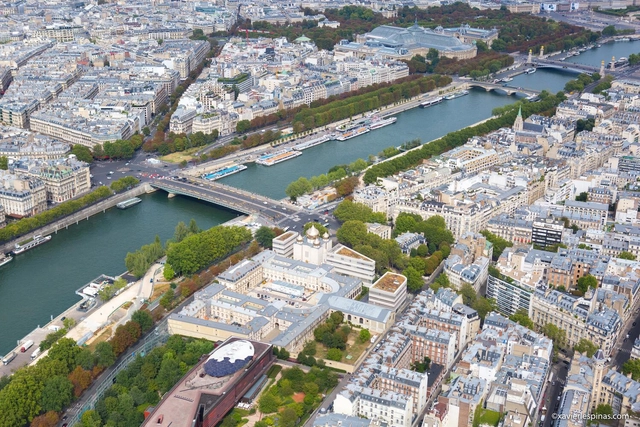
Paris, France. Photo by Lespinas Xavier, via Unsplash
Until a few years ago, the right bank of the Seine River in Paris was a high-speed thoroughfare carrying more than 40,000 vehicles every day. Despite being designated a UNESCO World Heritage Site, the roadway was routinely gridlocked during rush hours or used as a speedway for cars. Consequently, it contributed to the city's air pollution levels—which frequently exceeded European Union limits—and to thousands of premature deaths in the French capital each year.
https://www.archdaily.com/1136057/the-15-minute-city-the-paris-vision-that-has-inspired-a-global-movementSalome Gongadze e Anne Maassen
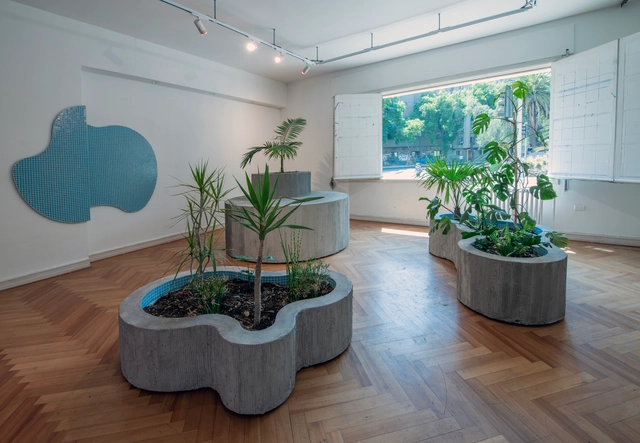
Barco gallery is located in downtown Santiago, right next to Santa Lucía Hill. It occupies an apartment in the homonymous building designed by Sergio Larraín, celebrating a pioneering work of Chilean modern architecture. It is a curatorial practice dedicated to the debate, research, and development of critical and innovative ideas concerning the discipline through exhibition cycles. Its most recent exhibitions include 1972: Cities for Downtown Santiago, You Will Only Have Stones and Additive Manufacturing Shelf.
In partnership with the Embassy of Brazil in Chile, they organized a tribute to the leading figure of Brazilian modern architecture: Lina Bo Bardi. The exhibition "Sirena" by artist Jessica Briceño, curated by Matías Allende Contador and Anton zu Knyphausen, places Bo Bardi's disciplinary work at the center of reflection through an immersive installation that brings together five pieces abstracting her most recurring motifs.
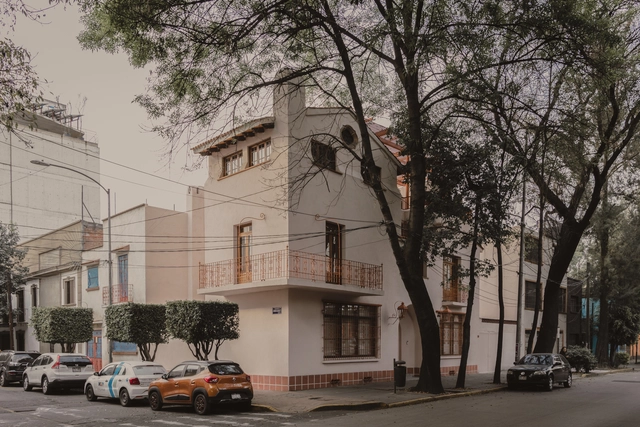
A new space has opened its doors in a 1930s house in the San Miguel Chapultepec neighborhood of Mexico City. This cultural enterprise, named ARCO, merges art, design, and architecture to create a collaborative venue housing the architecture firm WORC and the furniture-focused design studio VETA.
The construction of urban highways continues to expand worldwide. In Latin America, major projects are underway in Santiago (Américo Vespucio Oriente), Lima (Línea Amarilla), Quito (Solución Vial Guayasamín), São Paulo (Rodoanel Mário Covas), and Mexico City (Segundo Piso a Cuernavaca), to name just a few.
In Colombia, the national government announced a new program to improve access to urban areas during the 18th Congress of the Colombian Chamber of Infrastructure. In the words of Colombian President Juan Manuel Santos, “Our goal is also to transform access to cities. It is of little use to save time on intercity trips if that time is then lost within urban areas.”
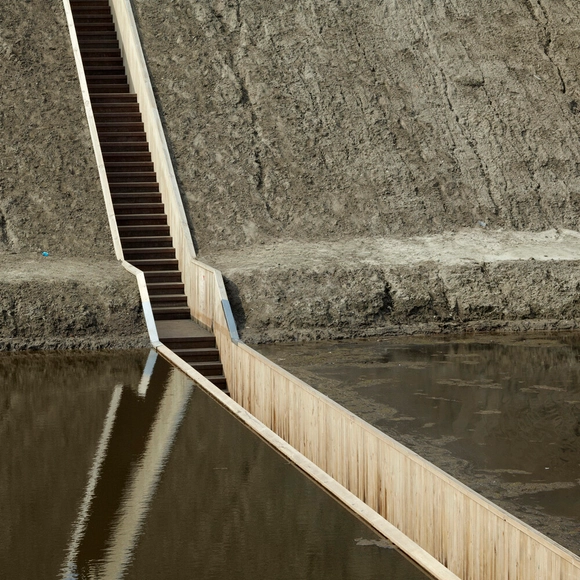
El Puente de Moisés / RO&AD Architecten. Image Cortesía de RO&AD Architecten
It is increasingly common to observe how current generations, characterized by greater respect and awareness of the environment, seek new ways to interact with nature while assuming a deep responsibility to protect it. Accordingly, the future of architecture is closely tied to the ability to balance these desires and obligations, particularly in the design of natural public spaces.
By integrating subtle paths and walkways, public space design can open up access for people of all ages and abilities. Combined with a natural material palette, architects and designers can create spaces that complement their surroundings. Yet, however beautiful these natural areas may be, making them safe and suitable for visitors can have detrimental effects on the environment. Consequently, design and material selection must be approached mindfully and with care.
Throughout our lives, we are exposed to various stimuli and pollutants that directly impact our well-being. Although air and water pollution typically garner more attention due to their highly visible and negative effects, noise pollution is sometimes underestimated, even though it poses a risk to physical and mental health, according to the European Environment Agency.
Some of the strategies to address this challenge have focused on policies that control vehicular traffic and establish schedules for specific activities. In the field of architecture, within the Mexican context, local regulations address specific scenarios related to noise produced by machinery and particular uses, such as entertainment and service centers. These regulations establish a sound intensity limit of 65 dB (decibels). However, since housing represents perhaps the most archetypal manifestation of architecture and can be affected by various noise sources, it is worth asking: How can a home be soundproofed? In response to this question, Soprema has developed several solutions to create a soundproofed environment through the different elements that make up a home.
https://www.archdaily.com/1136480/how-to-soundproof-the-elements-of-a-homeEnrique Tovar