1. ArchDaily
  2. Articles

Articles

Wet Decks: Innovating Pool Architecture

Subscriber Access | 

The word "deck" originated in the English language to refer to a ship's deck. Today, the term is used to describe outdoor surfaces made of wooden planks that may or may not surround pools, hot tubs, and soaking tubs. These design options can be highly diverse—so much so that a new approach has emerged in the market as a growing trend: the wet deck.

Wet Decks: Innovating Pool Architecture - Image 1 of 4Wet Decks: Innovating Pool Architecture - Image 2 of 4Wet Decks: Innovating Pool Architecture - Image 3 of 4Wet Decks: Innovating Pool Architecture - Image 4 of 4Wet Decks: Innovating Pool Architecture - More Images

Youth in Bahia Preserve Black Historical Heritage by Listening to the Community

Subscriber Access | 

The municipality of Rio do Antônio, located about 700 kilometers from the capital of the state of Bahia, still retains remnants from the era of slavery in Brazil. This period left deep marks that remain visible in the town's daily reality, including its architecture.

The female pencil in the Chilean architecture classroom

Subscriber Access | 

The podcast "Lápiz femenino en el aula de arquitectura" was created by Layla Jorquera Sepúlveda, an architect from the Universidad de Chile, to bring visibility to women from different architecture institutions who have completed the Design Studio course, which carries the highest number of academic crédits.

A no-man's land, Brazilian sidewalks reveal neglect of the pedestrian.

Subscriber Access | 

Even though one-third of all trips in Brazilian cities are made on foot, citizens who walk or use wheelchairs are not treated as a priority. In fact, the words "pedestrian" and "sidewalk" do not even appear in Law 12,587/2012, which establishes the guidelines for the National Urban Mobility Policy—a clear sign of legal inconsistency at both federal and municipal levels.

Benefits of Activating Public Space Around the World

Subscriber Access | 

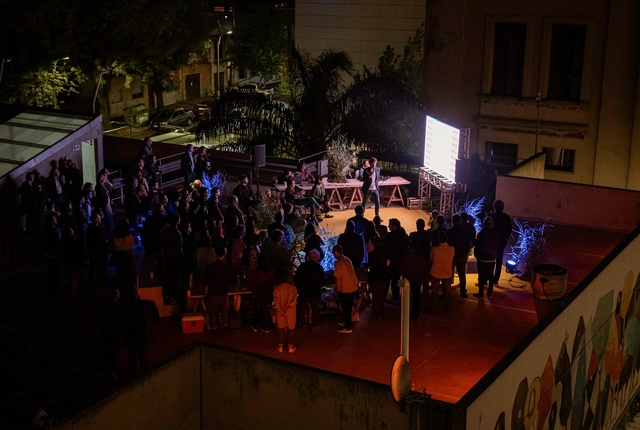
Urban public space is, and must remain, a platform for social, cultural, and political expression. Studies such as those by UN-Habitat recognize that accessible, safe, and inclusive public spaces are vital tools for mitigating urban inequality.

Moreover, when conceiving these spaces as a "living room," they should ideally be functional and welcoming to everyone, ensuring users feel "invited" to linger, use, and care for them. Over the past two decades, open public spaces (streets, intersections, squares, plazas, parks, etc.) have increasingly become the focus of strategic and tactical activations and experiments.

Benefits of Activating Public Space Around the World - Imagem 1 de 4Benefits of Activating Public Space Around the World - Imagem 2 de 4Benefits of Activating Public Space Around the World - Imagem 3 de 4Benefits of Activating Public Space Around the World - Imagem 4 de 4Benefits of Activating Public Space Around the World - More Images+ 3

Sustainable Transit-Oriented Development: From Theory to Territories

Subscriber Access | 

With the rapid acceleration of the climate emergency and the consolidation of an urbanized planet, the challenge of transforming cities and metropolitan areas into more inclusive and sustainable environments depends on reducing the negative impacts of transportation. Shortening the distances traveled by residents, bringing homes closer to work and opportunities, promoting the shift from private motorized transport to active or public transit modes, and creating more plural and democratic territories are the outcomes of policies aligned with addressing 21st-century global challenges. Implementing the necessary transformations across urban territories on a global scale, while also considering local particularities, is an even greater challenge—yet a vital one for a more sustainable future.

Assembly: Foundational Chilote Architecture of Magallanes

Subscriber Access | 

Chiloé as a starting point. From here, translocal phenomena, driven primarily by sea, served as the catalyst for sculpting the southern Patagonian cone—across both Chile and Argentina—by Chilote hands during colonial times. A hybrid people of Indigenous and European descent, whose geographic and political-administrative isolation forced them to rely on the self-construction of their settlements, the cultivation and gathering of their own food, and the making of their own clothing—all from the resources available within their archipelago. Out of this emerged the unquestionable Chilote ingenuity—a skill set highly sought after in territories that, during the colonial period, were being forged under the Chilean state. Consequently, it is easy to recognize the creative hand of the Chilote people in the architecture of the southernmost towns.

What is a Low Emission Zone?

Subscriber Access | 

Discouraging the use of private cars is a crucial step in addressing climate change, improving air quality, and reducing traffic collisions. Cities must find ways to curb traffic and prioritize human well-being, while also considering the environmental and social impacts of automobile use by offering transportation options that generate lower carbon emissions.

Recently, low-emission zones (LEZs) have become a popular strategy in several cities worldwide. The measures implemented in these areas effectively reduce car dependency by offering cleaner, more affordable, and accessible transportation alternatives.

What We Can Learn from the Urban Evolution of Porto Alegre

Subscriber Access | 

The update to Porto Alegre's Master Plan is currently underway. Much has been said about the city's future, but what can we learn from the past to foster greater dynamism, walkability, and quality of life for its citizens? After all, a more inviting city retains and attracts talent, driving innovation and wealth. In this article, I look back at the most significant moments in Porto Alegre's urban evolution, dividing them into four major periods.

Tanzania: Africa's Agrarian Urbanism

Subscriber Access | 

In the hyper-tech twenty-first century, urban North America is largely a service economy. New York City, for example, is currently dominated by a mix of high-end financial services, technology, and other specialized professions, while lower-skilled work is concentrated in tourism, food delivery, and other service-sector jobs. Manufacturing jobs, where they exist, persist as a legacy of strictly industrial zoning. Agrarian land uses, such as "urban agriculture," are almost non-existent—an esoteric hobby for foodies.

The Colombian Congress of Architecture and Urbanism 2023 opens in Pereira under the theme of Social Architecture.

Subscriber Access | 

The 38th Colombian Congress of Architecture and Urbanism opened virtually on Monday, October 16, and will host its in-person sessions starting October 19 in the city of Pereira, Risaralda, Colombia. The event will run until October 21 at the Expofuturo Convention Center.

How to install ceramic tiles in a home? 7 step-by-step guides

Subscriber Access | 

Choosing, installing, and maintaining coverings are essential aspects of home design, as they directly influence both the aesthetics and functionality of the space. Along with the variety of colors, textures, and materials, they help define the style and atmosphere of each room. Among the various types available, ceramic tiles stand out for their durability, versatility, and aesthetic appeal. Following the instructions in step-by-step guides is crucial for proper ceramic installation, ensuring their properties are preserved.

Tailored to each area of the home—including bedrooms, common areas, bathrooms, kitchens, utility rooms, and balconies—Bekron and Bemezcla have developed a series of technical guides specifying the step-by-step installation process for coverings. Among the recommended materials and solutions is the newly launched Bekron DA Superflex 20 kg. This organic resin-based adhesive mortar is designed for installing a wide range of tile formats, both indoors and outdoors.

Complexity and high entropy: to what extent is it still possible to plan the city in the 21st century?

Subscriber Access | 

From a natural perspective, agglomerations represent a nucleation similar to the "gravitational model," in which flows of energy and matter are "optimized" through proximity and articulation—the urban center. Etymologically, as we know, polis, from the Greek, indicates the collective and political character of the formation of urban space.

Perelman Center in New York: How Large-Scale Project Management Works in the US

Subscriber Access | 

The recent completion of the Perelman Performing Arts Center (PAC), a collaboration between REX, Davis Brody Bond, and the Rockwell Group, is a milestone in the cultural transformation of Lower Manhattan. The PAC site is part of the World Trade Center complex, owned by the Port Authority of NY and NJ, an autonomous agency responsible for managing bridges, ports, tunnels, and airports. Since the 2001 attacks, the site has undergone significant changes, including the construction of the four WTC complex towers and the Oculus. More than nine years passed between the launch of the PAC competition and the project's completion, and I participated in the last five years as an architect on the Davis Brody Bond team.

Perelman Center in New York: How Large-Scale Project Management Works in the US - 1 的图像 4Perelman Center in New York: How Large-Scale Project Management Works in the US - 2 的图像 4Perelman Center in New York: How Large-Scale Project Management Works in the US - 3 的图像 4Perelman Center in New York: How Large-Scale Project Management Works in the US - 4 的图像 4Perelman Center in New York: How Large-Scale Project Management Works in the US - More Images+ 3

Nigeria: The Challenges of Governing Lagos, a City That Never Stops Growing

Subscriber Access | 

From its historical origins as a fishing village and the site of a pepper farm to today's bustling metropolis, Lagos, Nigeria, has evolved into a complex agglomeration of people, settlements, and vested interests.

As the economic powerhouse of Nigeria and West Africa, Lagos is projected to become the most populous city in Africa over the next 50 years, growing from its current 15 million to a population of 100 million. If recent migration waves are any indication—comprising those seeking economic opportunity or fleeing climate crises and conflicts in other parts of Nigeria—these projections may well be underestimates.

Nigeria: The Challenges of Governing Lagos, a City That Never Stops Growing - Imagem 1 de 4Nigeria: The Challenges of Governing Lagos, a City That Never Stops Growing - Imagem 2 de 4Nigeria: The Challenges of Governing Lagos, a City That Never Stops Growing - Imagem 3 de 4Nigeria: The Challenges of Governing Lagos, a City That Never Stops Growing - Imagem 4 de 4Nigeria: The Challenges of Governing Lagos, a City That Never Stops Growing - More Images+ 2

Women in Cities

Subscriber Access | 

It is 6:00 AM on a Tuesday. Where are you? 

Geovana leaves her house already running late. It usually takes her two hours and three different transfers to get to her job in the city center. But it rained all night and her house flooded. She, her mother, and her siblings tried to save their furniture and other belongings. At 2:00 AM, when the rain finally let up, she managed to rest a bit, only to wake up shortly after. After yesterday's rain, she knows the streets in her neighborhood will be flooded, and her commute will take an hour longer than usual.

Is it possible to build with straw?

Subscriber Access | 

The practice of building with straw has existed since the dawn of civilization. Given the devastating impacts of contemporary construction methods, could straw be a viable, biogenic alternative to today's building materials?

Evidence suggests that straw and reed have been used in construction for over 10,000 years. Since then, the Industrial Revolution has completely transformed building practices, introducing the mass production of steel, glass, and, not least, concrete.

Our housing policy needs to move beyond the homeownership paradigm.

Subscriber Access | 

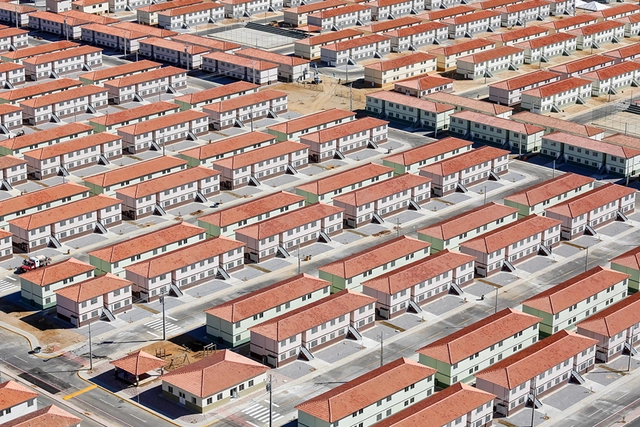
One of the structural problems of Brazilian society is the excessive growth of the urban footprint, commonly referred to as "urban sprawl," which results in low-density urban occupation. This dispersed footprint complicates the provision of public services and compromises residents' quality of life, as it fails to generate sufficient demand for mass transit and encourages the use of private automobiles for commuting. To reverse this trend, urban policy seeks to increase the density of the existing city, whether by constructing new buildings on vacant lots or by rehabilitating degraded buildings in central areas. However, as currently designed, housing policy actually encourages urban sprawl.