1. ArchDaily
  2. Articles

Articles

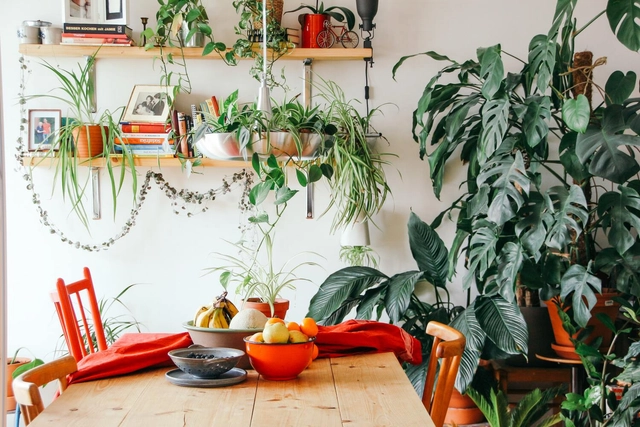
The Advantages of the Secondhand Furniture Market in Fragile Economies

Subscriber Access | 

Driven by Gen Z's preference for access over ownership, the secondhand market is beginning to see significant growth worldwide.

This includes the secondhand furniture market, which, in addition to giving a second life to items destined for landfills, helps reduce industrial CO2 emissions—manufacturing and shipping a single piece of furniture emits about 90kg of CO2, equivalent to a one-hour flight on a Boeing 747.

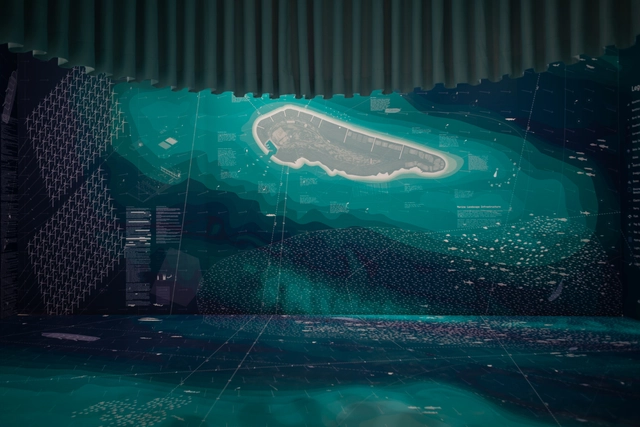
Joanie Lemercier Presents "Landscapes of Light" Installation at Laboratorio Arte Alameda, Mexico City

Subscriber Access | 

The Laboratorio Arte Alameda (LAA)—a venue of the National Institute of Fine Arts and Literature (Inbal) Museum Network—in collaboration with Fundación Telefónica presents Joanie Lemercier: Landscapes of Light, the French artist's first solo exhibition in Mexico. The exhibition offers "a journey through different landscapes that transport the viewer from the contemplation of refined abstract lines and the fascination of majestic computer-generated virtual mountains, to the troubling reality of an overexploited nature."

Walking in the Shade: How to Choose Sidewalk Vegetation

Subscriber Access | 

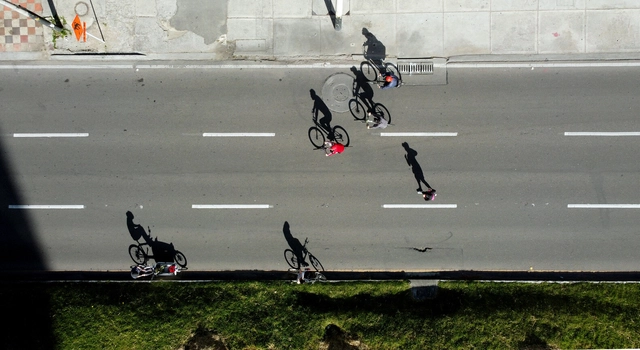
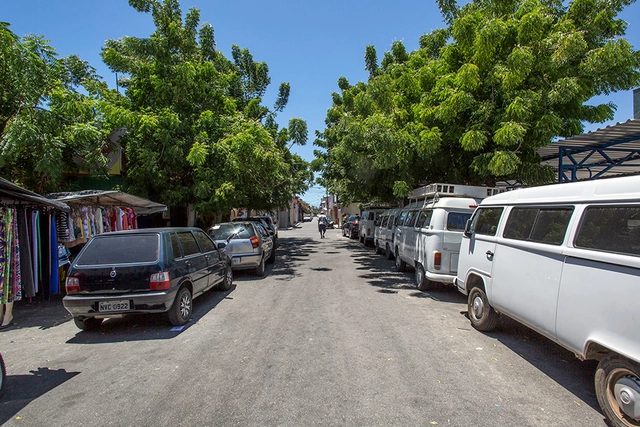
From reducing local temperatures to improving air quality, the benefits of urban forestry in city centers are numerous. Combining social, environmental, and even economic advantages, urban planting—especially along sidewalks—is fundamental to citizens' quality of life. However, it must be carefully planned and designed, balancing urban demands with biological needs. 

Walking in the Shade: How to Choose Sidewalk Vegetation - Image 1 of 4Walking in the Shade: How to Choose Sidewalk Vegetation - Image 2 of 4Walking in the Shade: How to Choose Sidewalk Vegetation - Image 3 of 4Walking in the Shade: How to Choose Sidewalk Vegetation - Image 4 of 4Walking in the Shade: How to Choose Sidewalk Vegetation - More Images+ 1

The eruv as a territorialization device for Orthodox Jewish communities in metropolises

Subscriber Access | 

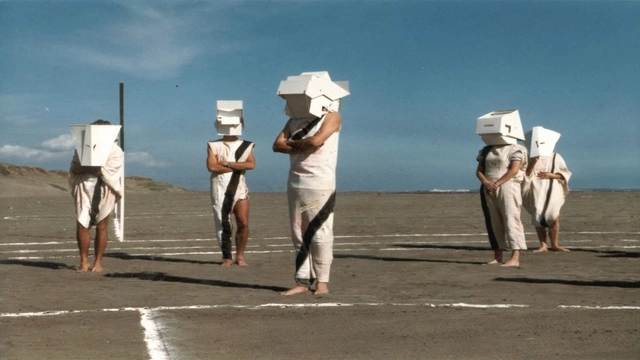
The eruv divides the public from the private, the secular from the sacred, and labor from the shabbat. This essay aims to understand how Jewish cultural traditions have adapted over the centuries and coexist today with the dynamics of the metropolis, leaving identity markers on the urban space. Ultimately, we seek to examine the tension between community, identity, and belonging, which construct alternative readings, understandings, and modes of sharing in the city's public spaces. 

The life and work of Matilde Ucelay Maórtua, Spain's first female architect

Subscriber Access | 

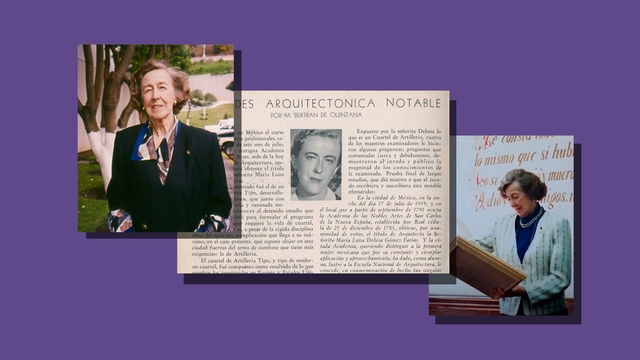
Matilde Ucelay Maórtua was born in 1912 in Madrid into a bourgeois, professional, and enlightened family, as the eldest of four sisters. Her father's family, Enrique Ucelay, of Basque origin, had held a prominent economic, political, and professional position in 19th-century Madrid, closely tied to political liberalism. Meanwhile, her mother, Pura Maórtua, also of Basque descent, came from a wealthy family as well. Though she lacked formal academic training, she possessed an insatiable desire to learn and was fortunate to travel extensively, visiting museums and architectural works.

Mexican artists and designers present pieces for the exhibition "MASA X SOTHEBY’S: Harmonious Contradiction" in New York

Subscriber Access | 

"Harmonious Contradiction" is the third and final summer exhibition at Sotheby's East Hampton Gallery New York and the first collaboration between MASA and Sotheby’s. Running from August 24 to September 18, this group exhibition features brass and polished bronze floor works by eight contemporary artists from Mexico City-based Masa Gallery, in conversation with a curated selection of contemporary and post-war works from Sotheby's.

Forests for water: a nature-based solution to tackle water crises

Subscriber Access | 

What if policymakers, when deciding how to allocate public investments, looked beyond massive concrete structures and also turned their attention to forests?

Viewing the conservation, restoration, and management of native vegetation—in other words, nature-based solutions—as viable investment alternatives to improve urban infrastructure is an innovative approach that can yield major benefits for society. A prime example lies in the water treatment and supply sector: forests can play such a crucial role that they can be considered a form of natural infrastructure.

Balcony Enclosures as a Selling Point

Subscriber Access | 

In Brazilian cities, we see new residential buildings being constructed with cantilevered balconies—that is, extending beyond the building's perimeter and encroaching upon the minimum required setbacks (referred to as afastamentos in Rio de Janeiro). However, what we have seen in recent years is a growing trend of enclosing these balconies with glass panels, consequently expanding the adjacent rooms. But what is the reason behind this enclosure? If there is a need to enlarge these spaces, why aren't they designed this way to begin with?

The "exotic" floating city of Manaus

Subscriber Access | 

The end of the rubber monopoly, the economic crisis of the 1920s, demographic growth driven by the migration of river dwellers and northeasterners to Manaus, and a scarcity of resources all contributed to a housing crisis in the city.

Amid this adversity, in 1920, João Aprígio, a native of Paraíba with a wife and children to support, faced immense hardships. His meager earnings were barely enough to feed his family. Lacking a home of his own, Aprígio gathered two açacu logs from an igapó (flooded forest) and towed them behind his canoe to the Educandos waterfront, which he deemed the most suitable location to build his dwelling. For twenty days and nights he worked, eventually erecting what would become the first floating house in Manaus.

Andenes and Terraces: Natural Infrastructures and Andean Landscapes

Subscriber Access | 

In sloped topographies, factors such as rainfall and excess water promote surface runoff, triggering a series of impacts that lead to the loss of soil, water, nutrients, and seeds, consequently reducing agricultural productivity (Posthumus, 2005). In Andean mountain environments, this is compounded by water scarcity and variability, alongside the challenges of water retention (Canziani, 2007). To address these challenges, territorial transformations and modifications known as terraces and andenes emerged, representing some of the oldest infrastructural practices for soil and hydrological conservation and management. Their physical presence, productive use, and cultural relevance remain vital in many parts of the world today.

Andenes and Terraces: Natural Infrastructures and Andean Landscapes - 13 的图像 4Andenes and Terraces: Natural Infrastructures and Andean Landscapes - 1 的图像 4Andenes and Terraces: Natural Infrastructures and Andean Landscapes - 2 的图像 4Andenes and Terraces: Natural Infrastructures and Andean Landscapes - 3 的图像 4Andenes and Terraces: Natural Infrastructures and Andean Landscapes - More Images+ 9

Waterproofing: Learn How to Protect Your Building from Moisture

Subscriber Access | 

Concrete, metal, or wood—all building materials degrade over time when exposed to water and moisture. Moreover, every building element is exposed to weathering to varying degrees, from the foundation to the roof. Consequently, protective layers must be incorporated to prevent water from contacting raw materials—a process known as waterproofing—ensuring the structure's maintenance and longevity.

Waterproofing: Learn How to Protect Your Building from Moisture - Imagen 5 de 4Waterproofing: Learn How to Protect Your Building from Moisture - Imagen 1 de 4Waterproofing: Learn How to Protect Your Building from Moisture - Imagen 2 de 4Waterproofing: Learn How to Protect Your Building from Moisture - Imagen 3 de 4Waterproofing: Learn How to Protect Your Building from Moisture - More Images+ 1

5 things you need to know before learning BIM

BIM methodology is currently booming and on the lips of every industry professional, making it essential for any sector expert to keep in mind. In this article, we review the five most relevant factors to help you assess your compatibility with BIM, according to Editeca.

Esrawe Studio + Francisco Pardo present their new project "Biodynamic Community" in Los Altos de Jalisco, Mexico

Subscriber Access | 

As part of a new collaboration between the Mexico City-based firms, Esrawe Studio and Francisco Pardo present "Biodynamic Community," a new project in Los Altos de Jalisco, Mexico. The development will be built on an 820,000-square-meter site and will have a total built area of 29,700 square meters.

Representations of Carolina Maria de Jesus and Clarice Lispector: Body, City, and Territory

Subscriber Access | 

Carolina Maria de Jesus and Clarice Lispector are among the most prominent Brazilian writers of the 20th century. This essay analyzes the representations surrounding them and, above all, offers an approach that complexifies the comparison between the two, reflecting on body and city from an intersectional perspective.

Urban Murals: The Solidarity Infrastructure Plan (PISO) in Argentina

Subscriber Access | 

What are the stories, processes, and hidden messages behind murals in urban contexts? How do they relate to the communities that live alongside them? “Urban Murals: Solidarity Infrastructure Plan (PISO)” by Bisman Ediciones compiles the work of Saint-Gobain, highlighting the urban interventions they have driven since 2005 through their Solidarity Infrastructure Plan (PISO) program across the 24 Argentine provinces.

When the city becomes invisible

Subscriber Access | 

In Brazil, urban policies are commonly assumed to be the responsibility of either municipalities or the federal government. However, there is another level of government that cannot be overlooked: the states. State urban policies are just as important as municipal and federal ones.

When the city becomes invisible - Image 1 of 4When the city becomes invisible - Image 2 of 4When the city becomes invisible - Image 3 of 4When the city becomes invisible - Image 4 of 4When the city becomes invisible - More Images

How cities can source sustainable wood

Subscriber Access | 

The footprint of urban construction is expanding rapidly. Globally, building floor area could double by 2060. Constructing and maintaining urban infrastructure requires significant amounts of energy and material resources. Consequently, how cities build—and with what materials—directly impacts whether sustainability goals are achievable or even realistic. Cities must ensure they are using low-impact, renewable materials. This challenge presents a clear opportunity for wood.

How does architecture relate to the forest and its inhabitants?

Subscriber Access | 

Amazon Day was celebrated on the 5th of this month. Established in 2007, the date aims to raise awareness about the importance of this biome, which is essential to the planet's environmental and climate balance. Constantly under threat and shaping a contested territory, Earth's largest natural biome is a frequent site of human intervention. How have architecture and urbanism engaged with this context? 

How does architecture relate to the forest and its inhabitants? - Imagem 1 de 4How does architecture relate to the forest and its inhabitants? - Imagem 2 de 4How does architecture relate to the forest and its inhabitants? - Imagem 3 de 4How does architecture relate to the forest and its inhabitants? - Imagem 4 de 4How does architecture relate to the forest and its inhabitants? - More Images+ 5