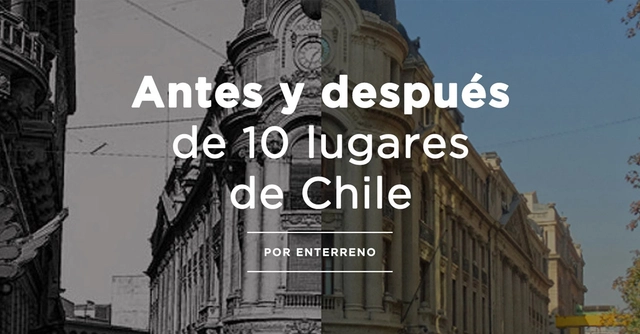
The website Enterreno is building the first “collaborative time machine” using historical images, allowing thousands of people to travel through time via their mobile devices from anywhere in the country or the world. The platform features over 45,000 photographs revealing what Chile was like in both the distant and recent past, shared by everyday people from their family archives and other sources.
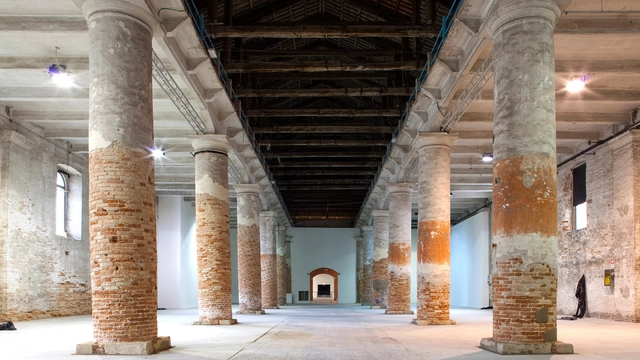
Curated by Irish duo Yvonne Farrell and Shelley McNamara, partners at Grafton Architects, this year's theme seeks to reveal "diversity, specificity, and continuity in architecture." According to Paolo Baratta, president of La Biennale di Venezia, FREESPACE aims to promote "desire" in architecture.
A "common, everyday, and collective" space is the goal set by the curatorial team of the upcoming 2019 Chilean Architecture and Urbanism Biennial. This was announced during the official launch last Thursday, November 8, at the headquarters of the Architects Association of Chile (Colegio de Arquitectos) in Santiago.
The first edition of the Biennial to be held in Santiago since 2013—the last two editions took place in Valparaíso—will be located in the traditional Franklin neighborhood of the Santiago commune, a historic sector of the capital currently undergoing urban transformation driven by real estate pressure, commercial reconversion, and historic preservation.
By the end of 2018, at least five cities in Germany could test a model approach to combating pollution. The trial will discourage private vehicle use while offering free public transit—a solution currently adopted in only a few places.
Bonn, Essen, Herrenberg, Reutlingen, and Mannheim are the German cities included in the proposal drafted by the federal government. “We are considering making public transport free of charge to reduce the number of private cars,” German ministers stated in a letter sent to the European Commission. “Fighting air pollution effectively without unnecessary delays is of the highest priority for Germany,” the document adds.
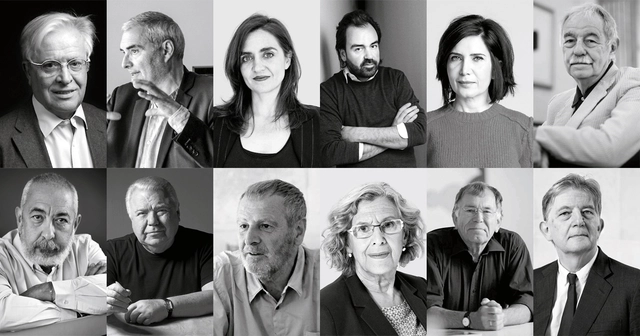
Ponentes del V Congreso Internacional de Arquitectura y Sociedad. Image Cortesía de Fundación Arquitectura y sociedad
On June 14, the second and final day of the 5th International Congress of Architecture and Society took place at the Baluarte Congress Center and Auditorium of Navarre in Pamplona, Spain. The day's sessions focused on topics as diverse as urban development, the political ecology of cities, mobility, and the future of our cities.
Architects Farshid Moussavi and Belinda Tato opened the day's first session, focusing their reflections on the importance of public spaces in cities as “generators of citizenship.” Both experts also highlighted the role of people in shaping cities.
https://www.archdaily.com/1113748/jan-gehl-we-have-lost-the-ability-to-create-neighborhoods-where-it-is-a-pleasure-to-grow-up-and-grow-oldJavier García Librero
A few days ago, we welcomed @archdailyco to Instagram. ArchDaily Colombia's dedicated account on the platform serves as a new showcase for local architecture. To mark this milestone, we invited our readers to share their best photos of Colombian architecture using the hashtag #ArchDailyCo.
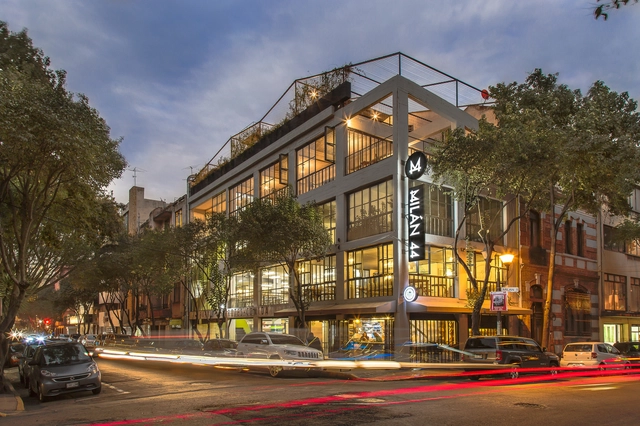
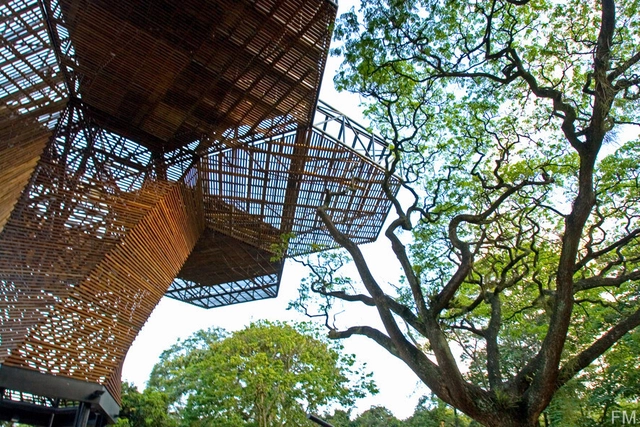
Today, we present six of the best photos, along with ArchDaily Colombia's featured project of the week on our Instagram account. This inaugural selection spans Bogotá and Medellín, contrasting concrete and brick, while showcasing both bird's-eye cityscapes and architectural details captured by our followers.
Remember to tag your future photos of Colombian architecture on Instagram with the hashtag #ArchDailyCo for a chance to be featured in our next roundup.
Opening its doors alongside the Infinito Vão exhibition, “Two Houses by Paulo Mendes da Rocha” will be on display until February 10, 2019, at the House Gallery. Curated by Nuno Sampaio, “Two Houses” offers the opportunity to visit two unique projects from the collection of architect Paulo Mendes da Rocha, which, in line with the transatlantic focus of this program, are located in Portugal and Brazil.
Ever since we announced the results of the competition for the “New Biobío Regional Theater,” an initiative led by the Regional Government and the Architecture Area of the Council of Culture and the Arts, we had been eagerly looking forward to seeing the winning proposal finally built.
https://www.archdaily.com/1113761/the-narrative-behind-the-theater-designed-by-smiljan-radic-eduardo-castillo-and-gabriela-medrano-for-the-biobio-regionPola Mora
The IABsp Awards, one of the most anticipated and competitive honors in Brazilian architecture, revealed yesterday, December 7, the 2018 winners across 14 categories. Over the years, since its first edition in 1968, the IABsp awards have established themselves as an important platform for critique, recognition, and dissemination of national architecture and urbanism, promoting the exchange of ideas and new solutions among Brazilian architects.
In addition to the category awards, the Rino Levi Prize was awarded for lifetime achievement. This year, the honor went to Rosa Kliass for her lifetime body of work in landscape architecture.
On October 13, the 2018 Archmarathon Awards concluded their fifth edition in Milan. Held at the impressive Palazzo Mezzanotte from October 11 to 13, 2018, the event featured 55 architecture and interior design projects across 16 categories, submitted by 55 studios from 23 countries and four continents. Selected by a prestigious international jury, the 55 firms were invited to present their projects to a large audience of architects, developers, and designers from around the world.
During the ceremony, the winners of each of the 16 categories and two overall winners—one for architecture and one for interior design—were announced. The selection was made by a main jury chaired by Luca Molinari, Gary Chang, Lesley Lokko, and Mexican architect Rozana Montiel, along with a guest jury comprising Massimiliano Cecconi, Cherubino Gambardella, and Evgeniya Murinets. Read on to discover the final winners in both categories.
The close relationship between architecture and landscape in Latin America is undeniable. This is due not only to the region's geographical, climatic, and ecological diversity, but also to how these countries have built and shaped their cities amidst progress and setbacks. Among these ongoing achievements is a growing respect for the landscape, an architectural language tailored to its context, and solutions designed for its diverse climates.
For this selection, we have chosen 10 projects in Colombia that have successfully adapted to their landscape, both in form and construction, across both urban and rural contexts.
On September 12, Arq.Futuro and Insper will host the 2018 edition of the Arq.Futuro International Seminar - The City and the Water. As in previous editions, the event will present the Brazilian public with iconic success stories in the restoration of urban waterways and their surroundings. For this year's seminar, three cases were selected that stand out both for their urban quality and their explicit purpose of combating different forms of urban exclusion.
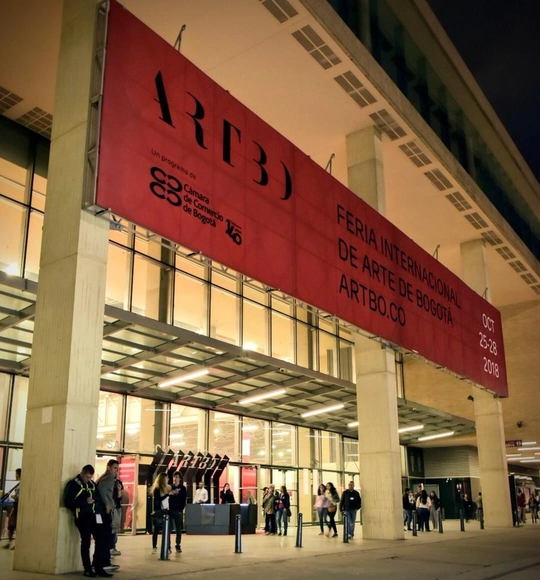
During the Bogotá International Art Fair (ARTBO), held between October 24 and 28, Colombian artist Miller Lagos was awarded the second edition of the Kubik Prize. According to the organization, the prize “commissions a project that bridges art and architecture from an innovative perspective for the benefit of the city and its inhabitants.”
“In his recent work, the artist has undertaken projects in public spaces, examining the relationship between human populations and their bodies of water,” Kubik Lab stated, explaining its decision.
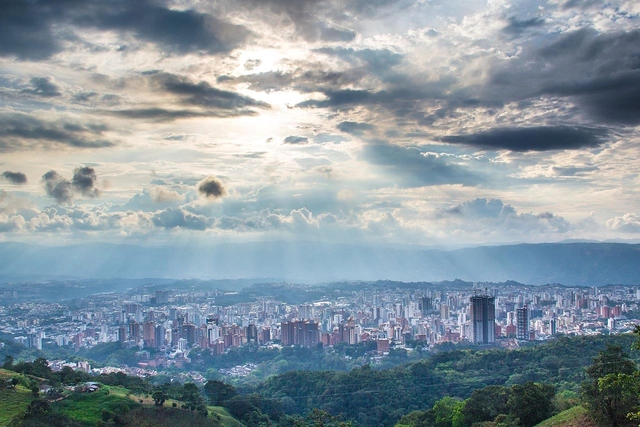
Bucaramanga is located 959 meters above sea level on a plateau in Colombia's Cordillera Oriental. Composed of 17 communes, it has a population of 528,575, while its metropolitan area is home to more than 1,141,700 people. Over the past 30 years, the city has systematically lost its public space due to abandonment, neglect, rapid urban growth, and a lack of coordinated political and planning initiatives that could foster direct communication between residents, public officials, academics, and private sector representatives.
The strategic project “Public Space: The Skin of Democracy” is a suite of initiatives designed by the Bucaramanga municipal government—and integrated into the city's current development plan—aimed at reconfiguring and renovating municipal public spaces. The initiative was launched by the Mayor's Office of Bucaramanga for the 2016–2019 term.
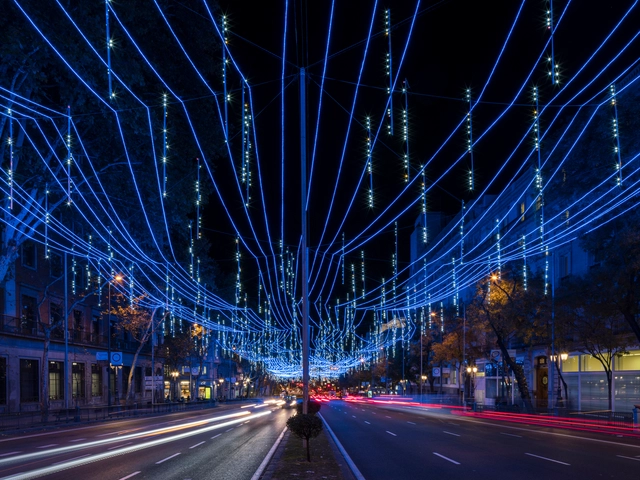
Alcalá Street was filled with light last Christmas thanks to the installation designed by the architecture studio Brut Deluxe and led by Ben Busche, commissioned by the City of Madrid.
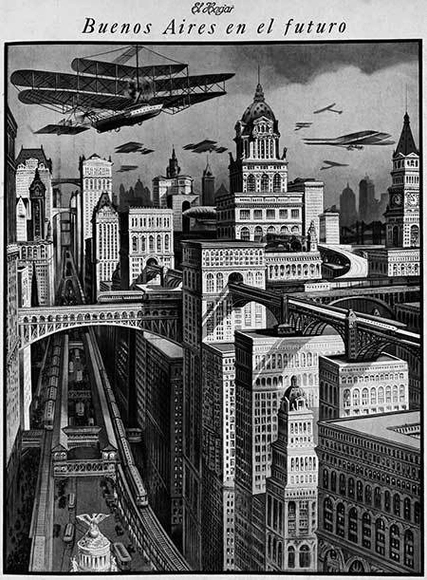
Buenos Aires in the future. Source: El Hogar, 1929. No. 1021. Image via Ediciones Infinito and Dr. Arch. Margarita Gutman
Buenos Aires, 2018. Population? Almost 3 million. High-speed maglev trains? Zero. Skyscrapers interconnected by railways? Zero. DeLoreans flying through the air? Unfortunately, zero. Transportation innovations? The Metrobus and bike lanes. In urban terms, the city seems not to have progressed at the pace once imagined.
There was blind faith in the future—a future where anything was possible, the sky was not the limit, and people could move freely above the clouds along a network of pathways connecting towering high-rises. What happened? To find out, we must travel back in time. To the past, to be precise.
A few days ago, we reported that BD Bacatá, Colombia's tallest skyscraper, has yet to open after a series of delays, and new reports from the local press make it clear that the outlook for its 4,200 investors is not improving.
The developer BD Promotores owes its suppliers an estimated 4 billion Colombian pesos (1.46 million USD) "for finishes and leases." Following a lawsuit filed by three suppliers demanding the payment of 750 million Colombian pesos (273,750 USD) for services rendered, "the only way out after declaring insolvency was the seizure of the trademark" by the Superintendency of Industry and Commerce (SIC), according to a report by local newspaper La República.
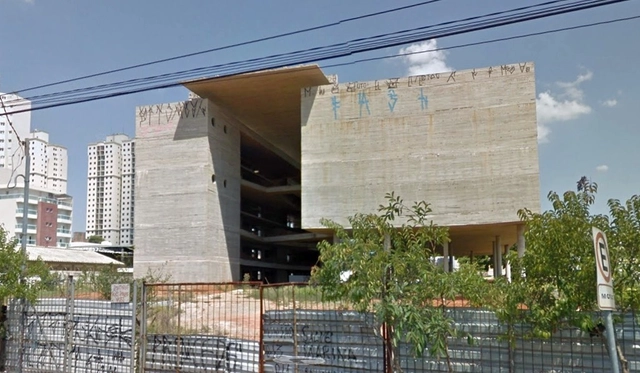
Museu do Trabalho e do Trabalhador in São Bernardo do Campo. Image via Google Street View
Designed by the firm Brasil Arquitetura, the Museum of Labor and the Worker is located in the city of São Bernardo do Campo. Once completed, it is set to house records of the "memory of the working world, from the arrival of the Portuguese to the present day." Although 5,500 square meters have already been built, construction has been halted and the site has been abandoned for about a year and a half.
In an op-ed published in the newspaper Folha de S. Paulo, Brazilian Pritzker laureate Paulo Mendes da Rocha and former UN Special Rapporteur Raquel Rolnik suggest that halting the museum's construction—officially blamed on suspected project overpricing—is actually more closely linked to an aversion to the cultural narrative surrounding the project.




.gif?1538085748)