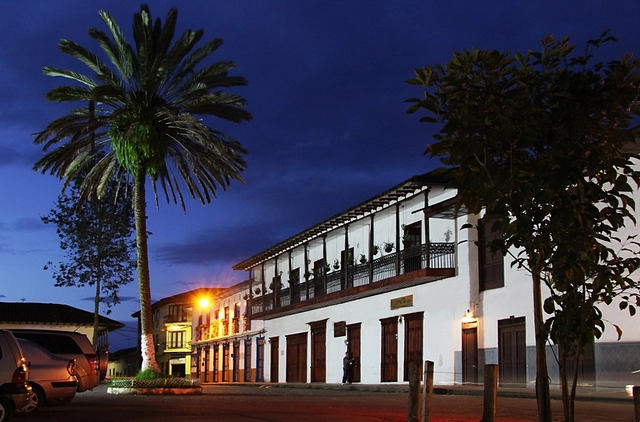
The vernacular architecture of bahareque was one of the first seismic-resistant building technologies in Colombia. By the late 19th century, this construction method was widely used across many regions of the South American country, valued for its earthquake resistance, speed of construction, and low cost. This was well before brick and sand-cement mortar arrived in cities like Medellín and Bogotá, eventually spreading to the rest of the country.
This construction method arose after its performance was analyzed as a viable system for implementation in different regions with high seismic activity. Its application leverages local, context-specific materials, making it a prominent vernacular technique in Colombia. It characterizes much of the colonial architecture still found today in historic centers and towns with rich heritage.


.jpg?1533572922&format=webp&width=640&height=580)












.jpg?1521471569&format=webp&width=640&height=580)
.jpg?1521471591 "Artista: AkaCorleone. Ano: 2015. Foto de André Santos. Image Cortesia de Undergdogs")
.jpg?1521471603 "Artista: AkaCorleone. Ano: 2016. Foto de José Pando Lucas. Image Cortesia de Undergdogs")
.jpg?1521472289 "Artista: Shepard Fairey. Ano: 2017. Foto de Jon Furlong. Image Cortesia de Undergdogs")
.jpg?1521472210 "Artista: Shepard Fairey. Ano: 2017. Foto de Jon Furlong. Image Cortesia de Undergdogs")
.jpg?1521471569)