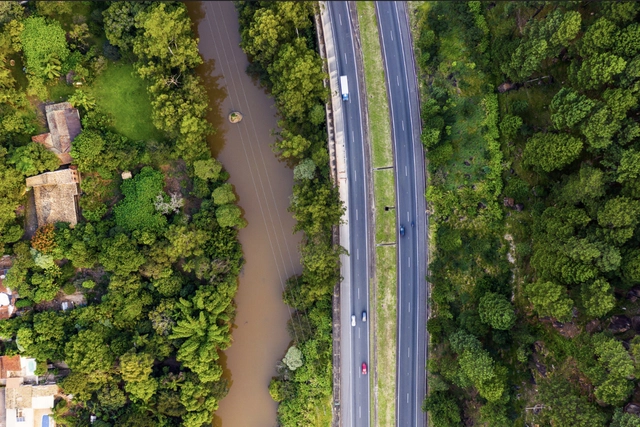
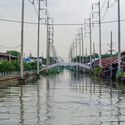
Preserving and restoring riparian forests has multiple benefits for climate adaptation and resilience. Pictured, the Atibaia River in Campinas. Photo: Renan Pissolatti, WRI Brasil
Will 2022 place Brazil on the path toward the economic transition needed to meet climate goals and keep the long-term target of net-zero emissions by 2050 viable? There is still a window of opportunity for the world to limit warming to 1.5°C, but countries' lack of ambition so far has made this scenario increasingly costly to achieve. Each passing year adds urgency, and science has made it clear that decisions made this decade will define the planet's climate balance.
https://www.archdaily.com/1132049/5-facts-and-trends-that-will-shape-the-environmental-agenda-in-brazil-in-2022WRI Brasil
The city of Sharm El Sheikh, Egypt, hosts the 2022 United Nations Climate Change Conference, COP27, from November 6 to 18. The conference builds on the negotiations of COP26 in Glasgow, Scotland, in 2021, with the expectation that countries will demonstrate climate ambition and urgency to limit the rise in global temperature to 1.5°C.
https://www.archdaily.com/1132088/3-topics-of-interest-to-brazil-at-cop27WRI Brasil
Transportation connects us. It is how we get to school and work, visit our families, and access grocery stores and healthcare services. It is also how we ship and receive goods and services. As economies and populations grow, so does the need for efficient, accessible, and sustainable transportation options.
https://www.archdaily.com/1136401/5-changes-to-transform-transportation-and-meet-climate-goalsWRI Brasil
Fortaleza, Ceará. Photo by Vitor Paladini, via Unsplash
The ten cities selected to compete for $9 million in the Sustainable Cities Challenge, a global mobility initiative by the Toyota Mobility Foundation in partnership with Challenge Works and the World Resources Institute, have been announced. The list of selected cities includes Fortaleza, Brazil, as well as cities in Colombia, India, Italy, Malaysia, Mexico, the United Kingdom, and the United States.
https://www.archdaily.com/1135992/fortaleza-among-the-ten-cities-selected-by-the-sustainable-cities-challengeWRI Brasil
When it comes to climate change, the headlines can sometimes seem contradictory. One day, we read about catastrophic wildfires wreaking havoc across the globe; the next, we see an optimistic article about the rapid rise of solar and wind energy. Taken together, these narratives can make it difficult to grasp the big picture of climate action. Are countries actually implementing effective solutions if greenhouse gas (GHG) emissions continue to rise? In which areas has the world made enough progress to overcome the climate crisis, and where are the gaps? What specific measures are needed to get us on the right track?
https://www.archdaily.com/1136114/what-the-world-can-still-do-to-keep-global-warming-below-degrees-cWRI Brasil
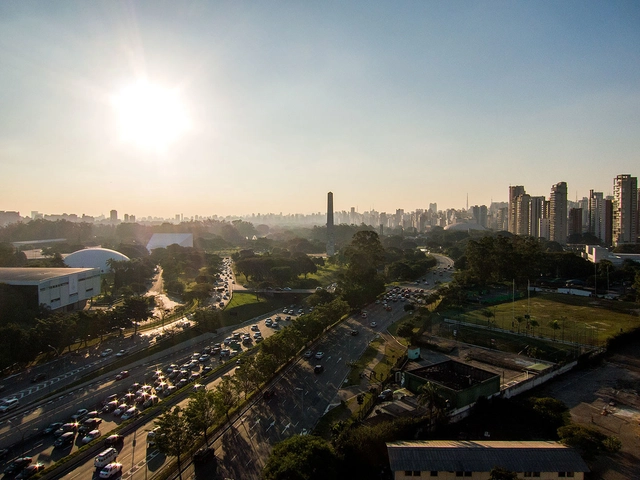
Ibirapuera Park in São Paulo. Photo: Fernando Stankuns, via Visualhunt / CC BY-NC-SA
Who could have predicted 2020? Even at the beginning of the year, when the existence of a new coronavirus was already known, it was hard to imagine that the world would undergo so many changes. The impacts were not limited to health; they spread to behavior, the economy, and many other aspects of life on the planet, including the environment.
At this point, it is impossible to predict how vaccines against the virus might change humanity's destiny over the coming year, or what Brazil's trajectory will be in recovering from the crisis caused by Covid-19. The year 2021 begins with this mix of uncertainty and expectation—and a strong sense of urgency. January also marks the start of a new decade fraught with major challenges such as the climate emergency, the need to transition to cleaner economies, the imperative to transform our relationship with forests and land use, reimagining urban spaces, and the struggle to reduce inequality and systemic racism, among many others.
https://www.archdaily.com/1127962/eyes-on-2021-climate-cities-and-forests-to-watch-in-brazilWRI Brasil
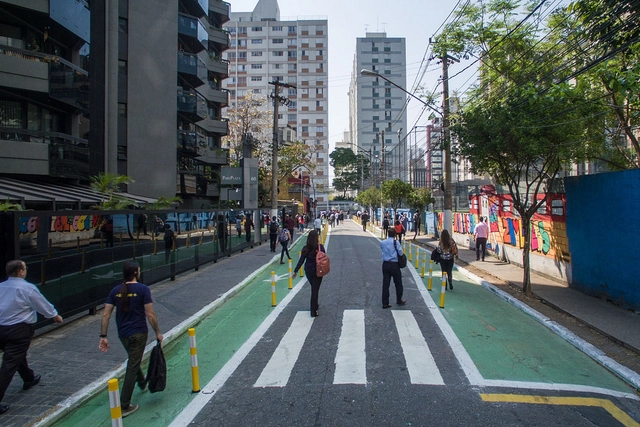
Joel Carlos Borges Street, in São Paulo. Photo: Pedro Mascaro/WRI Brasil
The latest Global Status Report on Road Safety from the World Health Organization (WHO) showed that over the last 15 years, the traffic mortality rate has remained stable relative to the world's population. While the fact that these numbers have not increased might sound positive, it is important to remember that this still represents the death of 1.35 million people annually, alongside 50 million injuries.
https://www.archdaily.com/1121788/traffic-deaths-are-not-decreasing-complete-streets-can-helpWRI Brasil
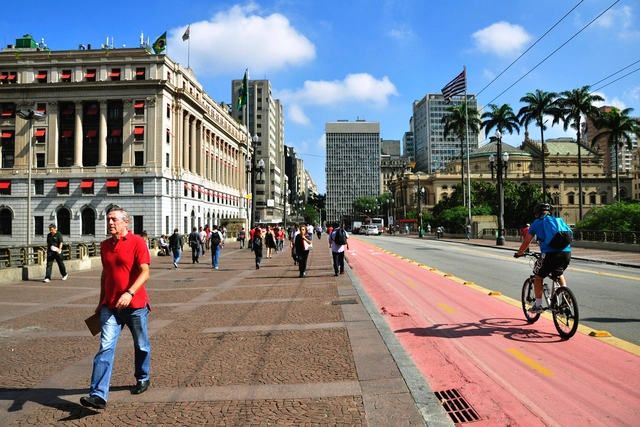
Downtown São Paulo. Photo: Mariana Gil/EMBARQ Brasil
Five Brazilians die in traffic accidents every hour. While highly critical statistics like this can spark positive reactions, they are not always enough to change reality on their own. However, knowing that in the city of São Paulo intersections concentrate more accidents per kilometer, and that these rose by 5% from 2017 to 2018, provides decision-makers with the concrete data needed to implement measures to reduce these numbers. Acting on the most dangerous intersections will save lives.
https://www.archdaily.com/1121376/how-sao-paulos-street-design-influences-traffic-accidentsWRI Brasil
Although the COVID-19 pandemic postponed COP26 to November 2021, UN negotiators were still hard at work throughout 2020. Following a series of virtual events in June of last year, more than 3,000 national delegates concluded the Climate Dialogues, a series of 80 virtual meetings in which countries shared, reviewed, and discussed outstanding issues in international climate negotiations.
From the outset, countries agreed that the dialogues would not include the formal negotiations that typically occur at COPs and would not lead to any official decisions. Instead, they addressed events that countries had previously scheduled for 2020, alongside other informal exchanges. The dialogues served as a platform for countries and non-state actors to take stock of overall climate action progress in 2020, offering an informal space for negotiators to better understand outstanding issues as they prepared to resume negotiations in 2021.
Photo by Fernando Stankuns on Visualhunt / CC BY-NC-SA
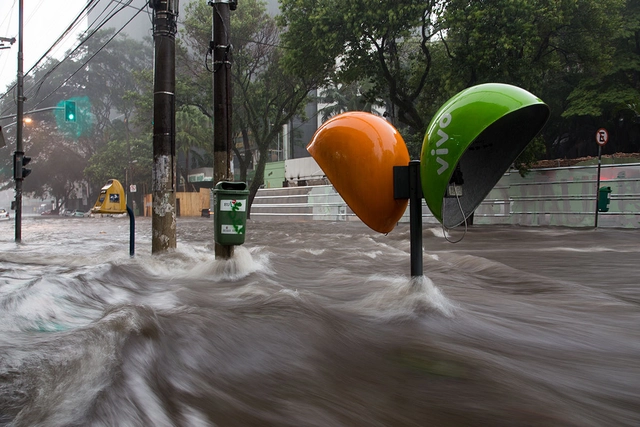
Recent floods in Belo Horizonte and other cities in Minas Gerais have alarmed residents. Videos showing the force of the torrents dragging cars and toppling structures shocked the entire country. This state of emergency was not confined to Minas Gerais. Much of the Southeast faced heavy rains, causing widespread disruption. In Espírito Santo, for instance, more than 5,000 people were forced to leave their homes, while São Paulo was placed on high alert for flooding. Meanwhile, in Rio de Janeiro, an algae bloom in water sources led to the opposite extreme: a water crisis triggered by the poor quality of the water reaching people's taps.
https://www.archdaily.com/1123688/natural-infrastructure-can-prevent-disasters-like-the-floods-in-minas-gerais-and-sao-pauloWRI Brasil
Cities occupy just 3% of the Earth's land surface, yet they account for most of the world's energy consumption and carbon emissions. Many are also highly vulnerable to climate change and natural disasters due to their high population densities and interconnected infrastructure. To prevent the worst impacts of climate change—including human, social, and economic losses—making cities more resilient and prepared for a changing climate is crucial. Yet, recent studies indicate we are still far from achieving this.
Videos
Joel Carlos Borges Complete Street, São Paulo. Photo: Pedro Mascaro/WRI Brasil, via Flickr. License CC BY-NC-SA 2.0
Shifting the street design paradigm that has been applied for decades in Brazil is challenging. Viewing every road through the eyes of someone who thinks first of people, rather than automobiles, is an increasingly necessary and urgent exercise in urban planning. Against this backdrop, the Complete Streets concept seeks to build safer, healthier, and more equitable streets.
To help professionals from various fields understand and implement the principles of Complete Streets, WRI Brasil and the National Front of Mayors (FNP) created the Complete Streets Online Seminars. Eight webinars were held throughout 2018, exploring various topics related to the stages of project development. Hundreds of people from 150 Brazilian cities attended presentations by 17 specialists representing ten different organizations.
https://www.archdaily.com/1114803/free-webinars-show-how-to-implement-complete-streetsWRI Brasil
In recent years, the term mobility has increasingly appeared in the media, likely driven by the establishment of the National Urban Mobility Policy (PNMU) in January 2012 and the requirement to develop Urban Mobility Plans. However, the term often loses its meaning when it becomes synonymous with transportation. Indeed, it does, as these two words do not share the same definition. Mobility is not limited to transportation.
https://www.archdaily.com/1114802/mobility-is-not-synonymous-with-transportationWRI Brasil
How many children do we see daily playing in the streets, interacting with elements of urban spaces, running in parks or plazas, or riding their bikes? These scenes can say a lot about a city—not only about how it is caring for its younger generations, but also about the quality of life it offers families; which is to say, for everyone.
https://www.archdaily.com/1114550/how-to-build-cities-for-children-in-14-stepsWRI Brasil
Most people today live in cities, which are growing rapidly. We are living in the age of urbanization, an era that began in the early 19th century when vast masses of people decided to be closer to one another rather than close to the land. There is no doubt that sooner or later the vast majority of us, humans, will be living in cities.
https://www.archdaily.com/1114474/it-is-still-not-true-that-eight-out-of-ten-people-live-in-urban-areasWRI Brasil
It is a frequent observation that Brazilian cities have grown haphazardly, without proper planning. Likewise, it is often said that Brazil's urban legislation is modern, yet translating these best practices into reality remains a challenge. However, few people actually understand how the gears of urban planning work and how these mechanisms can help guide urban centers toward a better, more sustainable future.
https://www.archdaily.com/1114327/the-brazilian-urban-machinery-legal-instruments-for-city-managementWRI Brasil
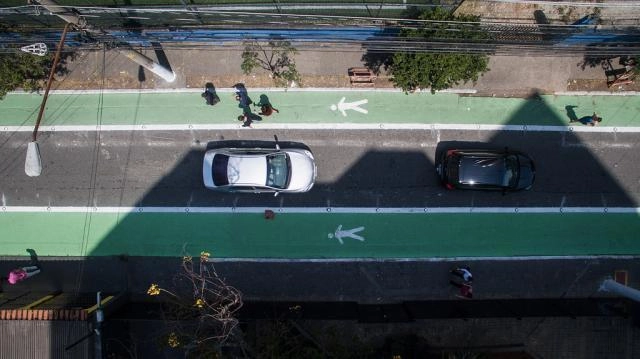
Interventions on Joel Carlos Borges Street ensure greater safety for pedestrians. Photo: Pedro Mascaro/WRI Brasil
Although we are all pedestrians, those behind the wheel often fail to respect the space, time, or priority of people on foot. This is one of the reasons walking in cities remains a challenge. Beyond public safety concerns, the road hierarchy and resulting urban design of Brazilian streets hinder the fulfillment of basic pedestrian rights.
https://www.archdaily.com/1113944/three-pedestrian-rights-that-can-be-ensured-through-urban-designWRI Brasil
Accelerating the fight against climate change and social inequalities depends on cities. Photo: Daniel Hunter/WRI Brasil
The greatest force in the fight against climate change lies in the hands of cities. This is where most people live and where the global economy drives forward. However, according to the new report by the New Climate Economy, titled "Unlocking the Inclusive Growth Story of the 21st Century: Accelerating Climate Action in Urgent Times," urban areas are not leveraging their transformative potential to promote sustainable development. Ultimately, this could mean missing our final opportunities to reduce poverty and halt climate change.
https://www.archdaily.com/1113695/cities-need-ambitious-action-to-promote-sustainable-developmentWRI Brasil