Toke Joseph

Toke Joseph is an architectural and spatial designer and researcher based in Lagos, with educational and professional experience spanning Cyprus, England, and Nigeria, working across architectural design and creative/cultural engagement. Her work sits at the intersection of design, research, and community engagement.

BROWSE ALL FROM THIS AUTHOR HERE
↓
Subscriber Access

The Work of Keeping a Public Building Public: The Drill Hall in Johannesburg

Audio available

What happens to a building after the architecture is finished? For buildings intended to serve the public, their continued life depends on more than the physical conditions of their construction. It involves the activities that take place within them, the relationships they allow to develop, the people who occupy and shape them, and the institutional structures responsible for their upkeep. Yet these conditions are not always secured through the act of building itself. They are continually negotiated, often through forms of work that remain outside the conventional understanding of architectural practice.

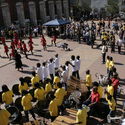
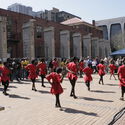
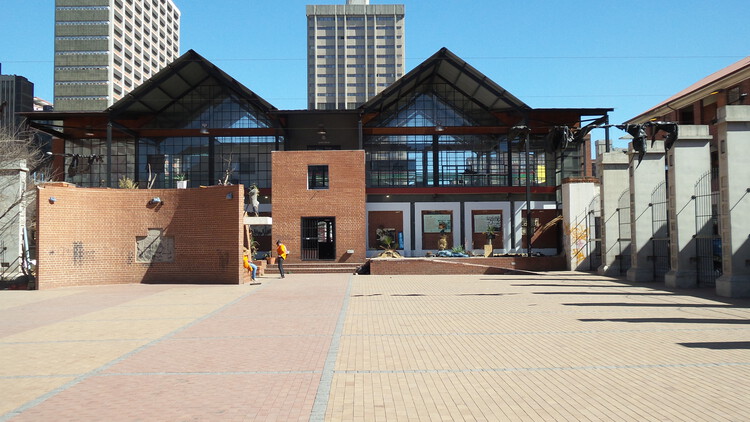
The Drill Hall in central Johannesburg offers a way of examining this unfinished work. Its history is marked by changes in use, occupation and institutional responsibility, but also by repeated attempts to imagine what the building could offer the city.
The Work of Keeping a Public Building Public: The Drill Hall in Johannesburg - 1 的图像 4The Work of Keeping a Public Building Public: The Drill Hall in Johannesburg - 2 的图像 4The Work of Keeping a Public Building Public: The Drill Hall in Johannesburg - 3 的图像 4The Work of Keeping a Public Building Public: The Drill Hall in Johannesburg - 4 的图像 4The Work of Keeping a Public Building Public: The Drill Hall in Johannesburg - More Images+ 7

Subscriber Access

Process as Practice: Building with Reclaimed Materials on Tarkwa Bay, Lagos

Audio available

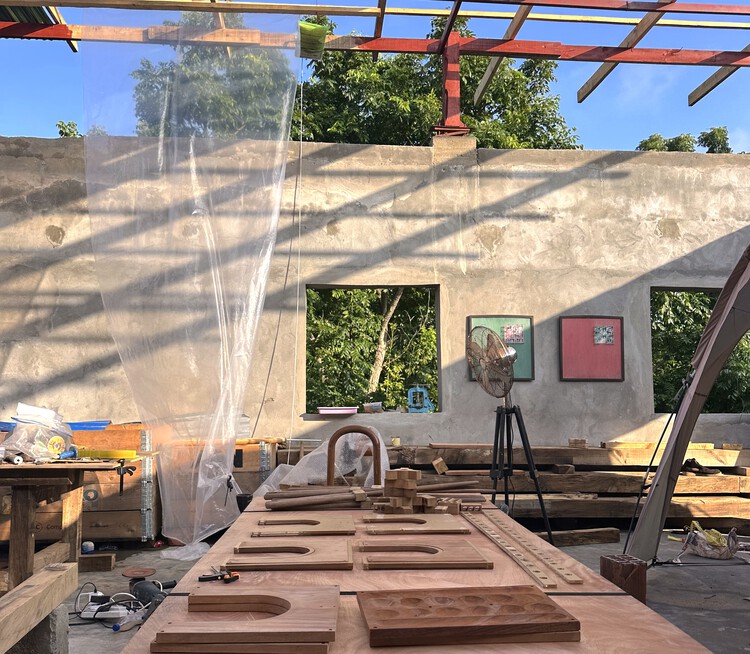
On Tarkwa Bay, off the coast of Lagos, the transformation of an abandoned building offers a way to consider how architecture might emerge from the materials, relationships and conditions already present in a place.

Architecture is often encountered at the end, when the uncertainties of making have been resolved into a building, a surface, a space. Less visible are the conditions that allow these outcomes to exist, the movement of materials, the availability of labour, the knowledge held by people and places, and the negotiations through which an idea becomes possible. On Tarkwa Bay, an island off the coast of Lagos accessible only by boat, these conditions are difficult to separate from the act of building itself.

The crossing from the Lagos mainland introduces a different relationship to access. People, tools and materials move across water; some resources are readily available, others less so. Materials move across water; reclaimed elements carry histories from elsewhere; salt and sun alter the behaviour of surfaces; and the availability of local artisans influences how work unfolds. These are not necessarily prohibitions; rather, they make visible the dependencies that building elsewhere can allow us to overlook.

Process as Practice: Building with Reclaimed Materials on Tarkwa Bay, Lagos - 1 的图像 4Process as Practice: Building with Reclaimed Materials on Tarkwa Bay, Lagos - 2 的图像 4Process as Practice: Building with Reclaimed Materials on Tarkwa Bay, Lagos - 3 的图像 4Process as Practice: Building with Reclaimed Materials on Tarkwa Bay, Lagos - 4 的图像 4Process as Practice: Building with Reclaimed Materials on Tarkwa Bay, Lagos - More Images+ 13

Subscriber Access

From Garden to Monument: Liberation Landscapes in African Cities

Audio available

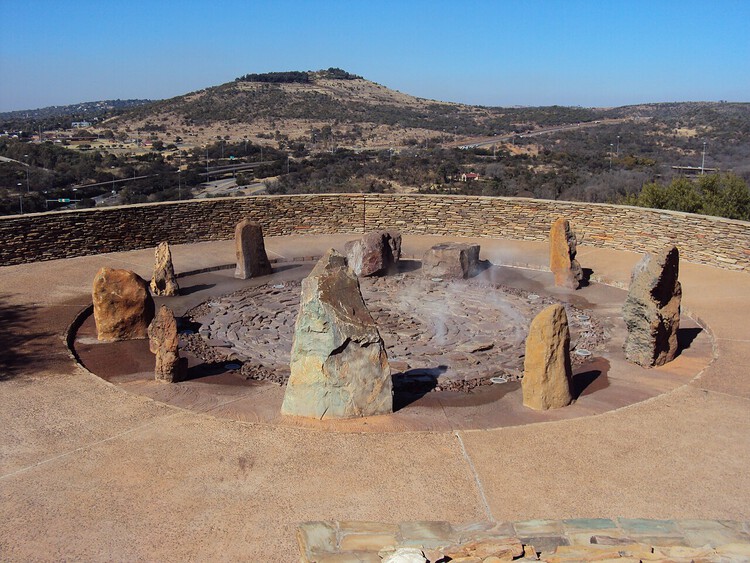
Liberation does not always begin with a monument. It may begin in a garden, a yard, a clearing, a field; in the occupation of land and the possibility of gathering there. Across histories shaped by colonialism and dispossession, space has been more than the setting in which liberation takes place. It has been one of its practices: cultivated, occupied, hidden within, moved through and collectively remade.

Wolff Architects' research Liberation Gardens offers the garden as one way of reading these spatial practices, not simply as planted ground, but as a space through which survival, nourishment and emancipatory imagination can be sustained. The garden in this sense is not defined by landscape design so much as by relationships between people and land, cultivation and knowledge, occupation and autonomy. It can hold cultural production alongside subsistence, and forms of collective life that emerge under conditions of violence and dispossession. Liberation, understood spatially, becomes as much about the possibility of inhabiting differently as it is about arriving at a final condition of freedom.

From Garden to Monument: Liberation Landscapes in African Cities - Image 1 of 4From Garden to Monument: Liberation Landscapes in African Cities - Image 2 of 4From Garden to Monument: Liberation Landscapes in African Cities - Image 3 of 4From Garden to Monument: Liberation Landscapes in African Cities - Image 4 of 4From Garden to Monument: Liberation Landscapes in African Cities - More Images+ 4

Subscriber Access

When the Water Comes: How Lagos Negotiates with Its Returning Floods

Audio available

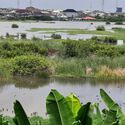
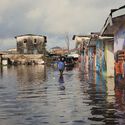
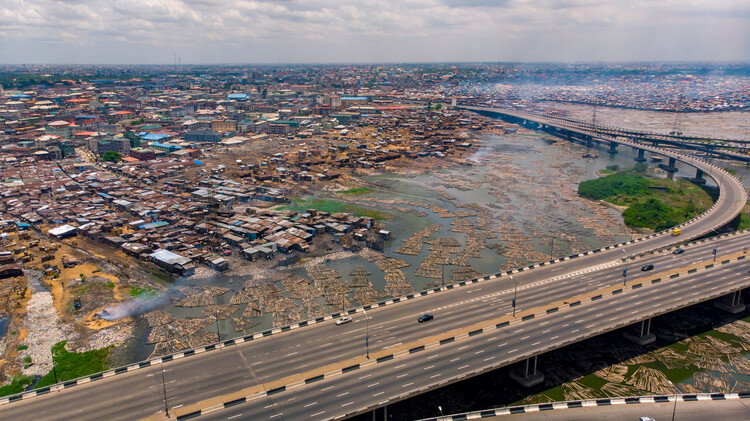
Lagos is a city shaped by time, human interaction, the forces of nature, and its evolving, sometimes uneasy relationship with all three. Nowhere is this more visible than when the rain comes.

Eko sits on a floodplain. Its geographical condition predates the city itself, reaching back to a time before the first road was laid, the first boundary drawn. The drainage systems, the developments that have gradually become privatised waterfronts, are all built on a landscape that has always been, at its foundation, in continuous conversation with water. The flood is not an anomaly; it is the land insisting on a dialogue that was always going to return.

When the Water Comes: How Lagos Negotiates with Its Returning Floods - Image 1 of 4When the Water Comes: How Lagos Negotiates with Its Returning Floods - Image 2 of 4When the Water Comes: How Lagos Negotiates with Its Returning Floods - Image 3 of 4When the Water Comes: How Lagos Negotiates with Its Returning Floods - Image 4 of 4When the Water Comes: How Lagos Negotiates with Its Returning Floods - More Images+ 2