Romullo Baratto

Romullo Baratto is an architect with a PhD from FAUUSP and Managing Editor of ArchDaily. He previously coordinated the editorial team of the 11th São Paulo Architecture Biennial and served as Managing Editor of ArchDaily Brasil, where he led the platform to win the FNA Award—the first time the honor was granted to a media outlet. He collaborated on the editing of the book "Concrete Jungle", published by gestalten, and has curated architecture exhibitions in Brazil, Chile, Denmark, and Italy, as well as delivered lectures and moderated debates in Spain, the United States, and Portugal. His doctoral thesis investigates the urban landscapes of São Paulo through cinema. His work spans academic research and editorial practice, communicating architecture through texts, interviews, lectures, curatorship, and photography. Follow him on Instagram @romullobf.

BROWSE ALL FROM THIS AUTHOR HERE

Ícaro Jardins da Graciosa Building by Studio Arthur Casas Receives the Rethinking The Future Award

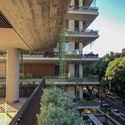
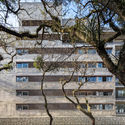
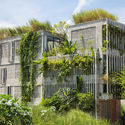
The Ícaro Jardins da Graciosa Building, designed by Studio Arthur Casas, was recognized in the Rethinking The Future Awards, an initiative that honors architecture and design projects from around the world across more than 40 categories. Located in Curitiba, the building features 21 apartment units distributed among three exposed concrete towers.

Competing in the residential (over five floors) category, the building designed by Casas features a facade defined by circulation pathways that double as balconies, emphasizing the towers' horizontality. With landscaping by Renata Tilli, these horizontal lines are accentuated by the lush greenery of plants grown in planters along the perimeter of each floor.

Ícaro Jardins da Graciosa Building by Studio Arthur Casas Receives the Rethinking The Future Award - 1 的图像 4Ícaro Jardins da Graciosa Building by Studio Arthur Casas Receives the Rethinking The Future Award - 2 的图像 4Ícaro Jardins da Graciosa Building by Studio Arthur Casas Receives the Rethinking The Future Award - 3 的图像 4Ícaro Jardins da Graciosa Building by Studio Arthur Casas Receives the Rethinking The Future Award - 4 的图像 4Ícaro Jardins da Graciosa Building by Studio Arthur Casas Receives the Rethinking The Future Award - More Images

COPAN Renovation: Results of the 5th {CURA} Award

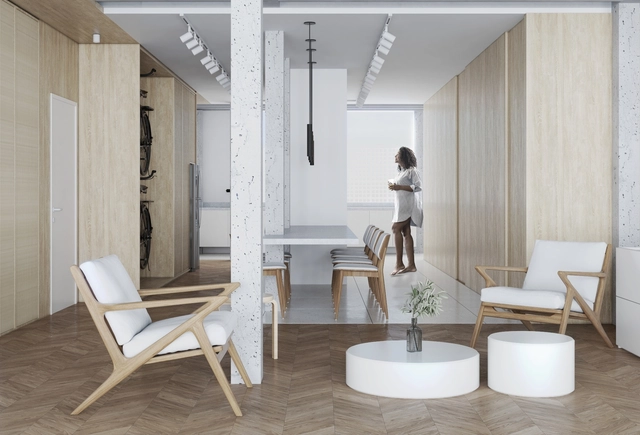
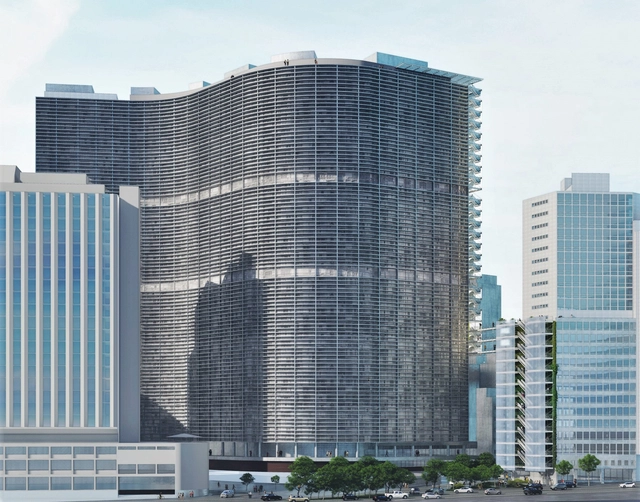
The 5th edition of the {CURA} Award continues its proposal of hosting ideas competitions with themes aligned with current discussions on architecture, the city, and society, always understanding that architecture is an action-based profession. This time, participants were challenged to design the renovation of an apartment in the iconic Copan Building, designed by Oscar Niemeyer in downtown São Paulo.

COPAN Renovation: Results of the 5th {CURA} Award - Image 1 of 4COPAN Renovation: Results of the 5th {CURA} Award - Image 2 of 4COPAN Renovation: Results of the 5th {CURA} Award - Image 3 of 4COPAN Renovation: Results of the 5th {CURA} Award - Image 4 of 4COPAN Renovation: Results of the 5th {CURA} Award - More Images+ 12

Pro-Reforma, a free app to quantify and estimate renovation projects

Small-scale renovations are among the most common projects in Brazil, but that does not mean they are immune to budgeting and specification issues. A useful tool to avoid these headaches is Pro-Reforma, a free web app that automatically specifies, quantifies, and estimates the products and services needed for a renovation project.

ABDI launches free online course on BIM

In October, the Brazilian Agency for Industrial Development (ABDI) launched a free basic online course on BIM (Building Information Modeling). Divided into two modules, the Democratizando BIM course is aimed at all professionals in the architecture, engineering, and construction (AEC) sectors. To register, simply visit the website and fill out the form.

The Black movement and the Black women's movement in Brazilian cities

Since colonial times in Brazil, Black people have organized in resistance to the slave-owning and colonial regime. Brotherhoods, quilombos, famílias de santo. The Black press, domestic workers' associations, the Brazilian Black Front, and the Black Experimental Theater. Blocos-afro, the Unified Black Movement (MNU), literary groups, Black women's organizations, and international fronts. A political activism interwoven with the arts and spirituality that has brought us to where we are today.

Guilherme Wisnik talks with Bianca Santana, a journalist, writer, PhD in information science, and holder of a master's degree in communication from the University of São Paulo. Santana is the author of Quando me descobri negra, a columnist for ECOA-UOL and Gama magazine, and a member of UNEafro, one of the organizations that make up the Black Coalition for Rights.

Betoneira, a podcast about architecture, people, and cities

What is comfort in living? How does the city serve as a stage for your life? How do gender and race issues influence the way you walk down the street at night? Why is the villain's house always cooler than the hero's? These are some of the topics discussed on Betoneira, a podcast hosted by architects André Scarpa, Marcelo Barbosa, and Paula Otto.

The core premise of Betoneira is to cover a bit of everything in order to speak deeply about architecture, people, and cities, blending a wide range of topics, guests, opinions, theories, and memes through the unique lens of each of the three hosts.

Altamira makes the e-book "Women Architects and Architectures in 20th-Century Latin America" available for free.

Altamira Editorial has made the book Arquitetas e arquiteturas na América Latina do século XX available for free download on its website. Authored by Ana Gabriela Godinho Lima, the publication features a "survey of the work of 20th-century Latin American women architects in the field of theoretical and practical building production."

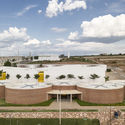
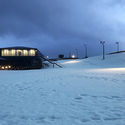
Contemporary architecture in communist countries: projects in Cuba, Laos, Vietnam, and China

Subscriber Access | 

"The world is highly polarized." This is a phrase we have all heard recently. While this is an undeniable fact, there have been times when the planet was just as, if not more, polarized than it is today. In particular, the period between the end of World War II and the early 1990s was marked by intense tension between the capitalist and socialist blocs, leaving deep marks on many countries and societies. The dismantling of the latter, symbolically represented by the fall of the Berlin Wall, dissipated the tension but did not eradicate communism, which remains the political system in several countries today.

There are currently six countries under a communist regime: China, North Korea, Cuba, Laos, Vietnam, and Transnistria. Despite differences in their economic systems—China, for example, has an economy considered mixed by some experts, with regions regulated by a capitalist market system—these countries also clearly present social, cultural, and geographical particularities that are reflected in their cities and architecture.

Contemporary architecture in communist countries: projects in Cuba, Laos, Vietnam, and China - Image 1 of 4Contemporary architecture in communist countries: projects in Cuba, Laos, Vietnam, and China - Image 2 of 4Contemporary architecture in communist countries: projects in Cuba, Laos, Vietnam, and China - Image 3 of 4Contemporary architecture in communist countries: projects in Cuba, Laos, Vietnam, and China - Image 4 of 4Contemporary architecture in communist countries: projects in Cuba, Laos, Vietnam, and China - More Images+ 9

Casa 239 by UNA Arquitetos Among the Finalists for the Pan-American Award of the 2020 Quito Biennial

Casa 239, designed by the São Paulo-based office UNA Arquitetos, has been selected as a finalist for the Pan-American Prize of the 2020 Quito Architecture Biennial. The only Brazilian project on the extensive shortlist, it was led by architects Fernanda Barbara and Fabio Valentim, now partners at UNA barbara e valentim, and is competing for the final award in the Single-Family Housing category.

Casa 239 by UNA Arquitetos Among the Finalists for the Pan-American Award of the 2020 Quito Biennial - Image 1 of 4Casa 239 by UNA Arquitetos Among the Finalists for the Pan-American Award of the 2020 Quito Biennial - Image 2 of 4Casa 239 by UNA Arquitetos Among the Finalists for the Pan-American Award of the 2020 Quito Biennial - Image 3 of 4Casa 239 by UNA Arquitetos Among the Finalists for the Pan-American Award of the 2020 Quito Biennial - Image 4 of 4Casa 239 by UNA Arquitetos Among the Finalists for the Pan-American Award of the 2020 Quito Biennial - More Images+ 2

3rd Anniversary of Casa da Arquitectura

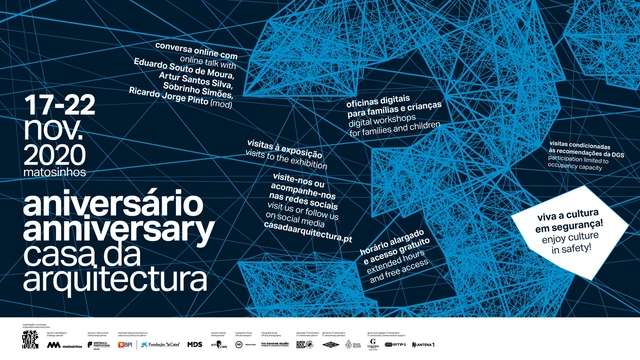
Casa da Arquitectura – Centro Português de Arquitectura is celebrating its 3rd anniversary starting November 17 at the Quarteirão da Real Vinícola in Matosinhos. The program features free admission to the exhibition through November 22, alongside online content available on its social media channels.

In light of the current state of emergency and in compliance with strict safety measures, the Casa will remain open with free admission from November 17 to 22, featuring extended and adjusted operating hours.

Brazilian students win Latin American steel construction award

Geared toward Latin American architecture students, the Acero Prize aims to promote and encourage initiatives that complement pedagogical models, fostering innovative architectural ideas that use steel as a raw material. This year's edition, themed "Sustainable Cities and Communities," awarded first place to a team of two Brazilian students from FAUUSP.

“Architecture that does not touch the ground” is the name of the proposal developed by Augusto Longarine and Luiz Sakata, advised by Professor Luciano Margotto. With the same project, they won the 13th CBCA Competition (Brazilian Center for Steel Construction), the national stage preceding the Alacero competition. See the project below, accompanied by the project description written by the students.

Brazilian students win Latin American steel construction award - Image 1 of 4Brazilian students win Latin American steel construction award - Image 2 of 4Brazilian students win Latin American steel construction award - Image 3 of 4Brazilian students win Latin American steel construction award - Image 4 of 4Brazilian students win Latin American steel construction award - More Images+ 25

Meet the winners of the 2020 Instituto Tomie Ohtake AkzoNobel Architecture Prize

The Tomie Ohtake Institute, with support from AkzoNobel, announced today the three winning projects of the seventh edition of the Tomie Ohtake Institute AkzoNobel Architecture Award. A total of 246 submissions were received from 14 Brazilian states and the Federal District. The selected projects, which will also be featured in a catalog, include works located in Amazonas, Bahia, Ceará, Goiás, Minas Gerais, Rio de Janeiro, Santa Catarina, São Paulo, and King George Island in Antarctica.

The selection was made by a jury composed of architects Diego Mauro, Elisabete França, Fernando Túlio, Juliana Braga, and Pedro Varella. The announcement, made via video on the Institute's social media channels, also marks the opening of the exhibition featuring the 13 selected projects in this seventh edition.

Meet the winners of the 2020 Instituto Tomie Ohtake AkzoNobel Architecture Prize - Imagem 2 de 4Meet the winners of the 2020 Instituto Tomie Ohtake AkzoNobel Architecture Prize - Imagem 4 de 4Meet the winners of the 2020 Instituto Tomie Ohtake AkzoNobel Architecture Prize - Imagem 5 de 4Meet the winners of the 2020 Instituto Tomie Ohtake AkzoNobel Architecture Prize - Imagem 6 de 4Meet the winners of the 2020 Instituto Tomie Ohtake AkzoNobel Architecture Prize - More Images+ 8

Eight historic examples of collective housing in São Paulo

Subscriber Access | 

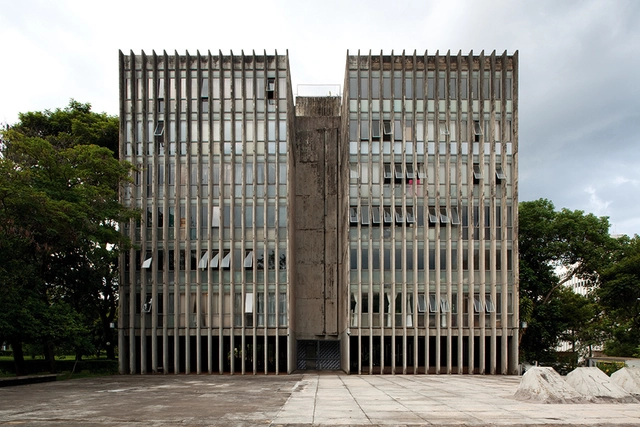
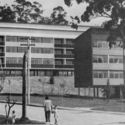
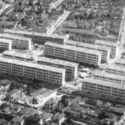
Eight historic examples of collective housing in São Paulo - Imagen 1 de 4Eight historic examples of collective housing in São Paulo - Imagen 2 de 4Eight historic examples of collective housing in São Paulo - Imagen 3 de 4Eight historic examples of collective housing in São Paulo - Imagen 4 de 4Eight historic examples of collective housing in São Paulo - More Images+ 4

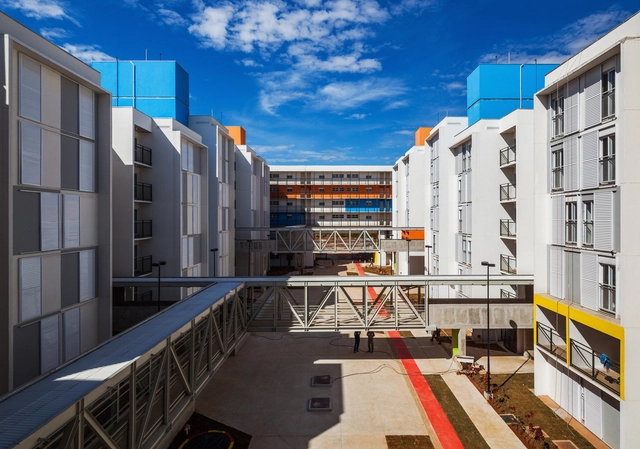
The history of collective housing has been the focus of the research group PC3 - Pensamento Crítico e Cidade Contemporânea (Critical Thinking and the Contemporary City), at FAUUSP, coordinated by professors Leandro Medrano and Luiz Recamán. Through the Cadernos de Habitação Coletiva (Collective Housing Notebooks) — developed under a cooperation agreement between researchers from FAUUSP and ETSAM-UPM in Madrid — the group explores the most significant examples of this housing typology in Brazil.

According to the group's platform, "the main objective of the Cadernos de Habitação Coletiva has been to build a comprehensive database, organized by decade, that includes the most relevant Brazilian collective housing buildings, both designed and built." Below, we highlight eight collective housing experiments built in São Paulo between the 1930s and 1960s, studied in detail by CHC and featured in individual articles here on ArchDaily.

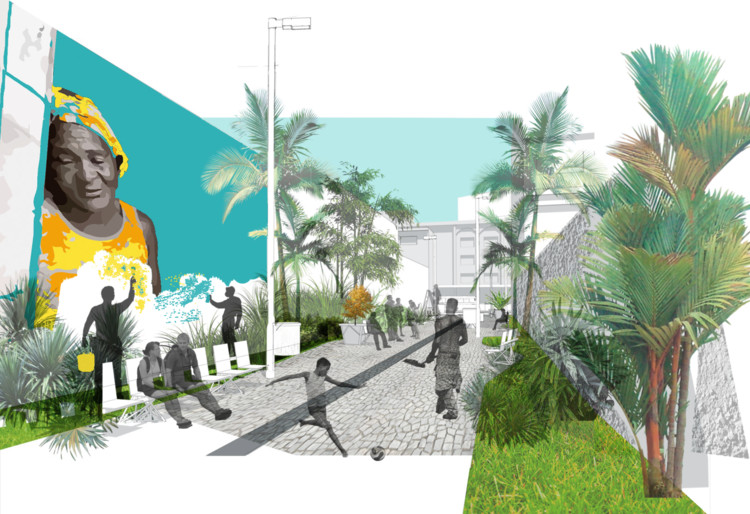
Statue of Tebas, an enslaved 18th-century architect, unveiled in São Paulo

On November 20 — Black Consciousness Day — the city of São Paulo inaugurated a statue honoring Joaquim Pinto de Oliveira, an enslaved 18th-century Black architect known as Tebas. Located in Praça Clóvis Beviláqua, on the eastern side of Praça da Sé in the city center, the sculpture was designed and developed by visual artist Lumumba Afroindígena and architect Francine Moura.

The work aims to cement Tebas's legacy, showcase his sophisticated technical output for the era, and, above all, provoke reflection on the historical significance of Black territorial presence in the city center, which has been fragmented over the centuries.

Urban agriculture can feed 20 million people in São Paulo

Subscriber Access | 

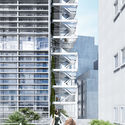
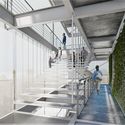
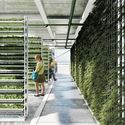
Urban agriculture can feed 20 million people in São Paulo - 1 的图像 4Urban agriculture can feed 20 million people in São Paulo - 2 的图像 4Urban agriculture can feed 20 million people in São Paulo - 3 的图像 4Urban agriculture can feed 20 million people in São Paulo - 4 的图像 4Urban agriculture can feed 20 million people in São Paulo - More Images+ 3

The Metropolitan Region of São Paulo (RMSP) has nearly 22 million inhabitants, representing about 10% of Brazil's total population. To feed this massive population, tons of food supplies arrive in the metropolis daily from different parts of the country. However, a new study by Instituto Escolhas shows that, with certain measures, it is possible to supply this entire population with locally grown vegetables.

Indigenous worlds: interfaces between art, architecture, and geography

What would happen if we abandoned the modern epistemology that separates “us” from “others”? What would art history look like without this restrictive separation? Many other, non-disenchanted worlds coexist with ours. Other cosmopolitics can offer us less exclusionary views of life and relationships, unearthing previously unsuspected futures.

Guilherme Wisnik talks with Renata Marquez, a professor at the UFMG School of Architecture and Design and co-editor of Piseagrama magazine. Holding a PhD in Geography and a postdoc in Anthropology, she researches curatorial practices, theory, and criticism at the intersection of art, architecture, geography, and anthropology.

NGO brings dry toilets to the Brazilian Northeast

Subscriber Access | 

According to the 2018 National Sanitation Information System, 25.8% of the population in Northeast Brazil lacks access to water and 72% has no connection to the sewage network. “Now tell me, how am I supposed to have a bathroom at home under these conditions?” This was the question that robbed Vera of her sleep and peace of mind.

Vera lives in the small community of Riacho das Almas (PE), and her story is similar to those of thousands of families living in the rural areas of the semi-arid Northeast. Where access to water is scarce and basic sanitation is practically nonexistent, the use of traditional bathrooms—equipped with faucets, showers, and flushing toilets—is uncommon in the region. Consequently, families like Vera's and many others rely on improvised outdoor spaces for their needs: the "aveloz bathroom."

Espírito Santo launches incentive program for solar energy generation

The government of Espírito Santo announced last week the launch of the GERAR Program, which aims to triple investments in distributed solar photovoltaic generation and expand incentives for renewable sources. Supported by the Brazilian Association of Photovoltaic Solar Energy (ABSOLAR), the program demonstrates the state's commitment to its targets for reducing pollutant emissions and combating the climate crisis.

Espírito Santo launches incentive program for solar energy generation - Imagem 1 de 4Espírito Santo launches incentive program for solar energy generation - Imagem 2 de 4Espírito Santo launches incentive program for solar energy generation - Imagem 3 de 4Espírito Santo launches incentive program for solar energy generation - Imagem 4 de 4Espírito Santo launches incentive program for solar energy generation - More Images