The Architects' Union of the State of São Paulo (SASP) is hosting a debate titled "Harassment in the Workplace" on Thursday, May 3. The event marks the launch of the Worker Health Working Group (GTST) and the start of the "Architects Against Harassment" campaign, launched in partnership with the SASP Women in Architecture Working Group (GTMA).
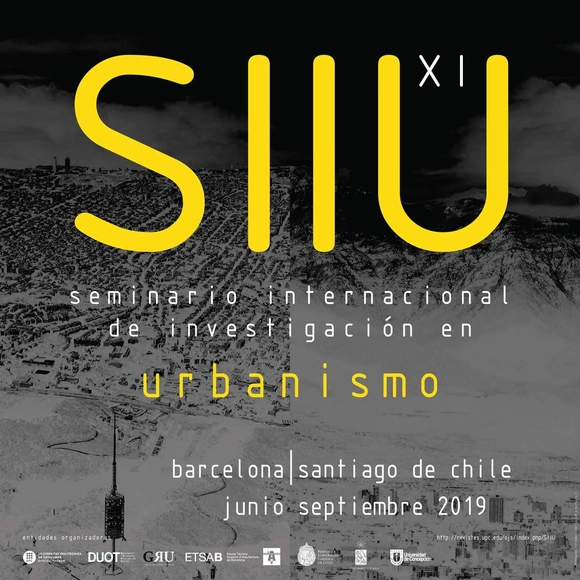
The seminar initiative was originally conceived in 2007 to offer participants in the master's and doctoral urbanism programs at the UPC the opportunity to discuss and enrich their work.
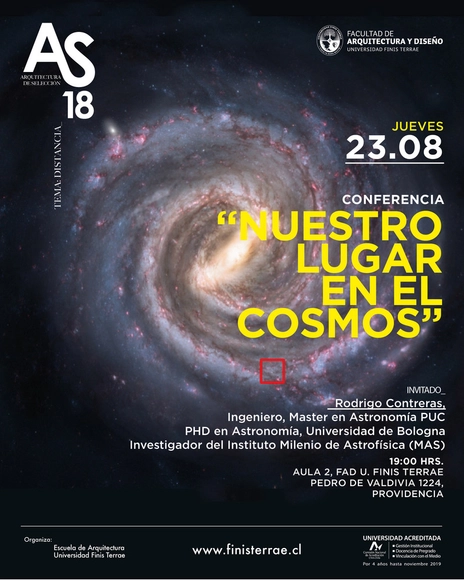
Researcher Rodrigo Contreras of the Millennium Institute of Astrophysics (MAS) will deliver this lecture as part of the "Architecture of Selection" series. Organized by the School of Architecture at Universidad Finis Terrae, the series will explore the theme of distance throughout the second semester of 2018.
David Santos, Bruno Mespulet, Sergio Chaparro, Ricardo Ortiz, Felipe Rodriguez, Christian Ramos, Anthony Morote, and José Herrera.
This one-of-a-kind congress in Latin America aims to showcase the true potential of SketchUp and V-Ray for SketchUp, explore their capabilities in greater depth, and provide insight into current workflows and future developments. The event features conferences and workshops led by internationally and nationally recognized experts in the field of architecture.
COMMEMORATIVE SPACE AND MONUMENT TO THE 100TH ANNIVERSARY OF THE GRITO DE ALCORTA. CLAUDIO VEKSTEIN Photo: Sergio Esmoris
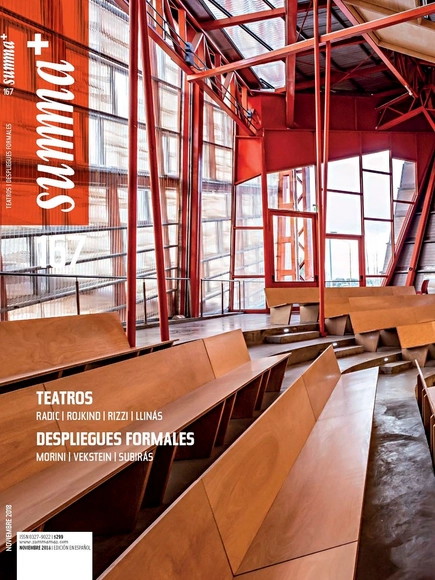
Four theaters share the opening section of this issue of Summa+, presenting a brief current overview of the subject—at least as far as concert and theater halls are concerned—while acknowledging the range of flexibility these types of spaces can possess. The Shakespearean Theater in Gdansk, designed by Italian architect Renato Rizzi, could be considered the most unique, as it is situated on the same site and follows the same layout as its century-old predecessor. Its distinctiveness lies in the ability to use either a central stage surrounded by galleries or a traditional stage against the back of the hall. Furthermore, it features a retractable roof, allowing for open-air performances.
Lorenzo Arenas Market (1959) / Osvaldo Cáceres & Gabriela González, Architects / Osvaldo Cáceres G. Photographic Archive
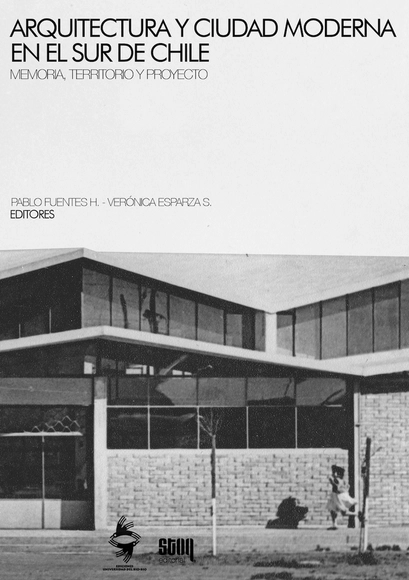
This editorial project originated from the seminar "SURMODERNO, Valuation of Modern Heritage in Southern Chile," held in Concepción in 2015. Building on the papers presented at that event, this publication was developed two years later following meticulous editorial work. Its purpose is to share and disseminate the modern architecture developed in cities such as Chillán, Concepción, Talcahuano, Lota, Nacimiento, Osorno, and Punta Arenas.
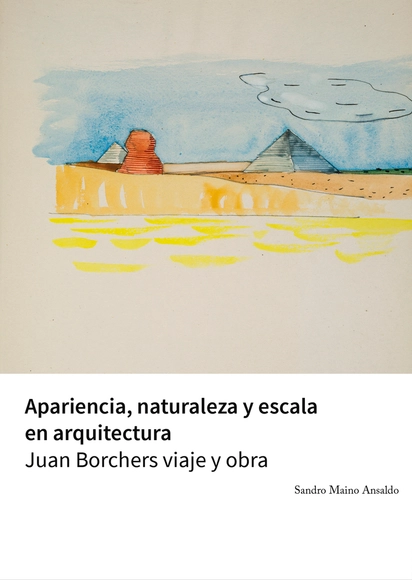
Drawing of the Giza complex, watercolor technique, Egypt. Borchers, Juan, Egypt Notebook, November 1948. (FJB-L22-004)
This book, written by Sandro Maino Ansaldo with a foreword by Fernando Álvarez Prozorovich (UPC) and Fernando Pérez Oyarzún (PUCCh), explores the travels of Chilean architect Juan Borchers Fernández through Europe and the Mediterranean between 1948 and 1950. During this period, he established the foundations of his architectural thought through the observation of major monuments of Western architecture and the study of seminal texts in the Western tradition.
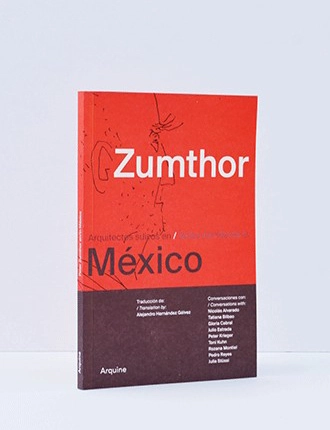
This book is the first in a series inaugurated by the visit of Swiss architect Peter Zumthor, winner of the 2009 Pritzker Prize, as part of the MEXTRÓPOLI International Architecture and City Festival, held in Mexico City from March 11 to 14, 2017. This marks the beginning of a project that celebrates the historical and cultural ties between Mexico and Switzerland through architecture.
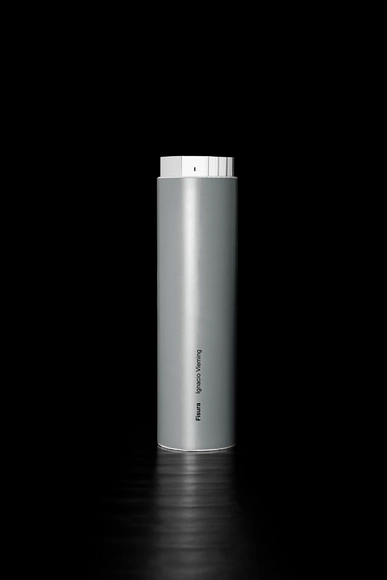
Fisura is a book of architectural adventures featuring Fernando Abellanas and an essay on the possibilities of residual urban space. Throughout its pages, Joris imagines various alternatives for imbuing anonymous places with use and meaning.
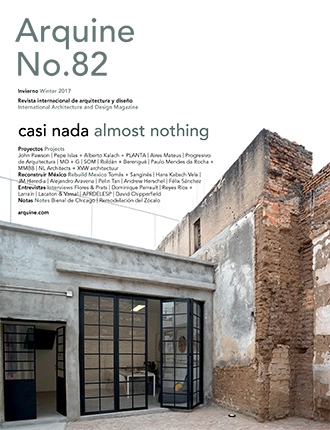
Following the devastating earthquakes last September, which affected more than 150,000 homes and buildings across various states and cities in Mexico, rescue and reconstruction have become fundamental tasks. Recycling and rebuilding imply a profound social repair and a valuation of what already exists, avoiding indiscriminate demolitions, the consequences of which are irreparable in economic, ecological, and heritage terms.
The Instagram photography competition for the XIV Spanish Biennial of Architecture and Urbanism (XIV BEAU) is now open. The event is curated by José Morales and Sara de Giles, with Jesús Marina and Elena Morón serving as directors of photography activities.
In the context of architecture and urbanism, design competitions are academic and/or professional contests that involve developing an architectural proposal based on specific requirements defined by organizers in a brief, which is carefully planned and prepared for each theme.
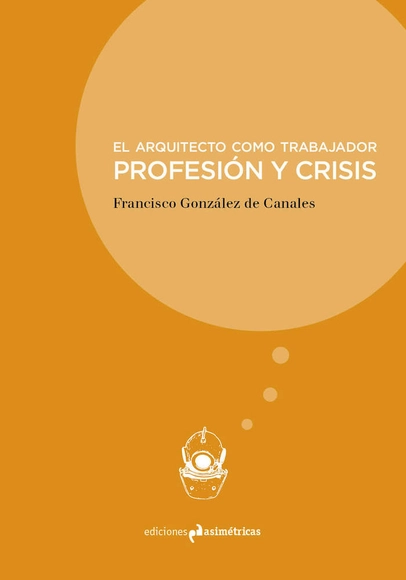
Much has been debated over the last half-century regarding the work of the architect—profession or trade?, creation or collaboration?, autonomous discipline or a cog in a socio-political system?—yet almost nothing has been written about the architect as a worker. One of the initial problems is that architects have always struggled to recognize themselves as just another type of worker. Architects have preferred to view architecture as a vocation—something done for pleasure, like a hobby or a passion—surrounding this attitude with various myths. In recent attempts to describe the state of the profession, the word "crisis" seems to permeate everything, rarely accompanied by broader reflections.
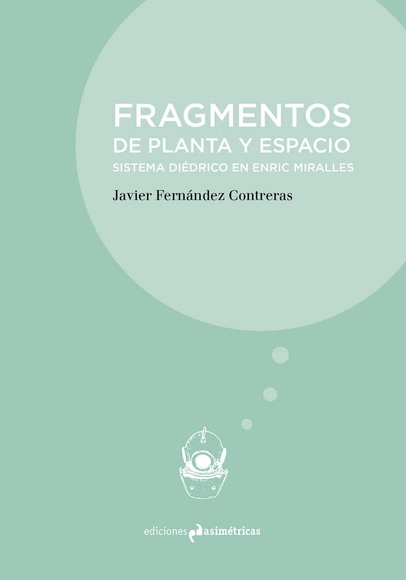
The impact of using representation systems in general, and the dihedral system in particular, on architectural thought has historically remained an underexplored topic in architectural theory. It is only in recent decades that the voices of prominent critics like Stan Allen, and above all the seminal research of Robin Evans, have focused attention on how designing from flat orthogonal projections—plan, elevation, and section—conditions, rigidifies, and "cubifies" architectural thought.
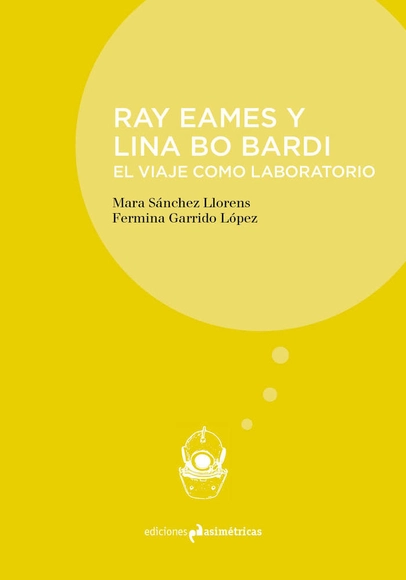
This book is a journey of journeys. It is a chronicle of the paths, pilgrimages, and relocations undertaken by two creators: Ray Eames and Lina Bo Bardi. These journeys merge with their lives and creative experiences, forming a succession of activities and experiments that constitute the "vital laboratory" of these architects.
Since its construction in 2005, Casapoli has become a reference point for contemporary visual arts in Chile, serving as a venue for diverse activities linked to artistic production and fostering national and international connections.
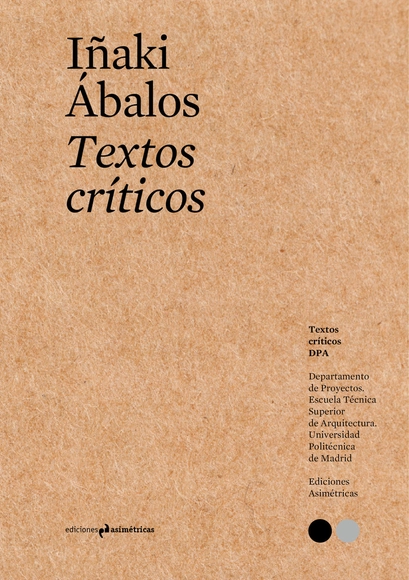
The texts that make up this selection—light yet lucid, and often considered minor (lecture introductions, forewords, journalistic articles, and short essays)—allow Iñaki Ábalos (Professor of Architectural Projects at ETSAM, Chair of the Department of Architecture at the Harvard GSD from 2012 to 2016, distinguished architect, and prolific author) to explore what 21st-century architecture might look like and what the role of the "architects of modern life" will be. In these writings, he discusses peers of his generation who are establishing innovative theoretical and practical positions (Johnston&Marklee, Sergison&Bates, Lacaton&Vassal, Amid.cero9, Lateral, Christ&Gantenbein, Liu Yichun, David Adjaye, Ciro Najle, Beigel, Christou, Moe...), critically revisits his mentors—at times heterodox, at others unjustly forgotten (Taut, Hilberseimer, Mies, Fuller, Goldsmith, Le Ricolais, Price, Branzi, Cook, Higueras, Peña Ganchegui...)—and elegantly ignores the star system.
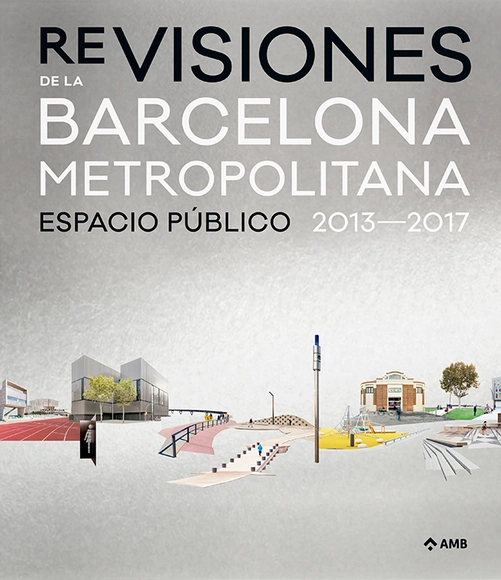
The AMB's Urban Design and Projects Section, in collaboration with POCH Comunicación, has published the 5th volume of the "Metropolitan Spaces" collection, which compiles and showcases projects executed by the institution between 2013 and 2017. This book aims to mark a turning point by broadening the perspective and moving away from the traditional catalog format. Beyond incorporating a historical reflection on the fundamental role the AMB has played in design, the construction of public space, and the transformation and structuring of the metropolitan territory, its goal is to outline new paths for the future.