O Infinito Vão arrives in Brazil between November 6th and 9th
The "Infinito Vão" exhibition arrives in Brazil from November 6th to 9th. A group of architects involved in the exhibition on 90 years of Brazilian architecture—currently on display at the Casa da Arquitectura (CA) – Portuguese Centre for Architecture in Matosinhos, Portugal—will participate in a series of talks and debates at the Instituto Moreira Salles in São Paulo. The program features Portuguese architect Inês Lobo, among many other professionals from various generations and backgrounds. Admission is free.
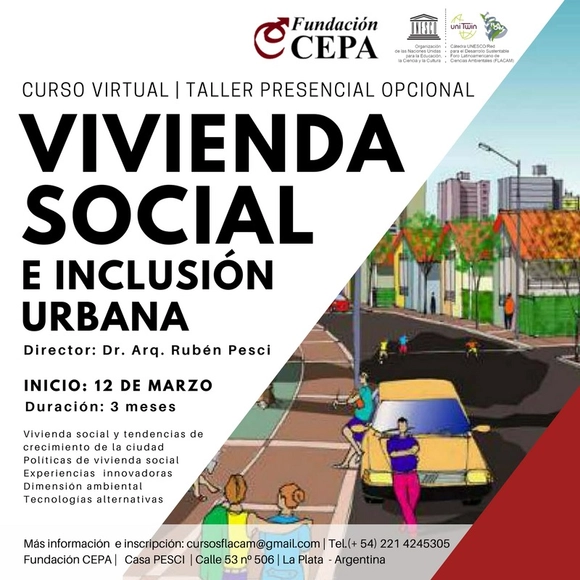
Pre-registration for the Social Housing and Urban Inclusion course: https://goo.gl/forms/32n3wXZRLtlJbKaS2
New course from Fundación CEPA: Social Housing and Urban Inclusion (2nd edition), starting March 12th, directed by architect and PhD in Urban Regeneration and Sustainability, Rubén Pesci.
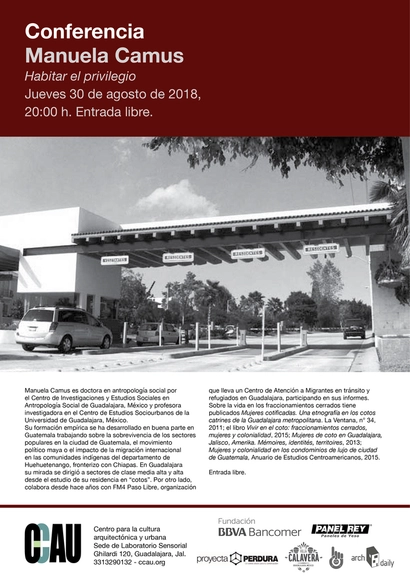
Manuela Camus holds a PhD in Social Anthropology from the Center for Research and Higher Studies in Social Anthropology (CIESAS) in Guadalajara, Mexico, and is a research professor at the Center for Socio-Urban Studies at the University of Guadalajara, Mexico.
Promotional poster displayed at Schools of Architecture and Urbanism (FAUs) across Brazil.
Motivated to bring to life an organization that strives for a better city and seeks to deconstruct the false stereotype of the AMAZONIAN METROPOLIS, the Organizing Committee presents the city of Manaus as the host of EREA Amazônia 2018.
escolaabertanogalpao. Art by Zenilda Pasquini and Luan Fernandes.
A project born from a desire to share and foster critical thinking on architecture and urbanism, the arts, cinema, geography, and other fields that play a fundamental role in how we appropriate and transform urban life. Connection drives us; building knowledge sustains us.
Founded in 1948, the School of Architecture and Urbanism at the University of São Paulo (FAUUSP) is currently one of the most important architecture schools in Latin America and ranks among the top 50 in the world.
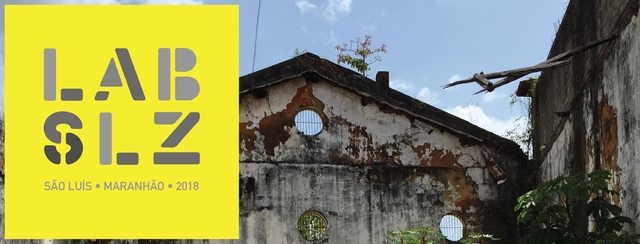
Partial view of one of the warehouses to be restored
For three weeks, São Luís will host a cycle of activities focused on social urban innovation at the Trapiche Santo Ângelo (Galpões do Complexo Santo Ângelo). Located in the city's historic center, the site is currently undergoing a process of heritage revitalization.
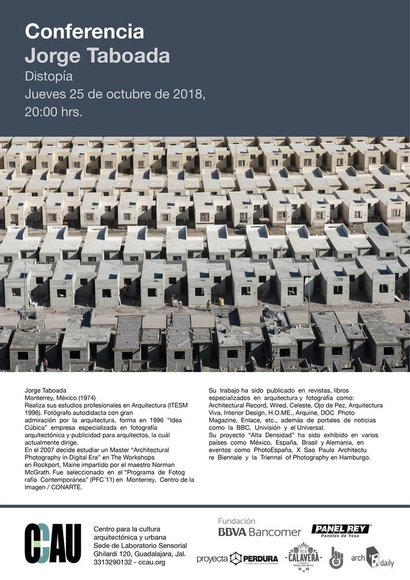
Jorge Taboada Monterrey, Mexico (1974) He completed his professional studies in Architecture (ITESM, 1996). A self-taught photographer with a deep admiration for architecture, he founded "Idea Cúbica" in 1996, a firm specializing in architectural photography and advertising for architects, which he currently directs. In 2007, he pursued a master’s degree in "Architectural Photography in the Digital Era" at The Workshops in Rockport, Maine, taught by Norman McGrath. He was selected for the "Contemporary Photography Program" (PFC '11) in Monterrey, organized by the Centro de la Imagen / CONARTE. His work has been featured in specialized architecture and photography magazines and books, including Architectural Record, Wired, Celeste, Ojo de Pez, Arquitectura Viva, Interior Design, H.O.ME., Arquine, DOC Photo Magazine, and Enlace, among others, as well as on news outlets such as the BBC, Univision, and El Universal. His project "Alta Densidad" has been exhibited in several countries, including Mexico, Spain, Brazil, and Germany, at events such as PhotoEspaña, the X São Paulo Architecture Biennale, and the Triennial of Photography in Hamburg.
The lecture offers an overview of the most significant works by the firm MOARQS, focusing on the concepts that inform its practice and its engagement with both the professional and academic worlds. The firm’s practice is rooted in a constructive approach that fosters an architecture free of preconceptions—one that emerges from the arrangement of specific materials in a particular order, combined with "art" to achieve an intense poetics through an economy of resources.
Tactical urbanism intervention carried out earlier this year by FADU-Udelar students
The "Corredor Sur" project—a partnership between the collectives TransLAB.URB (Porto Alegre, Brazil), Urbanismo Vivo (Buenos Aires, Argentina), and FADU (Faculty of Architecture, Design, and Urbanism at the University of the Republic, Montevideo, Uruguay)—began in November 2017 and is now seeing its first results.
Program subject to paid registration and limited to available seats/studio dobra
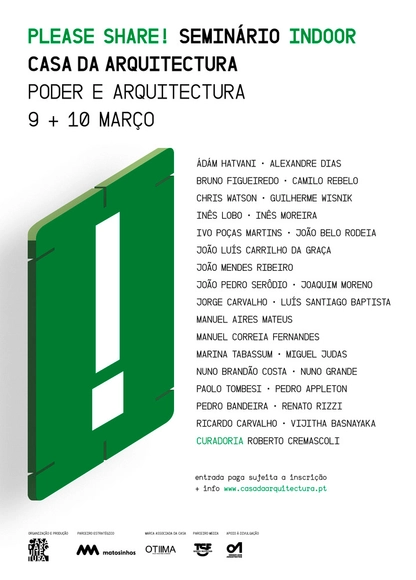
Act 4 of Please Share! /Indoor, a program curated by Roberto Cremascoli, requires paid registration and is subject to availability. The complete list of participants will be announced very soon.
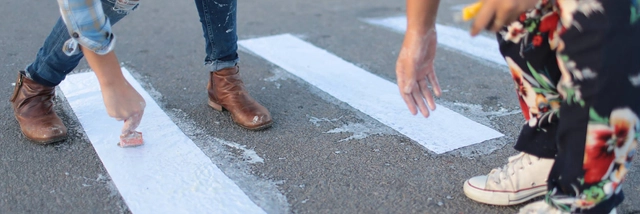
This Sunday, November 11, we invite you to a day of public space activation featuring two winning proposals from the IDB and Placemaking Latinoamérica México 2018 Urban Interventions Competition:
From May 17 to July 14, 2018, Pinakotheke Cultural Rio de Janeiro presents the exhibition "Victor Brecheret (1894–1955)," featuring works by the renowned artist born in Italy and based in Brazil. A key figure of modernism and a participant in the historic 1922 Week of Modern Art, Brecheret is the focus of this exhibition curated by Max Perlingeiro. The show gathers significant works by the artist alongside those of other figures who participated in that watershed event in Brazilian art: Anita Malfatti, Di Cavalcanti, Menotti del Picchia, John Graz, Vicente do Rego Monteiro, Helios Seelinger, and Zina Aita. Many of these pieces were featured in the original 1922 event at the Theatro Municipal de São Paulo.
The course seeks to contribute to the education of citizens capable of interpreting the reality of urban spaces and adopting a critical stance on the future of cities; registration is open until
Coinciding with the opening of the 15th Architecture Week, an exhibition is being presented to commemorate the centenary of the birth of architect Francisco Javier Sáenz de Oíza, a fundamental figure in Spanish architecture, and particularly in Madrid.
The Basque Country is one of Spain’s most advanced autonomous communities in terms of public housing, thanks to policies sustained since the transfer of powers in 1981. Regardless of the political party in office, laws and regulations have evolved to meet societal demands. After 37 years, what remains to be done? In what direction should public housing policy move?








.jpg?1537997160&format=webp&width=640&height=580)
