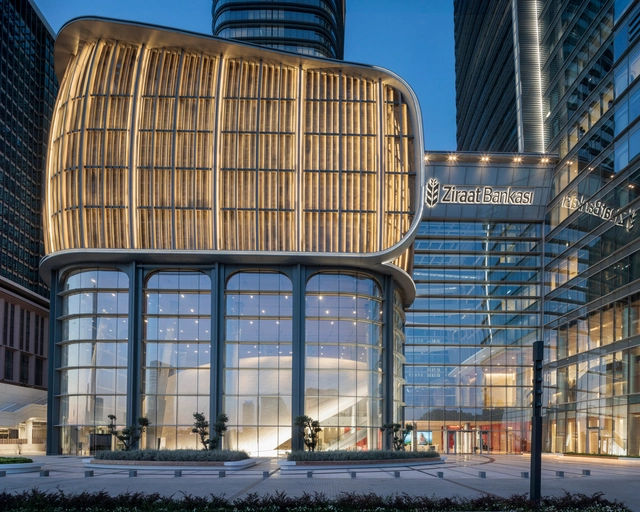
For almost four decades, ABB, the Swedish-Swiss multinational leader in electrical engineering, has been at the cutting edge of innovation and expertise. A standout initiative in their portfolio is the Frozen Music video series,a video series showcasing exceptional architectural projects and the architects who create them.As Katrin Förster, Global Key Account Manager at ABB, explains, 'When producing an episode for Frozen Music, I always begin by sending a bespoke questionnaire to the architect.'For Episode #24, a conversation with Mustafa Chehabeddine, Design Director at KPF, helped shape the narrative, emphasizing the formal and functional qualities of Ziraat Bank's new headquarters in Istanbul.
European Cultural Academy is pleased to offer a scholarship opportunity to join the 4th edition of the "Sustainable Healthy Cities: building for the future" course. The scholarship will cover full tuition fee.
The Commonwealth Association of Architects (CAA) is proud to announce the launch of a major survey aimed at capturing the perspectives, aspirations, and challenges of young architects and architecture students across the Commonwealth. This initiative underscores the crucial role of youth in shaping the future of architecture through policy, education, and training.
Enter the Howard Waterfall Retreat Architecture Competition now! 10,000 € in prize money! Closing date for registration: July 24, 2025
The Howard Waterfall Retreat Competition invites architects and designers from around the world to reimagine a multi-generational family retreat that embraces the extraordinary natural and historical context of Howard Falls in Northwestern Pennsylvania, USA. This competition is a unique opportunity to create a timeless design that honors the rich heritage of the Howard Family while looking forward to the future.
Architect Andrew Frontini converts the architectural monograph into a story telling vehicle to candidly reveal the inner workings of the architect’s creative process as it intersects with the constantly evolving needs of our society. Eleven narrative insertions are bound into the body of the monograph providing a parallel reading experience -one that gets in behind the polished architectural photography and curated drawings to reveal the poignant, often absurd and occasionally painful lessons that accompanied the gestation of each project. Every building has a story to tell and, in sum, these stories map the road an architect’s career can take. Populated with cunning contractors, inspiring design legends (such as the late Cornelia Oberlander), intractable bureaucrats, obstinate senior partners, mentors, students, rivals and collaborators of every stripe, Frontini’s road navigates technological revolutions, precipitous economies and societal threats that challenge the very notion of what architecture needs to be. With candor, humor and a design philosophy that is fundamentally open to suggestion, Frontini converts his personal experience into a set of universal reflections that are sure to inform, inspire and console architects (and the architecturally curious) at any stage in their journey.
The airport terminal is the ultimate ‘architectural promenade’, a typology of high modernism and a megastructure with complex programmatic configurations. Today, the high-tech aesthetic is being replaced with a more holistic approach, where smart tech and new materialities are used to support the transformation. Besides geopolitical uncertainties, concerns for the climate are key drivers for the reinvention of the airport terminal.
Cities are infinite cultural hyperobjects that contain layers of history, of contemporary life, of material, capital, infrastructure, of future dreams of what may come. We sometimes call these dreams “urban design plans”—two-dimensional drawings that are meant to capture our aspirations for the future of a place. Yet these plans are often static images—or, worse, building masses without people, narratives, or even nods to contextual histories.
The book offers a new conceptual and hist orical framework for the study of Kocher’s body of work that relocates it within the history of American modern architecture. Kocher’s work as an independent designer has gotten very little critical attention. The book devotes several chapters to this little-known part of Kocher’s practice and resituates him as one of the main pr otagonists in the history of American Modern architecture and reveals the profound relationship between Kocher’s designs and existing American domestic traditions. Kocher’ concept of the vernacular included not only the differ ent residential types of Colonial and Early Republican America, but most importantly, other kinds of transitional dwelling artifacts. This book tries to provide evidence about Kocher’s intention of using these vernacular artifacts, alongside the concepts of prefabrication and industrialization inherent to them as a base to construct a new national architecture in which to graft the European modernist tradition.
An insightful collection of essays on the overlooked sign. Each chapter explores the extraordinary connection that culture and society have to this common object. The book blends historical overview, graphic taxonomy, and design criticism on eleven signage types, ranging from signs that say no, to pharmacy signs, and all in-between. Every chapter uncovers the reasoning and logic of how and why our built environment is annotated the way it is form the simplest of signs to the largest of signs.
"Wit-ness to Mat-Haroo Spirit is a series of charmingly written stories by architects Gurjit Singh Matharoo and Vagish Naganur that shed light on the nuanced relationships and challenges architects contend with. These anecdotes span a 30-year career, providing a fascinating insight into the inner workings of an acclaimed practice – an uncharted territory thus far in architectural writing. Filled with self-deprecating humour in its folds, it gives us a quirky look into the special place the profession occupies, going beyond mere physical edifices to symbolize culture, history, and human connections. The stories delve into themes of love, loss and the transient nature of human existence, etched deep into the pages of this book."
The Virtues and Vices of Our Time sculptures by Matyáš Chochola, currently exhibited at the EPO1 Contemporary Art Center in Trutnov, are a postmodern interpretation of the original early 18th-century allegorical cycle Virtues and Vices by Matthias Bernard Braun (1684–1738), created for the nearby Baroque complex at Kuks.
The Rice School of Architecture invites you to attend its spring 2025 public programs, a dynamic series of lectures, exhibitions, and symposia that reflect our commitment to advancing architectural discourse and engaging with the pressing questions of our time. From thought-provoking talks by renowned practitioners to groundbreaking exhibitions and interdisciplinary collaborations, this semester’s lineup promises to inspire and challenge. Join us to build community through architecture.
India's leading product designer and an established name in the international art and design realm, Gunjan Gupta will be unveiling Craft-itecture — a series of handmade objects and artworks that breathe new life into traditional Indian crafts from across India at the sixteenth edition of India Art Fair, to be held in New Delhi.
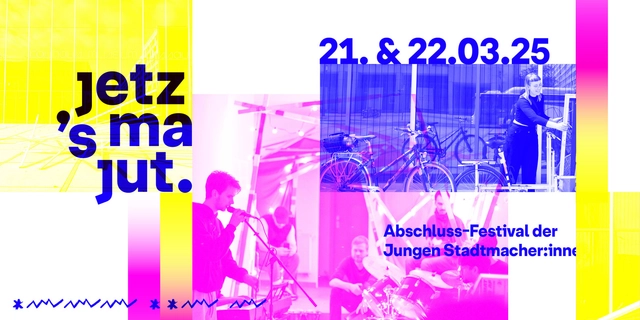
workshops, keynotes, conversations, and activities around the City center
Where is the city center here? At a time when it is becoming increasingly difficult to find a place to live in large cities smaller towns are confronted with the opposite problem: Emptiness. According to the "donut effect", this phenomenon begins in the core of city centers. In Dessau-Roßlau in particular, the reality of ageing and out-migration is rapidly coming to a head. Throughout Europe, however, innovative young projects are already looking for alternatives to meet this challenge. This is also the case in Dessau with the Young City Makers research project. Students from the Anhalt University of Applied Sciences' Departments of Design and Architecture have been conducting action research for two years to find out how vacant properties in Dessau-Rosslau's city center can be sustainably revitalized. Using different approaches, three vacant spaces were transformed into: an urban living room, a street gallery and a bizarre space. In doing so, they show how liveliness and community can be fueled by involving urban society and through design. can be fueled by design. The final festival presents and reflects on the findings of the Young City Makers together with representatives from the city, administration, politics and universities. Two days with lectures, discussion panels, workshops, city rally, party & concert.
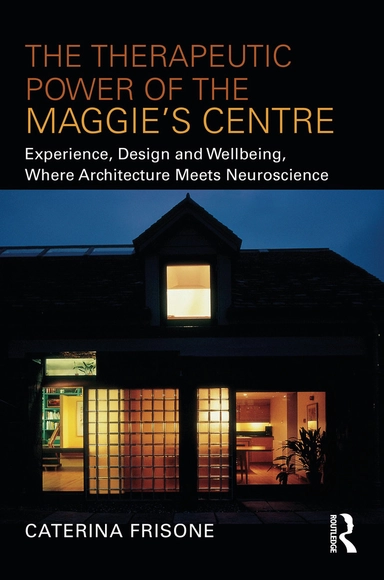
This book is about the therapeutic environment of the Maggie’s centre and explores the many ways this is achieved. With an unconventional architecture as required by the design brief, combined with Maggie’s psychological support programme, this special health facility allows extraordinary therapeutic effects in people, to the point that one can speak of therapeutic power.