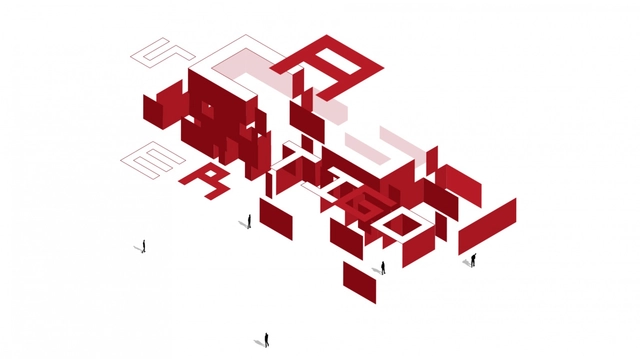
In recent months, we have witnessed one of the crises that has most profoundly challenged our "essence"—our ways of living, working, communicating, socializing, and even relating to one another. These issues, which transcend the health emergency and the pandemic, have prompted us to reflect on topics related to the environment, sustainability, the efficiency of segregating activities, the frantic mobility to which we had become accustomed, the need for flexible spaces in homes and cities, and the nature of public spaces when social distancing is mandatory.
Videos
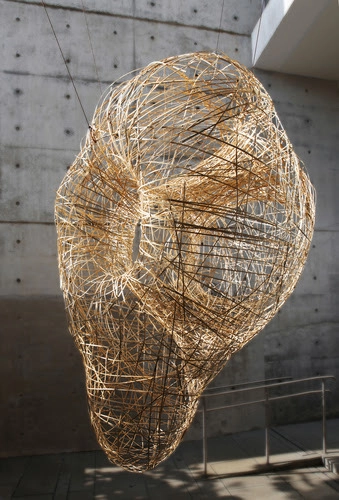
Sculpture made from grass-based biomaterial developed as an open source technology for the fabrication of objects and buildings.
Join us online or in person at Building 14, Nolan Park, Governors Island, New York, on Friday 29th October where we present a new material and a new approach to making public spaces and buildings based on the FIELD Project, followed by a panel discussion on their possibilities in the built and green spaces of New York, voiced by leading institutions working on climate justice and social resiliency in the city.
The opening conference of the “AURA on Saturday” series in 2021 Fall Semester will host architect, professor emeritus, writer Juhani Pallasmaa and architect, writer Hüseyin Yanar.
CASA Vertigo in collaboration with the Curatorial Research Collective proudly present 50 Years of CASA Vertigo: From KSA to CASA, a retrospective exhibition diving into the history and legacy of the exhibition and event committee CASA Vertigo, established with TU Eindhoven’s Architecture department.
Cover Image by: Brendan Cooney, Parto Jahangiri, Arvin Nadimi and Minh Quang Do, Sweden
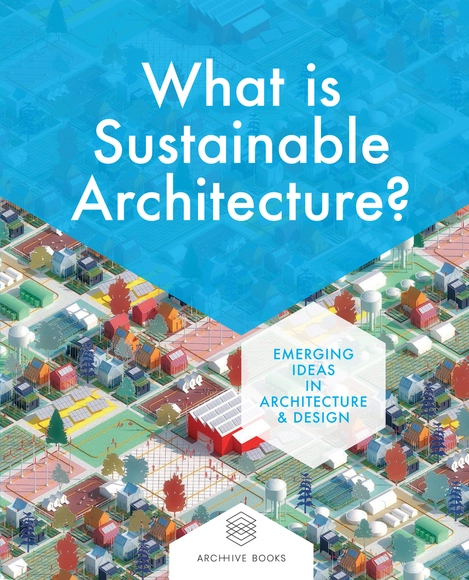
Sustainability comes in many forms. Amazing innovations and advances are introduced every day in the drive towards environmentally-responsible, socially sustainable, resource-efficient structures and cities. These include everything from smart homes and photovoltaic glass, to new forms of circular economies, centrally organized power networks, and modular building techniques.
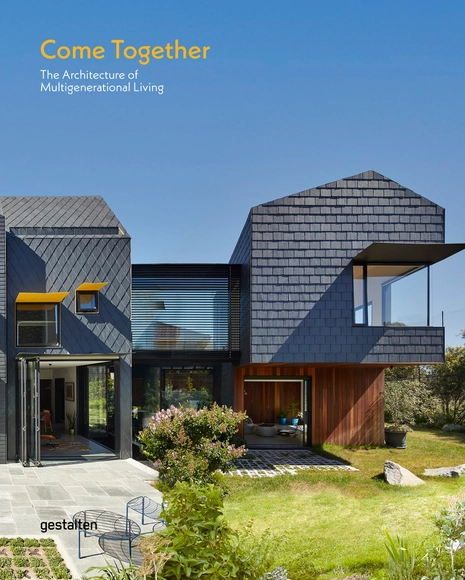
Come Together. The Architecture of Multigenerational Living, gestalten 2021
Three or four generations living under one roof, sharing their rooms, meals, and lives—this is multigenerational living. Around the world this more communal approach to living is getting increasingly popular. It’s not just within the family. Intergenerational community living is also making a comeback: Architectural experimentation is also creating space for new models of coliving that are bringing people from different backgrounds and generations, who might not typically live together, all into the same shared home. So what’s the difference between a multigenerational home and simply a big house? Come Together explores the why, the what, the where and, most importantly, the how of the homes that succeed at being liveable for all ages—with designs created by architects around the globe that are not only stunning, but balance flexibility, age-inclusivity, privacy, and communal spaces for multiple generations to come together. In five essays, ranging from rethinking Asia’s centuries-old tradition of multigenerational living, to Australia’s emergence as an epicenter for a new expression of multigenerational housing in the western context, and new approaches to intergenerational community living coming out of Europe, five in-depth profiles and 29 case studies, this book shows that through carefully considered design, it’s possible to live your own life and share it with others-all under one roof.
Oregon State University Forest Science Complex. Image Courtesy of Wood Design & Building Awards
The Wood Design & Building Awards program recognizes design teams that are passionate about celebrating wood as a safe, strong, and sophisticated building material. Projects submitted to the Wood Design & Building Awards program are accepted from Canada, US, and internationally, adding value to the diversity of wood building application examples.
Videos
Courtesy of IE School of Architecture and Design
Architects and Designers: Have you ever asked yourself how to win more work, how to leave behind unprofitable, ineffective marketing methods, how to level up your design firm, and to say yes to more fulfilling work...?
If so, sign up now to our free three online sessions of our Business of Design series and hear firsthand from Archmark, ING Media and MVRDV their tips to enable architects and designers to become better managers, business developers, and entrepreneurs.
The "AA Visiting School São Paulo 2021 – Play Structures" will be the first part of a two-workshop series led by architect and professor Kristof Crolla, held in a hybrid virtual-in-person format. This first workshop aims to explore the combination of bamboo construction and digital technologies, building on digital design research used to implement bending-active bamboo shell structures. The course will build upon previous work conducted by the Building Simplexity Lab at the University of Hong Kong, aiming to combine digital architectural exploration with real-time physical simulation software. The goal is to generate physical prototypes of these lightweight, low-tech construction systems within the Brazilian context, with the support of the digital design experts and the team at SUBdV.
VELUX Group's Director of Sustainable Buildings Lone Feifer talks about the Build for Life Conference and the company's vision for a more sustainable future for the built environment.
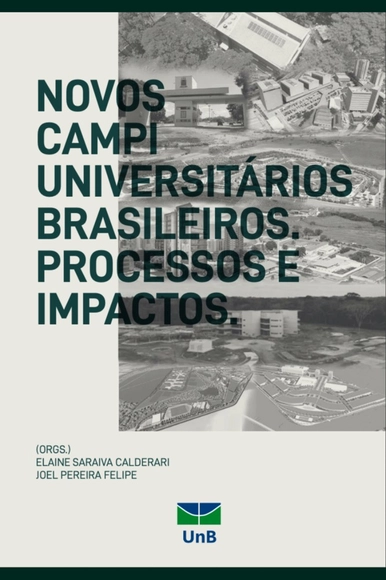
New Brazilian University Campuses: Processes and Impacts brings together the implementation experiences of nine new Brazilian federal universities created—or which underwent significant expansion—between 2004 and 2014. This was a fertile period of pedagogical, methodological, and architectural-urban experimentation resulting from the involvement of the federal government and higher education institutions.
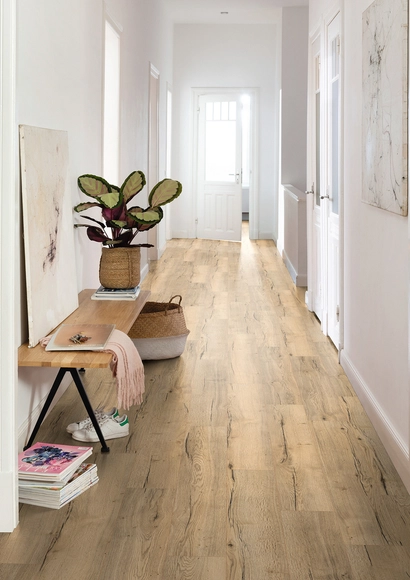
Cork is obtained from the bark of the cork oak, a slow-growing tree in the Mediterranean region that lives an average of 200 years. The valuable property of the cork oak is that it regenerates itself. After each peeling, the bark grows back. Therefore, no tree is cut down or permanently damaged for the cork harvest. In addition, a peeled cork tree binds more CO2 than an unpeeled tree.
Combining the benefits of laminate with the special properties of cork, EGGER Comfort flooring is made up of two layers of cork that provide warmth and special comfort when walking, coming from sustainable forestry.
The Secretariat of Culture, Youth, and Tourism of Tijucas, SC, launched a national design competition for the Casarão Gallotti Historic Center in Tijucas, SC, on August 31, 2021. Held in partnership with the Institute of Architects of Brazil – Santa Catarina Department (IAB-SC), the competition seeks to identify the best urban design and landscape proposal for the surroundings of Casarão Gallotti, the city's most significant building, through a legal and democratic process.
On October 12, a jury meeting of the open international competition for development of an architectural concept for the Galiasgar Kamal Tatar State Academy Theatre took place.



.jpg?1634586012&format=webp&width=640&height=580)