Architecture of the Future is the biggest architecture conference in Eastern Europe that brings together authorities, architects, engineers, developers, media – all who seek to change the city through the development of advanced technologies and the creation of iconic projects. Speakers from Zaha Hadid Architects, C.F. Moller Architects, Buro Happold, MVRDV, BIG, and Foster + Partners.
Description via Amazon. Life in Tehran proliferates and thrives in its interiors. When public space is policed and controlled, domestic interiors become art galleries, clubs, cultural centers, factories and offices. Interiors cease to be the exclusive domain for individual life and family matters; homes become the spaces in which new forms of collective life are explored and nurtured, and the battleground for social conflicts and political constituencies. Through its extensive apparatus of drawings, Tehran: Life within Walls presents an archeological inquiry over the politics and the ecologies of the interior spaces of the Iranian Metropolis, from its foundation as the Iranian capital till today. The book also provides an accessible entry point for the study of Tehran and Islamic/Iranian architecture, as well as a methodological experiment for the study of contemporary cities. An appendix of six projects provides an imaginative―yet radically pragmatic―vision for the future of Tehran.
Aquatecture 2018, a competition that challenges to explore innovative designs on water for our aquatic future Come join the movement and define the next big thing on Water!!
Water – an element in nature that life is constantly surrounded by; an element that has given birth to life on Earth and continues to support it. Although we made our shift to land, our bond with water still remains significant as ever; it is an element that is a basic necessity for our survival. The life on Earth is today plagued by adverse climate changes, global warming, the increasing toxic emissions, rising population, and scarce land resources. With various countries, such as Holland , fighting rising water levels for decades and with the current trends, it is now time to brace ourselves against the unseen future and design solutions to cope with the ever-changing community on Planet Earth. Today, the discourse of ‘smart cities’ has overtaken every conversation discussing the future of architecture. It is a glaring question as to how are we going to address the equation between the contrasting aspects of ecological crises and technological advancement for building our futures. Covering 71% of the Earth, it is now time to look at the water again as a harbinger of life in the near future; a place where human life can again thrive in its original glory. Creating living spaces on water will soon become a need to survive as a “What happens in the Arctic, does not stay in the Arctic” Extract - Greenpeace report on melting ice in Arctic paradigms of nature.
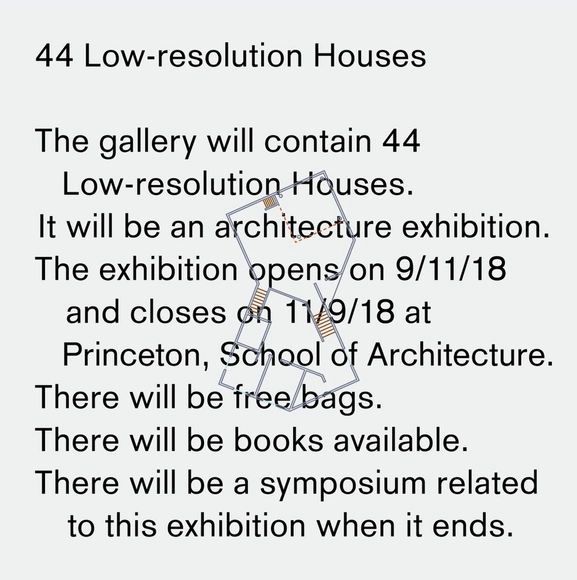
The term Low-resolution precedes Houses in order to make the exhibition-goer think about houses through this double technological and representational-aesthetic lens. All 44 houses exhibited fall into one or more of the following categories of Low-resolution: first, houses that vaguely resemble houses, using familiar house elements, such as pitched roofs, etc.; second, houses that appear to be constructed, in that you can see the construction, joints and the materials, there is a sort of cheap unfinished quality to the work; and third, houses that are composed of basic geometric primitives—squares, circles, triangles—arranged in a non-compositional or abstract manner. By these
The housing projects built in Camden in the 1960s and 1970s when Sydney Cook was borough architect are widely regarded as the most important urban housing built in the UK in the past 100 years. Cook recruited some of the brightest talent available in London at the time and the schemes – which included Alexandra Road, Branch Hill, Fleet Road, Highgate New Town and Maiden Lane – set out a model of housing that continues to command interest and admiration from architects to this day.
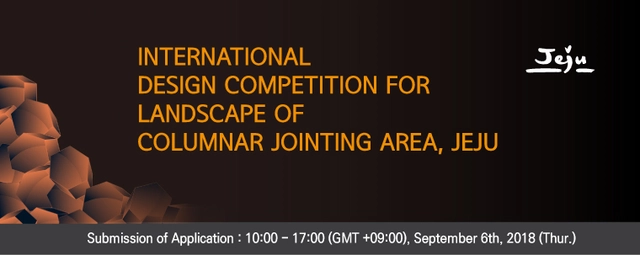
The city of Seogwipo is holding the “International Design Competition for Landscape of Columnar Jointing Area, Jeju” to improve the stunning scenery of the columnar jointing area near Jungmun Daepo Coast that reveals Jeju’s unique geological features, culture, and natural landscape. It will be conducted in the form of an international competition with 5 to 7 invited teams. Refer bellow for competition outlines.
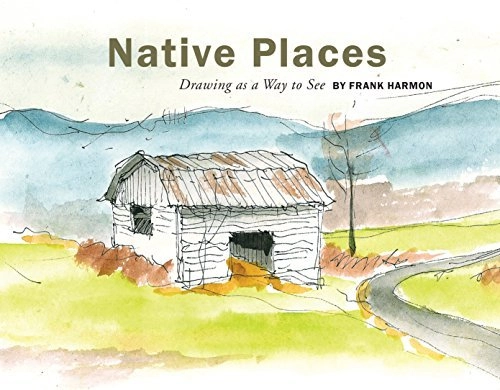
Description via Amazon. Native Places is a collection of sixty-four watercolor sketches paired with mini-essays about architecture, landscape, everyday objects, and nature. The sketches relate the delight found in ordinary places. The short essays, rather than repeat what is visible in the sketch, illustrate ideas and thoughts sparked by that image and offer a fresh interpretation of ordinary things. The goal of Native Places is, in part, to transform the way we see. Through its pages, barns become a guidebook to crops and weather; a country church is redolent of the struggle for civil rights and human dignity; a highway rest stop offers a glimpse of egalitarian society. Also exploring the belief that hand drawing and writing are not obsolete skills, both disciplines offer us the opportunity to develop a natural grace in the way we view the world and take part in it.
The chosen proposals for Exit Architecture: Speculations on the Hereafter will be on display upstate at Art Omi inside Charles B. Beneson Center this winter. (Robert Prochaska/Original Copy)
Humans have been enshrining and memorializing their dead for millennia. While forms and rituals vary widely across cultures and religions, we are nonetheless reacting to similar desires: memorializing a life, coping with loss, religious symbolism, returning to nature, etc.
The realities of the world today have imposed additional restrictions and opportunities on internment: rapid population growth, densifying urban areas, limited space, environmental concerns, and digitization—all factors that could lead architects to reimagine our own exit.
Exit Architecture is a speculative look at designing for the afterlife in all of its potential architectural and design forms, and new ways of marking our
A healthy downtown is both a symbol of community pride, history, and a civic and social center for positive interaction.
At Pratt’s School of Continuing and Professional Studies (SCPS), we have developed a Downtown Revitalization Certificate Program, to empower those who seek to turn Downtown and Main Street challenges into economic development and public space design opportunities. This program is of particular value to architects, urban designers, and planners (both private-sector and public-sector/ municipalities), Main Street Managers, Business Improvement District Directors (B.I.D.’s) and their staffs, Chambers of Commerce and community planning groups, historic preservationists, graduate – level students, and many more. Participants gain introductory knowledge and skills required to meet the needs of government, business and non-profits to plan, design, and implement efforts for the Downtown Revitalization of their communities, and their Main Streets / Commercial Corridor Districts, etc., and to help meet the goals of federal, state and local programs such as the NYS Office of Community Renewal’s New York Main Street Program, NYC-Small Business Service’s Storefront Improvement Program, and many others, etc.
Videos
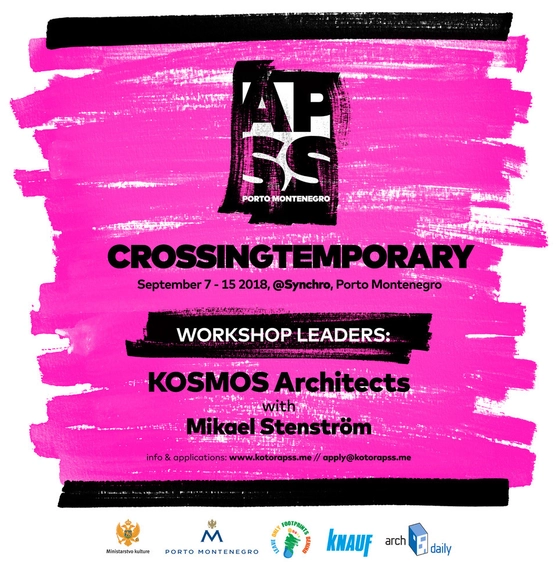
APSS Porto Montenegro 2018 with KOSMOS Architects and Mikael Stenström
APSS is a summer school of architecture located in Boka Bay, Montenegro, For six years now it has been acting as a platform for architecture, urbanism, informal education with studies and research that has lead to more projects such as Montenegro Pavilion at Venice Biennale in 2104 and 2016 that has originated from APSS work. After our Re-Use series in APSS, we have continued our journey with the topic of TEMPORARY in architecture, this year extended to CROSSING TEMPORARY.
The Hungarian Museum of Transport, one of the oldest transport museums in Europe will be rebuilt on a historically significant brownfield site in Budapest. The museum has launched an international design competition to select the best team of architects for its ambitious redevelopment program.
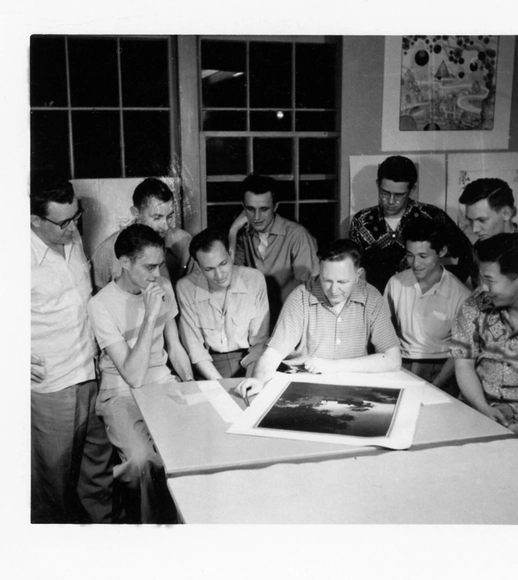
Bruce Goff confers with students in the early 1950s in Building 604 on the North Base
“A new school, probably the only indigenous one in the United States” is how the architect Donald MacDonald described Bruce Goff and Herb Greene’s influence on the University of Oklahoma School of Architecture from 1947 through the 1960s. The famous architects transformed the ways architecture was learned, taught and practiced, creating a uniquely American architectural style now represented in an archive at the University of Oklahoma Libraries and displayed in an exhibition in Bizzell Memorial Library.
Renegades: Bruce Goff and the American School of Architecture at Bizzell features selections from the American School Archive, including drawings and virtual tours of three
Human-machine collaboration during the assembly of lightweight metal structures. (c) Gramazio Kohler Research, ETH Zurich
The advent of robotics in the creative and construction industries has led to an amazing revolution, changing not just how things are designed and made, but also transforming knowledge cultures, politics and economics that surround them. As such, the ROB|ARCH 2018 conference – hosted by the NCCR Digital Fabrication and ETH Zurich – will continue this path, developing and revealing novel insights, applications and impacts of this transformation within the scientific, creative, and entrepreneurial domains, including, for example, architecture, structural design, civil and process engineering, art and design, and robotics. A particular focus lies upon cross-disciplinary approaches and applications, providing state-of-the-art knowledge, techniques and methods of robotics not just in individual areas of exploration, but also beyond. These ideals aspire to complement the transformation processes of emerging robotic research and applications, and to redefine cross-disciplinary work in an era of global digitalisation and knowledge transfer. Key topics and issues of ROB|ARCH 2018 include autonomous control systems, advanced construction, collaborative design tools, computerised materials and structures, adaptive sensing and actuation, on-site and cooperative robotics, machine-learning, human-machine interaction, large-scale robotic fabrication and networked workflows.
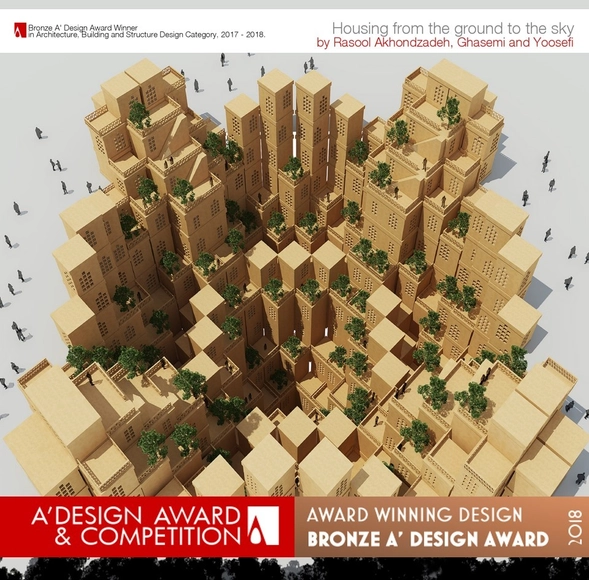
Housing from the ground to the sky The residential complex
Housing from the ground to the sky The residential complex
Award Winning Design - BRONZE A DESIGN AWARD
In modern architecture, high-rise building and skyscrapers was proposed as one of the effective factors to urban problems. This proposed method causes so much problems in these cities conditions such as twinkling city skyline, environmental pollution, disturbing privacy and also undesirable view of the buildings lower in height, safety factors, communication problems, installation, Etc. Skyscrapers, each trying to reach their peak in such a way that they aim to connect the earth to the sky. Somehow they are bridges from earth to sky. Dome is one
The School of Architecture at Academy of Art University in San Francisco is looking for talented students and we are still accepting applicants for Summer and Fall 2018 admission. You should apply now to be considered for our programs. Financial aid may still be available to those who qualify.
The School of Architecture is currently accepting applications in all programs. Our fairly priced tuition is extremely competitive compared to most US private universities, we also have a democratic, open and fair admissions process, we offer options for online and onsite learning, and instruction by an impressive and reputable faculty
Future eating, future drinking, future love, future working – what will our everyday life be like in the not too distant future?
The Laboratory is a cross-disciplinary workshop that brings together architects, artists and researchers to speculate about our life in the future. Participants are asked to develop written and drawn proposals about our life in tomorrow’s world through an exploration of our social, cultural, spatial and technological present.
The Laboratory will have input by experts from different fields such as architecture, nano science, entertainment design, trend research and photography. A series of field trips will explore centres of innovation
First Works - enter now and submit your project for the Bauwelt Award 2019.
For the eleventh time the Bauwelt Award “First Works” will be tendered this year – from now on you can submit your first work. The Bauwelt Award (consisting of 6 awards of 5000 Euros each) applies to all categories of “First Work” – from the interior design of shops and stores to prototypal constructions, from public housing projects to the restructuring of a public space and to temporary interventions. Qualified for submission is every first work the submitter has realized on his or her own responsibility and which has been completed after September 30th, 2015.