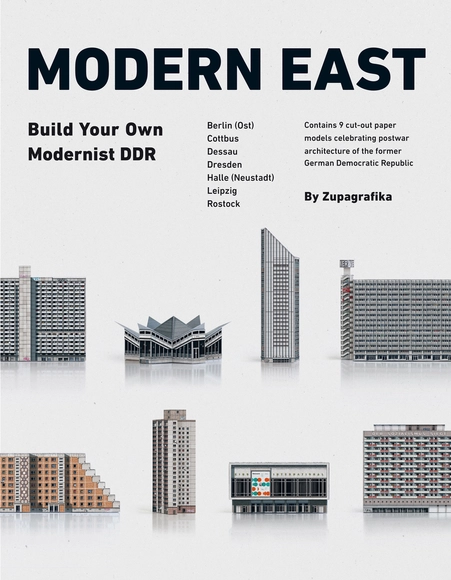
Omnipresent plattenbau housing estates, monumental hochhäuser, cosmic milk bars; the post-war East Germany was rebuilt on concrete foundations to stand for the new modernity and shape the unique and no less controversial urban landscape of German Democratic Republic.
MODERN EAST: Build Your Own Modernist DDR is the new book by Zupagrafika celebrating socialist modernist and brutalist architecture of the former East Germany and allows you to playfully reconstruct some of the most intriguing edifices erected between early 1950s and late 1980s - from the massive plattenbauten of Rostock, through the icons of DDR-Moderne, like Kino International or Haus des Berliner
Fosco Lucarelli, Dysfunctional Plans, Garofalo Fellowship research exhibition, April 2018
The University of Illinois at Chicago School of Architecture is now accepting applications for the 2019–20 Douglas A. Garofalo Fellowship. Named in honor of the architect and educator Doug Garofalo (1958–2011), this nine-month fellowship provides emerging designers the opportunity to teach studio and seminar courses and conduct independent research, culminating in a public lecture at the Graham Foundation for Advanced Studies in the Fine Arts and an exhibition at the school.
Now in its sixth year, the Garofalo Fellowship has made an essential contribution to the school’s culture through participants’ design and pedagogical agendas. Past fellows include Molly Hunker (SPORTS), Pier
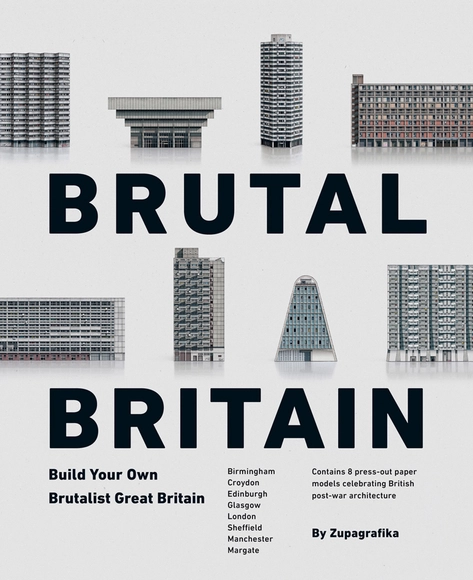
High-rise tower blocks, prefab panel housing estates, streets in the sky, new towns; some of the concrete constructions that once shaped the cityscapes of post-war Britain have stood the test of time, while others are long gone.
‘Brutal Britain’ by Zupagrafika (also author of ‘Brutal London’) celebrates the brutalist architecture of the British Isles, inviting readers to explore the Modern past of Great Britain and rebuild some of its most intriguing post-war edifices, from the iconic slabs of Sheffield`s Park Hill and experimental tower blocks at Cotton Gardens in London, to the demolished Birmingham Central Library.
Disruptive Design is a three-part design competition that seeks to address the challenges associated with designing and building affordable, owner-occupied housing.
Architects, designers, students, and those invested in urban development are invited to submit their speculative ideas for an owner-occupied housing development incorporating a flexible architectural solution that encourages wealth-building through homeownership and entrepreneurship. The competition will conclude with an occupant/buyer-ready prototype of the winning design.
THE CHALLENGE
The desire for affordable housing is present in both the gentrifying and underserved Chicago neighborhoods. In gentrifying areas, land values rise with desirability; in underserved areas, depreciated property and land values produce an appraisal
Beam Camp is a collaborative building and design summer camp in Strafford, NH that works with kids aged 10-17 to make the seemingly impossible possible. Our award-winning program has been featured in the New York Times, Wired, NPR, and designboom, and offers young people the opportunity to cultivate hands-on skills while exploring innovative thinking, design, problem solving and the creative process.
An intergalactic salvage station struck by a meteor, a solar-powered cinematic riff on a French film from 1902, a 2-story arboreal kaleidoscope: every year, Beam Camp solicits proposals for unique and spectacular large-scale projects that serve as the centerpiece
Many developing countries are seeking universal education, gender equality, and women's empowerment. Educating children helps reduce poverty and will give the next generation the tools to achieve upward mobility and conquer disease. Education also offers children a safe environment, with support, supervision, and socialization. Here they learn life skills that can help them prevent diseases, including HIV/AIDS and malaria prevention. Children may receive life-saving vaccines, fresh water, and nutrient supplementation at school.
Architectural visualization has been around for centuries, with drawings and paintings depicting finished structures before they were built. In the 1990s, the movement of the industry from paper to CAD saw video added to the mix, with the new ability to produce walk-throughs and fly-throughs from design.
It was only a matter of time before architectural visualization professionals discovered real-time rendering, which can produce finished videos in a fraction of the time of traditional rendering processes. Initially intended for game development, real-time render engines have now reached a level of quality and photorealism that makes them ideal for presenting architectural designs.
With real-time rendering comes an unexpected bonus: new types of presentations for clients. Architectural visualization can now include immersive experiences like virtual reality tours, interactive, game-like projects, and cave automatic virtual environments (CAVEs) to present design in ways never seen before.
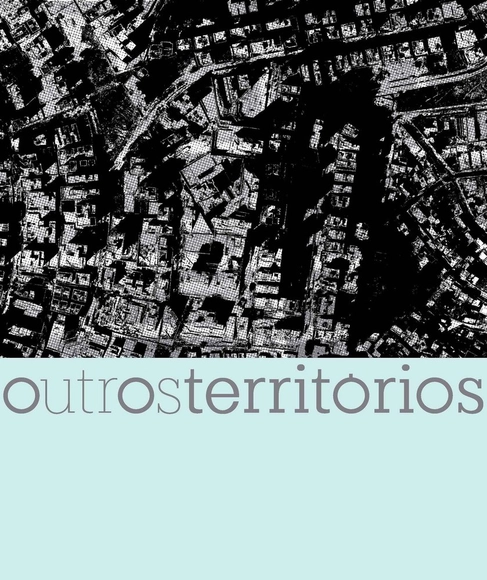
Vazio S/A, Coletivo Aurora and Eduardo de Jesus have launched the open competition Outros Territórios – International Call for Urban Intervention.
Outros Territórios (Other Territories) is a suite of ephemeral interventions proposed for a hilly neighborhood in Belo Horizonte, Brazil called Buritis. The plan envisages an instantaneous transformation of the landscape through the simultaneous occupation of the many stilt systems propping up the hillside buildings.
The array of forgotten spaces, ignored for their unsightly strangeness, will be infused with city life through an event that posits an open field of study: the latent possibilities in the existing
With an increasing number of urban movers and highway traffic; highway refreshment stops with filling stations play an important role of not just serving moving consumers but also generating an economy for the region. As road travel is becoming more frequent – highway refreshment stops are also growing in numbers. With the market becoming more competitive, the quality of highway refreshment stops will be the game changer.
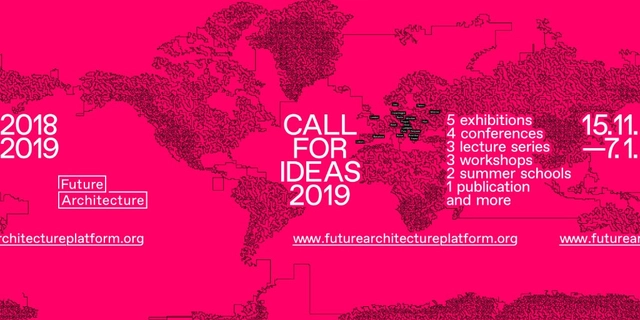
With the 4th Call for Ideas the Future Architecture platform invites multi-disciplinary emerging creatives who work on transformative projects and ideas for the future of architecture to apply for participation in the European Architecture Program in 2019. After three editions, the Future Architecture Platform has become a great opportunity for young creatives to materialize their ideas and kickstart their careers, collaborating with prestigious architectural institutions in Europe.
The Prize is open to new works, redevelopments, existing building expansions, urban-scale interventions, landscape design and in any other project that clearly expresses the ideals of sustainability. The Prize has involved during the years over 1000 built projects in more than 30 countries of the five continents. Jury: Thomas Herzog, Anne Lacaton, Xu Tiantian, Theo Zaffagnini, Nicola Marzot.
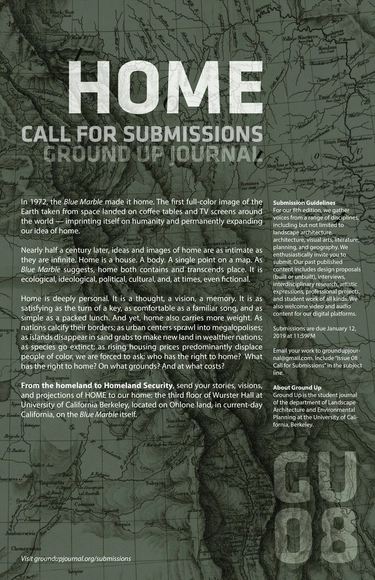
Ground Up, the journal of the Department of Landscape Architecture and Environmental Planning at UC Berkeley, Issue 08 seeks entries that address the idea of HOME.
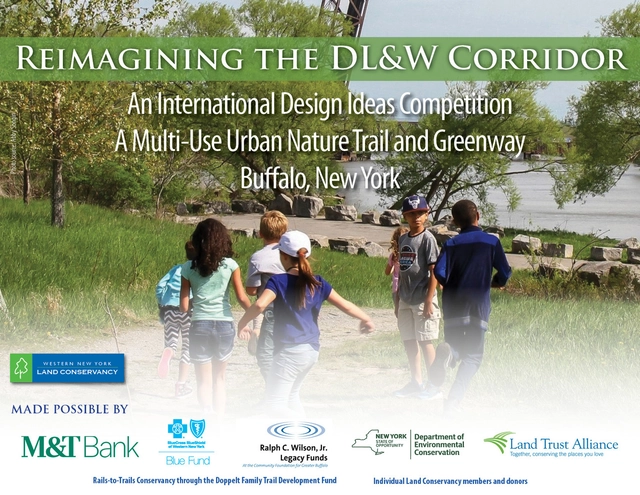
Reimagining the DL&W Corridor: International Design Ideas Competition for a Multi-Use Urban Nature Trail & Greenway in Buffalo, New York. Photo by Abby Songin.
Reimagining the DL&W Corridor: International Design Ideas Competition for a Multi-Use Urban Nature Trail & Greenway in Buffalo, New York
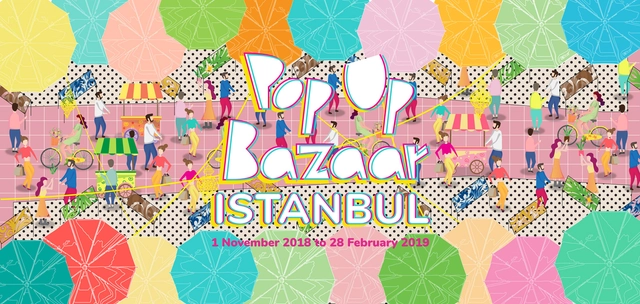
The oriental establishments of the Middle-East, Northern Africa and some parts of Europe all mention the bustling marketplaces in their popular culture. They weren’t just the main centers of trade and business, but were multifunctional entities that contributed to the social and cultural exchange between people and civilizations. These marketplaces were called by different names in different regions and languages; Bazaar in Persian, Souk in Arabic etc. Today, bazaars tend to be found in a city's medina (old quarter) and are often important tourist attractions.
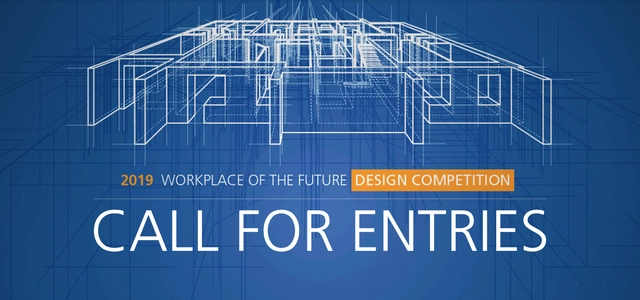
2019 STUDENT DESIGN COMPETITION WORKPLACE OF THE FUTURE As a way of giving back to the communities we serve, we are proud to be hosting our 2019 “Workplace of the Future” Design Competition to help support and promote the field of architecture and interior design. We encourage eligible U.S. graduate and undergraduate students* majoring in architecture or interior design within the New York, New Jersey, and Pennsylvania area to use their creativity and innovative ideas to express their vision of the “Workplace of the Future.”