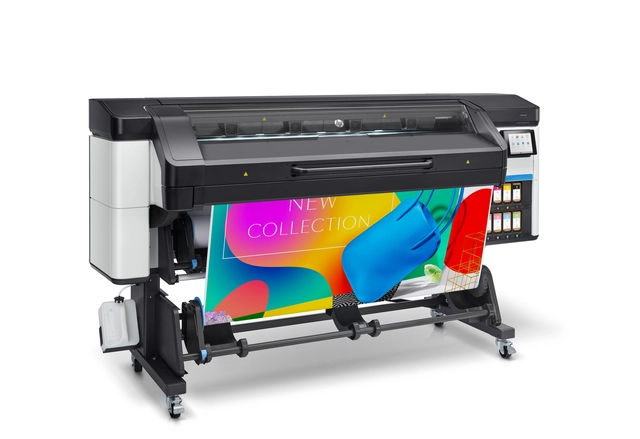
Delivering productivity levels up to 50% higher than previous models, HP introduces its new range of HP Latex large-format printing solutions. The series consists of four devices—the HP Latex 700 and 800, and the HP Latex 700W and 800W—introducing white ink printing to this category for the first time. Print jobs executed by this new series will not only deliver brighter colors and finer details, but will also do so at even faster printing speeds, reaching up to 36 m2 per hour.
Paint is synonymous with color, even when it is white. It is the simplest way to restore and correct imperfections on any surface, whether interior or exterior. Without detracting from this significant aesthetic benefit, paint also possesses composition-based properties that turn an attractive, well-finished project into a healthy building—one with a lower environmental impact throughout its life cycle.
On Tuesday, March 29, from 6:30 PM to 7:30 PM (CET), a virtual reality talk will take place at the Meetaverse Cultural Center, hosted on the AltspaceVR application.
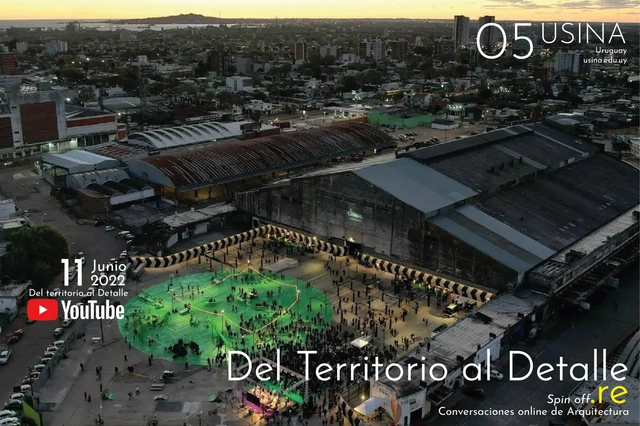
As part of the academic dialogue and reflection space "From Territory to Detail," which brings together architecture professors, students, and renowned architects, the spin-off "From Territory to Detail .re" explores—through informal conversations with key figures—the thesis that a territory's richness stems from its capacity for renewal, activating its own disused spaces to transform them into challenges and resources.
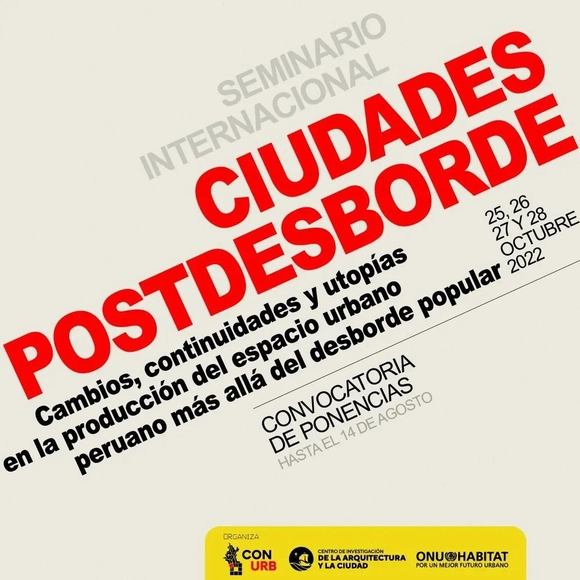
Since the publication of "Popular Overflow and the Crisis of the State: The New Face of Peru in the 1980s," the ideas presented by José Matos Mar have been fundamental to understanding 20th-century Peru. Beyond its academic value and conceptual argumentation, "popular overflow" became a reference framework that accompanied and shaped public debates and much of the academic analysis regarding rural-to-urban migration, the explosion of the informal economy, the accelerated expansion of cities through informal settlements, and the new urban culture during the second half of the 20th century. These processes, grouped and partially interpreted under the label of "popular overflow," have defined the urban reality of contemporary Peru.
General poster for the Sarañani! 2022 Festival. Art by Oaxacan artist Fanel Reyes (@fannnel on Instagram)
The Sarañani! Festival of Native Architectures of the World (Let’s Walk) fulfills its promise as a traveling festival, arriving in Oaxaca, Mexico, for its second edition. From January 27 to 29, the Sarañani! Festival will bring together global architectures that share the goal of achieving more equitable and responsible living. Hosted from Oaxaca, the event is made possible through a partnership with the Roots studio, led by architect and artist João Boto Caeiro, whose work is recognized for its exceptional quality, integrating tradition, sustainability, and social purpose. This year’s theme, presented in the Nahuatl language, references the Oaxacan custom of Tequio—a form of collaboration that invites collective efforts to preserve the knowledge of living in community.
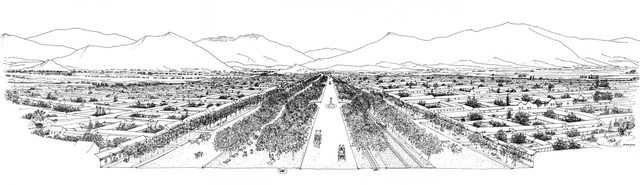
Alameda 1873, drawing by Germán Hidalgo Hermosilla
April 20, 2022, marked the 150th anniversary of Benjamín Vicuña Mackenna taking office as Intendant of Santiago and proposing the challenge of its transformation. Two weeks later, on Wednesday, May 4, the opening of this temporary exhibition commemorating such a unique initiative took place.
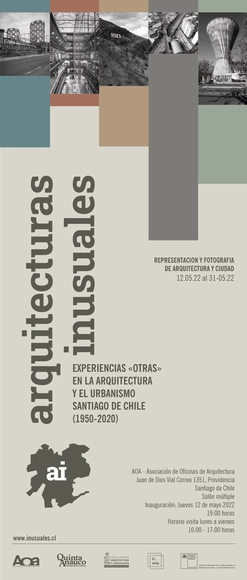
'Unusual Architectures: "Other" Experiences in the Architecture and Urbanism of Santiago de Chile (1950–2020)' is an exhibition of city representation and photography. It showcases a collection of objects and cases from Santiago, a capital that increasingly presents itself as a casual, uncontrolled, and contingent accumulation of matter and experience—an expression of the "other" and the unfathomable.
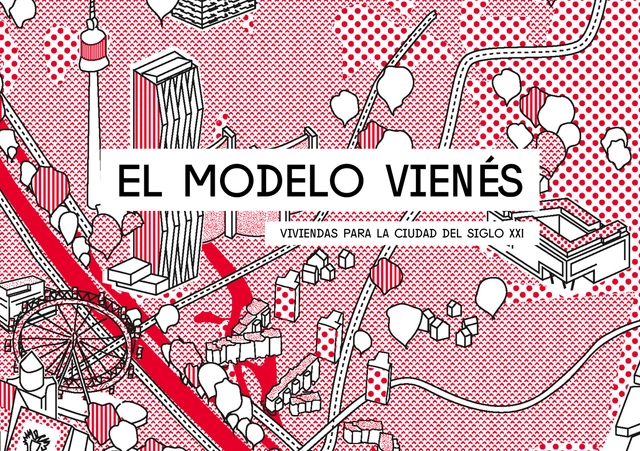
The exhibition The Vienna Model - housing for the twenty-first-century city opens on Thursday, May 5, at the Official College of Architects of Madrid (COAM). The exhibition is organized as part of the AHA (Affordable Housing Activation) UIA International Forum 2022.
The Arquitectura Atemporal 2022 (Timeless Architecture 2022) exhibition, organized by INTBAU Spain and curated by Alejandro García Hermida, features both the winning entries from the Architecture Competition and the 2022 Richard H. Driehaus Building Arts Awards. The exhibition will be on view at CentroCentro, a cultural space located in Madrid's Palacio de Cibeles, from June 10 to August 7, 2022.
Cecilia Vicuña: "Skyscraper Quipu" (2006), New York. Courtesy: Cecilia Vicuña.
LA ESCUELA___ is an artist-led platform for radical learning and collective action in public space. By understanding art as education and education as art, it offers a free, open-access, transdisciplinary program featuring both online and on-site projects. This space for creation, training, and research on art and education in Latin America launches its activities in March 2022.
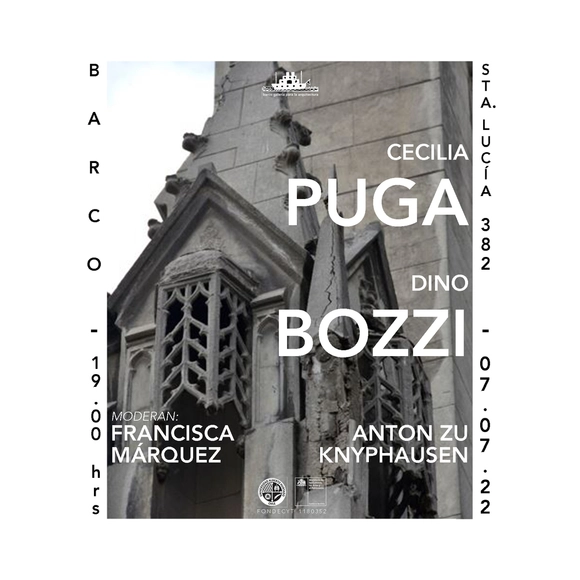
As part of our "Urban Ruins" series, developed in collaboration with anthropologist Francisca Márquez and the UAH, we will host a conversation this Thursday, July 7, at 7:00 PM with architects Cecilia Puga and Dino Bozzi regarding design approaches to ruins and the challenges of conservation.
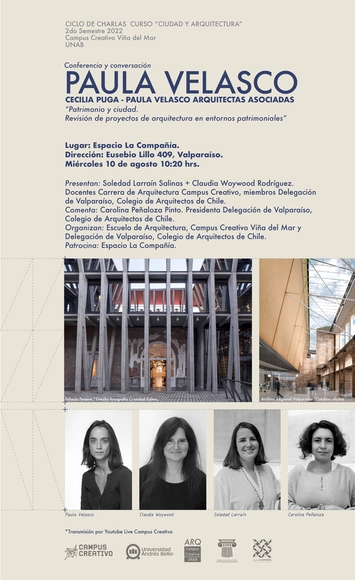
On Wednesday, August 10, at 10:20 AM, the first session of a lecture series will take place, organized by the School of Architecture at the Universidad Andrés Bello's Campus Creativo. The series is led by professors Claudia Woywood and Soledad Larraín in collaboration with the Valparaíso Zonal Delegation of the College of Architects and with the participation of Espacio La Compañía, as part of the "City and Architecture" course.
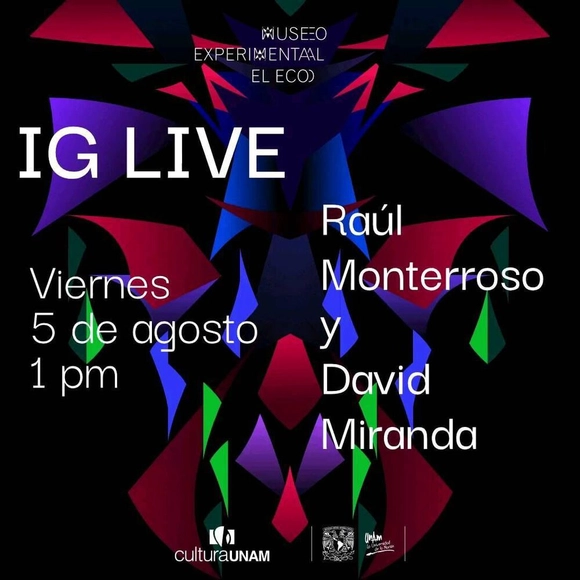
This Friday, August 5, at 1:00 PM, David Miranda and Raúl Monterroso will discuss their contribution to Re_vista 05 of the Museo Experimental El Eco, titled "Modern Dreams, Magical Realisms, and Other Fantasies of Yesterday and Today."
"For Mies, modern architecture in the age of industrialization required a renewal of the art of building from within. This could not be achieved by inventing a new formal language, nor by turning architecture toward technology, as many of his modern colleagues assumed. In his view, the modern architect had to recover the intrinsic value of architectural phenomena and fuse them with new life, rather than abandoning architectural values in the name of a new era. From this perspective, Mies combined, for example, classical monumentality and modern transparency, using marble or travertine in combination with modern steel and glass construction.
Mies’s attempt to explore the architectural potential of modern steel construction and the language of formal abstraction was not dedicated to rationalization, but to a new measure of spatial freedom. To achieve this, in the late 1920s, Mies developed his concept of the dialogue between opposites and their morphological transformation, brilliantly implemented in the 1929 Barcelona Pavilion. Later, in his American work, Mies transformed modern steel construction into a classical tectonic framework for an open, column-free space." - Fritz Neumeyer
Videos
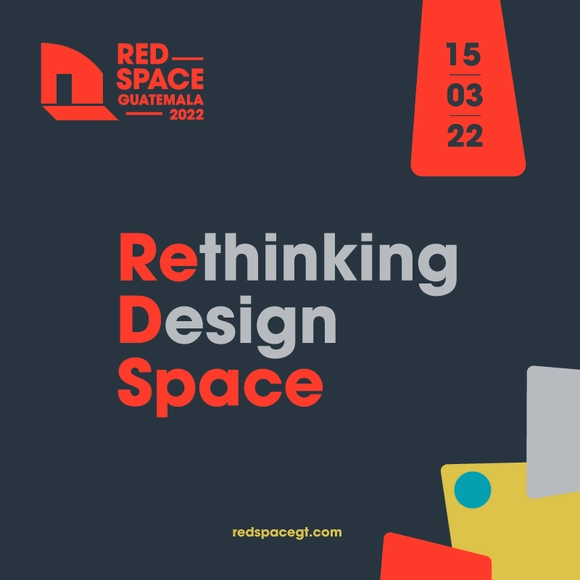
Visit www.redspacegt.com for more information on the various activities
Starting March 15, Guatemala will host its first-ever biennial event dedicated to the best of Guatemalan design: Red Space, organized by the Guatemalan Interior Design Association (ASODI). This significant event will cover topics in architecture, interior design, sculpture, painting, and the latest trends in decor. It will be a month filled with design in Guatemala.
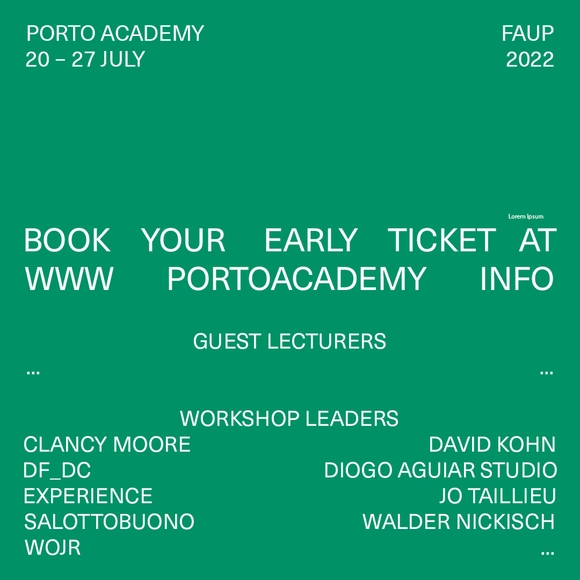
Porto Academy is the result of a profound passion for architecture as a discipline. It was established in 2013 as a manifesto of pluralism and opportunity, rooted in close engagement with a wide range of architects, artists, and curators.





.jpg?1652814271&format=webp&width=640&height=580)