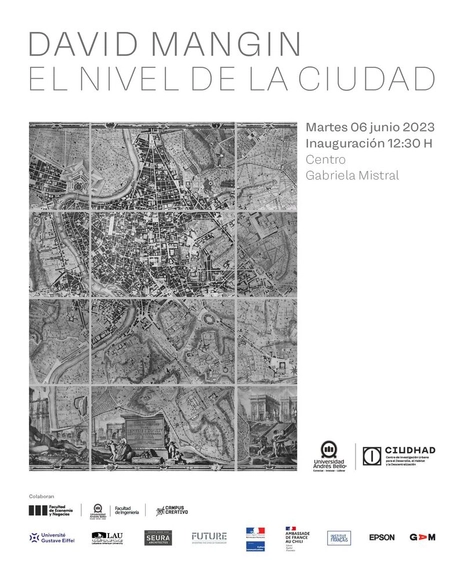
The seminar "The Role of Architecture and Public Policy in City Building" will be a unique opportunity to learn about the latest trends and advancements in urban design and to discuss how we can improve our cities for the well-being of all.
The seminar "The Role of Architecture and Public Policy in City Building" will be a unique opportunity to learn about the latest trends and advancements in urban design and to discuss how we can improve our cities for the well-being of all.
The most important project for a design studio is the design of the practice itself. A studio’s point of view is often first defined by feelings and hopes, but if cultivated, grows into values and tactics. How the studio environment is crafted and how it cultivates a kinship around this point of view with collaborators, clients, consultants, community members, and contractors is essential for it to be productive and have a healthy impact. With discipline, a studio evolves a practice that shapes the character, performance, and value of the work. The studio’s early critiques define the approach and territory of work and the propositions that are asked of every project. The studio environment and relationships create the space for the work to be possible.

Incorporating indoor-outdoor living into a home isn’t just limited to warm climates and beach front properties. Connecting homes to nature through copious amounts of glass creates serene environments while maintaining stable home temperatures. Below, see how five homes utilize sliding glass doors regardless of the weather, while maintaining energy performance.

Architects often face the challenge of effectively communicating their designs to clients, as architectural design is a complex process that involves numerous technical details and decisions. Current methods of presenting architectural designs, such as 2D drawings or renders can be limiting. In addition, clients may not have the same level of understanding of architectural concepts and may find it difficult to envision the final outcome leading to misunderstandings, delays and costly revisions.
To overcome these challenges, architects have increasingly turned to Virtual Reality (VR). However, the limitations of most Virtual Reality software to show photorealistic designs without requiring complicated VR setups has been a challenge.

In her series "Accessibility from North to South: All the Voices of Brazil," Mariana Bunn Architecture and Accessibility will host a conversation this coming Sunday, June 4th, with Jundiaí-based architect Julia Lopo.
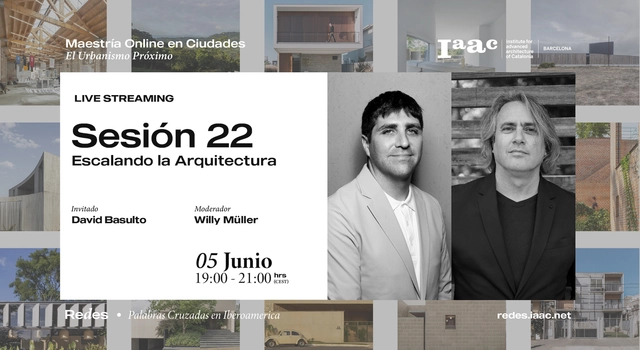
This session is titled: “Escalando la Arquitectura,” a lecture by David Basulto followed by a dialogue with Willy Müller. The event will be conducted in Spanish, but we invite everyone to join the conversation.
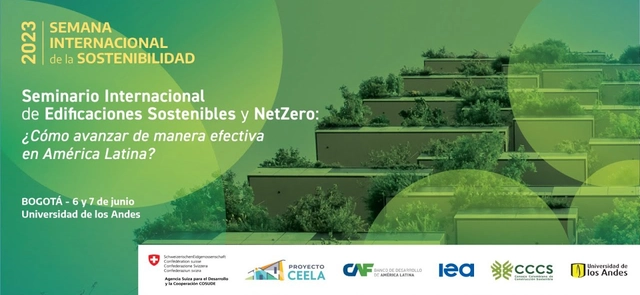
Bogotá becomes a hub for discussing sustainability in architecture and construction. As part of International Sustainability Week 2023, the city is hosting two events: the International Seminar on Sustainable and Net-Zero Buildings from June 6 to 7, and the Construverde Colombia 2023 Forum from June 8 to 9.
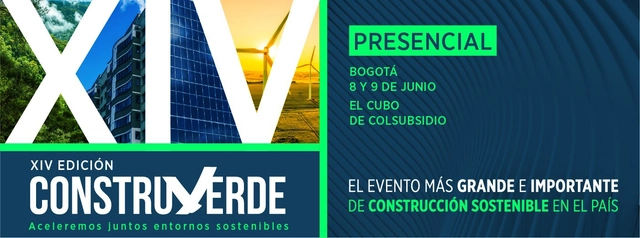
Since 2010, the Colombia Green Building Council (CCCS) has annually organized Construverde Colombia, an "International Forum & Expo – Sustainable Design and Construction."
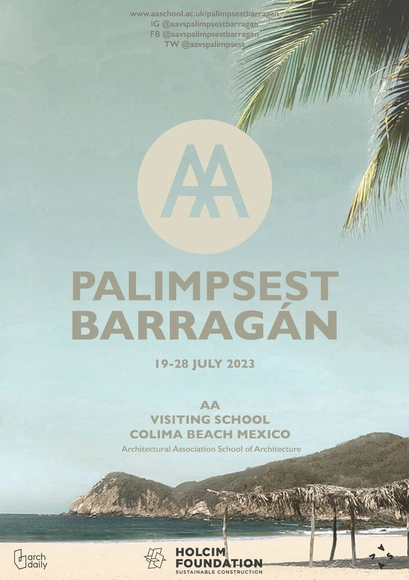
‘Palimpsest Barragán’ offers a unique opportunity to engage closely with a 20th-century modernist architectural masterpiece by Luis Barragán. As a hidden and yet-to-be-recognized gem located in the middle of a paradisiacal jungle on the Pacific coast, the ruins of the unfinished building have faded into obscurity, much like pre-Hispanic pyramids in Mexico. It is currently in a state of progressive decay. The workshop will not only ‘unearth’ the project and finally place it on the map of architectural discourse, but it may also have a greater impact by initiating a debate surrounding the preservation of the disintegrating ruin.

In 2023, Copenhagen Architecture Festival puts life at the centre: symbioses, habitats, life balances and life cycles; nest, city, cave.

The Royal Institute of British Architects (RIBA) and the Design Museum (London), have launched a design competition, in partnership with Network Rail, inviting proposals for the design of a timepiece to be used across the British rail network.
Visit aia-phoenixmetro.org for all competition information, registration, and announcements.

The promise of better opportunities and a better quality of life, among many other factors, attracts people towards urban centers - cities. As a result the future cities are facing unimaginable growth and expansion, according to the UN 55% of the global population lives in cities and by 2050 this number is projected to climb to 68%1. The comparable numbers are even higher for the United States, with 83% of its current population living in cities and a projected 89% by 20502.With the continuous growth of the cities new and complex urban issues are also arising. Increasing poverty and environmental degradation within the cities.

Stories of Situated Pedagogies in Architecture and … workshop aims to gather educators and learners who are enthusiastic about sharing their stories of situated pedagogies in architecture and other fields with an interest in critical spatial practices. We invite all to apply to this workshop call with critical responses to their personal experiences in education. We envision a playful and productive platform for communication through pre-workshop peer-to-peer reviews, round-table sessions and fieldtrips in Istanbul, and post-workshop collaborations for publication.
Early Bird Registration
May 08 - June 05 (hour 23:59 UTC-5) - 30$/team
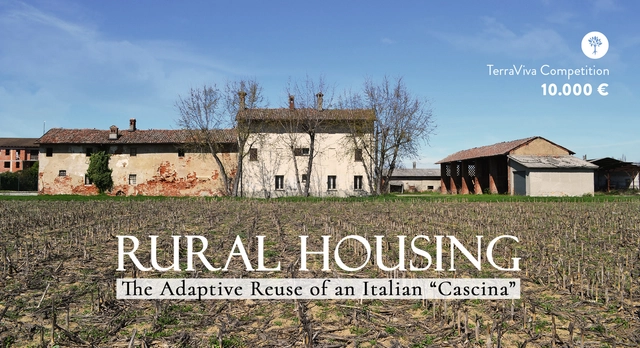
TerraViva Competitions launches RURAL HOUSING, a new architecture contest that aims to define new ways of living in the Italian countryside through the adaptive reuse of traditional “Cascina”. Prizes up to 10.000 € will be awarded to the winners selected by an international jury panel composed by, among others, Danilo Sironi (One Works), Coraly Mazzucchelli (Eckersley O’callaghan), Philip Kolevsohn (ATOMAA), Franca Carassai (Campbell Cadey);
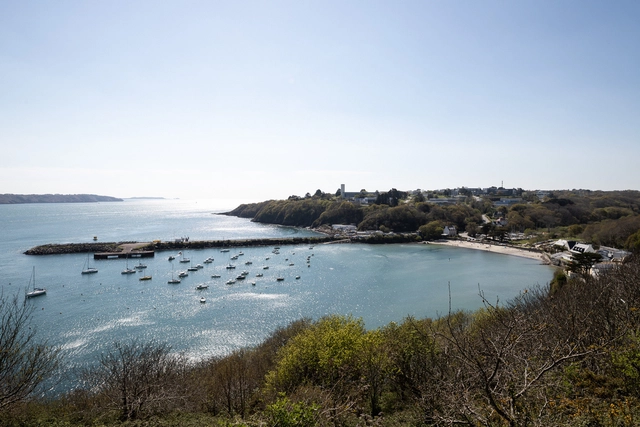
The Breton site of Exail Brest specializes in the development, production, and marketing of high-end positioning and communication equipment for underwater environments.
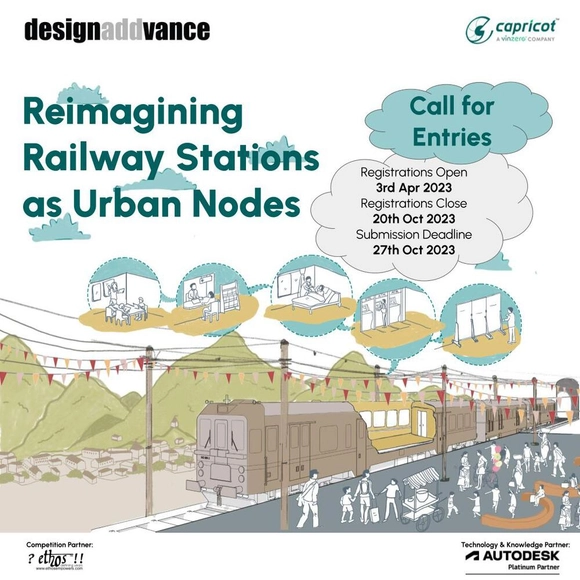
This year, designaddvance calls for ideas that reimagine railway stations in X, Y and Z cities beyond being just Transit Hubs and more as nodes of urban activity. To reform and boost the existing spatial and visual identity of a railway station into that of an urban centre—with a mix of uses such as healthcare, commerce, education, leisure, business, entertainment and so on—reshaping the interaction of the users with the place.