2023 Pavilion - Faculty of Architecture and Design at the Universidad de los Andes
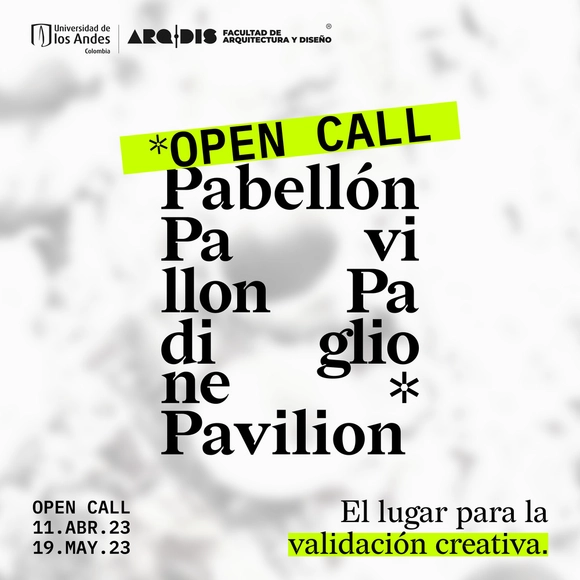
The Faculty of Architecture and Design at Universidad de los Andes announces the open call for Pabellón 2023, a three-day international conference (October 11–13, 2023). This open call seeks projects in various formats that capture the current state of creative practice, informed by plural perspectives as diverse as the world to which architecture and design respond. Submit your project by May 19, 2023, in one of the following formats: Transmedia, Performance, Exhibition, or Presentation, and receive academic validation.
Organized by the Arq.Futuro Cities Laboratory, the event, taking place on July 25, will present examples of architectural projects focused on social urbanism.
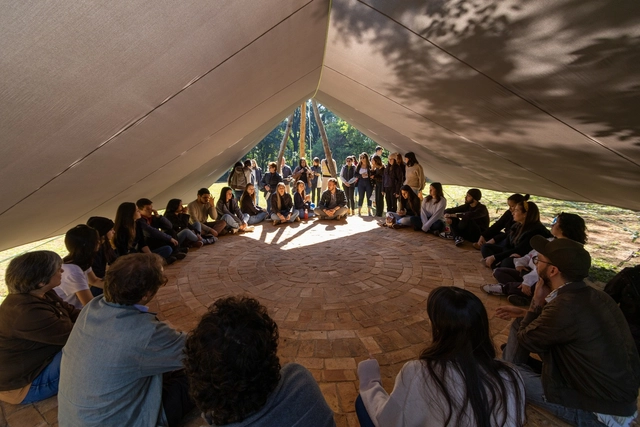
AULA: ‘Learning at the edge’, with Al Borde (2023). Project: ARANDURÃ (place of knowledge). Covered space for teaching pioneering. Courtesy: LA ESCUELA___.
With the intention of discovering and establishing new connections between peripheral initiatives, LA ESCUELA___ invites architects, researchers, educators, and community organizations to participate in the creation of programs and content that link architecture and education in Latin America.
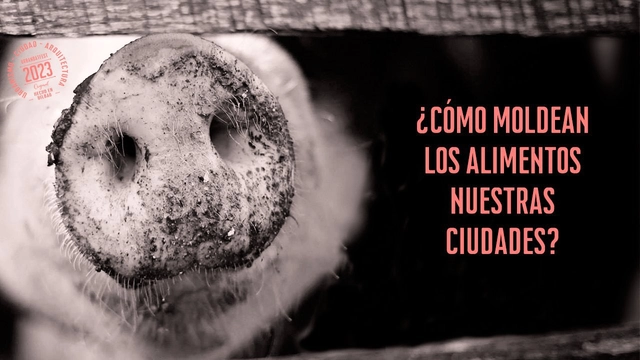
We are already developing a new edition of URBANBATfest. This year, we invite you to join a collective reflection on the relationship between food and urban space, and how food shapes our cities.
The Latin American Master in Architecture [MLA] is a postgraduate program that provides students with advanced disciplinary training in the study and application of contemporary design methodologies, tailored to Latin American environmental and cultural conditions, while seeking an emancipatory and sustainable vision of architecture.
Call for Papers: Between the Ephemeral and the Enduring, Dearq Journal
Architectural production is inherently linked to time, whether through the intent to endure or through a planned duration. However, the permanence of buildings is limited: elements wear out, are repaired, and are transformed, while users change their activities, integrate unexpected uses, and adapt spaces to their evolving needs. Similarly, projects with a set duration can extend their utility, travel to new spaces with updated programs, and generate new transactions. Even more paradigmatically, projects and construction are often carried out according to the rhythms of the community rather than a fixed schedule.
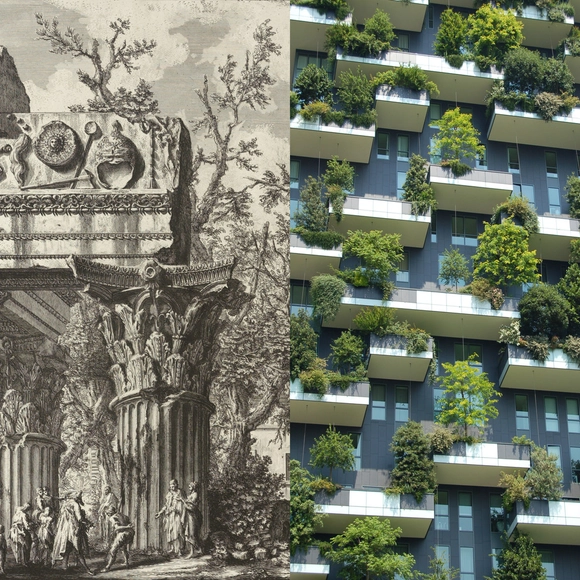
Caption: Veduta with the Temple of Jove. Giovanni Battista Piranesi. 1750–1758; Bosco Verticale. Boeri Studio. 2014. Creative Commons CC0 1.0 Universal Public Domain Dedication.
Architecture, as an act of human cultural artifice, has historically maintained an indissoluble relationship with Nature—as a site, enclave, environment, material, or mirror of the habitat for communal life, and as a factor of language. Both the symbolic tradition—monument, tomb, idol—and the typological tradition—temple, hut, theater, palace—form the basis of the elemental corpus of Vitruvian formulation. Whatever the artifact to be built, the natural condition is unavoidable. Fire, water, earth, and air—the elements that compose the universe according to ancient philosophy—are, in turn, constitutive of architectural thought. However, arrogance, success, or disruption over pre-existing conditions have dominated human behavior toward Nature. The current state of extreme intervention on the Earth as a planet, on geography as a foundation, on climate as a resource, or on the atmosphere as a domain, demands a critical review of the diverse perspectives that architecture has adopted according to historical, political, and cultural contingencies and their consequences on lifestyles.
The submission period for the curatorial competition for the International Union of Architects (UIA) World Congress of Architects in Barcelona 2026 opened on June 28.
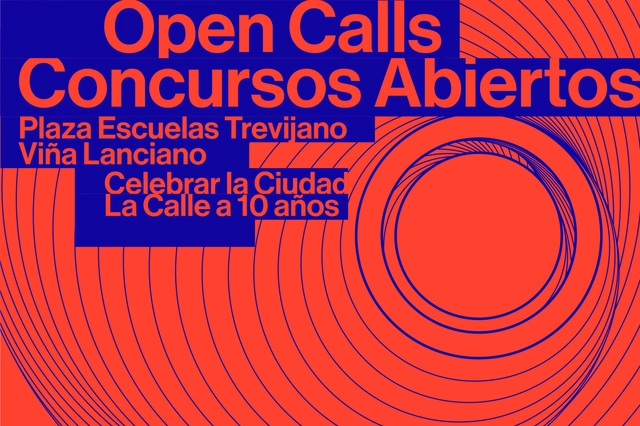
Concéntrico celebrates its 10th edition with a major transformation, aiming to envision the festival's future and share the knowledge gained about the city by incorporating new formats, engaging diverse audiences, and tackling challenges that explore time as a catalyst for change in urban and social design. The new edition will take place from April 25 to May 1, 2024.
The Brazilian Center for Steel Construction (CBCA) has opened registration for the 16th CBCA/Alacero Architecture Student Competition 2023. Interested participants may register until July 17 and submit their projects by August 25. The first-place winner will receive a prize of R$ 10,000.00, to be distributed among the team and their faculty advisor. The winning project will also represent Brazil in the 2023 #desafioALACERO Steel Design Competition for Architecture Students, organized by the Latin American Steel Association (ALACERO).
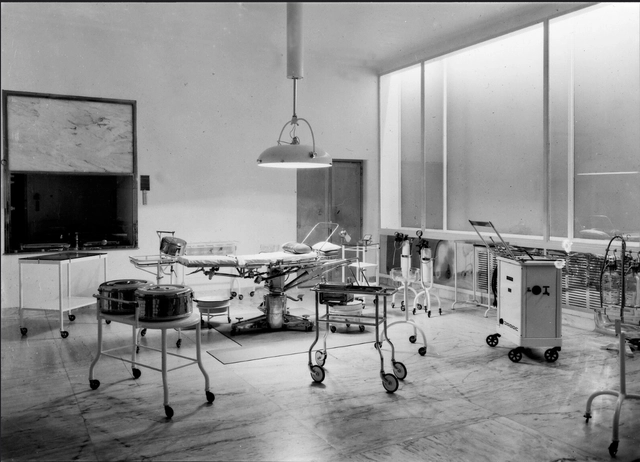
The modern design of a protected life, assuming a passive body constructed individually in the disease-health opposition, focuses on the elimination of disease through the use of the hospital as a fundamental device for biomedical knowledge and intervention. However, health is permanently reinvented through its social, ecological, and political dimensions, and the medicalization of life centered on the individual is expanding into spaces composed of less static and more complex visions, problematized by (re)emerging challenges such as the recent Covid-19 pandemic.
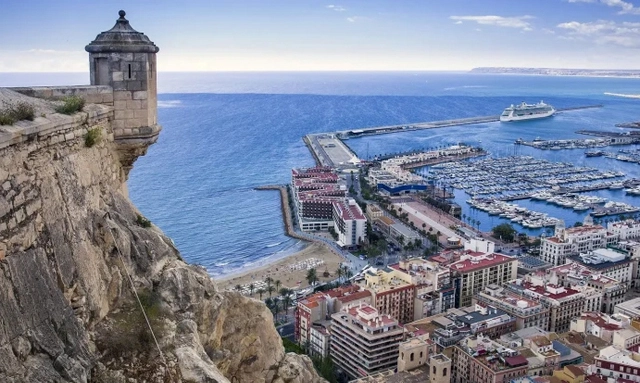
The city of Alicante, the provincial capital and the fifth most populous city in Spain, boasts a privileged climate, an exceptional location, magnificent infrastructure, and extraordinary connectivity. With its airport—the fifth busiest in Spain by passenger volume—and its high-speed rail connection to Madrid, the city is a continuously developing technological and service hub that also hosts the European Union Intellectual Property Office, the registry for EU trademarks and designs.
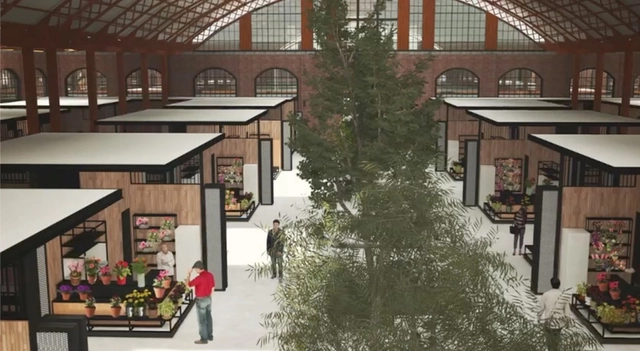
Talca has uploaded a multi-million dollar tender for the restoration of the Central Market to the public procurement portal. The project has a budget of over 17 billion pesos for this historic national monument. Mayor Juan Carlos Díaz, along with Regional Governor Cristina Bravo, met this morning with the market's tenant board to announce the timeline for this process.
Idealism and materialism, those two antagonistic philosophical visions, are constantly perceived in architecture. Juan Gris said that a nail was made with the idea of a nail, while Braque thought that a nail was made with iron.
Jeannette Sordi, Maura Mantelli. Photograph by Ignacio Ferrari
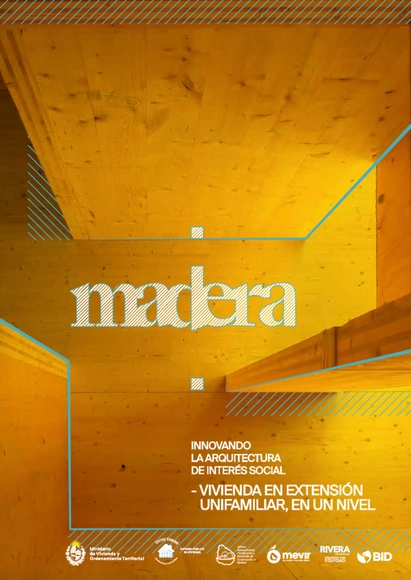
The Ministry of Housing and Territorial Planning of Uruguay and Mevir, with the support of the Inter-American Development Bank, are calling for proposals for new low-rise timber housing typologies. These units will be constructed by MEVIR as a 20-unit demonstration project in the town of Tranqueras, in the department of Rivera, Uruguay.