The Institute of Architects of Brazil - Department of São Paulo (IABsp) opens a call for papers for the 13th edition of the International Architecture Biennale of São Paulo, with the purpose of bringing together proposals for the exhibition Produções Insurgentes (Insurgent Productions), which will take place in the city of São Paulo in May 21 to July 10, 2022.
The competition is a collaboration between RESOLVE Collective, the Royal Borough of Greenwich, and Historic England's High Streets Heritage Action Zone programme in Woolwich and invites both groups and individuals to apply, prioritising 'first-time designers' and collaborations with local residents. Applicants' physical designs will be installed across a variety of available locations between the town centre and the river, while digital designs will be exhibited on the competition website.
Videos
Tiny House Community Competition - Amal Wasfi
With the success of ArcAce architecture competitions, and all the wonderful and creative work and designs we received. ArcAce is happy to let you in on our next competition! 😍
Archstorming is launching a new competition in partnership with the NGO Kakolum. We will travel to Casamance, a region in Senegal marked by an identity conflict that started more than 30 years ago and continues to this day. This region, located between Gambia and Guinea-Bissau, faces several challenges, one of which is the lack of classrooms for primary and secondary school children.
Courtesy of Shaoxing Jianhu Planning and Design Competition
Jianhu (Jian Lake) is the origin of local Yue civilization. It has witnessed the vitality and development of the city for thousands of years. Sitting at the junction between the Keqiao urban zone and Kuaiji Mountain landscape, it features a unique blended context of “mountain, lake, city and farmland”, and also a number of beautiful humanistic stories. Today, under Keqiao's development positioning—the "International Textile Capital", Jianhu is opening up and embracing creativity altogether.
Under the background of a new era, we would like to invite global planners, architects, and designers hereby to submit your “transcending” proposals along the lakeshore, thus creating a revived, prosperous Jianhu that transcends time and space, transcends imagination, carries, and reveals the super Yue culture, and goes beyond it!
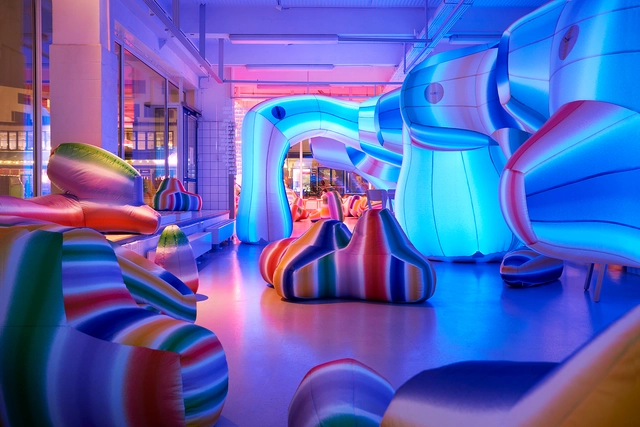
New Exhibition Kaleidoscopic Home at SPACE10 by Tin & Ed, photo credit Seth Nicolas
SPACE10, IKEA’s research and design lab in Copenhagen, introduce its newest exhibition Kaleidoscopic Home. The exhibition brings the digital platform EverydayExperiments.com to life for the first time to explore how playful interventions in our home can enrich our physical and mental well-being.
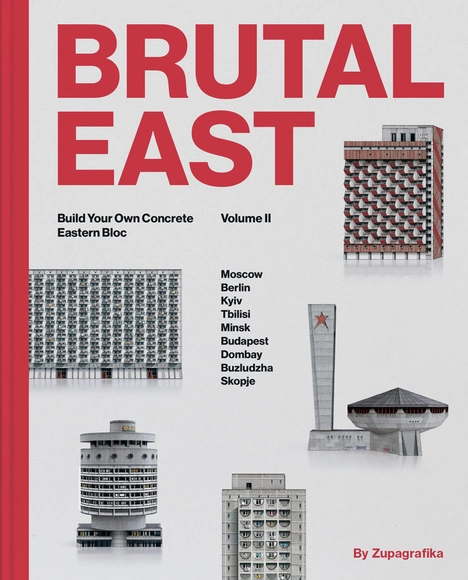
Streets in the sky, prefab panel housing estates, raw concrete flying saucers, corn cob-shaped tower blocks; these are some of the constructions that recast Eastern and Central European urban landscapes after WWII. This playful and engaging book allows readers to explore and learn about the brutalist and modernist architecture erected in the former Eastern Bloc and ex-Yugoslavia, and build some of their most intriguing edifices, from the massive housing estates in Moscow to the brutal skyline of Tbilisi.
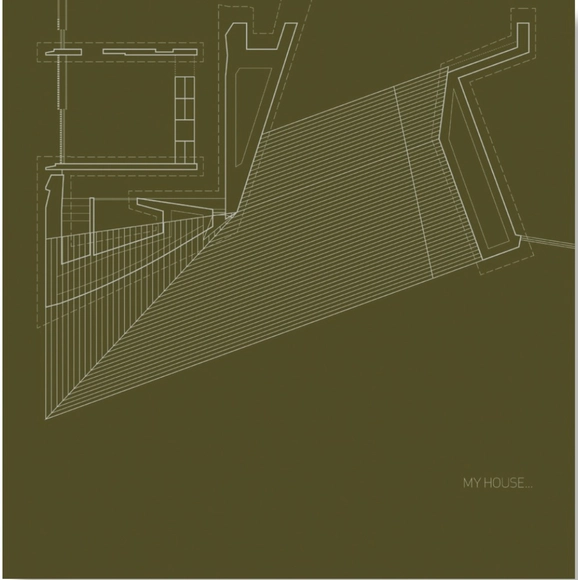
In the South of France, sited on a hill of olive trees, pinus pinea, and a vineyard, a family retreat was designed with a key mission of maintaining the vitality of the site. A small agricultural plot, the site offered the possibility of amplification. With the introduction of a garden and many outdoor living spaces, the family had the intention of cultivating the landscape as part of their stewardship. In part a response to a programmatic brief, but moreover, a discursive response to architectural predicaments of geometry, typology, and anomaly, the house is also a response to Preston Scott Cohen’s pedagogies on architecture.
Drawing from the unique design experience at Adrian Smith + Gordon Gill Architecture (AS+GG) as architects of the next world’s tallest tower and several others under-construction, Supertall | Megatall: How High Can We Go? highlights the design, sustainability, innovative technology, programming, and contextualism that defines supertall and megatall towers. The book is a mixture of under construction and design-only projects divided into several chapters that are organized according to their special characteristics: Innovative Systems, Harnessing Energies, Designing an Icon, Extending Ecologies, and Achieving Megatall. Each project, completed between 2007–2020 at AS+GG, is discovered through context, program, form, research and development, and performance, highlighting the stories, challenges, and lessons learned.
Urbanism Beyond 2020 explores numerous questions triggered by the COVID-19 pandemic: Why is city making a health project? How are ecological and human wellbeing interrelated? How can leadership and governance help bridge gaps in our unjust cities? How might we renew our relationship with dwellings and neighborhoods? How resilient and adaptable are our cities during uncertain times? Amidst climate change and global warming, is the pandemic a prelude to the challenges to come? Addressed to anyone invested in the well-being of our cities, this collection of essays by an accomplished urban designer and city planner reminds us why the pointers to our future will not emerge exclusively from affluent nations or less developed societies alone, why we live in an interconnected world, and why this pandemic is a crucial period to reexamine the impact of our cities on our planet’s future.
This book arose from two observations: that building design in these first decades of the 21st century has come to accept and pursue some increasingly odd and disturbing trends; and that there seems to be insufficient architectural criticism that calls these trends to account. Its mission is to take up that neglected role with respect to some specific exemplars of these trends, with subjects coming primarily from the worlds of commercial and institutional architecture. Numerous critiques of individual projects, all with hand-drawn illustrations, are presented under main headings of Obscuration, Fragmentation, Deformation, and Degradation. The book takes a somewhat acerbic tone, to distance the narrative from the rather serious and high-minded approach to written material that the subject seems prey to.