Advertising and Promotion Committee, Faculty of Architecture, USTA Tunja
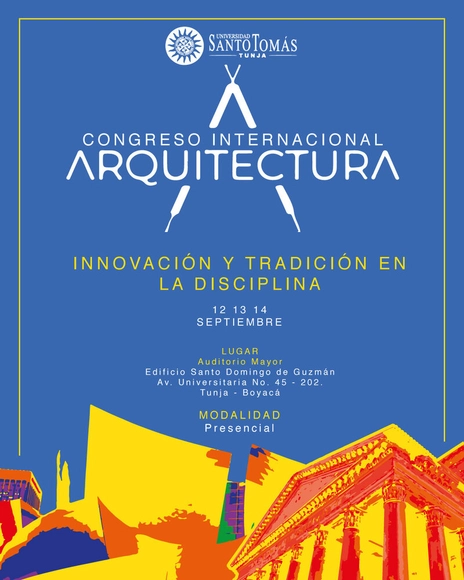
The 2023 International Congress of the Faculty of Architecture at the Universidad Santo Tomás, Tunja branch—themed "Innovation and Tradition in the Discipline"—aims to foster reflection on the changes and enduring elements within the field of architecture.
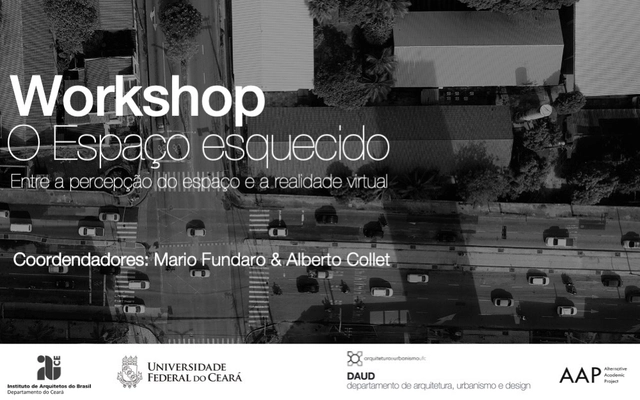
DAUD - Department of Architecture, Urbanism and Design at UFC, Fortaleza, Brazil
The workshop invites architecture and urban planning professionals and students to develop, over five days, an architectural project for the physical and conceptual transformation of a "Space" into a "Place." The work is based on three structural elements: the theory of change as a model for controlling the design process, environmental psychology elements for the perception, reading, and transformation of lived space, and Virtual Reality (VR) applied to design development.
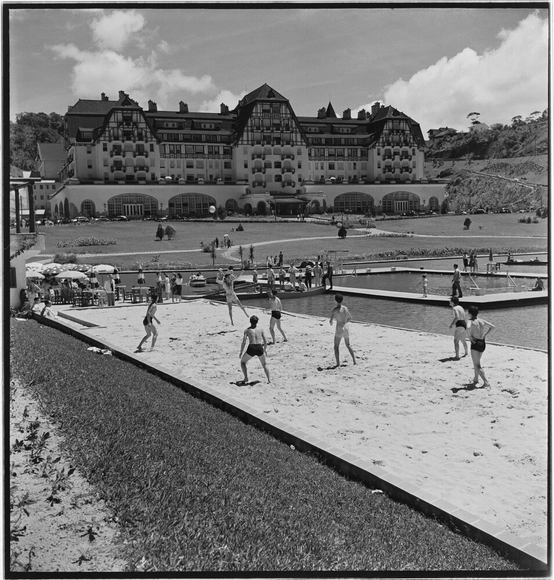
Sesc Rio de Janeiro invites you to the opening of the exhibition "Da Kutanda ao Quitandinha – 80 anos" on December 1, 2023, starting at 10:00 AM. The exhibition marks the beginning of the 80th-anniversary celebrations for the venue, which opened in 1944 as a hotel-casino and now houses the Sesc Quitandinha Cultural Center. Curated by Marcelo Campos, the expansive exhibition is organized into six sections, tracing a narrative that begins in the 18th century with the earliest records of Black presence in the Freguesia de Nossa Senhora de Inhomirim—the foundation of the region's settlement—via the Piabanha River and the plantations that relied on enslaved labor, ultimately giving rise to the city now known as Petrópolis.
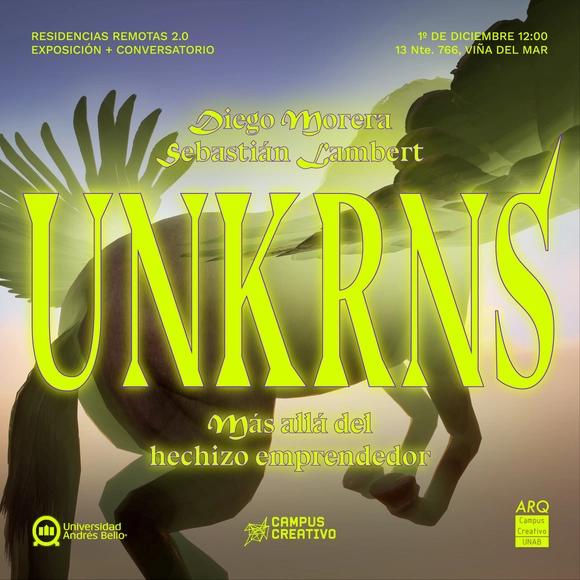
Remote Residencies is an initiative emerging from the Architecture program at Campus Creativo in collaboration with the Outreach department of the Universidad Andrés Bello. It is an [inter-trans-multi]disciplinary project that aims to open a discussion on contemporary topics based on a question and an image, which will be materialized as an installation at Galería Rocamar, located on the first floor of Campus Creativo in Viña del Mar, Chile.
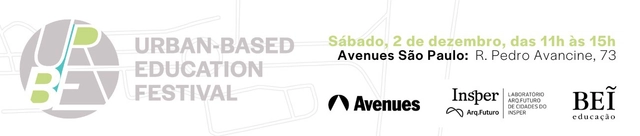
In partnership with BEĨ Educação and the Arq.Futuro Cities Laboratory, the open and free event will feature workshops, project exhibitions, and panels to promote debate on the future of cities.
On Saturday, December 2, São Paulo will host the Urban-Based Education Festival (URBE), an education and urbanism festival open to students, educators, and families to discuss the future of cities. This inaugural edition, themed “Visions of a Better City,” will feature a wide-ranging program from 11:00 am to 3:00 pm at the Avenues São Paulo campus in Morumbi.
Organized by the Caminhabilidade Institute, the award had winners in Benevides (Pará), Jundiaí (São Paulo), and Fortaleza (Ceará)
With the goal of disseminating knowledge about walkability and inspiring other cities and public administrations, the Instituto Caminhabilidade is launching three mini web documentaries and a three-part podcast series detailing the winning projects of the 2023 Walkable City Award: Rua da Gente, in the municipality of Benevides, Pará; the Novo Horizonte and Region Neighborhood Plan, in the municipality of Jundiaí, São Paulo; and the Infrastructure in Education and Sanitation Program (Proinfra) in Fortaleza, the capital of Ceará.
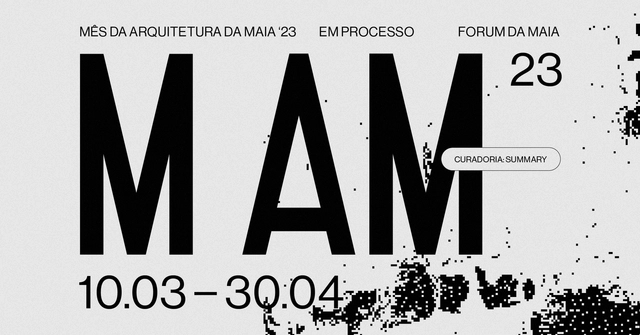
Maia Architecture Month, on display at Forum Maia until April 30, 2023
The Maia City Council is hosting the next edition of the Architecture Month in March and April 2023, an event entirely dedicated to architecture within the Maia territory.
Rua da Gente Project, Benevides, Pará, winner of the Small Cities category at the Walkable City Award. (Source: Benevides City Hall)
Addressing the climate crisis requires an urgent transformation of urban lifestyles, as cities are the largest polluters and energy consumers, primarily due to the excessive use of motorized vehicles. Promoting cities where people can actively commute—on foot or by bicycle—for their daily activities is the path championed by the Instituto Caminhabilidade. To this end, the institute created the Walkable City Award (Prêmio Cidade Caminhável), which recognizes and inspires actions for walkable cities in Brazil.
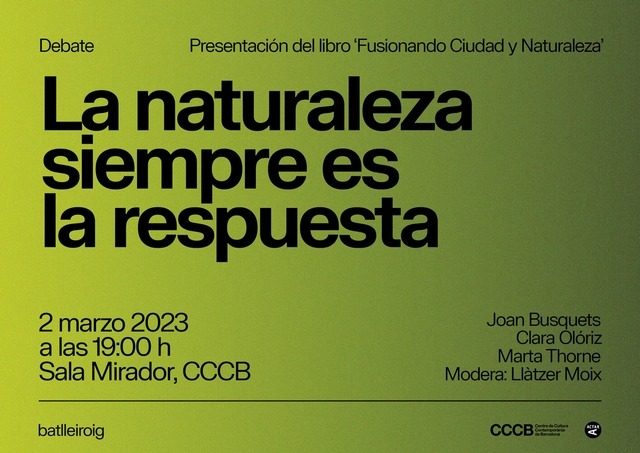
On Thursday, March 2, architects Joan Busquets, professor at Harvard University; Clara Olóriz, researcher and professor at the Architectural Association; and Martha Thorne, distinguished professor at the IE School of Architecture and Design, will join journalist Llàtzer Moix to discuss the role of architecture in addressing the primary challenges of the climate emergency and the need to improve living conditions on the planet.
Obra Blanca is an essential experience for professionals in the finishes and architectural design products sector, including ceramics, bathroom fixtures, faucets, lighting, and more. It is a unique opportunity to expand projects and reach new goals through interaction and connection with suppliers, professionals, and industry leaders.
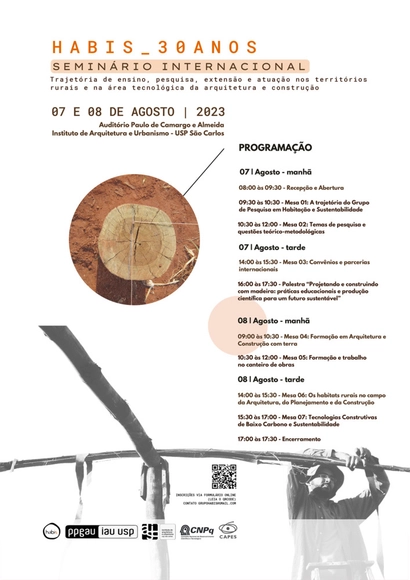
Program for the HABIS 30 YEARS International Seminar. Credits: Everton Gavino.
The HABIS 30 YEARS International Seminar: A Trajectory of Teaching, Research, Extension, and Practice in Rural Territories and the Technological Field of Architecture and Construction will take place on August 7 and 8, 2023, at the Paulo de Camargo e Almeida Auditorium.
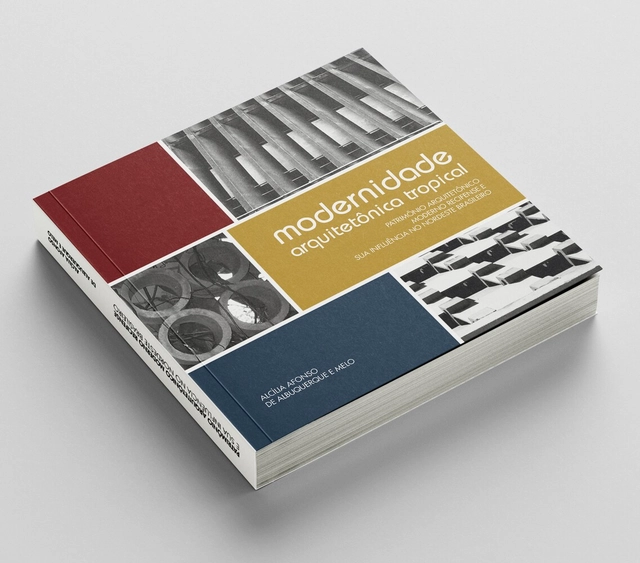
Mock-up of the book produced by Alcilia Afonso, with support from FUNCULTURA PE
The book "Tropical Architectural Modernity: Modern Architectural Heritage of Recife and its Influence in Northeast Brazil," authored by architect and university professor Alcilia Afonso, is now available for purchase.
October 28th marks the beginning of the project, which continues the studies to replan the landscape of Nazaré Paulista and João Pessoa!
The project "Replanning with the Landscape: Community Conflict Resolution and Technical Studies for Full Reurb-S" kicks off with an opening event scheduled for October 28, 2023. This event will be a significant milestone, bringing together project stakeholders, community representatives, and authorities from Ribeirão Preto, SP—the city where these communities are located—to highlight the initiative's importance and objectives, alongside the Council of Architecture and Urbanism of São Paulo (CAU/SP), which is funding its execution.
The event will take place in the city of João Pessoa, capital of the state of Paraíba—formerly known as Parahyba, which gave the meeting its name—between July 25 and 31, 2023.
These gatherings are FeNEA's largest and most well-known projects. The EREA (Regional Meeting of Architecture and Urbanism Students) is a deliberative body of FeNEA (National Federation of Architecture and Urbanism Students of Brazil) that takes place annually across the country's regions in different host cities. Now in its 12th edition, the Northeast Regional meeting brings together hundreds of students from all nine states for a week of theoretical and practical activities, including roundtables, project presentations, immersive experiences, workshops, collaborative work sessions, and cultural events. The primary objective is to facilitate the exchange of practical experiences and knowledge gained across different educational institutions, fostering deep integration among participants.
Register as a participant and submit an ATHIS practice!
The “Technical Assistance Forum for Risk Mitigation: Institutional Action and Arrangements Regarding Socio-environmental Issues, Displacement, and Unsanitary Conditions” aims to share, critically discuss, and propose alternatives to the limitations and potential of Technical Assistance in addressing socio-environmental risks, displacement risks, and risks related to unsanitary conditions. This will be achieved through the exchange of professional experiences and the formulation of analyses regarding existing and potential institutional arrangements in the country.