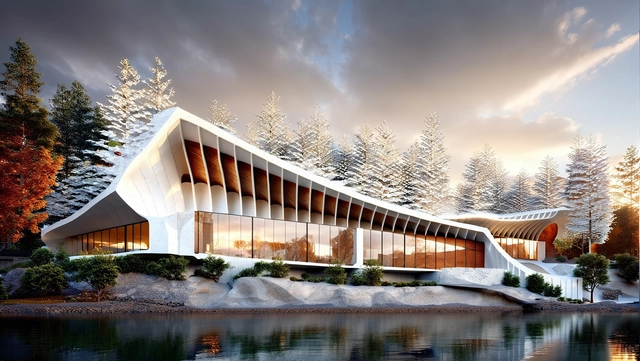
Spectrum Architecture, in collaboration with SOG and F&M, introduces the masterplan for Gonio Yachts and Marina—a significant waterfront development on the Black Sea coast designed to provide high-end residential and hospitality infrastructure for over 30,000 people.
The project is part of EMAAR's substantial investment in Georgian real estate under the Eagle Hills brand, which plans to develop two megaprojects in Tbilisi and Batumi. The total investment exceeds $6.5 billion and aims to attract $10 billion in foreign direct investment, generate 30,000 jobs across multiple sectors, and host 350,000 visitors annually.
Call for Project Submissions: Shared stewardship for nature
What’s That Green? Governance Lab is excited to launch an open call for projects that demonstrate good practice in the long-term co-care and co-maintenance of urban green spaces together with civil society. We are not looking for governance models where green spaces are solely managed by public or private actors, nor where citizens are acting entirely on their own. Our focus is on blended stewardship models - where cities, private organizations, and civil society care for green spaces together.
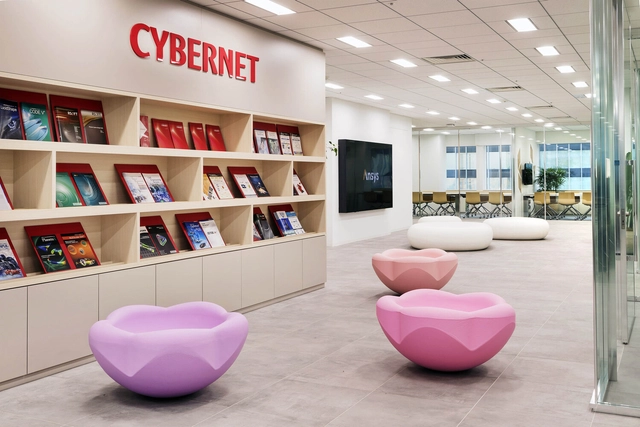
The new headquarters for Cybernet Systems was designed around the Japanese architectural concept of flexibility, promoting well-being, collaboration, and productivity. As a global leader in Computer-Aided Engineering, supporting industrial production through advanced digital solutions, the headquarters, located in the Fuji Soft Akihabara Building in Tokyo, embodies the company's commitment to creating a dynamic, technology-driven community.
Developed by MB-AA (Matteo Belfiore Architect & Associates) and Shukoh, in collaboration with Cybernet Systems, the project translates corporate values into spatial design. Minimalism, natural light, and openness define the environment. Transparent partitions and adaptable layouts foster communication while allowing each employee to personalize their workspace. Well-being, creativity, flexibility, and technology form the core of the project.
The prestigious BAUMunich, the world's leading trade fair for architecture, materials, and systems, served as the stage for Orama Minimal Frames' latest innovations in architectural frame technology. The exhibition offered a platform for industry connections and showcased advancements that challenge conventional boundaries in frame design.
Call for Action Launch - 6th biennale svizzera del territorio
The 6TH biennale svizzera del territorio, organised by the Istituto Internazionale d’Architettura in Lugano, is launching a call for action on the theme “handle with care”. The call is open to professionals of all ages and from all over the world. Building, demolishing, building again... that is easy. But caring for things, making them last, keeping them alive, repairing them. That is a difficult task. You have to observe, listen, pay attention. Study, understand. Recognise what exists, even if it’s fragile, even if it’s not perfect. You need allies. It’s a task for those who know from experience the consequences of destruction, who know the price of maintenance, who know a thing of beauty is a joy forever. If you can handle it, caring is power. Proposals can be of many kinds, ranging from installations, constructed or transformative interventions, to performances, artistic works, or architectural visions.
The Institute for Public Architecture (IPA) welcomes applications for the 2026 Independent Project Residency based at the historic Block House on Governors Island.
Angeleno architects and curators made their mark at this year’s Venice Architecture Biennale — with installations featured in the U.S., China, and Iceland Pavilions, among others.
Can academic projects explore new directions and contribute to public discourse on global and local issues? The 2025 Politecnico di Torino Architecture Students Award aimed to address these questions, showcasing how architectural research, training, and experimentation can be integrated into a school curriculum.
Boulder, 2025. Photo by Izzy Leung. Courtesy of Friedman Benda.
From November 7 to December 19, Friedman Benda presents "Adam Pendleton: Who Owns Geometry Anyway?", marking the gallery’s first collaboration with the artist and Pendleton’s inaugural exploration of furniture typologies. Pendleton’s works, stemming from the seeds of simple geometric figures, explore themes of the historical avant-garde that influenced modern and contemporary aesthetics.
India has a strong tradition of films that explore cities as characters in themselves — their social dynamics, architecture, chaos, and contradictions. Over three days, the Nagari Film Festival presents a curated lineup of Indian films and discussions that engage with urban life through fiction, documentary, and experimental cinema. The festival opens with the Nagari 2025 Award Ceremony, premiering this year’s anthology of short films and initiating a dialogue on the role of the public realm in our cities. The following days feature themed screenings and conversations exploring how cinema reflects, critiques, and reimagines the urban experience. The Nagari Film Festival is supported by a generous grant from the Tata Trusts.
About Competition A Sports Park will be designed as a sustainable space with courts, pedestrian walkways, and spaces suitable for holding outdoor festivals and concerts. Its prime location could serve as a fan fest for World Cups.
IAAC Advanced Architecture Barcelona launches its 11th Advanced Architecture Contest as part of the official program of Barcelona World Capital of Architecture 2026.
The conversation around AI in architecture has shifted from hype to application. Architects and designers now want to understand how the intelligent use of AI-powered tools can drive innovation and create a competitive advantage. Yet, as curiosity and optimism grow, firms also face concerns about the ethical and legal questions surrounding AI adoption.
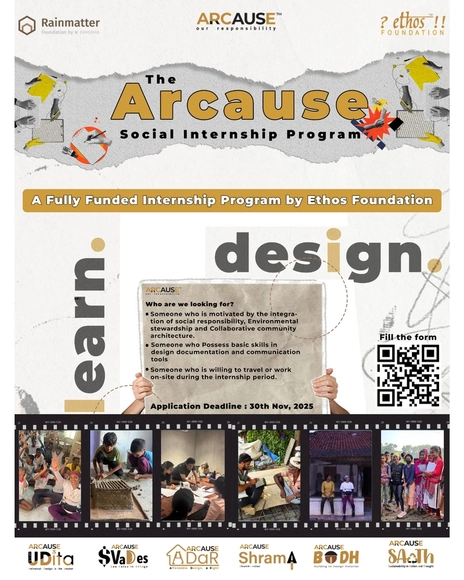
The Arcause Social Internships Program by Ethos Foundation | Arcause invites architecture students to explore how design can create real impact. This is a fully funded internship connecting young designers across India.
The Arcause Social Internships Program, a one of a kind initiative by Ethos Foundation | Arcause emerges from this understanding that the future of architecture depends on how deeply it listens, learns, and responds to the world it serves. The program seeks to bridge the long-standing gap between design education and the realities of community development, sustainability, and social impact. Through this initiative, students and early-career professionals will be placed at NGOs, community projects, and social design studios across India. Here, young and budding architects and designers will be encouraged to see beyond plans and elevations while discovering how spaces can become tools for change.
Registration for the Kingspan MICROHOME 2026 Architecture Competition is now open! 100,000 € in prize money! Early Bird registration deadline: February 11, 2026
The Kingspan MICROHOME 2026 invites architects and designers to pause and reconsider what is truly essential. In a world of constant expansion — of cities, technologies, and ambitions — this competition asks a simple question: Can less be more?
Enter the Buildner's Unbuilt Award 2026 Architecture Competition now! 100,000 € in prize money! Closing date for registration: September 23, 2026
Buildner’s Unbuilt Award 2026, celebrating its third edition, honors the boundless creativity and visionary spirit of architecture. The competition shines a spotlight on the significance of unrealized designs, celebrating bold ideas and imaginative visions that, even without being built, capture the essence of innovation and exploration. It offers a global stage for architects and designers to showcase their most daring concepts, challenge conventional thinking, and inspire the future of the built environment.
Jurong Lake Gardens is one of Singapore's newest national gardens, a 90-hectare urban oasis for the community. Elevate’s PondGard EPDM membrane was used to waterproof the pond. Image Courtesy of Holcim
The future of urban planning and architecture is promising if the world, collectively, looks beyond the concept of mere sustainability and instead embraces a nature-positive approach. As global population growth drives rapid urbanization—requiring humanity to build the equivalent of a city the size of Madrid every week for decades to come—the construction sector faces a defining challenge: how to build durable, energy-efficient, and resilient urban environments in harmony with natural ecosystems.