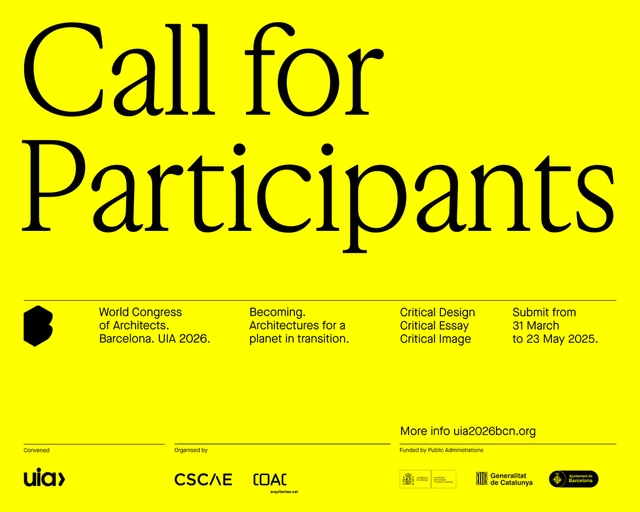
The UIA World Congress of Architects 2026 Barcelona (UIA2026BCN) announces the Call for Participants, an international and open invitation for professionals from around the world to take part in the largest global architecture event.
The UIA World Congress of Architects 2026 Barcelona (UIA2026BCN) announces the Call for Participants, an international and open invitation for professionals from around the world to take part in the largest global architecture event.
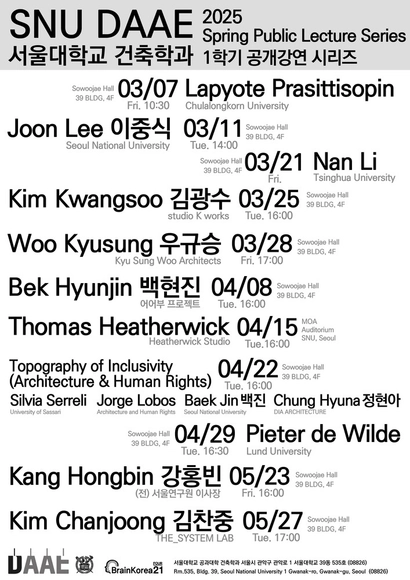
Seoul National University Department of Architecture and Architectural Engineering (SNU DAAE) is pleased to announce its Spring 2025 Lecture Series. This semester's lectures will feature speakers from various fields invited from around the world, offering diverse perspectives and international viewpoints at the forefront of contemporary architecture and architectural engineering.

ASA - The Association of Siamese Architects under Royal Patronage Thailand, invites all architects, designers, students, and the general public to submit their most innovative works under the exciting theme 'Future Nostalgia in Architecture' This is your chance to win incredible prizes—100,000 Baht for the general category and 50,000 Baht for students! This is more than just an international design competition. It's an opportunity to blend the past and future in architecture, by linking society, culture, people, nature, places, and time with cutting-edge tools and technology. There are no restrictions on location or scale! Using Thailand as a case study, you'll create a new form of future nostalgia in architecture that honors the past while paving the way for the future.

The Columbia University Department of Art History is pleased to announce the Emilio Ambasz Lecture Series: Architecture as Poetry. The inaugural lecture will be presented by the renowned architect Kengo Kuma on the topic of "The Materials and Structues of a Poetic Practice." The lecture will be followed by a reception in the Leo Café, located in the Asia Society's Garden Court.

Little Africa is a place of singular grandeur, where culture, memory, and resistance intertwine in every path and every narrative that is renewed. This territory has become a stronghold of Afro-Brazilian heritage, serving as a key reference in shaping Brazilian identity. To enhance its visibility, the National Bank for Economic and Social Development (BNDES) is launching the BNDES Little Africa Competition, both nationally and internationally. This is a historic opportunity for recognition and restitution, ensuring that the memory of the Brazilian people's formation is preserved and celebrated.

Open House Athens returns on 5–6 April, with more than 70 buildings opening their doors for free guided tours and an extensive parallel programme starting on 29 March. Now firmly established as one of the city's most engaging cultural events, the festival invites the public to explore public and private spaces—from historic buildings and monuments to contemporary offices, residences, and hotels—led by a team of 500 volunteers.

EWANE ASSETS, in partnership with CDG INVEST, is launching a call for applications for an international architectural competition for the design and development of the future Startup Campus in Casa Anfa.

Sergei Tchoban: Sections of the Mind
Comprising fantastic visions, idea competition submissions, personal manifestos, and depictions of buildings now under construction, all artworks presented in Sergei Tchoban: Sections of the Mind—an assembly of 30 freehand charcoal and ink drawings, watercolors, pastels, and prints—explore effective and imaginary use of the architectural section. Cutting through buildings, colonnades, domes, and whole chunks of cities, the architect not merely exposes his structures' spatial and material complexities but reveals hidden histories and meanings. In his drawings, Tchoban addresses clashes of extreme dualities head-on. He looks for the right balance between pragmatic and artistic, ordinary and spectacular, historical and contemporary, and offers his take on how to build more engagingly, responsibly, and ecologically.

Launch of the Moroccan Interior Design Awards (MIDA) – 1st Edition
Introducing the MIDA: a new stage for interior architecture and design in Morocco Casablanca, 25 March 2025. Archimedia Group announces the launch of the first Moroccan Interior Design Awards (MIDA), a biennial competition dedicated to interior architecture and design.
Long in the shadows, these professions are now enjoying remarkable growth, driven by a new generation of daring designers and a growing awareness of the importance of the living environment.
Interior architecture and design are shaping our spaces, transcending usage and revealing the identity of the places we live and visit.
MIDA is part of this dynamic, offering a new showcase for the different professions that are redefining the codes of interior design and decoration in Morocco.
A NEW STAGE FOR THE ‘MAKERS OF SPACES
In line with the Young Moroccan Architecture Awards (YMAA), the MIDA celebrates the men and women who, through their sensitivity and mastery, transform the environment in which we live on a daily basis.
This first edition will bring together architects, interior architects, designers, project developers and institutional and private players, thus affirming the fundamental role of design in enhancing living and working spaces.
AWARDS TO HIGHLIGHT THE BEST PROJECTS
With a range of 16 categories and three awards - Jury's Favourite, Audience's Favourite and the Archimedia Prize - the MIDAs will paint a striking portrait of contemporary interior architecture and design in Morocco. The aim of this initiative is to shine a spotlight on the professionals whose work is shaping the spaces of tomorrow, by offering them recognition matching their commitment.
Presided over by Lotfi Sirahal, architect and designer, the MIDA jury will bring together passionate experts to reward the talents redefining the way we design and inhabit spaces.
MIDA aims to become a benchmark event, a place where aesthetics, materials and expertise intertwine, where trends emerge, and where interior architecture is established not as a mere decorative art, but as an essential vector of well-being and emotion. This event is for all those who bring life to the places we live in, animate and share, by infusing them with harmony, character and meaning.

"Game of Goose," is a site-specific exhibition at Los Angeles's iconic Neutra VDL House by multidisciplinary artist Maayan Elyakim. Curated by Dan Handel, this marks Elyakim's first solo exhibition in the U.S., following his 2022 show at the Tel Aviv Museum of Art.

The Architect's Chair Competition offers architects and designers an exciting opportunity to showcase their creativity by designing a signature chair that embodies their unique architectural vision. Inspired by the tradition of renowned architects creating custom furniture as an extension of their work, this competition challenges participants to distill their design philosophy into a single, iconic piece.

Construmat is more than just a trade fair; it is the reference point for the construction industry, where ideas, solutions, and professionals come together to shape the future. With a clear commitment to sustainability, innovation and cross-industry collaboration, we are the place where architects, engineers, CEOs and consultants find the tools and opportunities to face the great challenges of the market.
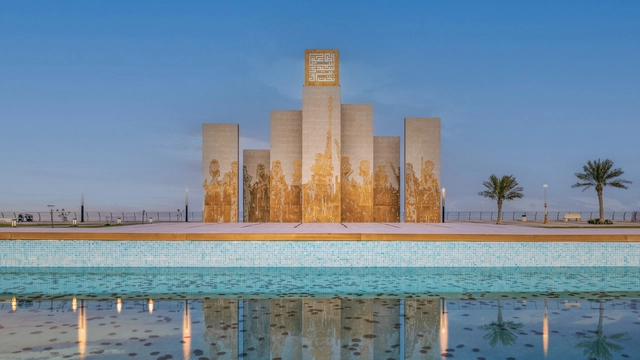
Saudi Arabia is undergoing a remarkable transformation, guided by Vision 2030, with investments in tourism, culture, technology, and sustainability reshaping the Kingdom's identity. As part of this cultural evolution, the Mujassam Watan Urban Sculpture Challenge, organized by Buildner in partnership with the Mujassam Watan Initiative (an initiative by Al Fozan Social Foundation), invites architects and artists to shape Saudi Arabia's evolving public spaces through contemporary sculptural design.

Jazz, architecture, and culture
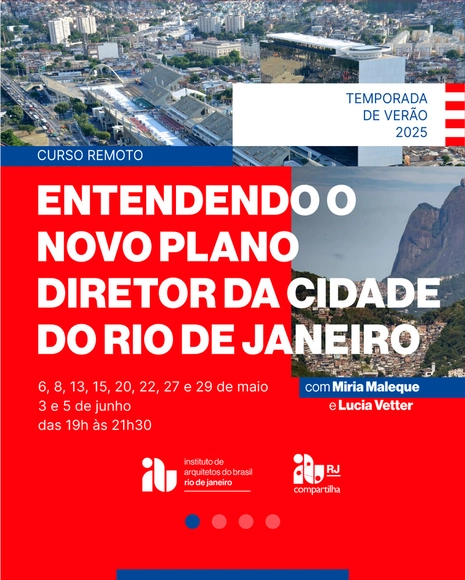
Remote Course: Understanding the New Master Plan for the City of Rio de Janeiro
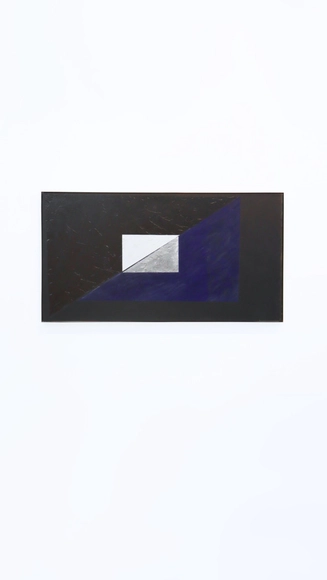
Galeria Contempo Debuts at SP-Arte
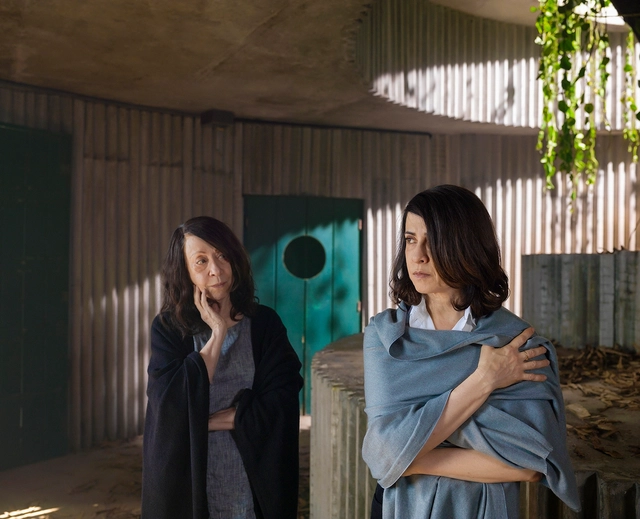
Nara Roesler São Paulo is pleased to present, beginning March 29, 2025, at 11 am, the exhibition "Isaac Julien – Lina Bo Bardi – A Marvellous Entanglement – Photographs & Collages." The show features 20 works—16 of which are being exhibited for the first time—derived from the film "Lina Bo Bardi – A Marvellous Entanglement" (2019), in which Lina Bo Bardi (1914-1992) is portrayed by Fernanda Montenegro and Fernanda Torres. The critical text is by Solange Farkas, founder of the Associação Cultural Videobrasil in 1991 and curator of numerous biennials and exhibitions.
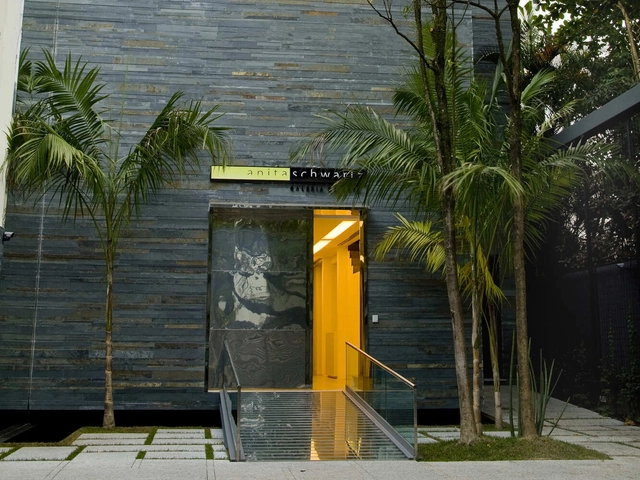
“It Is in Our Nature” and “When You See a Centaur, Believe Your Eyes” will occupy the gallery's two floors with painting and photography, starting April 9.