International Wastewater, Water Quality, Environmental Services, chemical treatment and Sanitation industries
The biggest trade show of its kind in Nigeria and West Africa has created an avenue to expand the frontiers of the Nigerian Water and Hvac environment with an enlightened Workshop and also had strong supported presence of various Engineering bodies.
Nearly 40% of the energy produced in the U.S. is used for building operations. The near-central role of buildings in the global climate and energy scenario makes it crucial for architects, engineers and building owners to take appropriate action. These stakeholders can help reduce the carbon footprint of the building through strategic design decisions.
Conventionally, the active modes of heating, cooling, ventilation and lighting utilize energy-intensive electrical processes. On the other hand, passive measures help maintain indoor thermal comfort using the inherent physical and thermal properties of the building envelope and its surroundings
Typically, a well-designed and well-operated building uses envelope-level passive measures to minimize the thermal loads first. Then, it uses energy-efficient active modes of heating, cooling, ventilation and lighting. This article highlights 4 key envelope-level passive strategies to implement for decarbonizing building systems.
As the holiday season approaches, so do college application deadlines. SCI-Arc’s priority deadline is January 15, 2023, at 11:59pm. All applicants that submit by the priority deadline will have their application reviewed for merit-based scholarship consideration.
This book explores the interdisciplinary project that brings the long tradition of humanistic inquiry in architecture together with cutting-edge research in artificial intelligence. The main goal of ‘Neural Architecture’ is to understand how to interrogate artificial intelligence—a technological tool—in the field of architectural design, traditionally a practice that combines humanities and visual arts.
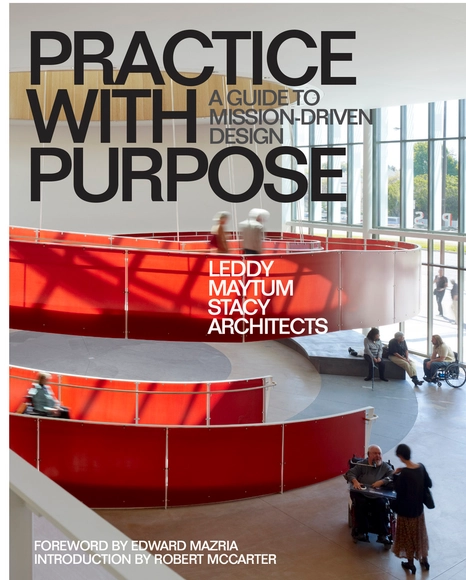
To successfully contend with these ecological and societal emergencies, the design values and practice of architecture must be rapidly transformed within the next decade. Architects must become creative agents of change, providing the vision and skill to lead our communities toward an equitable, climate-positive future for all.
The Shape of the Land: Topography & Landscape Architecture—the first book to center on this subject—presents the contributions of thirteen well-known practitioners and academics who discuss the forms and ramifications of reconfiguring terrain.
‘One House Per Day no.001-365’ collects the first 365 drawings from Andrew Bruno’s project One House Per Day, along with a foreword by Keith Krumwiede and essay contributions by Malcolm Rio, Alessandro Orsini & Nick Roseboro, and Clark Thenhaus. The drawings are high quality 1:1 reproductions of the originals, and the 7.5” trim size matches the size of the sketchbooks that the originals were drawn in. The drawings are each given a full page, with a subsequent section including a brief description of each drawing. While the drawings themselves are mute, and their descriptions relatively deadpan, the essays contemplate the place of the detached house in American culture from social, political, and economic perspectives. The book is 392 pages long and is softbound in gray recycled paper. The front cover features 365 debossed circles to represent the 365 houses; these give the book a unique tactile quality.
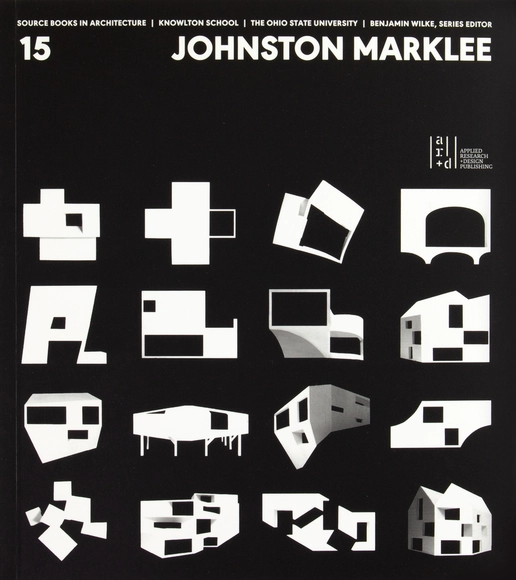
‘Source Books in Architecture No. 15: Johnston Marklee’ includes conversations with the architects and documentation of a range of built and unbuilt works. As the Baumer Visiting Professors at The Ohio State University, Sharon Johnston and Mark Lee engage with students at the school in conversations that range from developing a critical practice to idea formation with respect to projects to the pragmatics of working in the field or architecture today. Documentation of work includes drawings, diagrams, photos, and models.
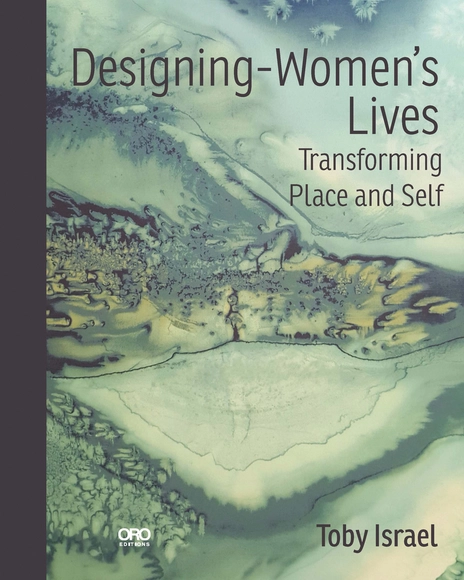
Designing-Women’s Lives calls for a place-making revolution based on women’s culturally nurtured “feeling” sensibility. Women too often have had to repress that sensibility in order to become designers. Now, rather than struggle to fit in, women can break new ground by using Design Psychology as the foundation for creating emotionally satisfying places. To encourage such a heart/mind shift, the author discusses how she took architecture Gold Medalist Denise Scott Brown and interior design legend Margo Grant Walsh through a series of Design Psychology exercises.
Environmental Activism by Design, a monograph by architects and educators Coleman Coker and Sarah Gamble, challenges designers to actively engage the environmental crisis through their work, while articulating an optimistic, tangible means to pursue community good and environmental justice through design activism and engagement. The authors assert that in addition to greener buildings, cheaper housing, and technological fixes, we must rethink pedagogy and praxis so that every single architecture graduate can define equity and transform the profession.
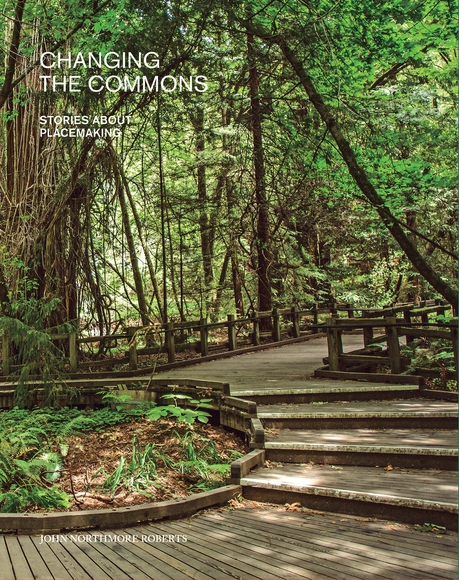
The intense social and environmental fervor that arose in the 1960s and 1970s in response to assaults on the planet’s life support systems, degradation of communities, and socio-economic inequality unleashed revolutionary change at all levels of society. Out of the turmoil of that era, community-based ecological design emerged as a powerful creative force for reshaping the commons, bringing people together, and forming ecologically sustainable relationships with the environment.
For thousands of years, nomadic Mongolians have lived in gers – circular ‘yurt-like’ structures made of timber, felt, and canvas that are ideal for moveable life on the Steppe. Since 1990, due to major political, social, and climatic upheaval, hundreds of thousands of people have abandoned nomadic life and moved to the country’s capital city, Ulaanbaatar. The gers, cheap and easily moved, are now grounded, exacerbating the extraordinary growth of the city, which has increased its size 35 times in the last thirty years. The living situation in these ger districts is increasingly unsustainable and detrimental to the health and well-being of those that live there.
Way Beyond Bigness is a design-research project that studies the Mekong, Mississippi and Rhine river basins, with particular focus on multi-scaled, water-based infrastructural transformation. The book proposes a simple, adaptive framework that utilizes a three-part, integrative design-research methodology, structured as: Appreciate + Analyze, Speculate + Synthesize, and Collaborate + Catalyze. To do such, Way Beyond Bigness realigns watersheds and architecture across multiple: scales (site to river basin), disciplines (ecologists to economists), narratives (hyperbolic to pragmatic), and venues (academic to professional).
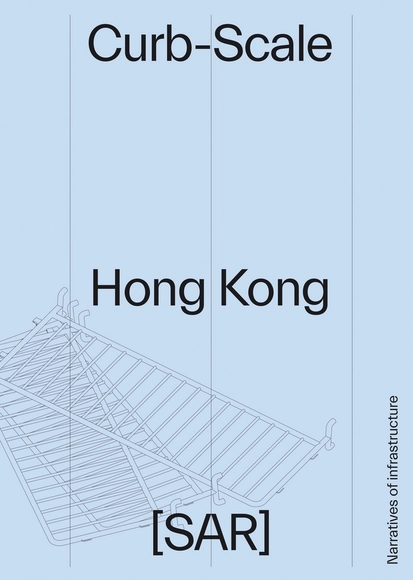
Curb-scale Hong Kong is about the infrastructural objects that constitute the street in Hong Kong. Through drawing and text, the book renders these objects visible and argues for their relevance as storytellers and civic protagonists. The book opens an alternative imagination of infrastructure and asserts the importance of the ground to Hong Kong’s urban realm.
At a time when the world is being forced to rapidly adapt to climate change, the landscape comes into focus as a subject and medium of more importance than ever. Nowhere is this better known than at the Weitzman School of Design at The University of Pennsylvania, where the landscape architecture department has been leading the field for almost a century.
AHL is the most prominent, prestigious, and progressive architectural practice working in Hawaii. As such, the history of Modern Hawaiian architecture is very much the history of AHL. Over the past 75 years, no firm has built bigger, higher, or more frequently than AHL. This book tells their story and in so doing, tells the story of the making of a modern Hawaii.
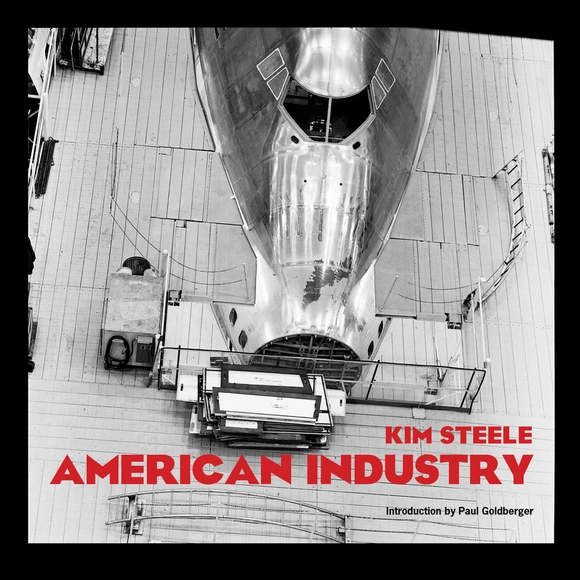
American Industry is as much a celebration as it is documentation. Through his unique vision and privileged access, photographer Kim Steele has achieved a spectacular distillation of a variety of icons of power. Some of these places of power are literal: sources of hydro-electric energy, such as dams or atomic and accelerators. Other places of power are more metaphorical: the might of massive construction as only heavy industry can achieve, whether in architecture or ships; or the romance of aviation and the exploration of space.
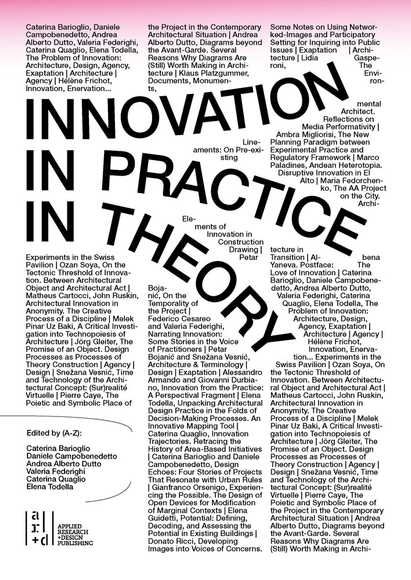
In a time of supra-national economic, political and social crises, the architectural profession is acknowledged as necessitating a fundamental restructuring in order to gain both renewed relevance as a discipline and sustainability as day-to-day practice.