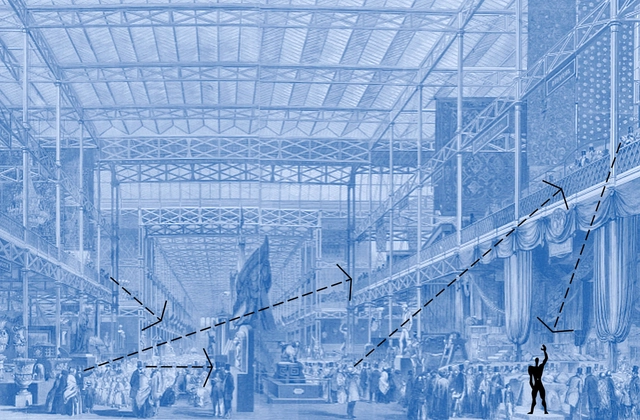
In the following article, José Javier Alayón González, PhD, Architect, and full-time assistant professor in the Department of Architecture at the Pontificia Universidad Javeriana, shares his perspective on exhibition venues and how they adapt to changing circumstances.
https://www.archdaily.com/1123614/exhibition-spaces-how-flexibility-helps-tackle-virusesJosé Javier Alayón González
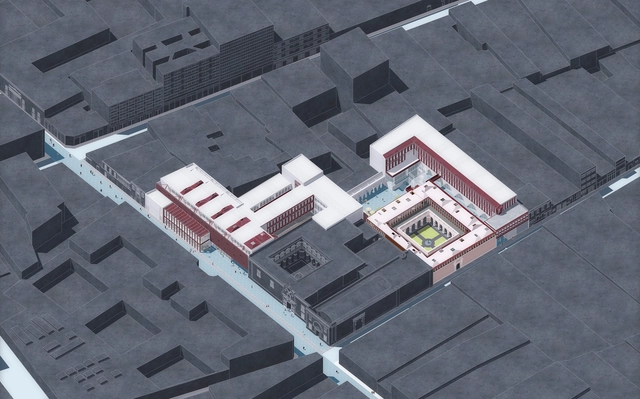
To showcase the valuable work emerging from Peruvian universities, we held the second edition of our open call for students, inviting them to submit their graduation projects completed in 2019.
Rural Social Housing Plan / Estación Espacial Arquitectos
Cultural customs may vary infinitely across countries, but family life always brings celebrations and conflicts, regardless of origin. The pandemic has magnified these dynamics, particularly the challenges of sharing the same spaces for extended periods. What is the minimum square footage allowed in Latin American countries? Is this area truly sufficient?
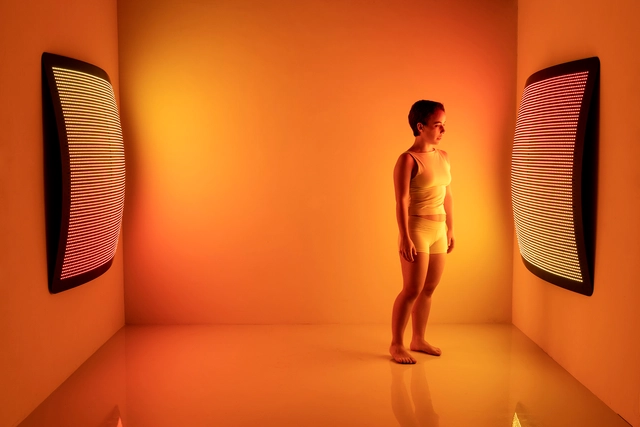
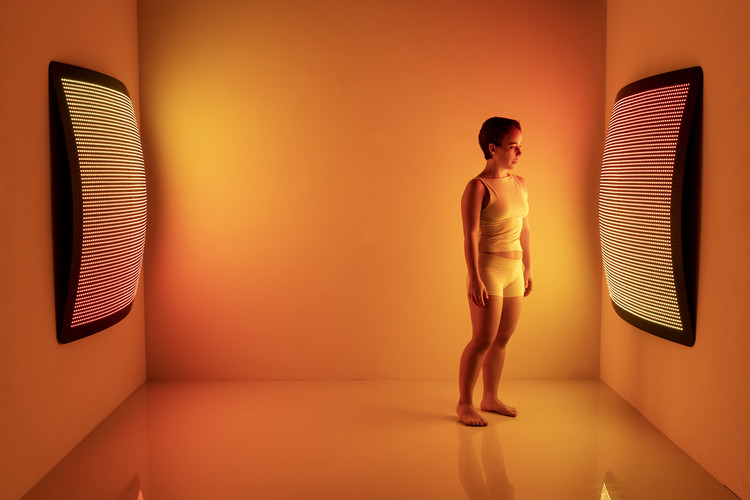
Seeking to design an immersive indoor environmental experience, design studio Aqua Creations created Manta Ray lighting. In this light installation, responsive RGB LED technology mixes red, green, and blue to produce over 16 million different hues. Programmed with a customizable color spectrum, the system is dimmable from 0.1% to 100% brightness and can even load images and videos directly onto its internal memory. This allows users to infuse expressive spaces with dynamic color and movement, or conversely, cultivate a warm, focused atmosphere for private, intimate settings.
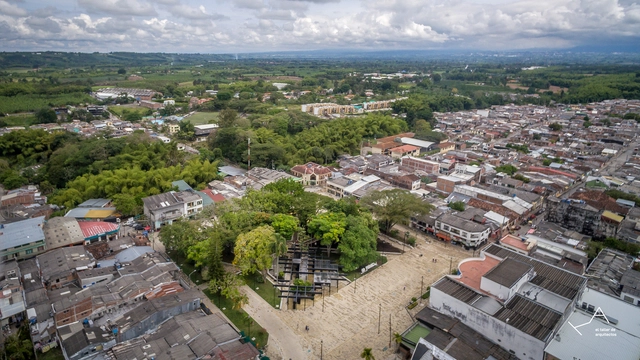
Architectural firms have been deeply questioning the future projections reshaped by lockdown and the new dynamics of how the city and territory are experienced. On this occasion, ruta4 taller from Pereira, Colombia, presents their perspective on how the profession is practiced in the country and their shift toward a more participatory practice for the benefit of local communities. The Pereira-based architecture studio has built exemplary collaborative projects, such as the taller de Urbanautas and the Casa Ensamble Chacarrá, demonstrating through experience that empathetic architecture is a highly viable approach.
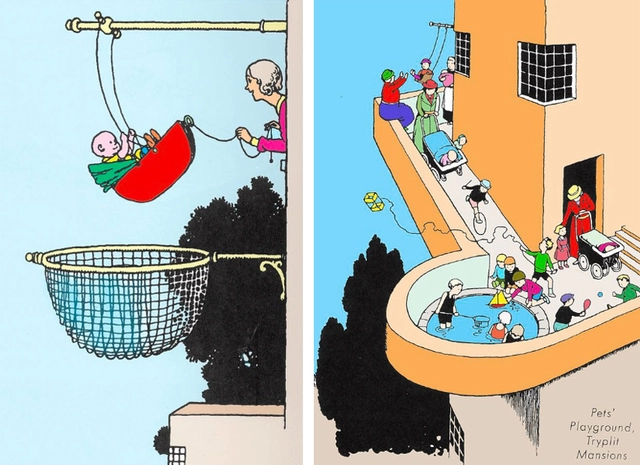
Deserted cities, shuttered businesses, canceled flights. Empty squares, streets with no one around... what seemed impossible has happened. If it is hard for us to adjust to this new routine, for children, the shock was even greater. Overnight, they were deprived of school, spending time with friends, outings around the city, parks, and squares. They were confined indoors.
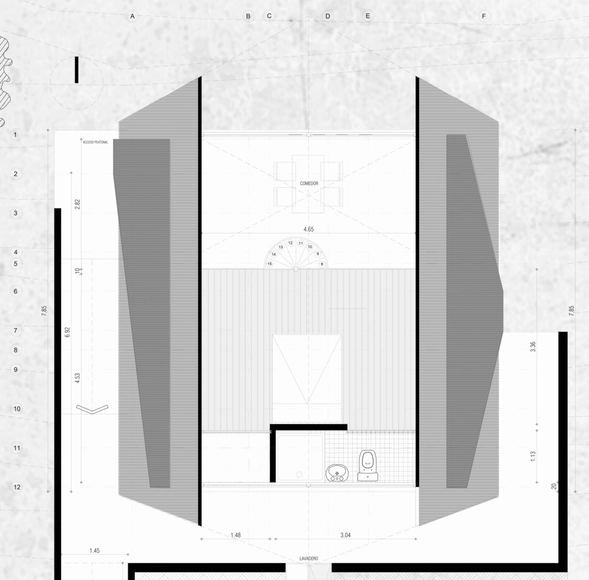
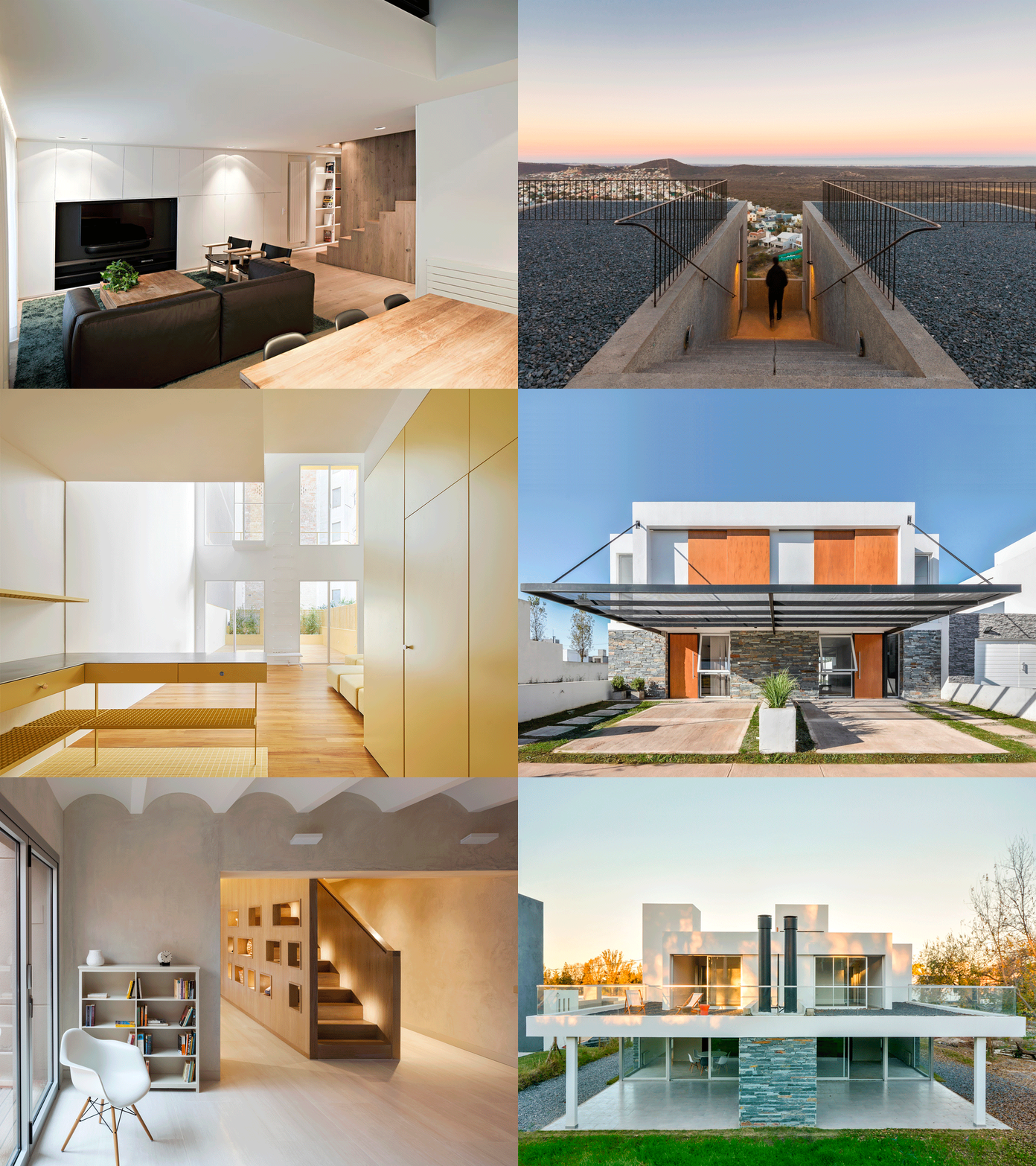
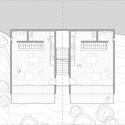
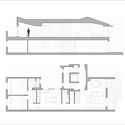
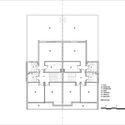
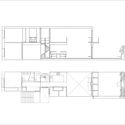
When it comes to housing typologies, the term duplex –lends itself to multiple interpretations, often leading to ambiguous applications and uses. The definition of the concept depends primarily on the country or region in which it is used, generally allowing for two main interpretations. First, a duplex can refer to a two-story housing unit with levels connected by an internal staircase. This definition usually applies to apartments and residences in countries like Spain or Canada, which are typically found in urban centers. Alternatively, a duplex can describe a specific type of project where two homes are joined side-by-side, each having its own individual entrance but sharing a central wall. Generally, the design of these houses is defined by an intentional axial symmetry, functioning as twin homes with the same features and floor plan layout. This type of duplex housing is particularly common in Argentina, Bolivia, the United Kingdom, Australia, and parts of the United States.
The city as we know it is collapsing, incapable of offering new ways of living. The virus is forcing us to confront the exhaustion of the buildings that make up the city and the systems underpinning how the entire urban landscape was conceived. Basic activities separated by miles along untraversable streets; halls and galleries acting as closed, artificially climate-controlled shells that can no longer accommodate crowds (and are therefore no longer visitable); subhuman capsules stacked atop one another in towers devoid of open spaces, common areas, or nature, with virtually no contact with the outside world—these will only become more dysfunctional as time goes on.
Shortly after the World Health Organization declared the outbreak of the novel coronavirus (COVID-19)—which began in Wuhan in December 2019—a pandemic, highlighting the disease's high rate of transmission and exposing global deficiencies in containment methods, most Latin American countries began implementing public health emergency measures to minimize spread and strengthen the response capacity of their healthcare systems.
Cities are the synthesis of thousands of years of agreements—as fragile as we are, yet wonderfully adaptable to change. As a result, they remain the ultimate ecosystem for our lives to unfold. Thanks to density, they allow us to maximize the benefits of the infrastructure, services, and public spaces we have created to sustain the well-being to which we aspire.
At first glance, all of this is in crisis today as a result of the COVID-19 pandemic. However, looking back at our history reveals far more lethal epidemics that ultimately brought substantial improvements to the way we live.
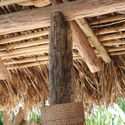
Construction inside Ekôa Park, in Morretes, Paraná. The project by Sem Muros Arquitetura Integrada is based on traditional knowledge and permaculture. Photo: Tomaz Lotufo
The stigma of rudimentary architecture, combined with the idealization of high-tech technology, relegates Indigenous building knowledge to a prehistoric imaginary. This pattern, which points to a single, unequivocal direction of progress, reveals the so-called coloniality of knowledge—a concept by Peruvian sociologist Aníbal Quijano that exposes the hidden side of modernity: the creation of hierarchies among peoples, keeping Latin America, and particularly its Indigenous populations, in a subaltern position. In other words, we tend to assume that the knowledge representing the future is produced in other lands, namely the Global North.
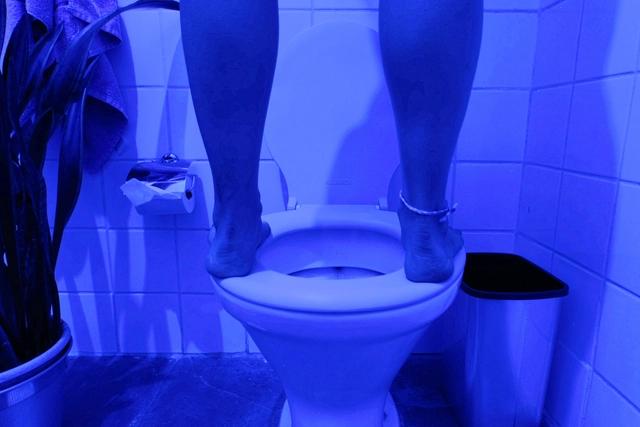
It is 12:11 PM on November 7 (2018). An "S" on the door indicates who this bathroom is supposedly for. I am in a bathroom located in a small building designed in the 1950s by Vilanova Artigas, the Brazilian modernist architect, in the Santa Cecília neighborhood. This is my second time inside, and to me, it is still a space slowly revealing itself. At first, what really caught my attention was the almost-purple blue cast by the blacklight, which tints every tone in the room toward that color. It brings a deep sense of serenity during the day.
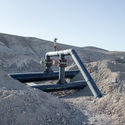
La serie titulada Agua, minería y éxodo forma parte de una investigación visual llevada adelante por el fotógrafo Marcos Zegers que explora las tensiones culturales y las alteraciones territoriales derivadas de las actividades mineras y extractivas en el desierto de Atacama.
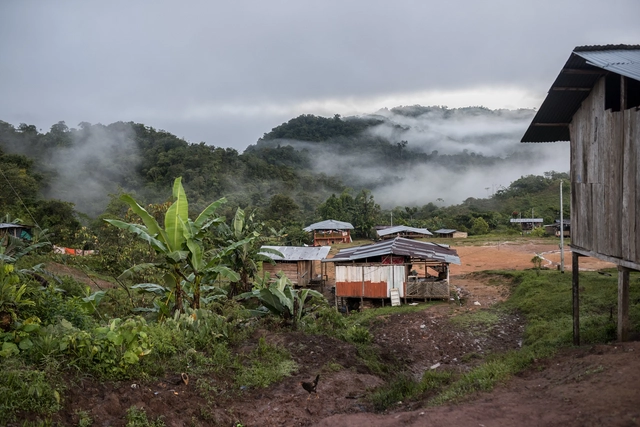
In Latin American countries, the most common method for distinguishing rural areas from urban spaces is based on analyzing the number of residents in a given zone, classifying as "rural" any locality with a population under 2,000. In these contexts, low density and scattered development typically allow the natural landscape to predominate over the built environment.
Originally published as "El espacio público en asentamientos de origen informal: una construcción colectiva del espacio social" in the third edition of Revista CLEA —an annual publication of the Latin American Coordinator of Architecture Students (CLEA)—, this article argues that the most important aspect of public space is the opportunity it offers to build ourselves as citizens.
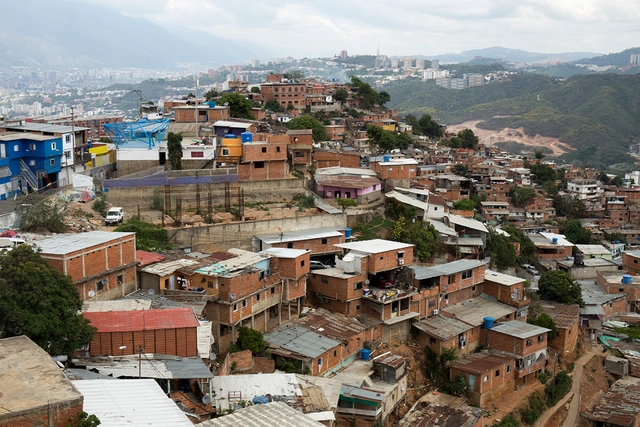
The production and meaning of public space in informal settlements are driven by the people who inhabit them. Consequently, the process of forming the concept of publicness is forged from the moment of occupying a void that lacks municipal services (Hernández, 2011). This stems from the fundamental need for shelter, which shapes this void through housing as the primary objective of the individual.
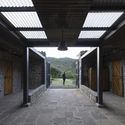
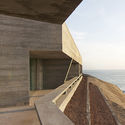
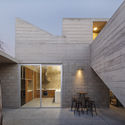
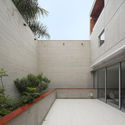
In the architecture of Peru, concrete took center stage during the development of the Modern Movement. In pursuit of a new urban geography, many architects set out to renew their architectural languages. As a result, new concrete buildings—residential, office, and commercial towers—began to emerge across the city, leaving behind the Neocolonial and Republican styles that had long characterized Lima's architecture. Today, the structural advantages, versatility, expressiveness, and aesthetic value of concrete continue to make it a preferred choice for many architects, keeping exploration around the material highly relevant.
One thing that unites all human beings is that during the first years of our lives, we absorb our surroundings to develop as we grow. Consequently, education plays an irreplaceably important role. In early childhood, however, learning differs from more theoretical methods, as young children assimilate knowledge through continuous experience, developing their motor skills and their sense of dimension and space in relation to their own scale and body.
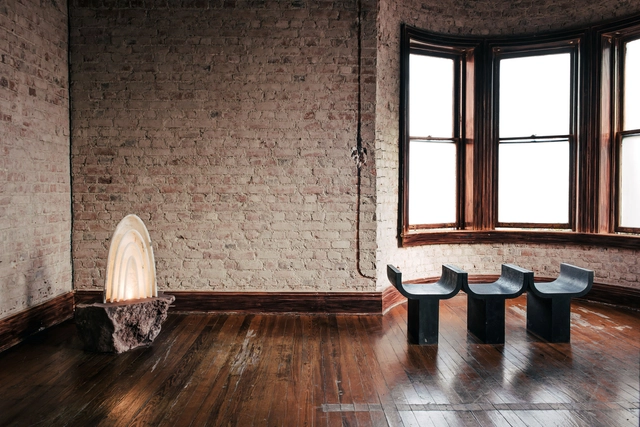
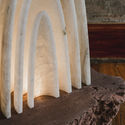
The Mexico City-based design studio, founded in 2017 by Manu Bañó, Age Salajõe, and Héctor Esrawe, has launched its new piece titled “Aura,” a lighting fixture that continues the studio's exploration of religious elements, objects, and places of worship in Mexican culture. Following this approach, the piece emerges as an aura built from four geometric, half-moon shapes that evoke the arches of colonial-era altars and churches.
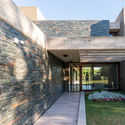
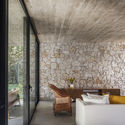
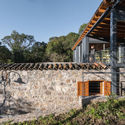
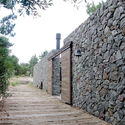
Historically, stone materials have offered ancient cultures the ability to build robust structures by interlocking stones of various shapes and sizes. The simplicity of the technique and its ability to deliver efficient, durable results have sustained the transmission of this construction method over time, enabling multiple contemporary architectural variations and reinterpretations.
In the daily routine of our conventional workday, we are influenced by many distractions that affect productivity, which have already become routine. However, now that we no longer lose time commuting and are restricted to activities we can do at home, we manage our time with more holistic priorities.
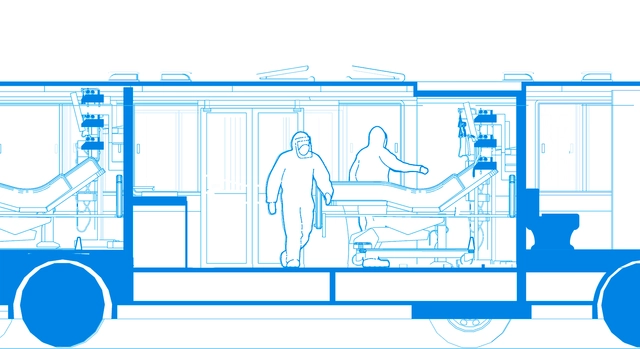
The Bogotá-based firm 57Uno focuses its practice on sustainability and has now channeled its creativity toward resilience and adaptability through Arquitectura en Tránsito (Architecture in Transit). This proposal aims to address the health emergency caused by COVID-19 by repurposing decommissioned buses from one of the primary contributors to poor air quality in the Colombian capital.
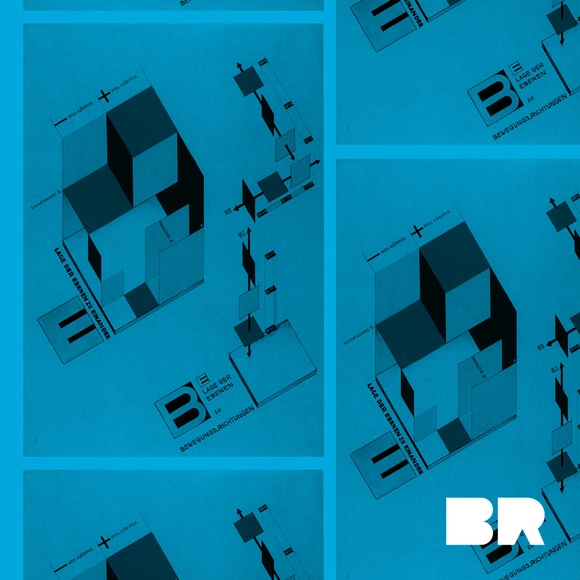
Beginning this April 30, a series of talks, workshops, forums, exhibitions, conferences, and other events will explore the legendary Bauhaus school and, in particular, its impact on Latin America. Due to current circumstances, several of these sessions have been redesigned to take place online.
When choosing the structural system for a house, several priority factors dictate the decision, with time and money being two of the most critical. While steel structures may not always be the most economical option, their prefabrication significantly accelerates construction times and, consequently, optimizes the overall budget. Moreover, they contribute to the project's aesthetic, providing lightness and a contemporary character.
This article is a contribution from the Medellín-based firm El Taller de Arquitectos, who share their experience in structuring their practice by understanding and approaching architecture competitions as commissioned projects. Read on to explore their insights.
https://www.archdaily.com/1123680/el-taller-de-arquitectos-how-to-approach-architecture-competitions-as-commissions-in-colombiaEl Taller de Arquitectos
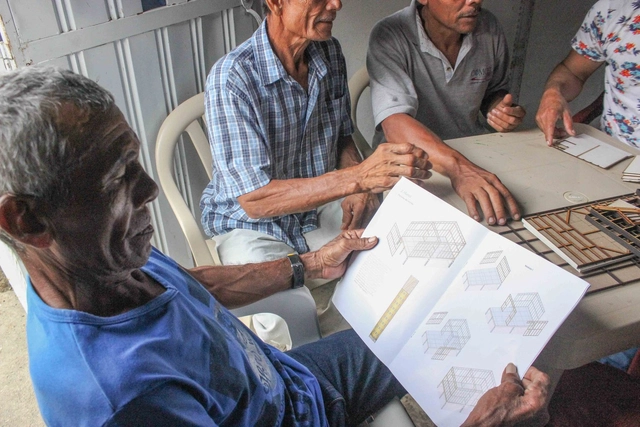
Social housing is one of the most compelling topics for our readers, representing a systemic challenge across most of Latin America. In Colombia, this challenge is even greater when it comes to rural social housing (known as VISR in Spanish), as inadequate infrastructure hinders dignified coverage throughout the country.






.jpg?1596481113&format=webp&width=640&height=580)

.jpg?1596481113)













.jpg?1592952477 "© Pilar de Ario")