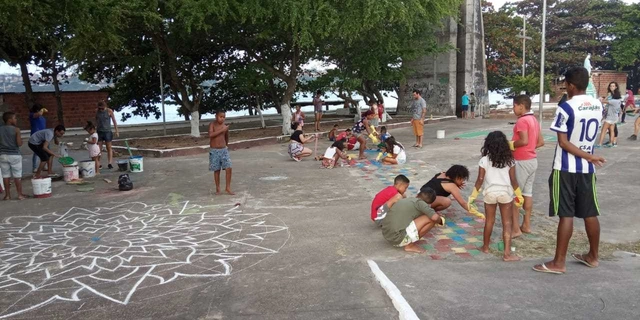
The city in the construction of the environment: "A place for strangers" or a place that only ceases to be neutral and abstract when painted by each of us? Image by Paulo Pacheco
There is perhaps no concept so generic and comprehensive, yet at once so impersonal and difficult to reach consensus on, as that of the environment (focusing on the United Nations Conference's own definition of environment—the environment as the set of physical, chemical, biological, and social components capable of causing direct or indirect effects, in the short or long term, on living beings and human activities—we immediately find that establishing a stable, common, and assertive conceptual foundation is highly difficult to achieve, let alone universally recognize...)
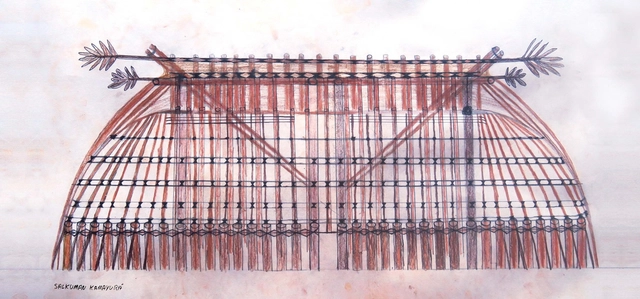
In July 2019, the habita-cidade Platform [1] organized the "Ways of Dwelling: Traditional Architectures" Travel-Workshop, which brought students and professors to the Ypawu Village in Kamayurá territory, in the Upper Xingu. The general objective of the "Ways of Dwelling" Travel-Workshops is to foster constructive reflection on the diverse forms of human habitat across the planet. This year, responding to a request from Kamayurá master builders to produce a manual on local architecture, the Travel-Workshop was designed so that the visiting group could support this important endeavor. The idea for the Kamayurá Architecture Manual was first proposed by Kanawayuri L. Marcello Kamaiurá (a local leader) to architect Clarissa Morgenroth (a graduate of Escola da Cidade) and theater director Cibele Forjaz. Escola da Cidade was then invited to join the project, which was taken on by the habita-cidade Platform, an initiative linked to the *lato sensu* postgraduate program "Housing and City."
https://www.archdaily.com/1122239/kamayura-architecture-manualLuis Octavio de Faria e Silva
Cortesia de Marcella Arruda / A Cidade Precisa de Você
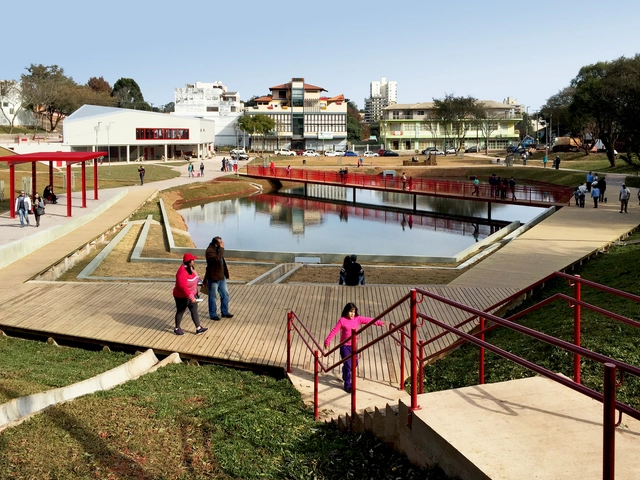
Over the next 20 years, 45% of urban land should consist of public spaces (streets, parks, and plazas), according to UN-Habitat. What will be the quality of these spaces? Which stakeholders will assume responsibility for their management? The movement to reclaim public spaces by city dwellers is gaining momentum both in Brazil and globally. The right to the city is at the forefront of urban discourse, and at its core, many citizens are committing to actively participate in decisions regarding their cities, or even in everyday initiatives to improve public spaces.
In the 21st century, smart city management will be one of the most influential factors in economic development. Addressing challenges in housing, sanitation, democracy, education, safety, economic development, and quality of life will be at the forefront of the agenda for city leaders.
https://www.archdaily.com/1122274/urban-planning-and-public-spaces-parks-as-tools-for-social-transformationAna Paula Wickert
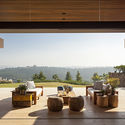
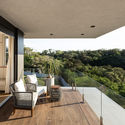
The veranda is one of the architectural elements that most powerfully fosters the connection between interior and exterior spaces. Its precise origins are difficult to pinpoint, as it can be found in vernacular architecture across the East, the Arab world, Europe, and, with particular prominence, Brazil.
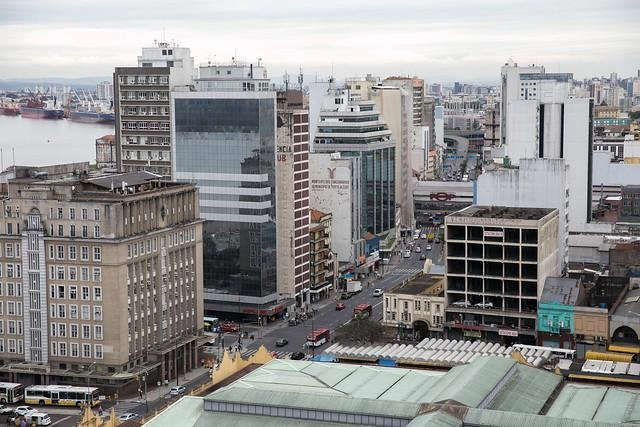
Image: Ivo Gonçalves – Prefeitura de Porto Alegre/Flickr, license CC BY-NC-SA 2.0
The Master Plan is the basic instrument for defining a municipality's development model. It establishes guidelines and strategies for executing plans, programs, and projects, seeking to emphasize public participation as well as economic, social, and environmental sustainability. Yet, its influence on the city goes far beyond what is commonly imagined: it ultimately dictates the volume and form of every new building.
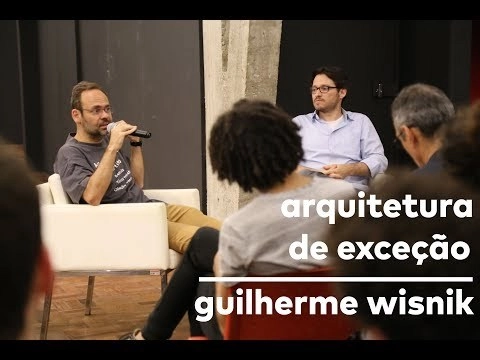
An open lecture on architect Paulo Mendes da Rocha and the Brazil Pavilion at Expo ’70 Osaka, as part of the exhibition "Architecture of Exception – The Brazil Pavilion at Expo ’70 Osaka." Exhibition curators José Paulo Gouvêa and Alexandre Benoit invite FAUUSP professor Guilherme Wisnik and Daniele Pisani, professor at Politecnico di Milano and author of the book Paulo Mendes da Rocha: Complete Works (Gustavo Gili, 2002).
https://www.archdaily.com/1122306/architecture-of-exception-guilherme-wisnik-and-daniele-pisaniPedro Vada
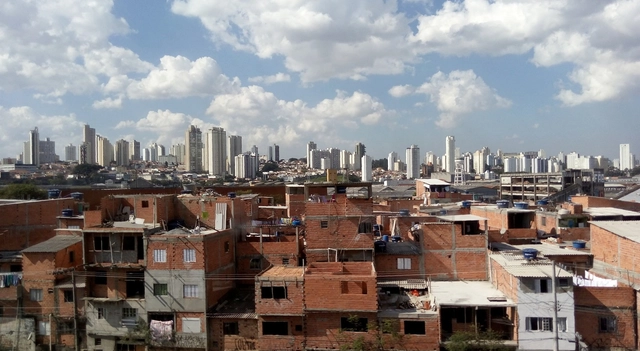
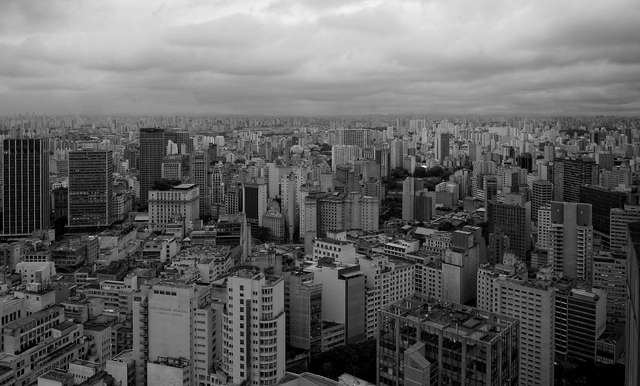
Contemporary architectural production in São Paulo is as diverse as one would expect from one of the most populous cities in the world. While architecture also encompasses the outcomes of urban disorder and population growth — buildings born out of the necessity of people who, with scarce resources, build their own homes — architectural discourse often focuses on production whose genesis lies in deliberate design.
Photographer Manuel Sá shared with us his photo essay of the Coati Restaurant, designed in 1987 by Lina Bo Bardi, João Filgueiras Lima - Lelé (precast reinforced mortar), Marcelo Ferraz, and Marcelo Suzuki. The complete complex—comprising a restaurant, a bar, and three historic houses slated to be converted into nine apartments with ground-floor commercial space—is located in Salvador's Pelourinho district and is part of the Pilot Project for the Recovery Plan of the Historic Center of Bahia, proposed by Lina. Unfortunately, the restaurant is currently abandoned and falling into ruin, as is the rest of the complex.
https://www.archdaily.com/1122300/coati-restaurant-designed-by-lina-bo-bardi-and-lele-through-the-lens-of-manuel-saPedro Vada
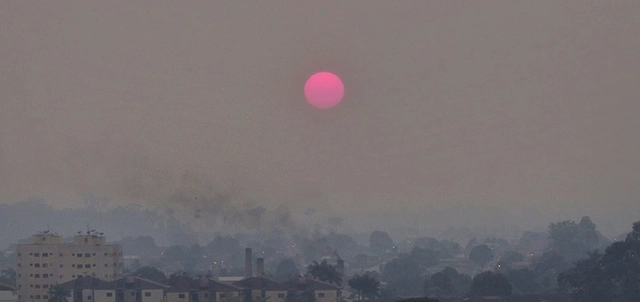
Smoke in Porto Velho, Rondônia, at dawn. Photo: Renata Silva/Personal Archive
Since the beginning of the month, thousands of fire outbreaks have been recorded in Brazil's northern states, spreading through Acre, Rondônia, Mato Grosso, and Mato Grosso do Sul, and reaching the triple border of Brazil, Bolivia, and Paraguay. According to the National Institute for Space Research (INPE), the country is experiencing its worst wave of wildfires in five years.
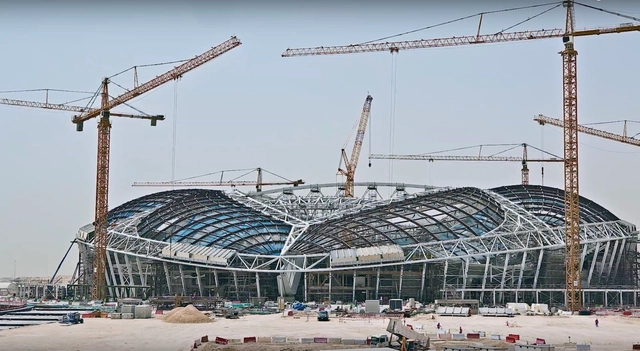
Construção do estádio Al Wakrah. Image Cortesia de Supreme Committee for Delivery and Legacy’
The year is 2010. As the first Arab country selected to host the 2022 FIFA World Cup, Qatar is already ramping up its preparations to host this highly anticipated and costly event 12 years down the line. Extensive construction and reconstruction efforts are being launched, targeting not only the facilities directly demanded by FIFA, but also, more broadly, the urban infrastructure systems of the country's major cities.
The search for the ideal city has always permeated human history, constituting a utopia pursued by rulers, artists, philosophers, and, in more recent history, by us, urban planners. Since the 19th century, various models of ideal cities have been proposed—and, at times, built—ranging from Howard's garden cities to mechanized, radial, and walking cities (like those of the Archigram group), to nomadic ones like Constant Nieuwenhuis's New Babylon, and modernist cities, among others.
The urbanization of Brazilian cities has been concentrated mainly in recent decades, but the process actually began at the end of the 19th century. Photo: Daniel Hunter/WRI Brasil
What images come to mind when we think of major Brazilian cities? Perhaps traffic jams, pollution, insecurity, and noise. Perhaps crowds of people coming and going. Pedestres. Bicycles. Buses. After all, eight out of ten Brazilians live in urban areas—regions that have undergone rapid urbanization. Over the last six decades, the country's population grew from 70.2 million to 209.3 million, and the proportion of urban dwellers surged from 44% to the current 85%.
https://www.archdaily.com/1122223/the-history-of-brazilian-urbanizationPriscila Pacheco e Laura Azeredo
Guilherme Essvein de Almeida's doctoral dissertation presents an analysis of two major works of contemporary architecture: the Casa da Música in Porto, designed by Rem Koolhaas, and the Cidade das Artes in Rio de Janeiro, designed by Christian de Portzamparc. Defended in 2018, the dissertation was advised by Prof. Dr. Carlos Eduardo Dias Comas as part of the graduate program at the Federal University of Rio Grande do Sul. Read the author's abstract and find the link to the full dissertation below.
https://www.archdaily.com/1122173/casa-da-musica-and-cidade-das-artes-towards-monumentalityPedro Vada
Many of the most compelling design solutions stem from site conditions—whether climate, local materials and labor, construction techniques, or, above all, the way these factors are addressed within the highly specific context of the plot. The plot is the ultimate space for putting these strategies into practice. As cities increasingly feature smaller land parcels, designing for narrow lots has become a recurring reality.
Brick is one of the most widely used materials in Colombia, helping local architecture stand out globally. This prominence is due to the exceptional quality of the clay found in several regions of the country. Beyond cladding the majority of the buildings that define Bogotá's urban landscape, the material is used in all its forms, from adobe to floor tiles in rural homes.
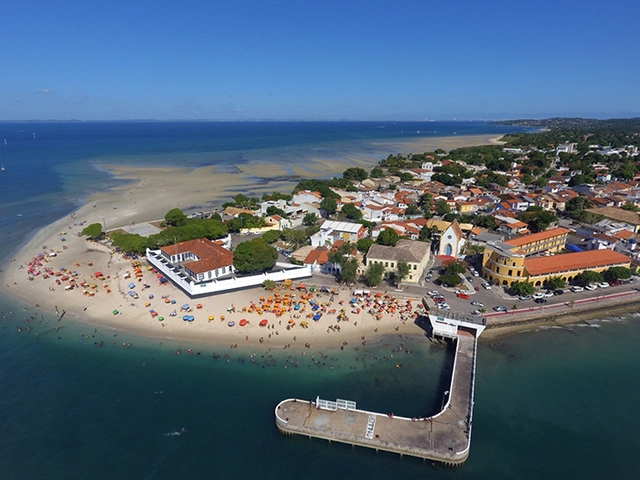
Municípios são territórios guardiões de cultura e identidade. Na foto, Itaparica (SP) / Foto: Wikipedia. Image Cortesia de Portal Aprendiz
Announced in November by Minister of Economy Paulo Guedes, the Mais Brasil Plan includes three Constitutional Amendment Proposals (PEC) aimed at balancing fiscal accounts at the federal, state, and municipal levels. Among them is the dissolution of municipalities that are not financially self-sustaining.
When driving alongside a bike lane, it is hard to escape comments like “it’s always empty,” “it takes away space from cars,” or “businesses lose customers.” But is there any truth to these claims? Here are some of the most common myths about bike lanes – and the reality behind them.
A person living in Moema, a neighborhood with one of the highest income concentrations in São Paulo, lives 20 years longer than someone born in Cidade Tiradentes, in the far east of the capital. Brazil's wealthiest city exposes just how unequal the country is, and how much access to public policies varies depending on where one lives.
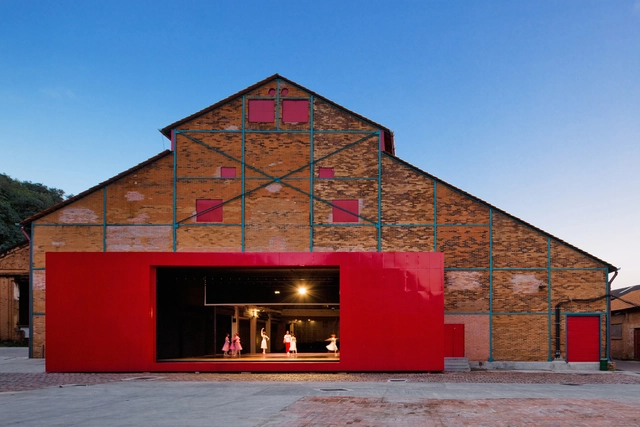
Factories, slaughterhouses, gasometers, convents, water towers, and railway stations are just a few examples of structures that often remain within the urban fabric of cities over time, even after losing their original purpose. Repurposing an existing building for new functions is what has become known as adaptive reuse. While not a contemporary concept, the practice has been widely adopted in recent years as a strategy to manage spaces in a more economical, sustainable, practical, and efficient way.
“Writing is like a city, for which words are a thousand gates.” - Walter Benjamin
No roads or maps lead to them. Yet, many of the cities imagined in literature feel more tangible than real ones, capturing the human imagination with their fantastical sparks. The rich geographical, cultural, and social detail of cities like the famous Macondo, from One Hundred Years of Solitude, frequently places a magnifying glass over the relationship between territory and its inhabitants.
Proposed Constitutional Amendment No. 80/2019, a collective proposal led by Senator Flávio Bolsonaro, suffers from blatant unconstitutionalities, in addition to posing structural risks to economic and social development. These issues are analyzed in detail below, based on the following aspects:
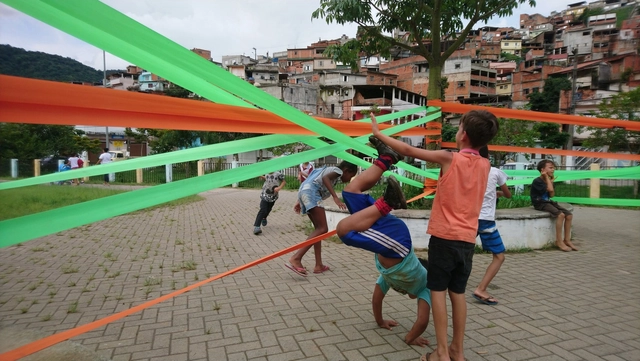
As a result of three months of training in local engagement within the pioneering COURB Ambassadors Program, mobilizers from various Brazilian cities promoted actions in their territories. Aiming for the collaborative construction of inclusive cities, the Articulation Journey—a highly collaborative effort—took place between August and September and featured three types of actions: roundtables, territorial interventions, and collective proposals. The ambassadors mapped and engaged more than 150 institutions in the program, including city halls, universities, collectives, businesses, and organizations.
https://www.archdaily.com/1122586/three-ways-to-activate-urban-space-courb-articulation-journeyCOURB Brasil
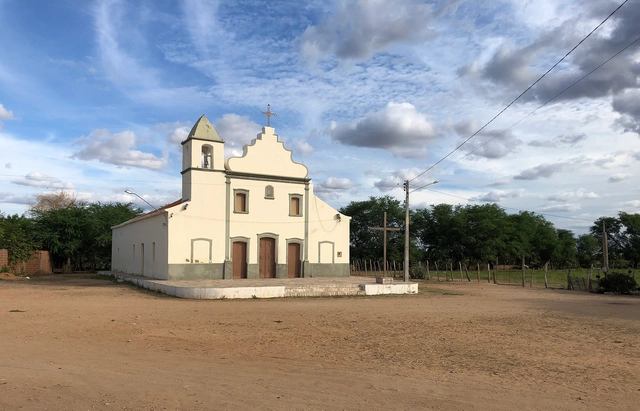
Church in Belém de São Francisco, Pernambuco. Photo by Oliver de Luccia, 2019
These river journeys are intended for on-site research, documentation, and data collection focusing on rivers. They are conducted by researchers from the Fluvial Metropolis Group of the Faculty of Architecture and Urbanism at the University of São Paulo (FAUUSP), coordinated by Professor Alexandre Delijaicov. Each researcher maps out their itinerary based on personal interests, yet shares a common goal: to gather design references for fluvial infrastructure architecture, expanding the research group's imaginary and repertoire. The driving question for the researchers is: how do people relate to the river waters flowing through their metropolises, cities, or towns within the built environment along the riverbanks? The boundary defined by the elements of land and water is the starting point for this observation.

.jpg?1546956437&format=webp&width=640&height=580)
.jpg?1546956437)


.jpg?1567798624&format=webp&width=640&height=580)