Produce personalized presentation boards that distill complex concepts into simple visual representations with a few helpful tools and effects.


Produce personalized presentation boards that distill complex concepts into simple visual representations with a few helpful tools and effects.

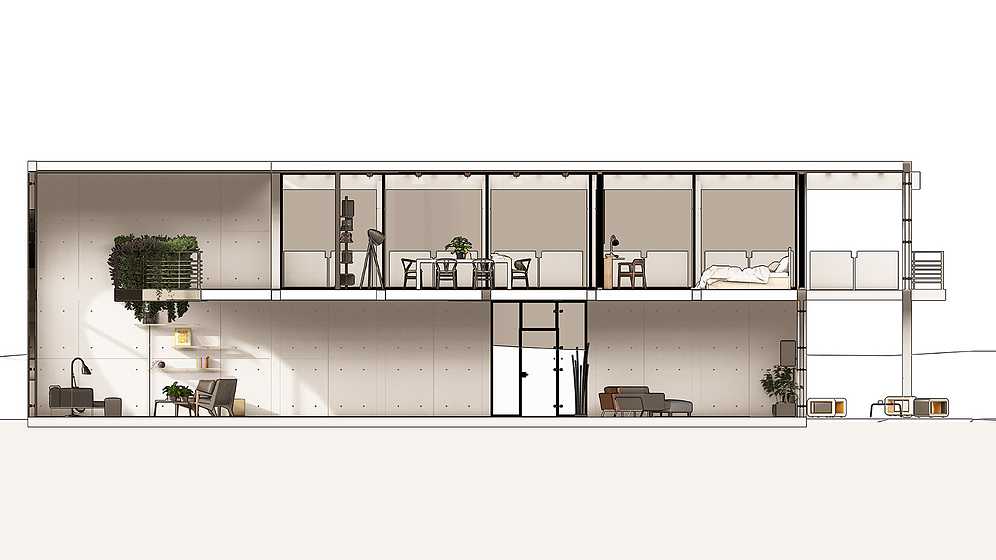
BAT + Arquitecnica + LaSuma Paisajistas shared with us their first prize winning proposal in the Eco-Zone competition for a center for cultural and linguistic diversity and an energy platform (renewable + energy efficiency technologies), including all their necessary content of museographic character. Their proposal aims to value the pre-existing built and landscape of the estate Zabalegi in San Sebastian. The architects seek to remember through their intervention, raising some core structural sections that are born from the house of the Indian, that the first stone or seed of this project was planted by Mr. Arteaga when he to donated his plot performing an act of social responsibility. More images and architects’ description after the break.
The votes have been closed, and the winners of the ArchDaily 2012 Building of the Year Awards will be announced today, February 14th, at noon EST.
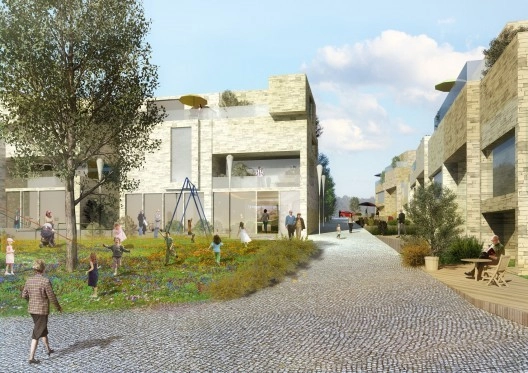
In recent years there has been a lot of talk in the United States about our aging population in terms of social security funds and medicare. We have asked how we should deal with the impending problem that our elderly will outnumber the population that can take of them. While speculations for a solution have generally settled within the realm of the economy, urban planners and architects are asking a different set of questions and looking for solutions regarding how we design. It is important to note, that while most of the discussion has been framed about the aging "baby-boomer" generation, Jack Rowe, speaking at the symposium for Designing Homes and Neighborhoods for an Aging Population in Washington, DC, pointed out that this concern is a conservative estimate of the bigger problem in our "demographic transformation". In fact, the trend is far more expansive; medical advancements and a longer life expectancy mean that for the next few generations each aging population is expected to outlive its parents and will exceed the population of its children. This makes the issue at hand a more over-arching concern, or as Rowe later states, an issue that all members of society must face.
This is why we must think about architecture and urban planning in terms of adaptability for the aging, as we have already starting thinking about it in terms of handicapped accessibility. More after the break.

The French Rugby Federation (FFR) recently announced they will use the proposal by Populous and Ateliers 2/3/4/ for the design of the Grand Stade. After several months of discussions with three competing groups, the FFR has made its choice of designers and has issued the first computer-rendered images. The FFR Grand Stade will be much more than a stadium; the 82,000 capacity venue will become the ‘national stadium of rugby’. It will host all the French rugby home matches, and also accommodate conventions, shows and a broad range of sporting events thanks to its multi-purpose design. More images and architects’ description after the break.

Exploring the evolving way in which we work, the POP-UP Office is an installation by DUBBELDAM Architecture + Design that uses modular units that can be combined in different ways. The result is a workspace that is simultaneously bare bones and tailored to the individual. This design becomes a great response to the profound shift in the way we work; when all we need is a surface to work on and a place to plug in, the working environment is no longer static. More images and architects’ description after the break.

Upon winning the contract to design the new State Fire Brigade School in Wurzburg, gmp Architekten recently presented their design which involves a new practice hall on the site of the Fire Brigade School in order to meet the changed requirements of the training program. The site is in a very exposed location so that the new practice hall building will be visible from afar, and will clearly mark the position of the State Fire Brigade School within the Zellerau neighborhood. More images and architects’ description after the break.

A join venture between Treurniet Architectuur, Michiel Clercx Architectuur, Addis Mebratu and S7 Architects PLC recently won the international design competition for the new building complex for the Ethiopian Parliament. The project represents the wide variety of 85 million people living across a fascinating landscape of 1,000,000 km2. The new building is of significance for every individual, every ethnic group, its thoughts, its interests and its own way of living. By creating a recognizable shape whith a strong symbolic value, the architects make full use of the site located on the hill in the middle of Addis Abeba. More images and architects’ description after the break.

Designed by Salon2, their ‘Haze’ Pavilion proposal aims to transform Istanbul Modern into a garden of stages while preparing an unexpected architectural condition for the distant relationship of İstanbul and the sea. Through an experiential design, the pavilion shifts the perception of a specific shore condition of the Tophane Pier and creates its own cool microclimate in the warmest days of the year it to accommodates various events. More images and architects’ description after the break.
Gem Barton, based in Brighton, England, is a writer, academic lecturer, curator and designer. As a regular contributor to journals and magazines such as Mark, Blueprint, Design Bureau and Inhabitat she explores and share her passion for architecture and design. Gem's column 'The B-Side' will look at the alternatives to architectural traditions and explore what it means to be knee-deep in the 21st century design world. Follow her @gem_shandy
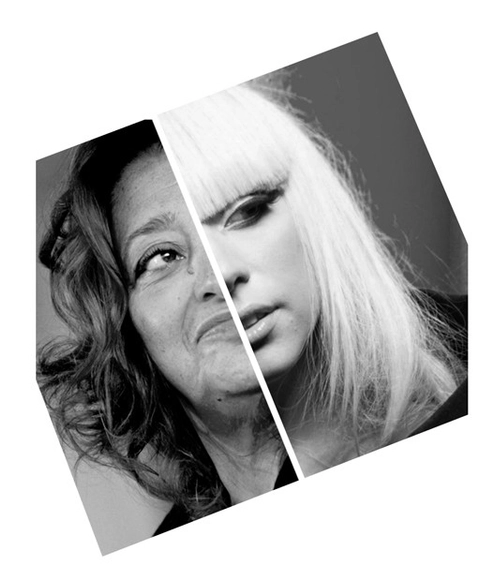
Allow me to make an unlikely comparison of two powerhouses: Zaha Hadid (62) and, bear with me now, Lady Gaga (26). Both are breaking the mold with their unique aesthetics; both are at the top of their respective industries; both are commercial successes. However, there is one undeniable difference: it only took the world a few years to recognize Lady Gaga and for her to skyrocket to fame. It has taken Dame Hadid the better part of three decades to receive a comparative level of acclaim. Is it fair to compare successful architects and super songstresses? In an architectural world where we are faced daily by terms such as ‘celebrity’ and ‘starchitect’ it may well be time to look deeper into the matter.
Read more about what architecture could learn from the Music Industry, after the break...

As part of their Cultural Drivers event series, the National Building Museum in Washington, D.C. will be presenting the ‘Culture as Catalyst: Past, Present, Future’ event from 6:30pm-8:00pm on February 25th. Cities are increasingly defined by their civic spaces such as museums, theaters, libraries, parks, and cultural districts. Designers, public officials, and non-profit leaders from across the U.S. will share how their cultural facilities and civic spaces are re-energizing neighborhoods, spurring economic development, and responding to the needs of the community. For more information, please visit here.

The first prize winning proposal in the competition to design the masterplan of Padideh Kish, a destination resort in Kish Island, Iran, creates a fantastic and exciting place to improve and deepen the experience of a trip and remain in the mind of any visitor. Designed by Shirdel and Associates Architects, their idea of Padideh is a result of juxtaposition, the interaction and development of concepts where each one is dependent on the architectural achievements and architectural history of Iran. More images and architects’ description after the break.

Elkiær + Ebbeskov Arkitekter shared with us their winning proposal, titled ‘GROW YOUR CITY’, in the Suburb of the Future competition. The idea is not to reinvent the suburbs from scratch, but they believe that if one is able to identify their existing strengths and exceptional features, the areas sometimes referred to as “the fringes” may have the potential to become “the cutting edge”. Their design describes a modern area of suburban cultivation – “the Growth Zone” (Vækstzonen) – as a new residential quarter in the town of Nykøbing Falster. Its underlying notion is based on the broad links sweeping from countryside to seaside and on into the close-grained structure of the Danish fields and farmlands. More images and architects’ description after the break.

Kokkinou – Kourkoulas Architects shared with us their proposal in the competition for the redesign of the existing cereals stock house building facilities (SILO) and its surrounding open space into a Museum for Underwater Antiquities. This also includes the regeneration of part of the Piraeus Port Authority (OLP) Coastal Zone – transformation into an open public space for outdoor activities. With their main strategy based on preserving the memory and the effective wealth of the industrial past of the port, their goal is the creation of a cultural center at the western edge of the port amongst the wharfs and other industrial infrastructure. More images and architects’ description after the break.
In 1969, zoologist Desmond Morris released a book titled The Human Zoo; in it, he argued that human beings, tribal by nature, aren’t wired to live in the big, crowded modern-day cities we find ourselves in:
“Some people call the city a ‘concrete jungle’ — but jungles aren’t like that. Animals in jungles aren’t overcrowded. And overcrowding is the central problem of modern city life. If you want to look for crowded animals, you have to look in the zoo. And then it occurred to me: The city is not a concrete jungle — it’s a human zoo.”
Humans in a city are like animals in a zoo. It’s a fascinating claim, one that led me to a rather unusual thought.
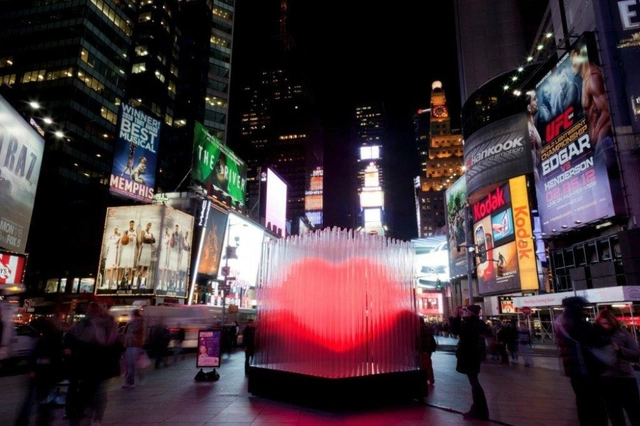
If we take for granted Morris’ claim that the city is essentially a human zoo, and that, as we are all aware, it’s far more difficult for animals to mate in captivity, then - could cities actually limit our capacity for love? As our world becomes more and more urbanized, will it also become more lonely?
Is there any way to stop it?
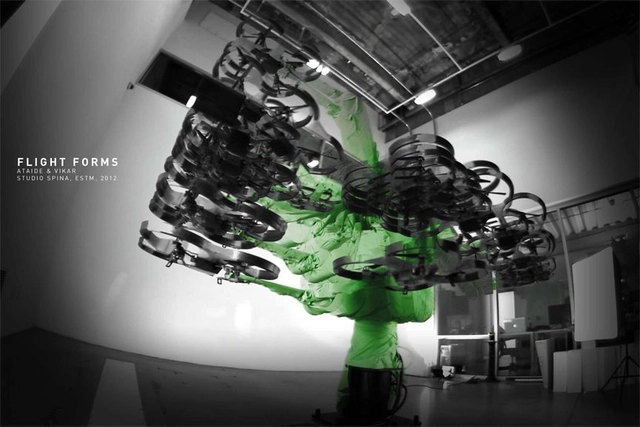
Two dynamic post-graduate programs offered by the Southern California Institute of Architecture (SCI-Arc) in Los Angeles have been charged with examining core contemporary issues facing architecture today. Spanning topics from advanced manufacturing methodologies and new building systems, to urban planning and design challenges faced globally, these post-professional tracks allow students to rethink architecture and design through the creative lens of the SCI-Arc community.
The architecture school’s Emerging Systems, Technologies & Media (ESTm) and Future Initiatives (SCIFI) programs are conceived as intensive one-year (three semesters) post-professional degrees in architecture, functioning as think tanks and research engines within the larger framework of the school.

Taking place at 6:00pm PST on Friday, March 1, internationally acclaimed architects Fuensanta Nieto and Enrique Sobejano will deliver their fourth presentation in the “Placing” lecture series offered by the Department of Architecture at Portland State University, which is free and open to the public. Based in Madrid and Berlin, Nieto Sobejano Arquitectos is known for projects that marry a contemporary architectural language with traditional settings and historic structures. Their work includes the Madinat al Zahra Museum in Córdoba—recipient of a 2010 Aga Kahn Award—and extensions to the Joanneum Museum in Graz. More information after the break.

With love in the air this Valentine’s Day season, there is undoubtedly no better way to express your feelings to the architecture enthusiast in your life with these one of a kind architecture love cards. Made especially to share with your loved ones and those you care about most, celebrate this year’s loveliest season with these simple, yet elegant cards featuring well-known architectural wonders throughout the world from the Eiffel Tower to the Golden Gate Bridge. Thanks to Architecture for Humanity, just by visiting here, you can easily download one, two, or several of these cards which remind you why you love architecture so much! More images of love cards available can be viewed after the break.

OKRA, in collaboration with CCO, ACT, and Smith Innovation, recently won the competition for their Ejby Campus Business area proposal located in the Glostrup Commune near Copenhagen. Their sustainable and innovative development strategy focuses on the creation of a diverse program and the use of public space. With the opportunity to rethink the business areas of suburbia, the business area currently plays an important role in providing economically attractive workplaces in an accessible, open and green setting. More images and architects’ description after the break.

“The World’s 100 Largest Firms Have Been Ranked...But Does It Matter?”
That was the question I posed yesterday, in response to our publication of The WA100, Building Design’s ranking of the world’s largest architecture firms. My conclusion was that ranking, by size, tells you very little about the success of the world’s largest firms. But ranking by income and efficiency? Well, that tells you quite a bit more.
By looking at the Top 5 Fee Income Earners and the 5 Most Efficient Firms of 2012 - and their strategies - we can understand far more what it takes to be successful in this tough market. Since The WA100 is much more than a list of rankings, but also a compendium of information, I went back to the source to investigate these firms more.
The big guns (Aecom, Gensler, etc.) have aggressively pursued a diverse range of projects on an international scale (particularly in China and the Middle East) - a stance that is far from surprising, considering how competitive they are.
More interesting, however, is that the most “efficient” firms (those firms that, while nowhere near the size nor clout of the Big 3, have earned higher fee incomes per employee), have either stayed in strong markets or diversified internationally, creating a niche for themselves in these markets (a strategy discussed at length in “The 7 Things You Need To Know Before Doing Business Abroad”).
Learn the business strategies of the top income earners and most efficient earners of 2012, after the break...

A unique ecological resource for an otherwise densely-populated urban region, the Xiasha district is a rural, coastal setting outside of Shenzhen. FCHA‘s second prize winning proposal for the masterplan project of Xiasha Wander Bay seeks to strike a balance between the preservation of the site’s pristine ecology and the needs of a four-season tourist town. More images and architects’ description after the break.

With the proposal title of ‘Expose the Structural DNA’, PWFERRETTO’s design for a new National Contemporary Art Storage of Korea amplifies the power of the existing structure by revealing its bare structural logic. Their main goals are to create an engaging experience and relate to the visitor in a more raw and immediate way, which makes it different from a museum. More images and architects’ description after the break.

The Cell, by Tarse Singh, is a visually powerful film in which every set is carefully prepared in terms of color, composition and atmosphere. Ranging from subtle scenes to really baroque ones, the film is loaded with surrealist, sophisticated imagery that helps the viewer experience the story with the characters.
As usual we invite you to enjoy these films, let us know your comments, and propose more for the list!

The ‘Gate 81′ project has been set up to imagine how Preston Bus Station could be adapted for the future and to strongly encourage all who are interested to develop your ideas using open, shared resources. In December 2012 Preston City Council voted ‘in principle’ to demolish the building and replace it with a surface car park. However, to many, the building is a major cultural landmark and it should be preserved and creatively adapted to serve the city. It should act as a key space to make Preston accessible and temper the decay that is affecting our city, and so many other city centers across the UK. This is a great way to maximize resources and collective intelligence through this very open site. More information after the break.

Conceived through a spatial inversion, the proposal for the new Antiquities Museum of Piraeus is an industrial typology that is reinvented as a cultural destination. Designed by PAR, in collaboration with ARUP, their interest lies not only in the complex program of the museum, but in the site’s unexploited urban potential as a civic link. Transformed into an iconic, world class museum, the building’s openness activates the Cultural Coast District. More images and architects’ description after the break.